لماذا تفشل الروبوتات الزراعية بدون هندسة السلامة الوظيفية


Agricultural robotics does not usually fail because the algorithm is weak or because the prototype cannot move in a field. It fails because once the machine must operate near people, crops, implements, obstacles, network gaps and regulatory requirements, the project stops being only an autonomy problem and becomes a مشكلة السلامة الوظيفية.
For founders, CTOs, production managers and machinery OEM teams, this changes the investment logic. If safety engineering is added after perception, navigation, and HMI have already been built, teams often face the redesign of the architecture, interfaces, validation plans, and even commercial timelines. Safety-based technical standards such as ISO 25119 و ISO 18497، جنبًا إلى جنب مع اللائحة (EU) 2023/1230، ليست أوراقاً ثبوتية حول المنتج؛ بل تُشكّل المنتج نفسه.
لماذا تُعد الروبوتات الزراعية وسلامتها بالغة الأهمية في الوقت الحالي؟
تكتسب الروبوتات الزراعية زخمًا لأن القطاع يتعرض لضغوط من نقص العمالة، ومتطلبات الاستدامة، والحاجة إلى عمليات ميدانية أكثر دقة. تشير منظمة OECD إلى أن الزراعة في الاتحاد الأوروبي توفر أكثر من 30 مليون وظيفة، yet faces an ageing and shrinking workforce. Meanwhile, the EU CAP Network, aside from labour shortages, also identifies interoperability issues, regulatory compliance, and farmers’ readiness as major barriers to the implementation of robotics and artificial intelligence.
That context matters because it clarifies why so many robotics initiatives receive attention, funding and pilot interest. It also explains why failure is expensive. In agriculture, a robot is not a lab system operating in a controlled aisle. It lives on farms and moves through mud, dust, variable light, crop rows, headlands, slopes, people, vehicles and attachments. The environment is dynamic, and the acceptable margin for unsafe behaviour is low.
المشكلة الرئيسية: تبني فرق الروبوتات الاستقلالية قبل تطبيق متطلبات السلامة
تبدأ العديد من الفرق بسؤال تقني معقول: هل يمكن للآلة أن تكتشف وتقرر وتتصرف؟ هذا ضروري، لكنه ليس كافياً. في عمليات النشر الفعلية، يكون السؤال الأصعب مختلفاً: ما الذي يجب أن تفعله الآلة، وما الذي يجب ألا تفعله أبدًا، عندما تتدهور المستشعرات، أو ينقطع الاتصال، أو ينحرف تحديد الموقع، أو يقترب مشغل، أو يتم تفعيل وظيفة أمان؟
This is where projects begin to stall. A prototype can often demonstrate route following, crop detection, or targeted actuation. But once the programme moves towards validation, scaling or customer rollout, the team discovers that hazard analysis, safety-related control architecture, degraded modes, traceability and verification evidence were not built into the development process from the start. At that point, safety stops being a final review and becomes a redesign programme.
اكتشف كيف يؤثر نضج البرمجيات على الزراعة الذاتية
اقرأ المزيد
ما الذي يحدث من أخطاء عادةً
قبل أن يرى فريق الروبوتات المشكلة بوضوح، غالباً ما تظهر في صورة تأخير أو زيادة في التكاليف أو "أعمال اعتماد غير متوقعة". في الواقع، يكون النمط عادةً واحداً مما يلي:
- صُممت منظومة الاستقلالية دون حدود سلامة واضحة بين منطق المهمة ومنطق السلامة.
- تم تحسين الاستشعار لأداء المهام، وليس للتحقق من وظائف السلامة.
- صُممت تدفقات واجهة الإنسان والآلة (HMI) لتحقيق الراحة، لا للتدخل الآمن للمشغّل.
- كانت معالجة الأعطال مفترضة، لكنها لم تُحدَّد أو تُختبر أو تُوثَّق.
- عملت فرق البرمجيات وفرق الامتثال بالتتابع بدلاً من العمل معاً.
النتيجة التجارية بسيطة. النظام الذي يبدو متقدماً في ظروف العرض التوضيحي قد يظل غير ناضج كمنتج.
ماذا يعني السلامة الوظيفية في مجال الروبوتات الزراعية؟
Functional safety is often misunderstood as a narrow compliance discipline. In practice, it is an engineering method that ensures a control system correctly performs safety-related functions, even under fault conditions. In agricultural machinery, تحدد ISO 25119 المبادئ العامة لتصميم وتطوير الأجزاء المتعلقة بالسلامة في أنظمة التحكم، يُشار إليه غالبًا باسمSRP/CS.
وهذا مهم بشكل خاص في مجال الروبوتات لأن الآلات الزراعية لم تعد أصولاً ميكانيكية بسيطة بمنطق تحكم محدود. إنها أنظمة معرَّفة بالبرمجيات تجمع بين الإدراك والتخطيط والتنفيذ والاتصال والتفاعل مع المشغل. يوسع ISO 18497 النقاش ليشمل الآلات مع وظائف آلية جزئياً وشبه مستقلة ومستقلة، ويعالج بشكل صريح المخاطر الكبيرة في ظل الاستخدام المقصود وسوء الاستخدام المتوقع بشكل معقول.
تعريف بلغة مبسطة
في البداية، قد يبدو المصطلح مجردًا، لذا من المفيد توضيحه ببساطة. السلامة الوظيفية تسأل: إذا حدث خطأ ما، هل ستنتقل الآلة إلى حالة آمنة أو تبقى فيها بطريقة يمكن التنبؤ بها؟ يشمل ذلك الإيقاف، أو الحد من الحركة، أو تعطيل أداة، أو طلب تدخل بشري، أو منع حالة بدء غير آمنة.
اعرف المزيد عن خبرتنا في السلامة الوظيفية لقطاع السيارات
تحقق من المزيد
لماذا يختلف عن جودة البرمجيات العامة؟
Good software quality reduces bugs. Following Functional Safety standards reduces hazardous behaviour. A stable application can still be unsafe if it makes a wrong but deterministic decision during degraded sensing, timing drift, or actuator fault. That is why safety engineering needs its own concept phase, architecture discipline, verification method and evidence trail.
المعايير التقنية المتعلقة بالسلامة: ISO 25119 وISO 18497 ولوائح الآلات الأوروبية
معايير السلامة الرئيسية للروبوتات الزراعية هي ISO 25119 وISO 18497 و لائحة الاتحاد الأوروبي للآلات. غالبًا ما تُذكر هذه المراجع الثلاثة معًا، لكنها لا تؤدي المهمة نفسها. تتخذ الفرق خيارات تصميم أفضل عندما تفهم الفرق بينها مبكرًا.
ما يغطيه كل إطار عمل
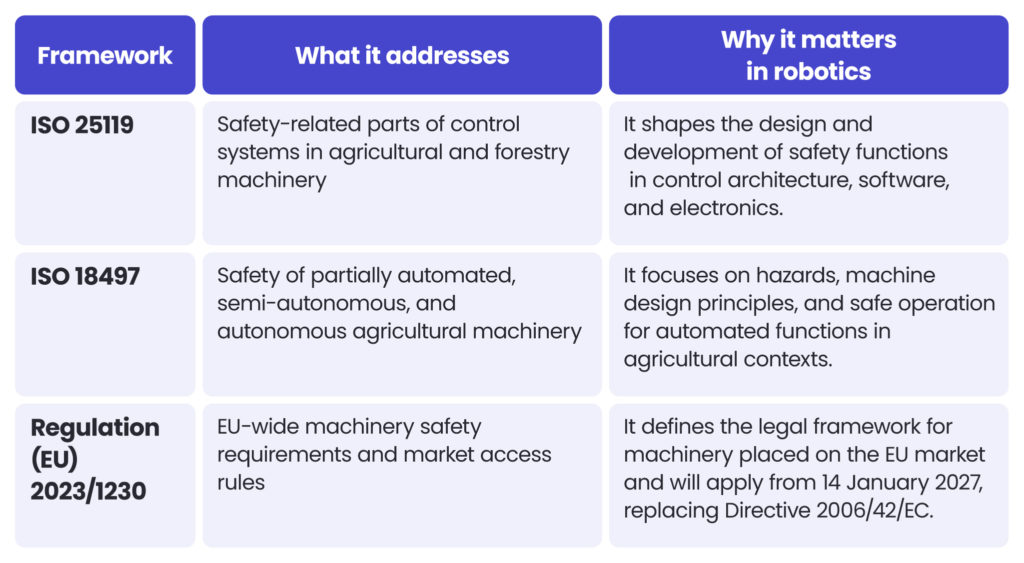
This distinction is important because robotics teams often treat regulation as a late-stage legal matter. That is incorrect. The legal framework and the technical safety standards influence software partitioning, interfaces, fault responses, documentation, and validation strategy from the concept phase onward.
ملاحظة حول التوقيت
نافذة الانتقال ليست نظرية. دخل اللائحة (EU) 2023/1230 حيز التنفيذ بعد النشر وستُطبق اعتبارًا من 14 يناير 2027, with some provisions applying earlier. Teams building systems for commercial deployment, OEM integration, or EU scaling plans need to design solutions with that in mind now, rather than waiting until after the successful completion of the pilot phase.
القراءة العملية لفرق المنتجات
For product teams, the implications are direct. If your roadmap includes autonomous navigation, remote supervision, automated implement control, human-machine interaction, or connected updates, then safety is no longer a document set around the machine. It is an integral part of the system design.
لماذا تتعثر مشاريع الروبوتات الزراعية عمليًا
The first reason is that agricultural environments are hard to model and even harder to bound. Weather changes visibility, crops change geometry, terrain changes traction, attachments change the system state, and human behaviour remains difficult to predict. مراجعات البحث لا يزال تحديد السلامة، وخاصة الكشف عن البشر والتشغيل الآمن في الحقل، يمثل تحدياً محورياً في مجال الروبوتات الزراعية.
السبب الثاني هو أن الروبوتات في الزراعة تمثل مشكلة نظام من الأنظمة. فقد يتضمن المنتج الملاحة والتحكم في الآلات والإدراك وواجهة الإنسان والآلة (HMI) والقياس عن بُعد، البيانات الجغرافية المكانية, cloud analytics, and service workflows. Safety has to be coherent across those layers. A safe braking function can be undermined by unclear state handling, poor operator messaging, or an unsafe restart path.
The third reason is organisational. Prototype teams are often structured around speed, rather than certification capabilities. That is rational at the start, but it becomes dangerous once the architecture starts to solidify. Every month spent building autonomy without safety assumptions increases the risk of having to redo the work later.
أكثر نقاط التوقف شيوعاً
من الطرق العملية لاكتشاف الخطر البحث عن الاحتكاك المتكرر في المجالات نفسها:
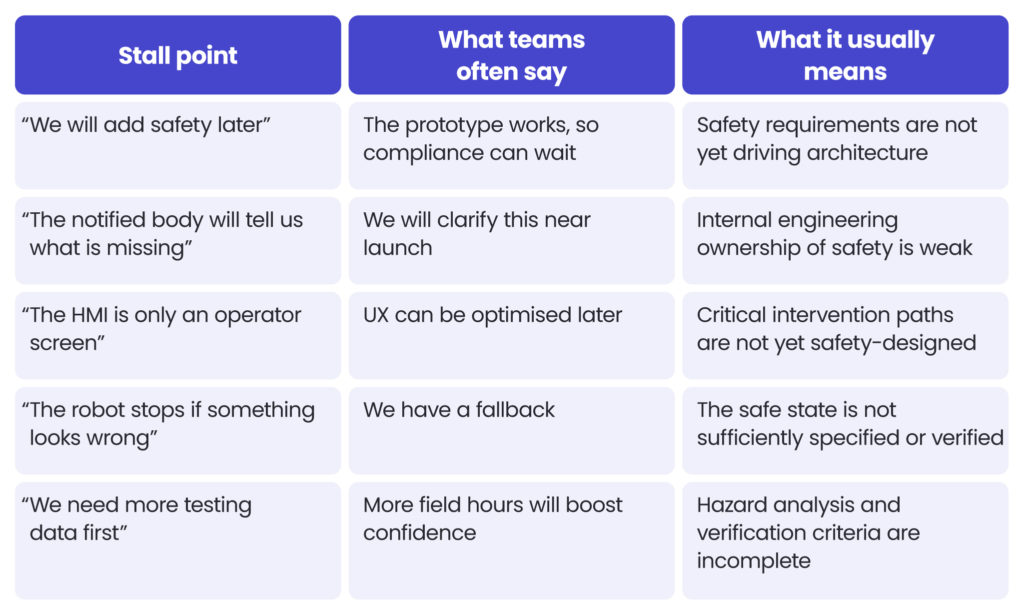
هذا النمط شائع لأن الفرق تخلط بين الأداء التشغيلي والمخاطر المقبولة. في هندسة السلامة، هذان الأمران مرتبطان لكنهما ليسا متطابقين.
السلامة الوظيفية كقضية أعمال، وليست قضية هندسية فحسب
For production managers and OEM decision-makers, the issue is not only whether the robot can work. It is about whether the product can be industrialised, supported, insured, integrated, and sold at an acceptable level of risk. When safety is addressed late, product economics shift in several ways: timelines extend, test cycles multiply, hardware changes propagate back into software, and documentation effort becomes harder to reconstruct.
For investors, the signal is equally important. A robotics company that shows autonomy performance without a credible functional safety path may still be technically impressive, but it is not yet de-risked as a deployment business. In that sense, safety maturity is part of commercial maturity.
حيث يظهر تأثير الأعمال أولاً
نادراً ما تُصنَّف الأعراض التجارية الأولى تحت مسمى "السلامة الوظيفية". وعادةً ما تظهر على النحو التالي:
- تمديدات تجريبية متكررة بدلاً من التحول التجاري،
- تردد العملاء بشأن نماذج الإشراف والمسؤولية،
- مناقشات أبطأ مع مصنّعي المعدات الأصلية بسبب عدم وضوح افتراضات البنية،
- صعوبة الانتقال من تكوين آلة واحد إلى عائلة منتجات أوسع،
- ارتفاع تكلفة التحقق والاختبار واستعادة الوثائق.
ما الذي تكسبه مختلف مجموعات أصحاب المصلحة من حل هذه المسألة مبكراً
في مجال الروبوتات الزراعية، ترى كل مجموعة من أصحاب المصلحة الفجوة الأمنية ذاتها من منظور مختلف.
لمديري الإنتاج
Production managers need a machine that can move from prototype to repeatable delivery. For them, early functional safety reduces late engineering churn, helps stabilise bill of materials decisions, and improves confidence that manufacturing, commissioning, and service documentation will not change every few weeks. The benefit is fewer surprises when the product approaches the scale-up stage.
لمديري التكنولوجيا
CTOs need architecture that remains coherent as product ambition grows. For them, safety-led design creates clearer boundaries between autonomy logic, safety logic, connectivity, and operator interaction. The benefits include lower rework, better verification discipline, and a product stack that can evolve without undermining core safety assumptions.
لمالكي المنتجات التقنيين
Technical product owners need a roadmap that aligns product goals with real delivery constraints. For them, functional safety turns vague risk into defined work packages: hazard analysis, safety requirements, traceability, verification planning, HMI behaviour, and evidence generation. The benefit is a backlog that supports deployment, not just demos.
للمديرين الرقميين في قطاع الزراعة
Digital managers often sit between operations, suppliers, and transformation programmes. Functional safety standards can help them recognise why robotics cannot be treated like a normal software rollout. The benefits are better vendor evaluation, more realistic milestones, and stronger questions during procurement or partnership discussions.
لمصنّعي الآلات الزراعية
OEMs and machinery producers need systems that can fit their product portfolio, certification path, and after-sales model. For them, functional safety is the bridge between innovation and marketable machinery. The benefit is faster alignment between embedded software, machine control, تقنية واجهة الإنسان والآلة (HMI)والامتثال وقابلية الخدمة.
للمؤسسين والمستثمرين
Founders want speed, and investors want scale. Early safety engineering helps both, because it reduces the chance that a seemingly promising robotics platform will get trapped between pilot success and commercial readiness. The benefit is a clearer route from field trial to revenue-grade product.
مقارنة: الروبوتات القائمة على النموذج الأولي مقابل الروبوتات القائمة على السلامة
تسهّل المقارنة المباشرة رؤية الفرق. لا يضمن أي من النموذجين النجاح، لكن أحدهما يتيح تقليلاً هيكلياً للمخاطر.
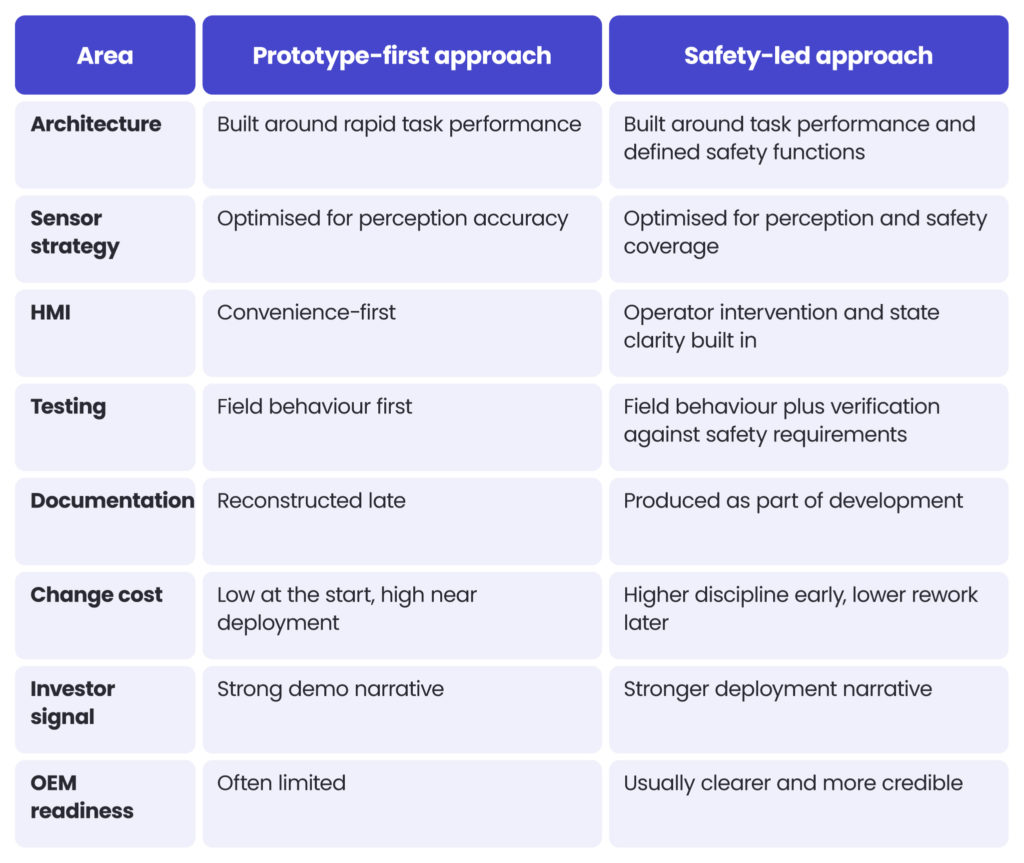
That is the core trade-off. A prototype-first path looks faster in the first months. A safety-led path tends to be faster across the full route to a product that can actually be deployed, supported, and expanded.
خطوة بخطوة: كيفية هيكلة برنامج روبوتات أكثر أماناً
A clearly defined process is helpful because many teams recognise the importance of safety but don’t know how to embed it. The goal of functional safety engineering is not to slow down innovation, but to prevent the rapid development of a flawed system.
- تحديد النطاق التشغيلي في وقت مبكر
ابدأ بوصف المكان الذي يُفترض أن تعمل فيه الآلة، ومن قد يكون قريباً منها، وما الأدوات المتضمنة، وما التباين البيئي المتوقع. يبدو هذا بديهياً، لكن تحليل السلامة يضعف عندما تُعامَل "العملية الميدانية" كحالة استخدام عامة واحدة.
- فصل منطق المهمة عن منطق السلامة
Next, make an explicit architectural distinction between what the robot is trying to achieve and what must constrain or stop it. A machine can continue to improve its autonomy stack, but safety decisions should not remain ambiguous within that stack.
- أجرِ تحليل المخاطر قبل تثبيت البنية المعمارية
Hazard analysis should happen before interfaces become expensive to change. If the team waits until after navigation, HMI, and actuation are integrated, even simple safety findings can force a broad redesign.
- تحديد الحالات الآمنة وأوضاع التشغيل المتدهورة
لا ينبغي أن يكون الروبوت مجرد شعار "يفشل بأمان". بل ينبغي أن يكون يُطبَّق بما يتوافق مع لوائح السلامة ولديك سلوك محدد وقابل للاختبار لفقدان المستشعر وفقدان الاتصال وعدم اليقين في تحديد الموقع وخلل المشغلات والتجاوز اليدوي وظروف إعادة التشغيل.
- بناء قابلية التتبع من المتطلبات إلى اختبار الإثبات
Once safety requirements exist, each one needs traceability through design, implementation, and verification. This is where many software-heavy teams struggle, because the work feels bureaucratic until they need proof.
- التعامل مع واجهة الإنسان والآلة (HMI) كسطح للسلامة
The operator view, alerts, override logic, and state messaging are not cosmetic layers. In automation systems, HMI affects whether a human understands the machine state quickly enough to intervene correctly. A proper approach to واجهة الإنسان والآلة في التكنولوجيا الزراعية يجب أن يعكس منطق التكامل هذا بوضوح: يجب ربط الواجهات بسلوك الآلة والبيانات ذات الصلة، وليس التعامل معها كشاشات مستقلة.
- التحقق مع مراعاة النشر
Finally, validate not only for technical correctness but also for the intended route to market. A pilot on one of the farms is not the same as a product family deployed across machines, geographies, and operational variants.
دراسة حالة: من نموذج أولي ميداني إلى منطق منتج قابل للاعتماد
تُفيد دراسة الحالة هنا لأن الحجة تصبح أكثر وضوحاً عند ربطها بمسار واقعي في مجال الروبوتات. وقد عرضت Spyrosoft عملاً مع Small Robot Company، وهي شركة بريطانية في مجال التكنولوجيا الزراعية تبني روبوتات تهدف إلى تحويل العمليات الميدانية، باستخدام تقنيات تشمل Java وReact وGeoServer.
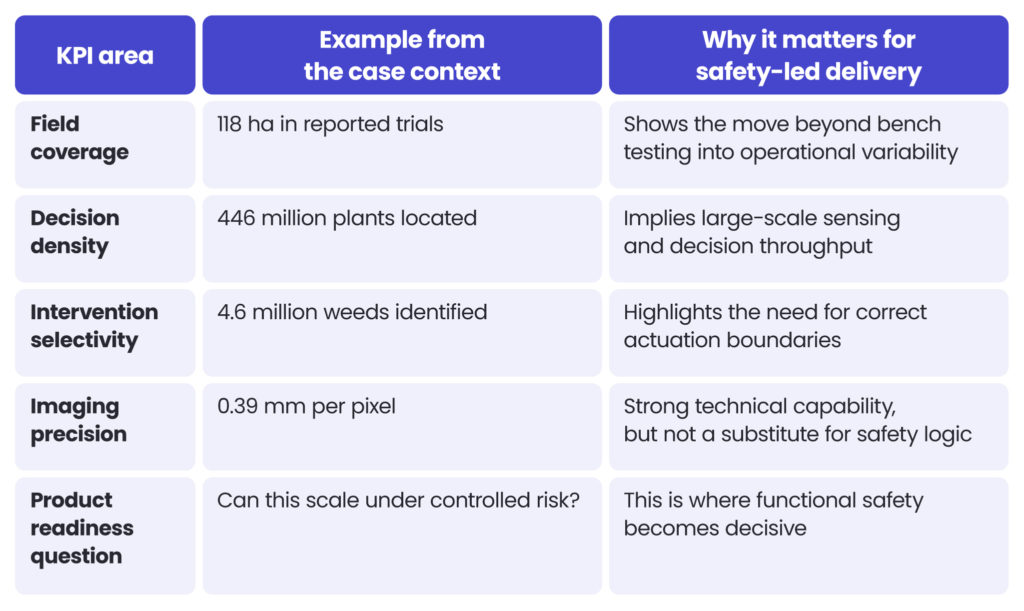
يساعد سياق التشغيل العام المحيط بذلك البرنامج في تفسير تحديات الحجم. أفادت شركة Small Robot Company عن تجارب ميدانية في المزارع عبر 118 هكتارًا، وتحديد موقع 446 مليون نبتة قمح وتحديد 4.6 مليون حشيشة ضارة، بالتصوير عند0.39 مم لكل بكسل من إعداد يتكوّن من ست كاميرات. وهذا يعادل تقريبًا 3.78 مليون نبات لكل هكتار، و38,983 حشيشة ضارة محددة لكل هكتار، ونسبة الأعشاب الضارة إلى النباتات نحو 1.03%.
لماذا تهم هذه الأرقام
Those figures are not just agronomic or computer vision metrics. They show the operational density with which safety engineering must coexist. When a system is making decisions at the plant level across millions of field objects, safety cannot be bolted on as a final gate. It must shape how sensing confidence, actuation authority, operator supervision, and degraded mode logic are handled. A system operating at that level of granularity still needs predictable behaviour when localisation is uncertain, when a person enters the work zone, or when a subsystem becomes unreliable.
التفسير العملي لمؤشرات الأداء الرئيسية
من المفيد قراءة الحالة من خلال مؤشرات الأداء الرئيسية للنشر بدلاً من مقاييس الذكاء الاصطناعي البحتة:
الدرس المستفاد لمصنّعي المعدات الأصلية ومؤسسي شركات الروبوتات
الدرس ليس أن الروبوتات المتقدمة محفوفة بالمخاطر أكثر من اللازم. الدرس هو أنه بمجرد انتقال الآلة من قدرة واعدة إلى نية نشر حقيقية، يصبح اختبار النضج الرئيسي هو: هل يمكن للنظام إظهار سلوك آمن بحكم التصميم، وليس فقط ذكاء المهام بالإثبات؟
كيف يمكن لـ Spyrosoft دعم معايير السلامة الوظيفية في هذا المجال
Thanks to our expertise in both agritech and Functional Safety, we can provide engineering and software expertise for robotics, automation, and control systems used in agricultural machinery, including autonomous tractors, robotic harvesters, and specialist agribots, with an emphasis on safe, reliable systems aligned with international safety standards and requirements.
حيث تُحقّق Spyrosoft قيمة مضافة
With our vast experience, we can handle projects where the challenge sits between software ambition and deployment reality. In the context of agricultural robotics, that means support in areas such as:
- البرمجيات المدمجة وبرمجيات التحكم لسلوك الآلة والوظائف المتعلقة بالسلامة،
- تصميم واجهة الإنسان والآلة لضمان وعي واضح بحالة المشغّل وإمكانية التدخل،
- التكامل عبر أنظمة الاستقلالية والقياس عن بُعد والحوسبة السحابية والأنظمة الفرعية للآلات،
- هندسة المتطلبات، والتتبّع، وانضباط التحقق،
- تسليم المنتج الذي يلبي توقعات بمستوى الشهادات بدلًا من توقعات العروض التوضيحية فقط.
الفوائد لمختلف الجماهير
For CTOs, this means architecture that is easier to scale and defend. For machinery manufacturers, it means stronger alignment between product software, machine logic and compliance expectations. For technical product owners, it means a clearer decomposition of safety-critical work into implementable backlog items. And for investors and founders, it means a more credible path from prototype traction to industrial readiness.
نقاط عملية ونصائح لفرق الروبوتات حول تقييم السلامة الوظيفية
Since safety topics become clearer when broken down into specific checkpoints, below we present notes and questions that can help your team prepare a risk assessment and determine whether safety remains merely an intention or has already become an integral part of the delivery.
قائمة التحقق من جاهزية المنتج
- هل حدّدنا النطاق التشغيلي بتفصيل كافٍ لتحليل المخاطر بشكل صحيح؟
- هل فصلنا منطق المهمة عن منطق السلامة في البنية المعمارية؟
- هل حددنا الوظائف المتعلقة بالسلامة والمحفزات والحالات الآمنة؟
- هل حددنا أوضاع التدهور للاستشعار وتحديد المواقع والاتصالات والتشغيل؟
- هل صمّمنا مسارات تدخل المشغّل وإعادة التشغيل بشكل صريح؟
- هل لدينا إمكانية التتبع من متطلب السلامة عبر التنفيذ وصولاً إلى الاختبار؟
- هل واجهة HMI الخاصة بنا جزء من مفهوم السلامة، وليس فقط جزءاً من قابلية الاستخدام؟
- هل نصمّم وفق المسار التنظيمي الأوروبي الذي نعتزم استخدامه فعلاً؟
- هل يمكننا شرح حالة السلامة الخاصة بنا بوضوح لشركة تصنيع المعدات الأصلية أو مدقق أو شريك أو مستثمر؟
علامات تحذيرية على انحراف البرنامج عن مساره
- النموذج الأولي يعمل، لكن لا أحد يستطيع تفسير الحالة الآمنة بدقة.
- الاختبارات شاملة، لكن معايير النجاح غير مرتبطة بمتطلبات السلامة.
- تُدار الاستقلالية والامتثال بواسطة فرق منفصلة مع ملكية مشتركة محدودة.
- توجد إمكانية تجاوز المشغّل، لكن حالة النظام يصعب تفسيرها.
- تركز معالم المنتج على الميزات، وليس على مخاطر النشر المُتحقق منها.
تلخيص احتياجات السلامة الوظيفية في الروبوتات الزراعية
Agricultural robotics fails without functional safety engineering because the machine doesn’t live in a closed technical problem. It lives in a real operational environment shaped by people, implements, variable terrain, uncertain sensing, service conditions, and legal obligations. That is precisely why companies should make a decisive shift from the question “Can the robot perform this task?” to the question “Can the robot perform this task safely, predictably, and repeatedly under real-world conditions?
ISO 25119, ISO 18497 and the EU Machinery Regulation are key because they force that question into the design process. Teams that treat them as end-stage compliance tend to discover hidden architecture debts too late. Teams that build around them earlier are usually better positioned to industrialise, integrate, and scale.
بالنسبة لـ Spyrosoft، هنا تحديداً تتجلى القيمة الهندسية. تركيزنا ليس فقط على بناء تكنولوجيا برمجيات الزراعة that works as a demo, but also on supporting the creation of robotics software, interfaces, and integrations that are robust enough for real-world product use. In agricultural robotics, that is the difference between an impressive idea for automation and deployable machinery.
If you are evaluating an autonomous or semi-autonomous agricultural machine programme, review the safety architecture before you expand the feature roadmap or reach out to our experts for assistance in that area. And remember to do this sooner rather than later to avoid unexpected risks or costs, and ensure system safety.
المصطلحات
السلامة الوظيفية – تخصص يضمن أن وظائف التحكم المتعلقة بالسلامة تعمل بشكل صحيح، بما في ذلك في ظروف الأعطال.
SRP/CS – الأجزاء المتعلقة بالسلامة من أنظمة التحكم. عملياً، هذه هي الأجزاء من نظام التحكم في الآلة التي تؤدي وظائف السلامة.
الحالة الآمنة – حالة محددة للآلة تقلل المخاطر، مثل التوقف المتحكم به، أو تقييد الحركة، أو تعطيل التشغيل.
وضع الأداء المنخفض – وضع تشغيل مخفّض يُستخدم عندما يصبح جزء من النظام غير متاح أو غير موثوق، مع الحفاظ على مستوى مخاطر مقبول.
تحليل المخاطر – عملية منظمة لتحديد المواقف الخطرة والأسباب واحتياجات الحد من المخاطر.
HMI – واجهة الإنسان والآلة. في الآلات الزراعية، تشمل هذه الشاشات وعناصر التحكم والتنبيهات ومسارات التدخل التي يستخدمها المشغلون.
النطاق التشغيلي – الظروف التي يُقصد تشغيل الروبوت فيها، بما في ذلك التضاريس والمحاصيل والطقس ونموذج الإشراف والعناصر المحيطة.
المصادر
ISO، ISO 25119-1:2018 – الجرارات والآلات الزراعية والحرجية – الأجزاء المتعلقة بالسلامة في أنظمة التحكم – الجزء 1: المبادئ العامة للتصميم والتطوير. (WMS)
ISO، ISO 18497-1:2024 – الآلات الزراعية والجرارات – سلامة الآلات شبه الآلية وشبه المستقلة والمستقلة – الجزء 1: مبادئ تصميم الآلات والمصطلحات. (WMS)
EUR-Lex، اللائحة (EU) 2023/1230 بشأن الآلات. (EUR-Lex)
الأسئلة الشائعة
Functional Safety is crucial because agricultural robots operate in open, variable and sometimes hazardous environments. The combination of moving machinery, attachments, people, crops and changing field conditions creates risks that cannot be handled by autonomy performance alone.
ISO 25119 focuses on safety-related parts of control systems in agricultural machinery. ISO 18497 focuses on the safety of partially automated, semi-autonomous, and autonomous machinery, as well as the hazards associated with these modes of operation.
يُطبق اللائحة (EU) 2023/1230 اعتبارًا من 14 يناير 2027، مع تطبيق بعض الأحكام في وقت مبكر.
لا. قد يُحسّن نموذج الذكاء الاصطناعي القوي الإدراك أو دعم القرار، لكنه لا يحل محل هندسة السلامة والحالات الآمنة المحددة وإمكانية التتبع والتحقق والتوافق التنظيمي.
A common mistake is to treat safety as something that can be documented after autonomy is already designed. In practice, late safety work often exposes architectural issues that are expensive to fix.
Ask how safety-related functions are defined, how degraded modes are handled, how operator intervention works, what standards guide development, and how verification evidence is produced. Those questions are often more revealing than a polished demo.


arrow_circle_rightاتصل بنا
لنناقش كيف يمكننا مساعدتك في مشاريعك الزراعية التقنية
arrow_circle_right مقالاتنا