من الزراعة الذكية إلى الزراعة الذاتية: لماذا أصبحت البرمجيات هي العقبة الآن


The future of autonomous farming will not be defined by new hardware and more powerful farm equipment, but by software maturity. As agriculture transitions from decision-support tools to closed-loop autonomous systems, machines must perceive their environment, make context-aware decisions, execute actions safely, and continuously monitor outcomes. Engineering software that can integrate perception, planning, control, and safety under highly variable field conditions is now the central challenge – and the key to making autonomous technology in farming reliable and scalable.
لم تعد الاستقلالية في الزراعة مشكلة عتاد
Over the last decade, agriculture has progressed rapidly from manual field operations to smart farming. Precision technologies – GNSS guidance, auto-steering, variable-rate application, yield mapping, drones, and in-field sensors – are now standard components of modern agricultural machinery and farming operations.
With the shift toward supervised and fully autonomous agriculture, the industry is fundamentally changing. Machines can already drive, sense, and actuate, thus making software the primary bottleneck to scaling autonomy in agriculture.
Not software in the sense of a single algorithm, but complex, safety-critical, lifecycle-managed autonomy software that must operate reliably in unstructured, variable, and biologically driven environments.
ما هي الزراعة الذاتية؟
Autonomous farming refers to agricultural systems in which machines can perceive their environment, make context-aware decisions, and execute tasks with minimal or no direct human input, while remaining within defined safety, operational, and regulatory constraints.
From a machinery OEM or robotics perspective, the key distinction is that smart/ precision farming supports the operator’s decisions, while autonomous farming executes decisions autonomously within a defined Operational Design Domain (ODD).
تجدر الإشارة إلى أن الزراعة الذاتية ليست حالة ثنائية. فهي تمتد عبر سلسلة متصلة من مستويات الاستقلالية، تشمل عادةً:
- الاستقلالية المدعومة – يبقى المشغل مسيطرًا، مع دعم الأتمتة لوظائف محددة (مثل التوجيه التلقائي، والتحكم في الأقسام).
- الاستقلالية الخاضعة للإشراف – يؤدي النظام المهام بشكل مستقل ولكنه يتطلب إشرافًا مستمرًا وقدرة على التدخل.
- استقلالية كاملة – يعمل النظام بشكل مستقل ضمن نطاق تشغيلي مصمم (ODD) محدد، مع إشراف عن بُعد أو معالجة الاستثناءات، مما يسمح بأدنى حد من التدخل البشري.
والأهم من ذلك، تدمج أنظمة الزراعة الذاتية:
- الإدراك (الرؤية الحاسوبية، LiDAR، GNSS، IMU، دمج المستشعرات)
- اتخاذ القرارات (التخطيط، منطق السلوك، القيود الزراعية)
- التحكم (تشغيل المركبة والمعدات، التحكم منخفض السرعة)
- برمجيات السلامة ودورة الحياة (المراقبة، أوضاع الاحتياط، التحديثات، قابلية التدقيق)
The hardest challenge of autonomous farming is no longer motion or actuation – it is ensuring that the software coordinating these layers behaves and operates safely, predictably, and repeatably under real-world field conditions.
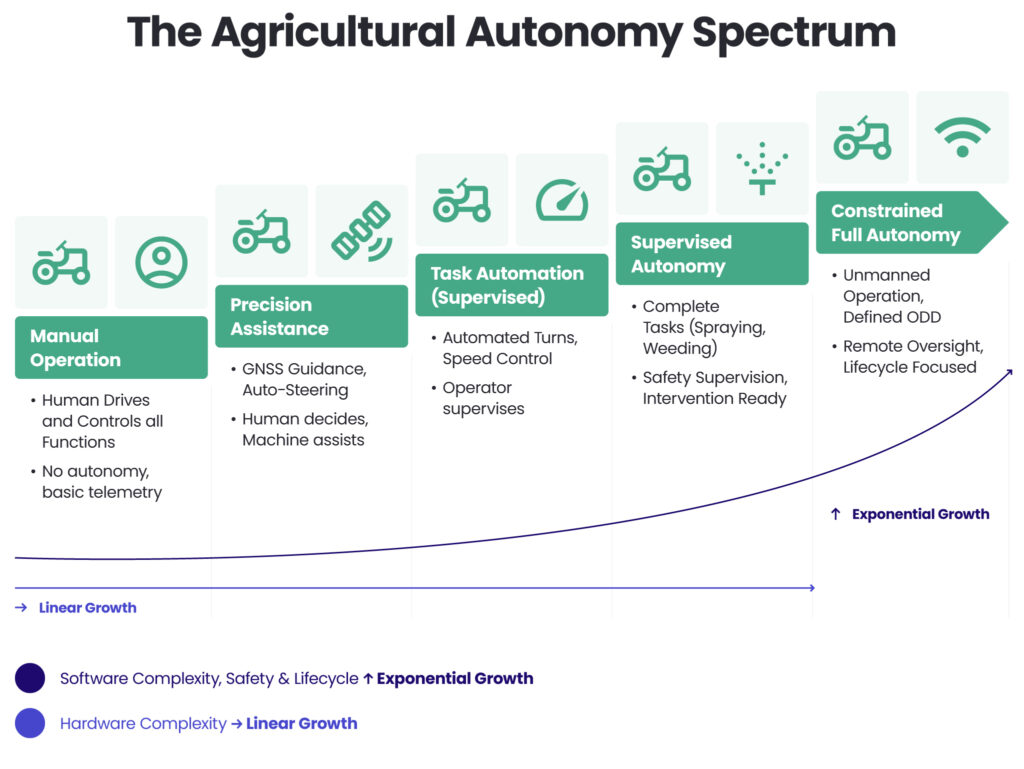
التحول: من أدوات ذات دقة أعلى إلى أنظمة مستقلة
Precision agriculture optimised how humans operate machines and other vehicles. Now autonomous farming changes the paradigm by optimising how farm equipment and machines operate themselves, within defined operational constraints. This shift turns “better guidance” into closed-loop autonomy: perception → decision → execution → supervision.
صُممت أنظمة الزراعة الدقيقة في المقام الأول لدعم القرار، وبالتالي فهي:
- جمع بيانات المزرعة،
- تصوّر الرؤى،
- ترك الحكم والتنفيذ للمشغل.
تسعى الأنظمة الزراعية المستقلة إلى إغلاق الحلقة من خلال:
- إدراك البيئة في الوقت الفعلي،
- تحديد الخطوة التالية،
- تنفيذ الإجراءات بأمان،
- مراقبة النتائج وسلامة النظام،
- يتكرر بشكل مستمر.
This transition fundamentally changes system requirements. A tractor following GNSS lines is a control problem. A machine navigating crops health, obstacles, soil conditions and variability, weather or climate changes, and other farm vehicles is a real-time autonomy system. At this stage, agriculture begins to resemble robotics and industrial autonomy, not traditional farm equipment.
لاستكشاف تقنيات الزراعة الذاتية، اطّلع على عرضنا في مجال التقنيات الزراعية
اعرف المزيد
حيث تكمن التعقيدات الحقيقية للأنظمة المستقلة اليوم
Autonomy in agriculture rarely fails because a sensor is missing, a robot cannot move, or existing equipment malfunctions. It fails at the interfaces: when perception uncertainty, control limits, agronomic rules, and safety constraints collide in real field conditions. The complexity, therefore, is not due to a single component – it is the integration and orchestration of many components under uncertain conditions.
الإدراك نظام، وليس نموذجاً
في الاستقلالية الزراعية، يجب أن يكون الإدراك:
- العمل عبر المحاصيل ومراحل النمو والمواسم والمناطق،
- تحمل الغبار والاهتزاز والحجب والإضاءة القصوى،
- دمج مستشعرات متعددة ذات أنماط فشل مختلفة،
- تقدير عدم اليقين والكشف عن تدهور الإدراك.
التحدي ليس تدريب كاشف، بل هندسة خط أنابيب إدراكي يظل موثوقاً على مدى سنوات من التشغيل. هذه مشكلة أنظمة برمجية، وليست مشكلة بحثية.
التخطيط والتحكم مدفوعان بالسياق
تعمل المعدات والآلات الزراعية بسرعات منخفضة ولكن في بيئات متغيرة للغاية. يجب أن تراعي برمجيات التحكم واتخاذ القرار:
- تباين التضاريس والجر،
- قيود خاصة بالمعدات (الرشاشات، آلات البذر، القواطع)،
- القواعد الزراعية (تلف المحاصيل، خطر انضغاط التربة، قيود التوقيت)،
- التفاعلات مع البشر والحيوانات والآلات الأخرى أو المركبات الزراعية.
Unlike automotive autonomy, agricultural autonomy has no universal ODD. Each operation, crop, and geography changes system behaviour. This makes behaviour planning, control tuning, and integration testing dominant sources of risk.
السلامة والإشراف هما من الاهتمامات المعمارية الأساسية
تعني الاستقلالية الزراعية في العالم الحقيقي دائمًا الاستقلالية الخاضعة للإشراف. ولهذا يجب أن تكون الأنظمة قادرة على:
- اكتشاف الظروف غير الآمنة أو غير المؤكدة،
- الدخول في أوضاع متدهورة،
- إعادة التحكم اليدوي إلى المشغل،
- سجّل القرارات وحالة النظام لضمان إمكانية التتبع.
تتطلب هذه القدرات بنية برمجية واضحة – فلا يمكن أن تكون أفكاراً لاحقة.
تهيمن برمجيات دورة الحياة على التكلفة الإجمالية للملكية
Delivering a working demo is easy compared to operating autonomy across seasons, hardware revisions, and changing conditions. Once autonomy is deployed, the real work begins: monitoring, updates, incident handling, continuous validation, and model lifecycle management. Over time, these lifecycle capabilities become the dominant driver of cost, risk, and customer trust.
يجب أن تتحمل الآلات المستقلة والمعدات الزراعية:
- التقلبات الموسمية،
- تغييرات المستشعرات وإعادة المعايرة،
- تحديثات البرمجيات وإصدارات الميزات،
- اللوائح المتطورة وتوقعات العملاء.
وهذا ينقل التكلفة والمخاطر على المدى الطويل نحو:
- MLOps وإدارة دورة حياة النماذج (كشف الانحراف، إعادة التدريب، التقييم)،
- تحديثات OTA واستراتيجيات التراجع (التسليم الآمن، والنشر الآمن)،
- القياس عن بُعد والمراقبة (مراقبة الأسطول، فرز الحوادث)،
- المحاكاة وHIL والاختبار الانحداري (التحقق القابل للتكرار من السلوك).
الاستقلالية الذاتية منتج برمجي طويل الأمد، وليست تكاملاً لمرة واحدة.
لماذا أصبحت البرمجيات الآن عنق الزجاجة للتقنيات ذاتية القيادة؟
The industry has made major progress on hardware platforms and sensing, but scaling autonomy depends on software reliability and operational maturity. As autonomy expands beyond assisted functions into supervised execution, the required software stack grows non-linearly – especially around safety supervision, validation, and lifecycle. This is why organisations often stall not at prototyping, but at industrialisation.
عبر الشركات الناشئة في مجال التقنيات الزراعية وشركات الروبوتات وفرق الاستقلالية لدى مصنّعي الآلات، يظهر النمط نفسه:
- المستشعرات متاحة
- المشغّلات مثبتة
- الخوارزميات متوفرة
- إثباتات جدوى المفاهيم
لكن توسيع نطاق الاستقلالية يتعطل لأن:
- خطوط أنابيب الإدراك هشة في ظل التباين الميداني،
- من الصعب تعميم منطق القرار عبر العمليات والمناطق،
- حالات السلامة غير مكتملة أو غير مُفعّلة تشغيليًا،
- أدوات دورة الحياة (المراقبة، التراجع، الاختبار) مفقودة،
- ينمو التعقيد التشغيلي بشكل أسرع من الفرق الداخلية.
لم يعد السؤال الرئيسي في تقنيات القيادة الذاتية هو "هل يمكن للآلة فعل هذا؟" بل "هل يمكننا تشغيل هذا بأمان، وبشكل متكرر، وعلى نطاق واسع؟" والإجابة على هذا السؤال تأتي من نضج البرمجيات.
الاستقلالية كنظام من الأنظمة
Autonomous farming is not a single “autonomy module” that can be bolted onto a machine. It is a system-of-systems where perception, planning, control, safety, cloud services, and fleet lifecycle must behave as one coherent product. That’s why the winners will be the teams that engineer the full stack for integration, verification, and long-term operations.
في Spyrosoft، يُعامَل الاستقلال الذاتي كتحدٍّ على مستوى منظومة الأنظمة، يشمل:
- الإدراك ودمج المستشعرات،
- التخطيط والسلوك والتحكم،
- الإشراف على السلامة وأوضاع التشغيل المتدهورة،
- برمجيات الحوسبة الطرفية والسحابية،
- دورة الحياة والاختبار وجاهزية الامتثال.
يعكس هذا الواقع الذي تواجهه برامج الاستقلالية الزراعية الحديثة: تنشأ أصعب المشكلات عند الواجهات بين المكونات، وليس داخل الخوارزميات الفردية.
نضج البرمجيات هو العامل المُميّز الجديد للزراعة المستقلة
As agricultural autonomy becomes real, differentiation shifts from hardware novelty to software maturity: safety, reliability, scalability, and lifecycle operations. The market will reward systems that can be deployed broadly, maintained efficiently, and trusted over years – not just demonstrated once. In autonomous agriculture, the most valuable innovation is the software discipline that makes the whole system repeatable.
Autonomous farming is no longer constrained by farm equipment and hardware innovation. It is constrained by software engineering maturity. This is where you should build your next competitive advantage. So, if you are looking for an experienced engineering team and assistance with your agricultural software endeavours, contact us via the form below or check our عرض AgtiTech لمزيد من المعلومات.
الأسئلة الشائعة
Autonomous farming refers to agricultural systems in which machines can perceive their environment, make context-aware decisions, and execute tasks with minimal or no direct human input, while operating within defined safety, regulatory, and operational constraints.
Precision farming supports human decision-making with data and automation tools, while autonomous farming enables machines to make and execute decisions independently within a defined Operational Design Domain (ODD).
ليس بالضرورة. توجد الزراعة المستقلة على سلسلة متصلة تشمل مستويات الاستقلالية مثل الاستقلالية المدعومة، والاستقلالية الخاضعة للإشراف، والاستقلالية الكاملة ضمن نطاق تشغيلي محدد (ODD).
Farm equipment and hardware solutions, such as sensors and actuators, have matured significantly. Currently, the main challenge for autonomous farming is to develop appropriate software that is reliable, safety-critical, and lifecycle-managed, and that also integrates perception, planning, control, and safety in variable real-world conditions.
Perception systems must function across different crops, growth stages, seasons, and regions while tolerating dust, vibration, occlusion, and lighting variability. The challenge is ensuring long-term reliability across years of operation.
Unlike automotive systems, agricultural autonomy has no universal Operational Design Domain. Each crop, farming operation, geography, and season alters system behaviour, increasing the complexity of planning, control tuning, integration, and testing.
Scaling fails due to fragile perception pipelines under variable field conditions, difficulty generalising decision logic across operations and regions, incomplete safety cases, lack of lifecycle tooling, and fast-growing operational complexity compared to slower development of internal teams.
تُعد نضج البرمجيات – لا سيما في مجالات السلامة والموثوقية وقابلية التوسع والتكامل وإدارة دورة الحياة – العامل المميز الرئيسي للنجاح على المدى الطويل.


arrow_circle_rightاتصل بنا
لنناقش كيف يمكننا مساعدتك في مشاريعك الزراعية التقنية
arrow_circle_right مقالاتنا


