كيفية بناء مركز اختبار للتقنيات الزراعية في 8 خطوات + قائمة تحقق


Modern agricultural machinery is increasingly a connected digital system rather than a standalone mechanical product. Tractors, sprayers, harvesters, implements, and robots may combine electronic control units, terminals, GNSS/RTK positioning, sensors, cellular connectivity, cloud platforms, mobile apps, and Farm Management Systems (FMS). As a result, individual components can work correctly, but the complete workflow can still break down at the point where systems interact. This is where a well-built, dedicated Test Centre for تكنولوجيا الزراعة تصبح لا تُقدّر بثمن.
In this article, we cover how to build a custom Test Centre, how to evaluate organisational readiness, what aspects your company should check before the release, and what benefits you can expect.
لماذا يُعدّ مركز اختبار AgriTech مهماً
A Test Centre for AgriTech provides a controlled environment for testing various machinery and system interactions before they reach the field. It combines people, labs, hardware, simulation, governance, automation, and field validation and is intended to support a complete product, not just an isolated part of the process or component.
Test Centre helps target many failures such as system and machine incompatibility, software version drifts, incorrect units or data formats, disrupted synchronisation and updates, or inaccurate telemetry. It can also expose safety and fallback issues that may only appear under realistic conditions involving people, animals, crops, or other machinery.
The main business value of a Test Centre for Agritech is risk reduction. Seasonal defects can be caught without the need to reproduce or wait for the next sowing, spraying, or harvest window, and customer configurations can be recreated in a controlled environment to investigate field failures.
A mature Test Centre therefore supports the entire release process and adds testing capacity. It can systematically validate prescriptions, device compatibility, connectivity and offline behaviour, OTA deployment and rollback, telemetry consistency, and seasonal regression scenarios. This gives manufacturers and technology providers stronger evidence for final decisions, while helping farmers and other supply-chain stakeholders benefit from greater reliability, data accuracy, and confidence that a digital workflow will perform as intended in the field.
للاطلاع على نظرة أكثر تفصيلاً لمركز اختبار AgriTech، راجع مقالتنا التمهيدية
اقرأ المزيد
المسار إلى إنشاء مركز اختبار للتقنيات الزراعية
A Test Centre for AgriTech use should not begin with the purchase of a large laboratory. It should start with a product boundary, risk model, and workflow that is valuable enough to justify repeatable validation.
يتيح هذا التسلسل للمؤسسة إثبات النموذج قبل دمجه في كل مجال من مجالات المنتج.
1. تحديد النظام الكامل وظروف التشغيل المقصودة له
Map the machine, implements, ECUs, terminals, sensors, connectivity, cloud services, applications, and external platforms. For automated functions, document the Operational Design Domain (ODD) and conditions that require fallback or operator intervention.
2. إنشاء الواجهة وخريطة التكوين
List active hardware variants, firmware branches, optional functions, communication protocols, countries, and third-party products. Identify the combinations present in the installed fleet rather than testing only the newest reference platform.
3. ترتيب الاختبارات حسب المخاطر التشغيلية ومخاطر السلامة
Combine hazard analysis, field incidents, warranty data, service records, and business impact. Give priority to workflows whose failure can stop a seasonal operation, create unsafe behaviour, or corrupt traceability data.
4. اختيار مجال تجريبي واحد
Choose a narrow but complete workflow, such as FMS prescription to implement actuation, OTA update to field-ready machine, or obstacle detection to safe stop. The pilot should cross enough system boundaries to demonstrate the value of the Test Centre for AgriTech.
5. بناء الحد الأدنى من البيئة الخاضعة للرقابة
إنشاء أولى منصات الاختبار والمحاكيات وسجل الأجهزة وضوابط الإصدارات وسير عمل الخدمة. تحديد كيفية إعداد كل بيئة والتحقق منها وحجزها ومراقبتها واستعادتها.
6. أتمتة السيناريوهات المستقرة والقابلة للتكرار
Automate critical regression paths, environment preparation, firmware deployment, data collection, and reporting. Retain exploratory and field testing where human judgement or physical variability remains important.
7. اربط المتطلبات والاختبارات والعيوب والإصدارات
Create traceability from the product or safety requirement to the executed configuration, result, and unresolved issue. Release readiness should be visible without manually combining several spreadsheets.
8. نقل مجالات إضافية والتحسين المستمر
استخدم مقاييس المشروع التجريبي لتحديد ما سيتم نقله تالياً. وسّع الأجهزة والأتمتة وإعادة تشغيل البيانات الميدانية مع مراقبة التكلفة والسعة والعيوب المتسربة والأثر التجاري.
مركز اختبار للتقنيات الزراعية – قوائم التحقق من الجاهزية والإطلاق
It’s worth noting that checklists are not a substitute for engineering judgement. However, they can help prevent common oversights and make it easier to compare product domains using the same minimum expectations.
تقيّم قائمة التحقق الأولى ما إذا كانت المؤسسة جاهزة لإنشاء هذه القدرة، بينما يمكن تكييف الثانية لتصبح بوابة إصدار.
قائمة التحقق من الجاهزية التنظيمية
[ ] حدود الآلة والسحابة والتطبيق الكاملة موثقة.
[ ] تكوينات الأجهزة والبرمجيات النشطة معروفة.
[ ] يمكن تحليل الحوادث الميدانية وسجلات الخدمة حسب التكوين.
[ ] يتم إعطاء الأولوية لسير العمل الحرج الموسمي والمتعلق بالسلامة.
[ ] يمكن لمالك المنتج أو مالك النطاق اتخاذ قرارات النطاق.
[ ] تم جرد المقاعد والأجهزة والتراخيص وأصول الأتمتة الموجودة.
[ ] يمكن ربط المتطلبات والاختبارات والعيوب في نموذج تقارير واحد.
[ ] يمتلك النطاق التجريبي قيمة أعمال قابلة للقياس.
[ ] يمكن جمع بيانات الميدان وفق متطلبات الموافقة والأمان والاحتفاظ المطلوبة.
[ ] وافقت المؤسسة على كيفية عمل الملكية بعد المشروع التجريبي.
قائمة التحقق الدنيا لبوابة الإصدار
[ ] جميع المتطلبات الحرجة لديها أدلة اختبار حالية.
[ ] اجتازت مجموعات الجرار الطرفي والوحدة الطرفية والمعدات والبرمجيات ذات الأولوية.
[ ] لا توجد عيوب غير محلولة تتجاوز حد الإصدار المتفق عليه.
[ ] تم تنفيذ سيناريوهات الاتصال دون اتصال والمتأخر والمنقطع.
[ ] تم التحقق من تركيب OTA والمقاطعة والتراجع.
[ ] اجتازت وظائف السلامة وحالات الرجوع السيناريوهات المطلوبة.
[ ] تتوفر أدلة مادية ميدانية أو تمثيلية لمجال التشغيل المصمم (ODD).
[ ] السجلات ومعرّفات الإعدادات ووثائق الإصدار مكتملة.
[ ] المخاطر المتبقية المعروفة مقبولة من قِبل صاحب قرار مُخوَّل.
[ ] تمتلك مؤسسة الخدمة معلومات تشخيصية وإجراء استعادة.
اختيار نموذج التشغيل المناسب لإنشاء مركز اختبار للتقنيات الزراعية
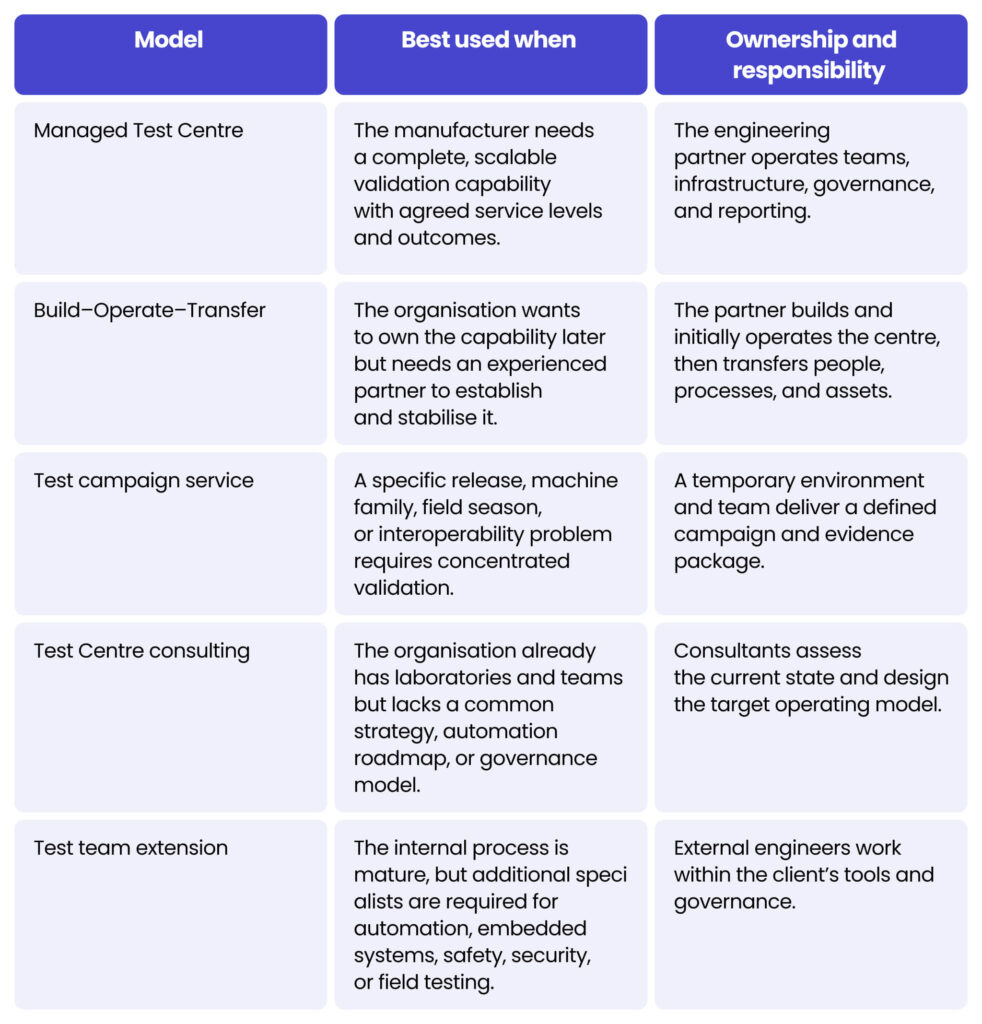
Not every manufacturer needs to build and own a full laboratory from day one. The operating model should reflect product maturity, internal capability, release pressure, and the organisation’s long-term ownership strategy.
قد تبدأ الشركة بحملة موجّهة أو تقييم استشاري وتتقدم نحو مركز اختبار مُدار أو منقول بعد إثبات القيمة.
الجدول 1. نماذج تشغيل مركز اختبار AgriTech
كيف ندعم التحقق من صحة الآلات الزراعية
يجمع نموذج مركز الاختبار لدينا بين فرق الاختبار والمختبرات المتخصصة والأتمتة وهندسة الأجهزة والحوكمة وذكاء الجودة. وقد تم تطبيق المنصة الحالية فيالسيارات, الرعاية الصحية, الإلكترونيات الاستهلاكية, التنقل، و الروبوتات، حيث تجمع المنتجات أيضًا بين البرمجيات والإلكترونيات والأجهزة المادية والإصدارات المستمرة.
بالنسبة لتقنيات الزراعة، يمكن تكييف نموذج التشغيل حول وحدات التحكم الإلكترونية الزراعية، ومحطات المشغلين، شبكات ISOBUS، وGNSS، وأجهزة الاستشعار، والتليماتيك، وتكاملات FMS، والوظائف الذاتية، والعمليات الميدانية الفعلية.
مركز اختبار لتقنيات الزراعة – الاستراتيجية والتحول
Spyrosoft can assess the current testing landscape, identify duplicated assets, and define a target operating model. The transition can begin with one product domain and expand through a structured sequence covering scope, domain alignment, migration planning, first-domain launch, and scale-up.
مختبرات هندسة الأجهزة والاختبارات الآلية
Agricultural benches can combine real ECUs and terminals with simulated sensors, GNSS, vehicle signals, and machinery behaviour. A hardware engineering laboratory supports wiring, adapters, fixtures, diagnostics, repairs, calibration, and rapid prototyping, reducing dependency on external service providers.
اختبار الأنظمة المدمجة وISOBUS والاتصال
Teams can validate embedded software, CAN and ISOBUS communication, terminal interfaces, telematics, sensor integration, and over-the-air updates. Network simulation and fault injection allow engineers to reproduce timing problems, communication loss, and incompatible versions before a machine enters the field.
التكامل مع السحابة والجوال وأنظمة FMS
Our experts can test the complete data path from the machine to cloud services, mobile applications, and Farm Management Systems. This includes API contracts, message processing, ISO-XML, delayed synchronisation, duplicate events, data reconciliation, and integration with third-party platforms.
القيادة الذاتية والذكاء الاصطناعي والسلامة الوظيفية
Support around the Test Centre for AgriTech can include scenario design, perception and sensor-fusion validation, model-performance analysis, degraded modes, safety requirements, traceability, and verification evidence. The objective is to connect AI performance with physical machine behaviour and the defined Operational Design Domain.
حملات الميدان والتحمل
Laboratory evidence can be extended through structured trials on real machines. Field campaigns collect telemetry, environmental conditions, operator interventions, and defects in a form that can be reproduced later through simulation or data replay.
ثلاثة مستويات من وضوح الجودة
Operational teams need bench status, pipeline progress, and immediate failure information. Product and release managers need coverage, defect flow, and release readiness. Directors need cost, capacity, and quality trends, as well as evidence showing where further investment will reduce risk.
فوائد مركز الاختبار للتقنيات الزراعية الذي طورته Spyrosoft
Spyrosoft’s current cross-industry Test Centre infrastructure includes more than 65 test benches, over 200 automotive ECUs and more than 10,000 test cases executed weekly. These figures describe the existing testing capability and provide a foundation for building domain-specific agricultural environments.
تشمل الفوائد العملية لكل جمهور من الجماهير الزراعية:
- للمصنّعين: تغطية أوسع للتكوين، وبنية تحتية قابلة لإعادة الاستخدام، وقرارات إصدار أكثر قابلية للتنبؤ.
- للمزارعين والمتعاقدين: تحديثات أكثر استقرارًا، ومشكلات توافق أقل، وتشخيص أسرع للحوادث.
- للمصنّعين والموزّعين: بيانات أكثر موثوقية للتشغيل والعلاج والحصاد والتتبع.
- للمستشارين: الثقة في نقل خرائط التوصيات والوصفات الطبية وتنفيذها بشكل صحيح.
- للوكلاء وفرق الخدمة: سجلات كاملة للأجهزة والبرمجيات، وتكوينات مرجعية معروفة، وعيوب قابلة لإعادة الإنتاج.
الدور عليك
A successful Test Centre for AgriTech provides a structured way to validate increasingly complex agricultural systems before they reach the field. From defining system boundaries and prioritising risks to building controlled environments, automating repeatable scenarios, and connecting tests with requirements and releases, our eight-step approach can help your organisation create a testing capability that grows with your needs.
The benefits go beyond finding software defects. A mature Test Centre can reduce risks, improve compatibility across machines and systems, accelerate field-issue investigation, and provide greater confidence in data, connectivity, safety, and end-to-end workflows.
Whether you are planning a new Test Centre or looking to improve an existing testing landscape, the right operating model can help you reduce risk, increase test coverage, and build greater confidence across the agricultural ecosystem. To discuss your اختبار التقنية الزراعية التحديات واستكشاف كيف يمكننا مساعدتك في بناء مركز اختبار مُصمَّم خصيصاً لمنتجاتك وأهدافك، تواصل مع خبرائنا عبر النموذج أدناه.
الأسئلة الشائعة
Modern agricultural machines depend on interactions between embedded software, ECUs, terminals, sensors, GNSS, connectivity and external platforms. Individual components may pass their own tests, but failures can still occur between systems. Test Centre helps identify problems such as incompatible versions, communication loss, incorrect data exchange, failed updates or unexpected behaviour under degraded conditions.
No. A Test Centre can begin with a single, high-value workflow and a minimum controlled environment. For example, an organisation may start by validating an FMS prescription through to implement actuation or testing an OTA update across representative machine configurations. Additional benches, automation, and product domains can then be added as the model’s value is demonstrated.
Not necessarily. The capability can be delivered as a managed service, established through Build–Operate–Transfer, used for a limited test campaign, or introduced through consulting and team extension.
Testing priorities should reflect operational risk, safety impact and business consequences. Typical priorities include workflows that could stop a seasonal operation, create unsafe machine behaviour, affect compatibility between machines and implements, corrupt traceability data or make a software update difficult to recover from.
No. Laboratory testing and field testing serve different purposes. Controlled environments make it easier to reproduce configurations, inject faults and repeat regression scenarios, while field trials provide evidence under real environmental and operational conditions. A mature validation approach connects both, using field data to improve simulation and laboratory scenarios where possible.
The right model depends on internal expertise, product maturity, release pressure and long-term ownership plans. Organisations may choose a managed Test Centre, Build–Operate–Transfer model, focused test campaign, consulting engagement or test team extension. A company that ultimately wants to own the capability, for example, may use Build–Operate–Transfer to establish and stabilise the Test Centre before bringing it in-house.
Management should track release validation time, critical configuration coverage, escaped defects, field issue reproduction, bench availability, automation stability, and cost per validated configuration. The baseline should be recorded before the first pilot.


arrow_circle_rightاتصل بنا
لنتحدث عن كيفية مساعدتك في مركز اختبار AgriTech الخاص بك

arrow_circle_right مقالاتنا


