مجالات العمليات في نموذج CMMI 2.0


The use of improvement models, like CMMI, by organisations in very competitive industries can be helpful. Therefore, it is important to know all their components and understand changes and adjustments made to them over time.
في هذه المقالة، نتناول بعض التغييرات التي أُجريت في CMMI 2.0 وأثرها على معمارية النموذج، وبشكل أكثر تحديداً على مجالات العملية، المعروفة الآن باسم مجالات الممارسة.
ما هو CMMI؟
The Capability Maturity Model Integration, also known as CMMI, is a process model developed by Software Engineering Institute at Carnegie Mellon University (SEI). In the creation process, they collaborate with the U.S. Department of Defence (DoD) and U.S. Government. Therefore, using CMMI is usually required in software development contracts with those institutions. The model is currently managed by CMMI Institute.
We can define the CMMI standard as a behavioural and process model that describes critical elements and best practices in the industry. It provides a framework that helps organisations to conduct improvements in processes and create behaviours that reduce risks and defaults in product, service, and software development.
CMMI was first released in 2002 as an extension of the Capability Maturity Model (CMM). Originally that model was prepared for software, but now it also can be applied to hardware and service development in multiple industries. The newest version of the model was published in 2018 and is known as CMMI 2.0.
تمثيلات نموذج CMMI
عند اعتماد CMMI يمكننا اختيار أحد تمثيلين، وكل منهما يساعد في تحقيق مجموعة مختلفة من أهداف التحسين. هذان النوعان من النماذج هما:
- تمثيل مرحلي – يستخدم مجموعة محددة مسبقًا من مجالات العمليات ويوفر تسلسلات مثبتة من التحسينات، يعمل كل منها كأساس للذي يليه.
- التمثيل المستمر – uses processes selected in a way that the organisation considers the most appropriate and effective to reach business goals. Because of that, this representation is more similar to other quality standards, such as ISO 15504 or ASPICE.
تجدر الإشارة إلى أنه لا يوجد فرق بين هذين التمثيلين من حيث المحتوى الجوهري، بل فقط في طريقة تنظيمهما.
التحول النموذجي إلى CMMI 2.0
Like many other models in the industry, CMMI also had to change over time. The goal of these modifications is usually to make the model easier to understand and implement. In case of changes from CMMI 1.3 to CMMI 2.0 كانت الأهداف كالتالي:
- تحسين كفاءة الأعمال.
- الاستفادة بشكل أفضل من أفضل الممارسات الحالية.
- بناء نظام رشيق يتمتع بمرونة عالية وقابلية للتوسع.
- تسهيل اعتماد النماذج.
A new version of the model focuses on performance, understanding of its needs and how it can impact a company’s business. It also provides information on how to establish performance goals and how to navigate them at different maturity levels. Another new thing in the model is its better integration with Agile and Scrum, which helps to work around and improve already established processes. In addition, all those changes make the CMMI model even more profitable for businesses to integrate and apply.
تتكون بنية النموذج في الإصدار 2.0 من أربعة مجالات فئوية، واثني عشر مجالاً للقدرات، وخمسة وعشرين مجالاً للممارسات، وستة مستويات للنضج.
CMMI 2.0. مستويات النضج (ML)
Maturity levels in CMMI 2.0 are quite similar to those in the previous version of a model. The main change is that now CMMI breaks down organisational maturity into six and not five levels. The newest addition is Maturity Level 0, which refers to incomplete or unknown processes in the organisation. In using CMMI the goal is to reach the highest level possible.
جميع مستويات النضج هي كما يلي:
مستوى النضج 0 – غير مكتمل – يصف عمليات الشركة بأنها غير مكتملة وغير جاهزة ومجهولة.
مستوى النضج 1 – مبدئي – يصف العمليات بأنها غير قابلة للتنبؤ وبالتالي يفشل في ضمان إنجاز العمل في الوقت المحدد وضمن الميزانية.
مستوى النضج 2 – مُدار – ينطبق على العمليات التي يتم تخطيطها وتنفيذها وقياسها والتحكم بها على مستوى المشروع ولكن ليس على مستوى الشركة بأكملها بعد.
مستوى النضج 3 – مُعرَّفة – تشير إلى الشركات التي تطبق معايير جيدة في جميع أنحاء المؤسسة، وتفهم أهداف أعمالها، وتعرف كيفية تحقيقها.
مستوى النضج 4 – الإدارة الكمية – تصف المؤسسات التي تستخدم نهجاً قائماً على البيانات لتحسين العمليات مع ضمان أن تكون العمليات قابلة للتنبؤ ومتوافقة مع احتياجات الشركاء.
مستوى النضج 5 – التحسين – يتعلق بالشركات التي تركز على التحسين المستمر، والتكيف مع البيئات المتغيرة، مع إيجاد الابتكارات أيضاً.
Organisations are considered high maturity when they hit levels 4 and 5. A high level of maturity in the company means that the firm is continuously evolving and adapting to fulfill the needs of stakeholders, partners, and clients.
>> اكتشف المزيد عن CMMI 2.0 في قطاع السيارات
مجالات الفئات ومجالات القدرات
جاءت التعديلات في نموذج CMMI بمصطلحات جديدة وتغييرات في تجميع المتطلبات المعروفة الآن باسم مجالات الفئة ومجالات القدرة.
The new version of the model has four Category Areas. These are groupings made up of related areas where practices are defined to improve specific activities of an organisation or project. These four areas are:
- التنفيذ – يغطي المجالات المتعلقة بإنتاج وشراء وتسليم الحلول عالية الجودة.
- الإدارة – تشمل المجالات المتعلقة بالقدرة على تخطيط وإدارة العمل والقوى العاملة.
- التمكين – يغطي المجالات المتعلقة بتحليل الأسباب، واتخاذ القرارات، والحفاظ على سلامة المنتج، والتواصل مع أصحاب المصلحة.
- التحسين – يشمل المجالات التي تركز على تطوير وإدارة وتحسين العمليات والأصول ذات الصلة، مع التركيز الرئيسي على تحسين الأداء التنظيمي
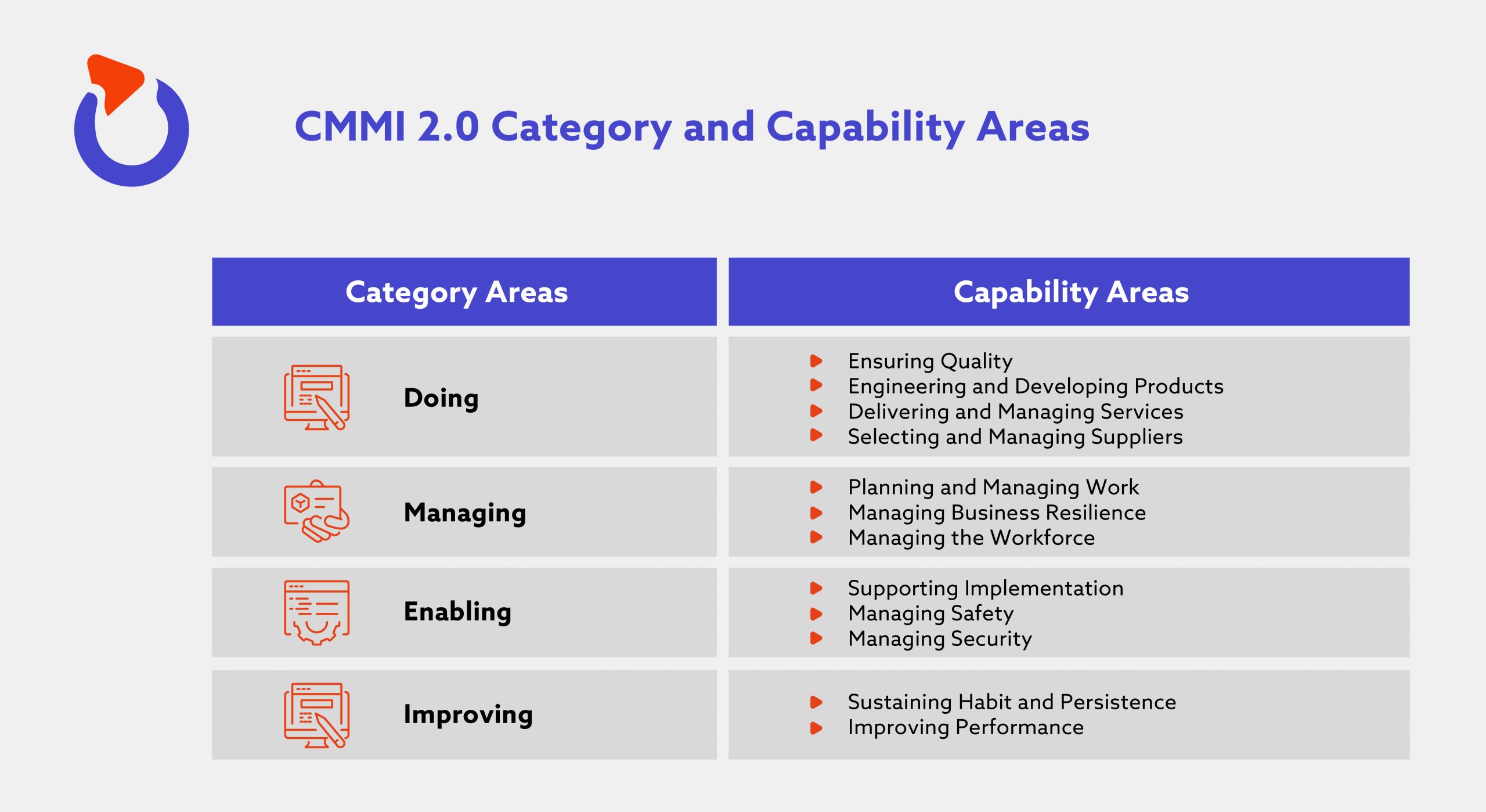
Each Category Area consists of specifically identified Capability Areas. They represent groups of related and common practices that are typically encountered during product creation and development.
مجالات القدرات الخاصة بالتنفيذ هي:
- ضمان الجودة – يساعد على تحسين جودة المنتج والخدمة.
- هندسة المنتجات النامية – تتيح النظر إلى المشروع من منظور التطوير.
- تقديم وإدارة الخدمات – يتيح النظر إلى المشروع من منظور الخدمات.
- اختيار الموردين وإدارتهم – يساعد في إقامة شراكة بين المشتري والمورد لضمان تقديم حلول عالية الجودة للعميل.
مجالات القدرة للإدارة هي:
- تخطيط العمل وإدارته – يساعد في تحديد حجم العمل المطلوب إنجازه وتخطيطه وإدارته بحيث يتم تنفيذه وفقاً للخطة.
- Managing Business Resilience – Addresses the ability to anticipate, prepare for and manage risk, and defines a minimum set of critical functions that must continue in the event of significant disruption to normal operations.
- إدارة القوى العاملة – تشير إلى الطريقة التي تطوّر بها المؤسسة الموارد البشرية اللازمة لأداء العمل الحالي والمستقبلي وتحافظ عليها.
مجالات القدرة للتمكين هي:
- Supporting Implementation – includes identifying and resolving the causes of selected results. Assists in establishing decision-making structures and maintaining the integrity of work products and the quality of communication between stakeholders.
- إدارة السلامة
- إدارة الأمن
مجالات القدرة المطلوب تحسينها هي:
- الحفاظ على العادات والاستمرارية – يضمن أن تكون العمليات مستدامة وتُنفَّذ بانتظام في جميع أنحاء المؤسسة وفعّالة في تحقيق أهداف الأعمال
- تحسين الأداء – يركز على قياس وتحليل وفهم قدرة المشروع وكفاءته إلى جانب أولوياته واحتياجاته في تحسين العمليات.
مجالات الممارسة في CMMI 2.0
Before CMMI 2.0. Process Areas were known as defined requirements grouped into four general categories: Process Management, Project Management, Engineering, and Support. With changes in the new version, Process Areas become Practice Areas. There are 25 of them, and they all can apply to an organisation at Maturity Level 3. Similarly, to prior versions of the model, all those areas describe requirements and critical operations that define the intent of the practice.
It is worth mention that Generic Practices, known from the previous version of CMMI, are now included to model also as specific Practice Areas. Each practice is assigned to a specific Capability Area but addresses them differently depending on their Maturity Level (ML).
مجالات الممارسة الجديدة في كل مجال من مجالات القدرات وفهمها، بناءً على مستوى النضج، مدرجة على النحو التالي:
ضمان الجودة
تطوير المتطلبات وإدارتها (RDM)
RDM helps to develop and update a joint understanding of the necessities and expectations of the solution. The intention of the practice is to identify requirements and ensure shared stakeholder understanding and adjustment of requirements, plans and work products. The value of this practice is to ensure that the client’s needs are met. (Maturity Level 1=ML1, ML2, ML3)
ضمان جودة العمليات (PQA)
PQA helps to identify and prevent adverse effects, while ensuring the recurrence of positive results. Addressing the root problems quickly reduces the need for subsequent rework and therefore improves productivity. (ML1, ML2, ML3)
التحقق والتحقق من الصحة (VV)
VV ensures that requirements are fulfilled, and the solution works as planned in the target environment. Its intention is to confirm and validate that selected solutions and components match the requirements and fulfil their intended use in the target environment. Value from verification and validation of selected solutions and components is the increase of likelihood that the solution will be satisfying for clients. (ML1, ML2, ML3)
مراجعات الأقران (PR)
It helps to identify defects and issues in the solution. PR intention is to find and address product defaults and issues through peers and experts’ reviews. The value from this practice comes with reduction of costs and reworks by uncovering defects early. (ML1, ML2, ML3)
هندسة المنتجات التطويرية
الحل التقني (TS)
This Practice Area focuses on designing and building products and their components. Its intention is to ensure that designed and prepared products are in line with customer requirements. TS value is providing effective design and solution that meets customer requirements while reducing costs and reworks. (ML1, ML2, ML3)
تكامل المنتج (PI)
It covers the assembly of the products and their deliveries to the clients, while also ensuring the required functionality and quality features. The intention of PI is to provide solutions that address functional and quality requirements. Its value is the increase in customer satisfaction, that comes with giving them a solution that matches or exceeds their requirements. (ML1, ML2, ML3)
تقديم الخدمات وإدارتها
إدارة تسليم الخدمات (SDM)
It focuses on delivering services in accordance with the established agreements. SDM’s main intention is to provide and manage the service delivery system. It helps to increase customer satisfaction by managing the delivery system in line with their expectations. (ML1, ML2, ML3)
إدارة الخدمات الاستراتيجية (STSM)
It helps to develop and keep an updated portfolio of standard services that align with strategic plans and needs. Its intention is to have and use standard services that are aligned with strategic business objectives. (ML1, ML2, ML3)
اختيار الموردين وإدارتهم
اختيار مصدر الموردين (SSS)
يركز على اختيار الموردين ومنتجاتهم وتقييمها. يساعد SSS على تحسين القدرة على اختيار الشركاء الأكثر تأهيلًا لتقديم الحلول. (ML1، ML2، ML3)
إدارة اتفاقيات الموردين (SAM)
It helps to develop and keep the supplier agreement updated, while ensuring that both sides perform according to the terms of the contract. The value of this Practice Area comes with providing an understanding between two sides of an agreement to maximise the success of the supplier’s agreed delivery efforts. (ML1, ML2, ML3, ML4)
التخطيط وإدارة العمل
التقدير (EST)
It helps with forecasting and estimating the size, effort, and costs for the work required in a development process. It provides a basis for planning, making commitments and decreasing uncertainty, that helps to make early corrections and increase the likelihood of achieving the objectives. (ML1, ML2, ML3)
التخطيط (PLAN)
It covers the use of estimates for planning schedules and budgets. It helps to identify the resources required to implement any plans and what is needed to carry out the work within the organisation’s standards and constraints. (ML1, ML2, ML3, ML4)
المراقبة والتحكم (MC)
It helps to see and understand project progress and to take quick corrective action. Taking early actions to correct significant deviations in performance increases the likelihood of achieving targets. (ML1, ML2, ML3)
إدارة مرونة الأعمال
إدارة المخاطر والفرص (RSK)
It helps identify risks and opportunities and assesses the likelihood of their appearance. Its main value is to mitigate negative influences and focus on exploiting the positive impact to increase the likelihood of success. (ML1, ML2, ML3)
حل الحوادث والوقاية منها (IRP)
It includes identification of actual and potential incidents that may have an impact on the project. It also helps to define how to behave when incidents and errors occur. Its intention is to minimise the impact of disruptions and to address them quicker. (ML1, ML2, ML3)
الاستمرارية (CONT)
يساعد ذلك في تخطيط والتحقق من المجموعة الحرجة من الوظائف والموارد اللازمة لمواصلة العمليات عند حدوث أحداث كبيرة أو كارثية. يمكن أن يكون CONT مفيدًا أيضًا في تحديد الوظائف والموارد الأساسية لاستمرارية الأعمال وترتيب أولوياتها. (ML1, ML2, ML3)
إدارة القوى العاملة
التدريب المؤسسي (OT)
It provides a strategy for training that supports the organisations business goals. It helps to develop and enhance the skills and knowledge of employees to improve work performance. (ML1, ML2, ML3)
دعم التنفيذ
التحليل السببي والحل (CAR)
It helps to identify causes of selected outcomes and act to either prevent the undesirable ones or ensure recurrence of positive outcomes. It also addresses the root causes of problems, thus eliminating rework and directly improving quality and productivity. (ML1, ML2, ML3, ML4, ML5)
تحليل القرارات وحلها (DAR)
It assists in decision-making by evaluating alternatives and recording results. It also helps to increase the objectivity of the decision-making process and the probability of choosing the optimal solution. (ML1, ML2, ML3)
إدارة التكوين (CM)
It helps to manage the integrity of work products by using configuration identification and audits. Its intention is to minimise work loss and maximise the ability to provide the customer with the correct version of the solution. (ML1, ML2, ML3)
الحفاظ على العادة والاستمرارية
الحوكمة (GOV)
يوفر التوجيه للإدارة العليا بشأن دورها في إدارة أنشطة العمليات ويحدد ما إذا كانت تُنفَّذ بطريقة مناسبة للمؤسسة. (ML1, ML2, ML3, ML4)
البنية التحتية للتنفيذ (II)
It provides a framework to ensure that processes are used and improved. It helps to maintain the ability to achieve goals and objectives consistently in an efficient and effective way. (ML1, ML2, ML3)
تحسين الأداء
إدارة العمليات (PCM)
It helps to manage and elevate performance by planning, implementing, and deploying improvements based on the understanding of the current strengths and weaknesses of the processes in the organisation. (ML1, ML2, ML3, ML4)
تطوير أصول العمليات (PAD)
It helps to develop and keep updated the process assets necessary to successfully perform the work. Its value is to ensure the ability to understand and repeat successful results. (ML1, ML2, ML3)
إدارة الأداء والقياس (MPM)
It helps to manage performance and ensure that benefits and business objectives are the leading factors driving its improvement. MPM intention is to maximise the return on business investment by improving effectiveness and quality of performance. (ML1, ML2, ML3, ML4, ML5)
قيم CMMI 2.0
تكمن القيمة التجارية للتغييرات التي أُجريت في CMMI 2.0 في الطريقة المبسطة لعرض مفاهيم الشركة للتطور عبر مراحل مختلفة من النضج وقدرة العمليات.
The naming change between Process and Practice Areas was made to avoid misunderstandings that there was a sequential relationship between the Process Areas. The benefit to the business of this change is that it highlights CMMI as a set of best practices rather than a collection of processes to be applied. Another value from modifications in CMMI 2.0 made in the new concept and grouping of Category and Capability Areas is a clearer path for building capacity and improvement.
يمكن أن يكون CMMI حاسمًا في عملية تطوير المنتجات، والآن مع الإصدار 2.0، أصبح استخدامه لتعزيز الأداء العام أسهل من أي وقت مضى.
إذا كنت بحاجة إلى أي دعم في إدخال نموذج CMMI إلى مؤسستك، فلا تتردد في التواصل مع قطاع السيارات الفريق.
الأسئلة الشائعة: مجالات العمليات في CMMI 2.0
Capability Maturity Model Integration (CMMI) is a process improvement framework designed to help organisations enhance performance, reduce risk, and improve the quality of products and services. It was originally developed by the Software Engineering Institute at Carnegie Mellon University in collaboration with the United States Department of Defense.
يوفر CMMI أفضل الممارسات التي تساعد المؤسسات على:
– تحسين فعالية العمليات
– تقليل العيوب وإعادة العمل
– زيادة قابلية التنبؤ بالنتائج
– تعزيز رضا العملاء
– مواءمة العمليات مع أهداف الأعمال
يدعم التحسين المستمر عبر تطوير البرمجيات والأجهزة والخدمات.
في الإصدارات السابقة (مثل CMMI 1.3)، كانت المتطلبات تُجمَّع في مجالات العمليات. أما في CMMI 2.0، فتُسمى الآن مجالات الممارسة.
This change clarifies that CMMI represents a collection of best practices rather than a rigid sequence of processes. It reduces the misconception that areas must be implemented in a strict order.
يحدد CMMI 2.0 ستة مستويات للنضج:
– المستوى 0 – غير مكتمل: العمليات غير معروفة أو غير مكتملة
– المستوى 1 – الأولي: العمليات غير قابلة للتنبؤ وتفاعلية
– المستوى 2 – إدارة: يتم تخطيط العمليات وإدارتها على مستوى المشروع
– المستوى 3 – المُعرَّف: تُرسى معايير على مستوى المؤسسة بأكملها
– المستوى 4 – مُدار كميًا: التحكم في الأداء القائم على البيانات
– المستوى 5 – التحسين: التحسين المستمر والابتكار
تُعتبر المؤسسات في المستويين 4 و5 ذات نضج عالٍ.
يصنّف CMMI 2.0 الممارسات ضمن أربعة مجالات فئوية:
– التنفيذ – إنتاج وتقديم حلول عالية الجودة
– الإدارة – تخطيط وإدارة العمل والقوى العاملة
– التمكين – دعم اتخاذ القرار والسلامة والتواصل
– التحسين – تعزيز أداء المؤسسة وعملياتها
توفّر هذه الفئات هيكلاً أوضح لأنشطة التحسين.
يتكامل CMMI 2.0 بسلاسة أكبر مع أطر Agile و Scrum. فبدلاً من استبدال أساليب Agile، يعززها بإضافة الهيكلة والقياس وإدارة الأداء على المدى الطويل.




arrow_circle_rightاتصل بنا