من SPICE إلى ASPICE – تطور المعايير وتنفيذها


Market competition in the software industry is leading to a steady increase in innovation and product quality. For companies in the sector to remain relevant the market, it is important to apply solutions that help them keep up with market pressure. Without the steady improvement of software development processes, it is nearly impossible to achieve adequate quality and efficiency. Implementing special standards such as ISO 15504 or Automotive SPICE helps to deliver proper results. In this article we are taking a look at these standards, their evolution and the benefits that come from implementing them in a company.
ما هو SPICE (ISO15504)؟
ISO 15504 also known as SPICE (Software Process Improvement and Capability Determination) is an international norm made in collaboration between International Organisation for Standardisation (ISO) and International Electrotechnical Commission (IEC). Originally, SPICE was funded by the European Union and was its response to CMMI. The SPICE standard is prepared for software companies and its main goal is to assess and improve the capability of the development process.
The SPICE standard is designed to help identify the stages of software development that need improvement in order to make a holistic impact on improving the quality of products developed in the industry. The model can also be used to measure the effectiveness of the process. There are various models of evaluating software companies, but one of the most commonly used in the world is the ISO 15504 standard. According to ISO 15504, evaluation of the software production process should focus on project planning, project management, software development and organisational processes.
هناك عدة مراحل في عملية اعتماد SPICE:
- التقييم الأولي
- تطوير العمليات
- تطبيق العمليات في مشاريع البرمجيات في شركتك
- التقييم النهائي
- الشهادة
In the evaluation process, SPICE uses its own PAM (Process Assessment Model) that helps define the capability of processes within an organisation. It takes a two-dimensional approach and defines:
- Process Dimension – يركز على جميع المؤشرات الأساسية لتقييم قدرة العملية، مثل الممارسات الأساسية ونواتج العمل.
- بُعد القدرة – يركز بشكل أكبر على المؤشرات العامة لقدرة العملية مثل الممارسات العامة، والموارد العامة، ومخرجات العمل العامة.
يوفر ISO 15504 إطارًا قائمًا على 6 مستويات من القدرة على مقياس من 0 إلى 5، يتم قياسها من خلال 9 سمات عملية:
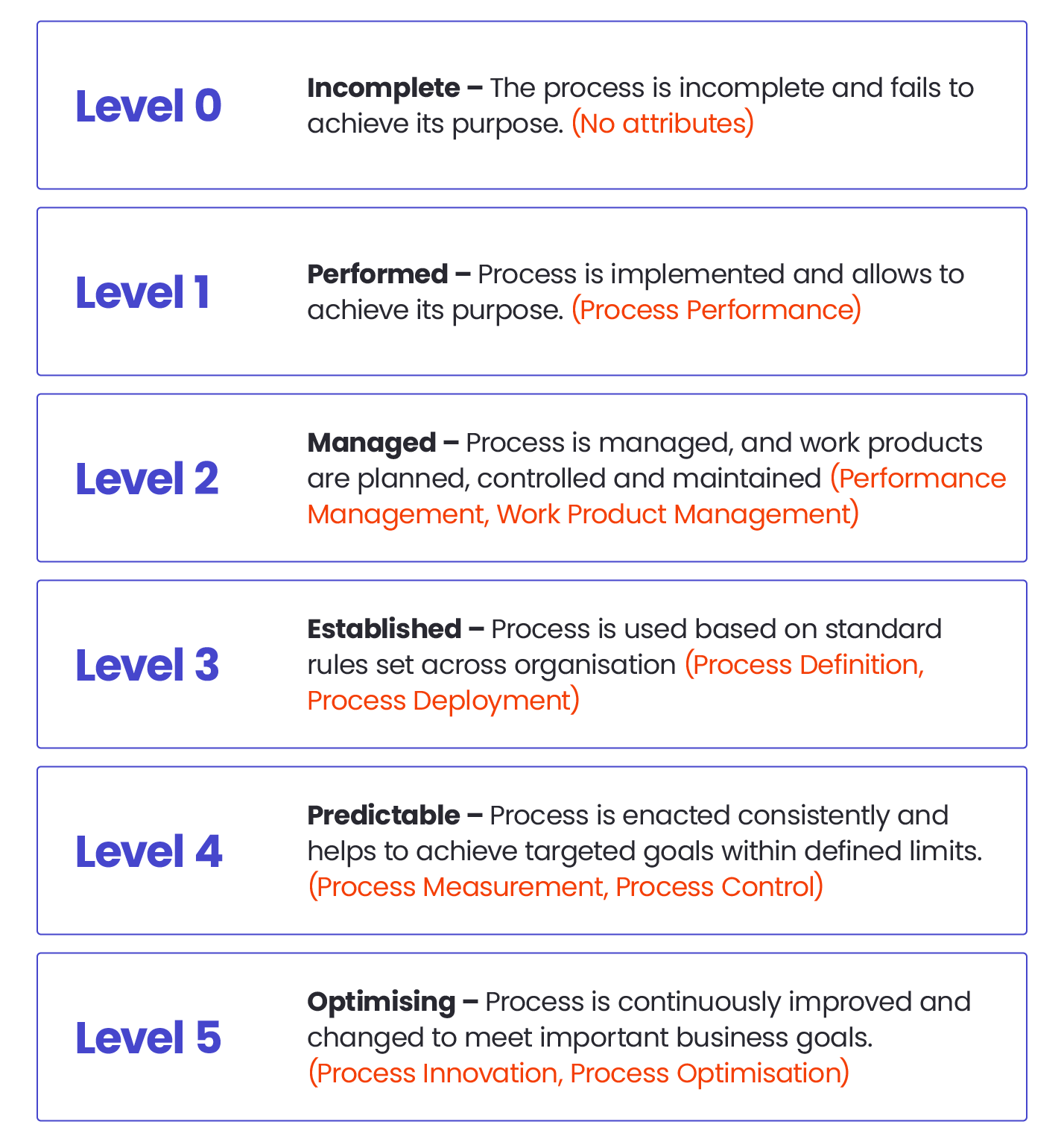
يتم تقييم كل سمة عملية على مقياس تصنيف من أربع نقاط:
- غير محقق (دليل ضئيل أو معدوم على السمة في العملية)
- تحقق جزئي (وجود بعض الأدلة على السمة في العملية، مع بقاء بعض الجوانب غير متوقعة)
- تحقق إلى حد كبير (دليل كبير على وجود السمة في العملية، لكن قد يوجد بعض التباين)
- محقق بالكامل (توجد السمة بشكل كامل ومتسق في العملية).
مع إسناد التقييم لكل سمة وكل عملية، يمكننا إنشاء ملف تقييم يمكن أن يتخذ أشكالًا متنوعة مثل الجداول أو الرسوم البيانية.
The SPICE standard doesn’t contain strict regulations for assessment. Instead, it defines the basic scope of requirements, that must be complied with to conduct an assessment in line with the ISO/IEC 15504 guidelines.
The ISO/IEC 15504 model can be used in companies of different sizes and different areas of operation. The standard does not pay attention to the internal structure or business philosophy of the software company. Nor is it built for a specific software technology or development process. The model is intended to provide the basic requirements for quality software engineering.
من ISO 15504 إلى ISO 33000
In time ISO 15504 needed to evolve, therefore its numbering scheme was changed to ISO/IEC 33000. With that modification, the norm had a complete technical and conceptual overhaul on process assessment and now also offers in-depth review of the topic both for software developing organisations and for those who outsource such services. ISO 33000 revises ISO 15504 and provides a framework for assessment to cover the processes used in the development, maintenance and application of systems across IT area, and also those deployed in the design, improvement and delivery of services. In contrast to ISO 15504 one of the main objectives of ISO 33000 is to provide a global framework for process evaluation and a final framework for improvement processes and management systems. Results of assessment stay similar, which means it can help with improvement of process performance and identification of risks associated with the use of processes. In general, the actualisation to ISO 33000, was made to create a more complete and up-to-date standard.
ASPICE كتطور لـ SPICE
Besides the change involved in ISO 15504 numbering modification, SPICE itself also evolved. The influence of various industries has played an important role in this process. The ISO/IEC 15504 norm is focused on software in general. Therefore, after the release of SPICE several process assessment models and extensions were developed for more specified industries, for example:
- Automotive SPICE
- Medi SPICE – الطب
- SPICE لهندسة الأجهزة
- Mechanical SPICE
- Test SPICE
- Agile SPICE
- S4S – SPICE for SPACE – تكنولوجيا الفضاء
- SPICE في التطبيق العملي – تجارب في التخصيص والتوسيع
ASPICE or Automotive SPICE is one of the norms that evolved from ISO 15504. As its main focus it provides best practices and processes in terms of automotive software development. Therefore, we can define ASPICE a lot like SPICE itself, as an assessment model that provides a framework for defining, implementing and evaluating software development processes. With the difference that it is applied only to the automotive industry and its own crucial demands.
تحميل دليلنا إلى ASPICE
احصل على الكتاب الإلكتروني
يمكن أن تمنح شهادة ASPICE ضماناً بإجراء تحسينات في كل مرحلة من مراحل عملية الإنتاج. كما تعمل ASPICE في سياقISO-26262 و ISO SAE 21434. على الرغم من الاختلافات، فإن المعايير متكاملة مع بعضها البعض ويمكن أن توفر عملية تطوير برمجيات أفضل.
The structure of the Automotive SPICE model is very similar to ISO 15504. In the evaluation process, it also uses the two-dimensional framework of Process Dimension and Capability Dimension. Both are rated by the same scale of 6 levels of capability, 9 attributes of process assessment and achievement scale presented by 4 letters (N, P, L, F).
This evaluation model relates to the V-model, which includes a testing phase alongside every stage of development. ASPICE uses VDA scope, which can be defined as a minimal set of processes. This model, on its left side of the V, includes initial phases, such as:
- SYS.1 – استخلاص المتطلبات – المرحلة خارج نطاق VDA، مما يعني أنه يمكننا استخدامها، لكنها غير مطلوبة من قِبل الشركة المصنّعة الأصلية (OEM)
- SYS.2 – تحليل متطلبات النظام
- SYS.3 – التصميم المعماري للنظام
- SWE.1 – تحليل متطلبات البرمجيات
- SWE.2 – التصميم المعماري للبرمجيات
- SWE.3 – التصميم التفصيلي للبرمجيات وبناء الوحدات
وعلى الجانب الأيمن من نموذج V، يتضمن مراحل ثانوية، مثل:
- SYS.4 – تكامل النظام واختبار التكامل
- SYS.5 – اختبار تأهيل النظام
- SWE.4 – التحقق من وحدات البرمجيات
- SWE.5 – تكامل البرمجيات واختبار التكامل
- SWE.6 – اختبار تأهيل البرمجيات
This assessment rating provides more control over the software development process and helps to ensure product quality, timely release and, by identifying problems quickly, reduces the cost impact on product development.
الفوائد المستمدة من تطبيق SPICE وASPICE
Since the standards are very much alike, they also share some benefits that come from using those assessment models. It is easy to find advantages from using these standards, among them, we can highlight the following:
- تحديد المهام والكفاءات المهمة للعملية.
- هيكلة العمليات وتوحيدها.
- يتيح إمكانية قياس جودة تطوير البرمجيات.
- تحفيز مهندسي العمليات على الاستفادة المثلى من الموارد بما يحقق أهداف المؤسسة.
- يساعد على ترسيخ ثقافة التحسين المستمر في الشركة.
- يساعد على زيادة الاعتراف في السوق والثقة في منتجات الشركة.
- اكتشاف الأخطاء المحتملة وتصحيحها في كل مرحلة من مراحل المشروع.
- زيادة رضا العملاء.
يساعد تنفيذ هذه المعايير في معالجة أي نوع من الخلل في مشروع برمجي مع اتباع إرشادات مشتركة في جميعها.
Using SPICE or ASPICE has the potential to reduce costs, missteps, and work time. Limitation of defaults and defects in the software developing process is especially important in the case of the automotive industry since it may prevent the manufacturer from putting a vehicle with flaws on the market.
Those standards can also improve contact with clients. They help to avoid miscommunications and provide greater transparency between producers and their business partners. From a client’s perspective, they can also be useful for measuring the maturity of a process in a supplier’s company and for determining the capabilities of a potential technology partner.
Another important advantage is related to the maturity of a process and its correlation with product maturity. Usually, the more a mature process is, the higher product maturity is. Which translates to finding out and fixing possible product faults at an early stage of the development process. All that also supports cost reduction, while encouraging innovation despite limited resources.
أهمية استخدام SPICE وASPICE في المؤسسة
With all the value from the benefits shown here, the main reason to implement SPICE or ASPICE in a company still should be the need of being a competitive producer in a software market. In many cases, especially in the automotive industry, without those certificates it is hard to find partners or clients. Implementation of those standards helps to show who is a reliable cooperation partner.
Use of ASPICE seems to be crucial in the automotive industry. Since it requires both suppliers and customers to be very strict about the products they put on the road, the mutual use of a standards’ certification such as ASPICE simplifies work by ensuring the same approach. An approach that puts quality and safety first, for all parties involved in the process.
In Spyrosoft we see even more value in using those standards. As practitioners with a lot of experience in implementing both SPICE and Automotive SPICE, we also like to expand our portfolio to other standards related to safety and cybersecurity. Here, experience in ASPICE is a great advantage, because a lot of security and safety standards like FuSa are built on a base similar to the one in ISO 15504. Therefore, for us the extra value in using ASPICE is also treating it as a basic framework, that we already have and that helps with the implementation of other standards. In many cases, it means that we already have the base, and now we only need to adjust and add missing pieces to be compliant with other standards, for example with FuSa.
In conclusion, not having SPICE or ASPICE in a company can result in lack of confidence from other firms and business partners. While implementing those can have multiple benefits in terms of both product development processes and the business aspects of the company.
إذا كنت ترغب في معرفة المزيد عن معايير السيارات وقواعد السلامة، فاطّلع على ASPICE وFuSa العرض.




arrow_circle_rightاتصل بنا