ما هو CMMI 2.0؟ دليل لمتطلبات CMMI ومستويات النضج وأساليب التقييم


For over two decades, CMMI has been used by high-performing organisations, helping them improve their processes and decrease risks in software development. If you’re also considering adopting this framework, you’ve come to the right place.
From this article, you’ll learn everything you should know about CMMI 2.0: from an overview of the Category, Capability and Practice Areas to the description of Maturity Levels and Appraisal Methods.
ما هو CMMI 2.0؟
CMMI (تكامل نموذج النضج القدراتي) هو إطار عمل لتحسين جودة البرمجيات وكفاءة التطوير. It provides a set of best practices and guidelines for process improvement in a project, division or the whole organisation. It’s also used as a model for assessing the process maturity level within an organisation.
نشأ CMMI في عام 1987 وخضع للعديد من التعديلات والتحسينات منذ ذلك الحين. CMMI 2.0 هو الإصدار الحالي من الإطار، الذي صدر في عام 2018.
مجالات الفئات ومجالات القدرات ومجالات الممارسة في CMMI 2.0
CMMI requirements are grouped into Category Areas, Capability Areas and Practice Areas. There are four CMMI Category Areas: Doing, Managing, Enabling and Improving. Each of the Category Areas consists of defined Capability Areas, which group practices for improving performance in an organisation or a project.
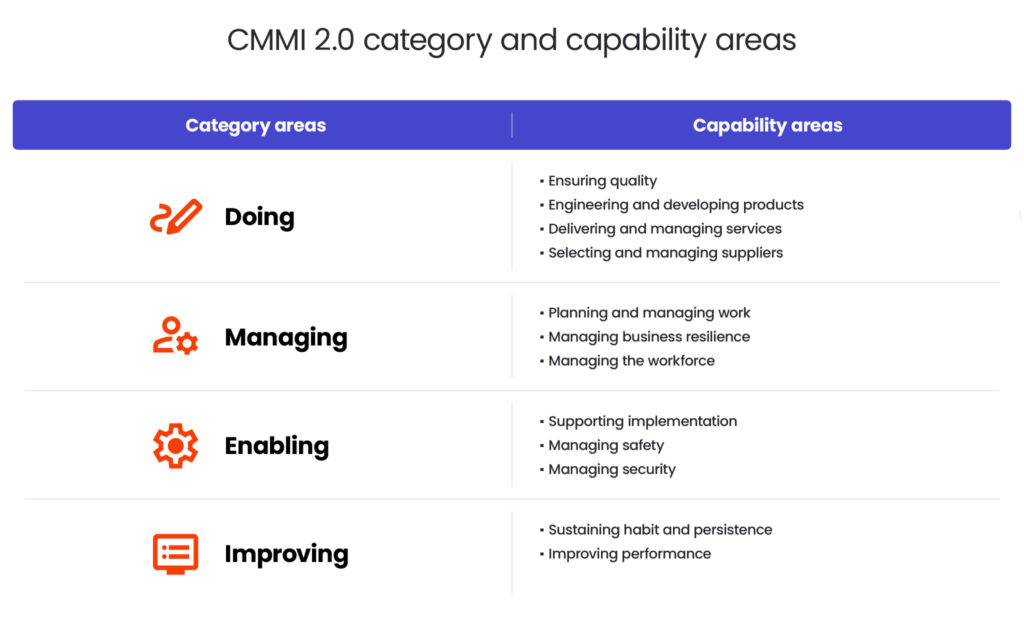
Practices are organised within Practice Areas. Each Practice Area is a set of practices that collectively describe the critical activities to achieve defined intent and value. The organisation is appraised at a specific maturity level based on how well certain practices are implemented.
ما هي نماذج نضج CMMI؟
يحدد CMMI ستة مستويات لنضج CMMI:
مستوى النضج 0 – غير مكتمل
يصف مستوى النضج 0 شركة تكون فيها العمليات غير معروفة أو مخصصة – فقد لا يتم اتباعها أو قد لا تكون موجودة على الإطلاق. وفي هذه المرحلة، قد "يتم إنجاز العمل أو لا يتم".
مستوى النضج 1 – الأولي
Maturity Level 1 means that processes are still unpredictable and reactive rather than planned and practices are not fully implemented. The work may not always be completed on time or within the budget. Businesses at Maturity Level 1 are perceived as inefficient.
مستوى النضج 2 – المُدار
In organisations at Maturity Level 2, processes are planned, performed, measured and controlled on a project level but not across the whole company. However, there are still some issues to address and resolve. The following Practice Areas must be implemented and rated:
- إدارة الأداء والإدارة
- إدارة اتفاقيات الموردين
- ضمان جودة العمليات
- إدارة التكوين
- المراقبة والتحكم
- التخطيط
- التقدير
- تطوير المتطلبات وصيانتها
- الحوكمة
- البنية التحتية للتنفيذ
يمكن إعلان إدارة اتفاقيات الموردين كغير قابلة للتطبيق إذا لم يكن هناك موردون.
مستوى النضج 3 – المُحدد
يعني مستوى النضج 3 أن الممارسات متبعة في الشركة بأكملها. تدرك الشركات في هذه المرحلة مجالات التحسين لديها ولديها خطة لمعالجتها.
فيما يلي الممارسات التي يجب تنفيذها وتقييمها عند المستوى 3:
- إدارة الأداء والإدارة
- إدارة اتفاقيات الموردين
- ضمان جودة العمليات
- إدارة التكوين
- المراقبة والتحكم
- التخطيط
- التقدير
- تطوير المتطلبات وصيانتها
- الحوكمة
- البنية التحتية للتنفيذ
- التحليل السببي والحل
- تحليل القرارات وحلها
- التدريب التنظيمي
- إدارة المخاطر والفرص
- تطوير أصول العمليات
- مراجعات الأقران
- إدارة العمليات
- التحقق والتحقق الصحيح
- الحل التقني
- تكامل المنتج
يمكن إعلان إدارة اتفاقيات الموردين كغير قابلة للتطبيق إذا لم يكن هناك موردون.
مستوى النضج 4 – مُدار كميًا
Organisations at Maturity Level 4 have a data-driven approach to process improvement. Their processes are predictable and aligned with stakeholder needs. The risk level is lower since the organisations have more insights into process deficiencies. Level 4 is considered high maturity, though few companies reach this point in practice. In the automotive environment, level 4 of CMMI is treated as an aspiration rather than an achievable goal.
بالإضافة إلى الممارسات المطبقة على المستوى 3، يجب على المؤسسات في المستوى 4 أن تستخدم وتقيّم أيضاً:
- إدارة الأداء والإدارة على المستوى الرابع
- التخطيط في المستوى 4
- الحوكمة
- التحليل السببي والحل في المستوى 4
- إدارة العمليات عند المستوى 4
- إدارة اتفاقيات الموردين عند المستوى 4
يمكن إعلان إدارة اتفاقيات الموردين كغير قابلة للتطبيق إذا لم يكن هناك موردون.
مستوى النضج 5 – التحسين
Maturity Level 5 characterises organisations that strive for continuous process improvement, which gives them a stable foundation for introducing innovation. Similarly to the previous level, Level 5 is commonly regarded as an aspiration.
بالإضافة إلى مجالات الممارسة المطبقة على المستوى 4، يجب على المؤسسات في المستوى 5 أيضًا تنفيذ:
- التحليل السببي والحل في المستوى 5
- إدارة الأداء والقياس في المستوى الخامس
اعرف المزيد عن CMMI 2.0 في قطاع السيارات
اقرأ المزيد
ما هو تقييم CMMI؟ وما هي أنواع تقييم CMMI؟
The aim of an appraisal is to find out the strengths and weaknesses in your processes based on CMMI best practices. There are 4 types of CMMI 2 appraisal methods: Benchmark, Sustainment, Evaluation, and Action Plan Reappraisal.
لنناقش كل طريقة تقييم بمزيد من التفصيل:
تقييم المعايير المرجعية
يحدد تقييم المعايير (Benchmark Appraisal) فرص تحسين العمليات وأداء الأعمال. وينتج عنه تصنيف مستوى النضج (Maturity Level) صالح لمدة 3 سنوات.
إعادة تقييم خطة العمل
إذا لم تحقق المؤسسة مستوى النضج المستهدف بفارق ضئيل في تقييم سابق، فيمكنها إجراء إعادة تقييم لخطة العمل.
تقييم الاستدامة
يتم ذلك بعد عامين من التقييم المرجعي لتأكيد تصنيف مستوى النضج الخاص به وتوسيعه في وقت أقصر وبتكلفة أقل من التقييم المرجعي.
تقييم الأداء
An Evaluation Appraisal helps to get prepared for the Benchmark Appraisal. It’s used to identify gaps and areas for improvement before the official appraisal. It’s informal and very flexible in terms of scope. An Evaluation Appraisal doesn’t result in a maturity level rating.
هل من الإلزامي تحقيق تقييم CMMI 2.0؟
No, CMMI 2.0 appraisal is not mandatory. However, it’s worth noting that CMMI is commonly required by U.S. Government software development contracts and thus can be your significant competitive advantage.
كيف تستفيد المؤسسة من تبنّي CMMI 2.0؟
CMMI allows organisations to evaluate how their processes compare to CMMI best practices and identify areas for improvement. Also, from a client’s perspective, organisations with a high maturity level (3-4) are perceived as more reliable and stable.
It’s worth noting that CMMI is especially beneficial for organisations with short time requirements as it instructs to first map the timings and then plan the modules of the software development phase.




arrow_circle_rightاتصل بنا
سنساعدك على تطبيق معايير السلامة في قطاع السيارات. تواصل مع خبيرنا

arrow_circle_right مقالاتنا


