NVIDIA Alpamayo والحالة الذكية للاستقلالية من المستوى L4: الاستدلال، والسلامة، وما يتطلبه دمجه


الجزء 1 من هذه السلسلة غطى ما هو موجود بالفعل في مرحلة الإنتاج: منصة Hyperion، وبنية NVIDIA L2++ في Mercedes-Benz CLA، وخارطة الطريق الملتزم بها لمستوى القيادة الذاتية L4 حتى عام 2028.
اقرأ الجزء الأول: استراتيجية NVIDIA من L2++ إلى L4
اقرأ المزيد
This article covers the shift that made all of it possible. Three AI developments in the last 3-4 years delivered more progress in autonomous driving than the entire previous decade. Understanding them changes how you think about SOTIF scope, safety case obligations, and integration strategy for any programme that touches the NVIDIA DRIVE stack. We also cover what it actually looks like to run Alpamayo in practice.
قفزة الذكاء الاصطناعي: ما الذي تغيّر في السنوات الثلاث الماضية
Marco Pavone, NVIDIA’s Director of Autonomous Vehicle Research and a Stanford professor, described the shift plainly: more progress in autonomous driving in the past 3-4 years than in the previous decade combined. These three developments drove that acceleration.
1. جلبت النماذج التأسيسية المعرفة العالمية إلى المركبات
Previous AV systems only knew what their training data had shown them. Foundation models let a vehicle reason about situations it’s never seen before – a mattress in the road, a ball rolling into the street. Pavone’s analogy is useful: when you learn to drive at 18, you bring 18 years of world experience with you. Foundation models do the same for AV stacks.
2. قضت البنى الشاملة على مشكلة التسليم
Traditional AV pipelines pass data across discrete modules (perception, prediction, planning, control) and lose context at every handoff. End-to-end architectures take raw sensor input and output a driving decision in a single pass, keeping full situational awareness throughout. It changes the failure mode profile entirely.
3. الاستدلال، وليس مجرد رد الفعل
يُعد Alpamayo من NVIDIA نموذجًا للرؤية واللغة والإجراء يضم 10 مليارات معامل، وقد دُرِّب في 25 دولة وأكثر من 2,500 مدينة. وهو يُنتج مسارًا حركيًا بالإضافة إلى أثر استدلالي. مثال ملموس: ”انحرف إلى اليسار لزيادة المسافة عن مخاريط أعمال الإنشاء.“
Explainability is a prerequisite for regulatory approval of AI-based driving systems. The reasoning trace is what makes the approval path tractable, and its absence is exactly what makes pure black-box neural networks hard to certify. If you’re running SOTIF assessments on an AI-based ADAS stack, this matters directly.
تضاعف عجلة البيانات هذه العوامل الثلاثة جميعاً
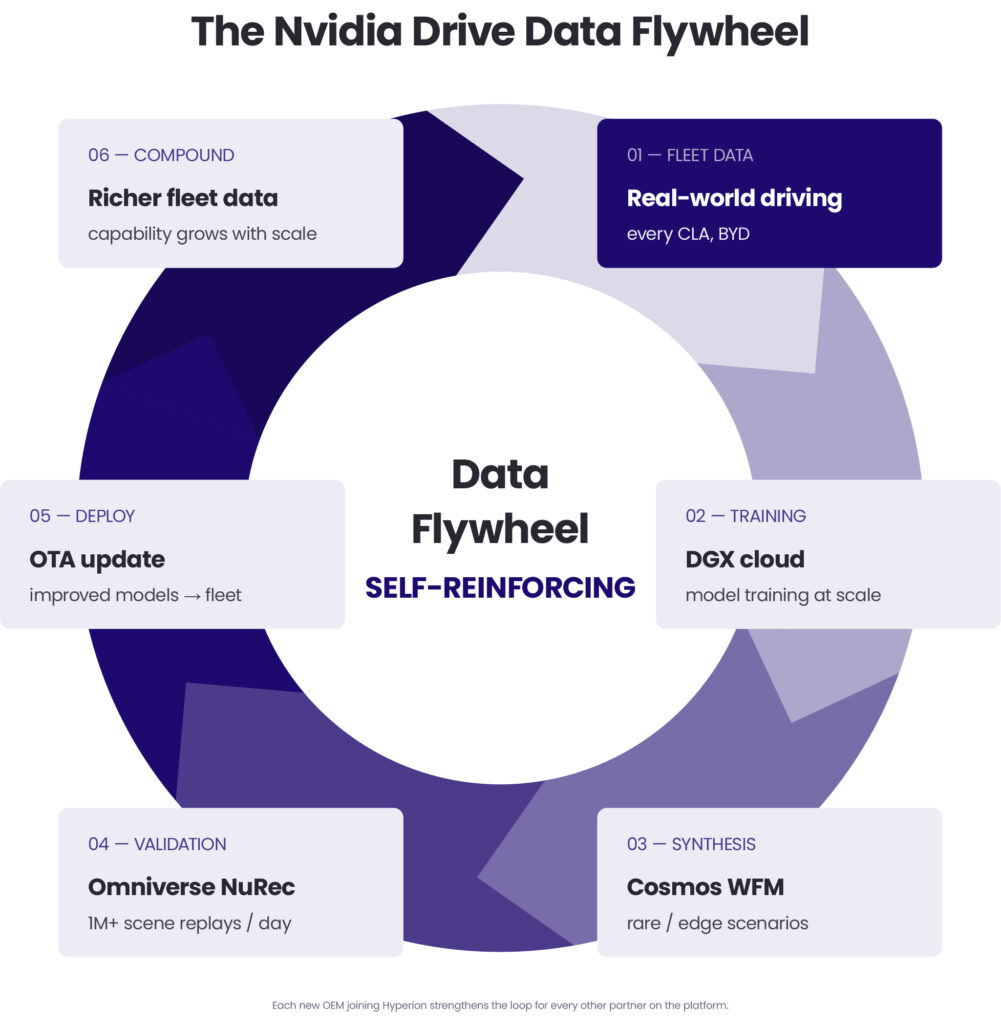
Every vehicle on the DRIVE platform feeds real-world driving data back to DGX cloud systems for model training. NVIDIA Cosmos generates synthetic variations of rare and dangerous scenarios at scale. Neural reconstruction (NuRec) runs more than one million validated scene replays per day. Better models return to vehicles via OTA update.
Each new OEM that joins Hyperion makes the loop stronger for everyone on the platform. The more programmes that run on Hyperion, the faster Alpamayo improves for all of them. A standalone stack can’t replicate that. It’s a structural advantage that compounds with adoption.
السلامة: ما يعنيه فعلياً مستوى ASIL D على طبقة الذكاء الاصطناعي
ISO 26262 was written for deterministic systems. Fault tree analysis and FMEA methods assume predictable, bounded behaviour. A 10-billion-parameter neural network isn’t predictable in that classical sense. This is the tension every OEM faces when integrating an AI-based driving stack, and picking a certified platform doesn’t resolve it.
إجابة NVIDIA هي Halos، المبنية على ثلاثة مبادئ:
- التنوع – تعمل الحزم الكلاسيكية والشاملة بالتوازي، ولا تشكل أي منهما نقطة فشل واحدة، وكل منهما يحدّ من الأخرى باستمرار
- المراقبة – يفرض وقت تشغيل Halos OS غلافاً سلوكياً حول الشبكة العصبية بشكل مستمر – وليس فقط في وقت التحقق
- التحقق – يشغّل NuRec أكثر من مليون إعادة تشغيل للمشاهد يومياً، بحيث يتم التحقق من كل إصدار برمجي مقابل بيانات واقعية على نطاق الأسطول
The investment behind Halos is substantial: 15,000+ engineering years, 1,000+ AV safety patents, 240+ peer-reviewed safety papers, and an ANSI-accredited AI Systems Inspection Lab – the first programme that integrates functional safety, cybersecurity, and AI safety into a single accredited framework.
تعتمد NVIDIA المنصة. ومع ذلك، تظل كل شركة تصنيع معدات أصلية تدمج Hyperion في برنامج مركبة مسؤولة عن التزاماتها الخاصة بالسلامة:
- HARA لمركبتك المحددة وODD – لا تغطي منصة HARA الخاصة بـ NVIDIA حدود تكامل المركبة
- تحليل ASIL لبنية النظام عند التكامل
- ملف سلامة يغطي الامتثال لافتراضات الاستخدام الخاصة بـ NVIDIA
- تحليل SOTIF وفق ISO/PAS 21448 – لا تعالج ISO 26262 بشكل كامل القصور السلوكي للذكاء الاصطناعي/تعلّم الآلة
- الامتثال لعمليات A-SPICE لجميع أنشطة التطوير الخاصة بك
This is the standard model for platform-based development. It mirrors how OEMs have always worked with AUTOSAR, QNX, or any certified supplier layer. The difference with AI stacks is that SOTIF scope grows substantially: every reasoning-based component you add creates new scope. Most OEM safety teams haven’t fully mapped that yet, and it tends not to become visible until you’re well into the integration.
قمنا بتشغيل Alpamayo – إليك ما وجدناه
لا تزال معظم المؤسسات التي تقرأ عن Alpamayo تقرر ما إذا كانت ستبدأ. نحن قد شغّلناه بالفعل.
We worked on an NVIDIA DGX Spark, which is an NVIDIA’s desktop AI supercomputer delivering 1 PFLOP of FP4 performance, shipping since October 2025. We ran the full Alpamayo 10B inference pipeline with real multi-sensor inputs and validated three concrete driving scenarios:
- كشف الضوء الأحمر مع توليد مسار القرار – تحققنا من أن مخرجات الاستدلال قابلة للقراءة آلياً وجاهزة للتدقيق، وليست مجرد تسمية للاستهلاك البشري.
- تغيير المسار ليلاً عند التقاطعات في ظروف الرؤية المنخفضة – اختبرنا سلوك النموذج في ظروف استشعار ضعيفة، حيث يكون الإدراك المعتمد على الكاميرا الأصعب في الثقة.
- تكييف السرعة للطرق المنحنية – قمنا بتقييم جودة المسار وتماسك الاستدلال في ظل هندسة مقيدة.
NVIDIA’s official distillation scripts for Alpamayo are scheduled for June 2026, with a closed-loop reinforcement learning framework alongside them. Fine-tuning tooling arrived in March 2026. Our implementation came before any of that public tooling, which gives us a concrete lead for any OEM or Tier 1 assessing integration readiness before NVIDIA’s official release.
One specific finding from that work: Alpamayo’s reasoning traces hold up for regulatory purposes, not just technical demonstration. That matters because SOTIF assessors will eventually require explainability infrastructure for AI-based systems. Knowing the audit trail works before the certification conversation starts is operationally valuable.
ما يمكننا تقديمه لبرنامجك
نتيجة لهذا العمل التطبيقي، نقدّم:
- تقييم الجاهزية من مجموعة القيادة الذاتية الحالية لديك لتكامل Alpamayo
- استراتيجية التكامل – البنية المعمارية، منهجية النشر، تصميم خطوط معالجة البيانات
- تسريع النماذج الأولية قبل أدوات التقطير الخاصة بـ NVIDIA في يونيو 2026
- القابلية للتفسير وتسجيل التدقيق لسير عمل الموافقات التنظيمية
- معمارية النشر على الحافة لقيود القدرة الحاسوبية في مركبات الإنتاج
التطوير المدعوم بالذكاء الاصطناعي في قطاع الابتكار
اكتشف كيف يمكننا مساعدتك
Alpamayo integration compounds the safety challenge. Every reasoning-based AI component you add to a vehicle programme creates new SOTIF scope and puts new demands on the safety case. The combination of hands-on Alpamayo experience and full-stack functional safety capability in one partner is uncommon. For teams navigating the NVIDIA DRIVE ecosystem, that combination matters.
هل أنت مستعد للانتقال من التقييم إلى التدمج؟
Whether you’re assessing the NVIDIA DRIVE platform for the first time or you’re already mid-programme and facing SOTIF scope questions, the right conversation starts with the specifics of your stack.
نحن مهندسون شغّلنا هذا الكود. إذا كان ذلك مفيداً لك، فلنتحدث. تواصل معنا عبر النموذج أدناه. استكشف أيضاً خدمات السلامة الوظيفية لاطّلاع على كيفية دعمنا لمصنّعي المعدات الأصلية وموردي الطبقة الأولى من تحليل HARA إلى ملف السلامة.


arrow_circle_rightاتصل بنا
تواصل معنا لمناقشة احتياجاتك

arrow_circle_right مقالاتنا


