الواقع المعزز 101: حالات الاستخدام والتوقعات المستقبلية


The potential of augmented reality spans various industries, from retail and manufacturing, to even healthcare. As AR technology is constantly being improved, its application extends way beyond games and virtual entertainment.
In this article, we’ll look at how augmented reality works to understand better what it can be used for. Then, we’ll also describe some current and evolving augmented reality use cases in business as well as discuss how AR will be developing in the future.
ما هي الواقع المعزز بكلمات بسيطة؟
الواقع المعزز (AR) هو وسيلة لعرض بيانات إضافية من خلال عناصر بصرية رقمية أو صوت أو محفزات حسية في بيئة واقعية. عادةً ما تضع الواقع المعزز (AR) كائنات افتراضية فوق الكائنات الحقيقية، لكنه يمكنه أيضًا إخفاء الكائنات الافتراضية خلف الكائنات الحقيقية أو إخفاء الكائنات الحقيقية بحيث لا تكون مرئية على الشاشة.لقد غيّر تطور تقنيات الواقع المعزز (AR) صناعات مختلفة بشكل كبير من خلال تعزيز تفاعل العملاء وتجربتهم.
نبذة تاريخية عن تطور الواقع المعزز
Augmented reality has a fascinating history that dates back several decades. The concept of AR was first introduced in the 1960s, but it wasn’t until the 1990s that the first practical AR applications began to emerge. These early applications were primarily focused on education, training, and gaming, laying the groundwork for the technology we know today.
The 2000s marked a significant turning point for AR technology, driven by the rapid development of smartphones and tablets. This era saw the creation of AR apps that could be used on mobile devices, bringing AR into the mainstream. Popular apps like Pokémon Go and Snapchat showcased the potential of AR for entertainment and social interaction, capturing the imagination of millions worldwide.
Today, AR technology is being harnessed across a wide range of industries, from education and healthcare to marketing and retail. Businesses are leveraging AR to enhance customer experiences, improve training and education, and foster greater engagement and interaction. The journey of AR from a conceptual idea to a transformative technology is a testament to its incredible potential and versatility.
كيف تعمل الواقع المعزز؟
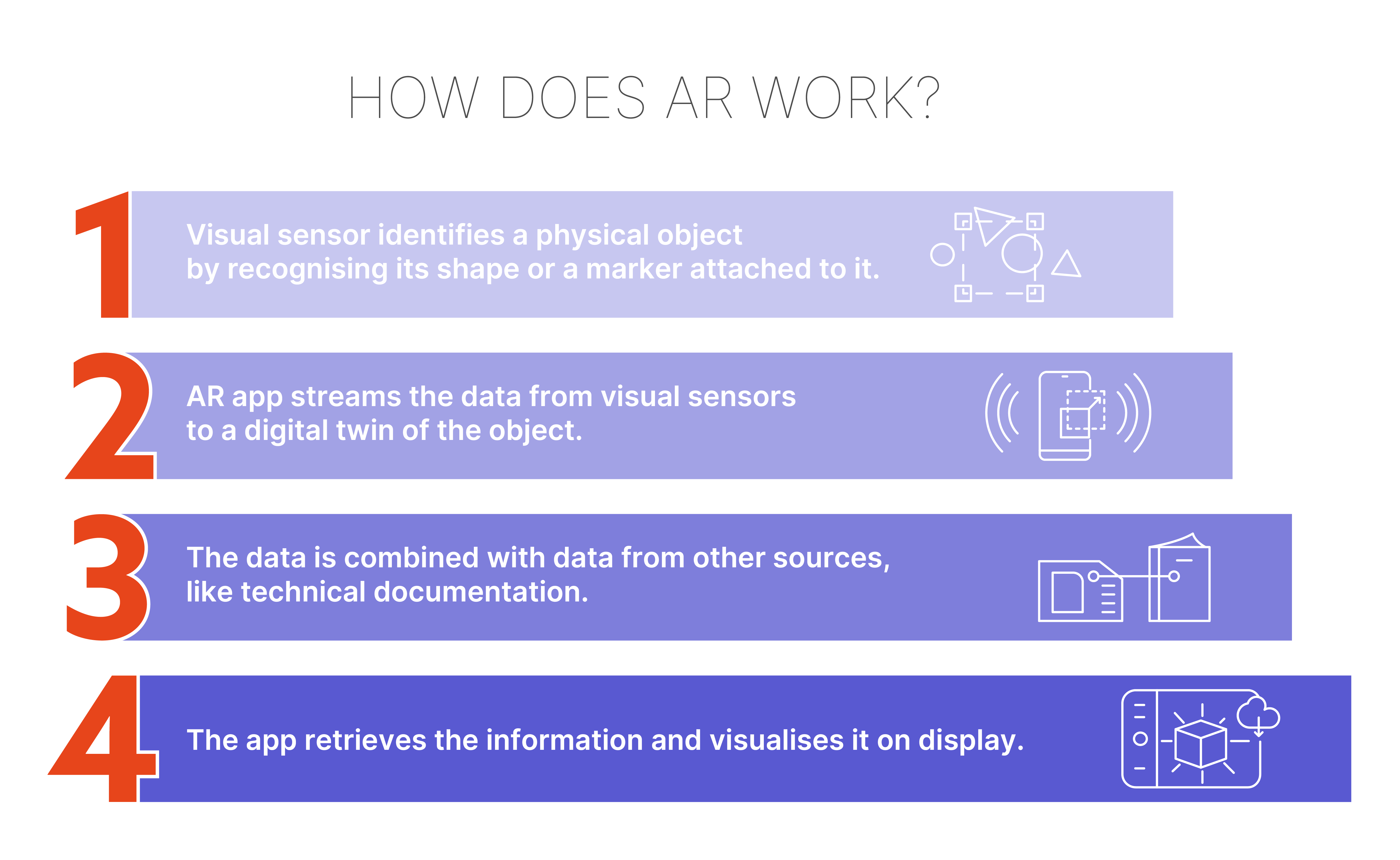
The way augmented reality works depends on the complexity of the system. In general, AR uses computer vision, GPS data about user localisation, mapping and depth tracking to show extra data layered on the real-world context. The cameras and sensors collect, send and process the gathered data to show virtual content layered on what the user is looking at in real time. As the user moves, the AR visuals automatically adjust to the changed context.
The hardware components required for augmented reality include: a processor, display (optical projection systems, monitors, wearable display devices, eyeglasses or goggles), sensors and input devices. Smartphones and mobile tablets are commonly used for AR as they are very often equipped with sensors, like accelerometer, GPS or compass that allow motion tracking. However, the more complex the AR, the more computing power the processor should have, as the latency requirements are extreme. In mobile devices, insufficient computing power is often compensated by offloading data processing to a remote machine in the cloud.
كيف يبدو دمج الواقع مع العالم الرقمي؟
دعونا نوضح كيف تعمل الواقع المعزز فيالتصنيع الصناعي context. Let’s imagine a situation, in which AR enables workers to get trained by substituting paper manuals with digital instructions presented directly in their field of view, for example, through AR goggles, leaving their hands free and reducing mental effort required to operate a machine.
The AR-enabled device uses a visual sensor to identify a physical object by recognising its shape or a marker attached to it. Then, the AR application connects with a digital twin (a 3D copy) of the object – in our example, one of the machines used on the production line. The data from visual sensors is then streamed to a digital twin and is combined with data from other sources, like technical documentation. The application retrieves the information and visualises it to the user on display, in some cases allowing the user to interact with the visualisation through touch interaction.
That’s just one of the examples of how augmented reality is used in a business context. In recent years, AR has been spreading across many industries, from entertainment to healthcare. Below you can read about a handful of other applications.
الاختلافات بين الواقع المعزز والواقع الافتراضي
While augmented reality (AR) and virtual reality (VR) are often mentioned in the same breath, they are distinct technologies with unique applications. Virtual reality creates a completely immersive digital environment that replaces the physical world, transporting users to a different reality altogether. In contrast, augmented reality enhances the physical world by overlaying digital information and images onto it, creating a blended experience.
VR is predominantly used for gaming, education, and training, offering users a fully immersive experience. On the other hand, AR is utilised in a broader range of applications, including marketing, retail, and healthcare. One of the key advantages of AR is its accessibility; it can be used on a wide variety of devices, such as smartphones and tablets, making it more readily available to the general public.
يُعد فهم الفروق بين الواقع المعزز (AR) والواقع الافتراضي (VR) أمرًا بالغ الأهمية لتقدير الفوائد الفريدة التي تقدمها كل تقنية وكيفية تطبيقها في مختلف المجالات.
اطّلع على خدماتنا الاستشارية والتطويرية لواجهات الإنسان والآلة
اعرف المزيد
ما هي بعض أمثلة استخدام الواقع المعزز؟
The beginnings of AR technology are grounded in aviation, where it’s still used, for example, in pilot training. AR head-up displays are also used in military aircraft to present flight parameters and machine controls right in the field of a pilot’s view, so they can remain focused on piloting the aircraft.
ثم نُقلت شاشات العرض العلوية إلىمركبات السيارات. Originally, car head-up displays presented data, such as the speed or a route map. These days, thanks to AR, the data, such as navigation, is displayed on the real-life view of the road, instead of just a map.
Another example of an industry where AR is widely used is entertainment. The global AR market reached a value of US$ 6.39 Billion in 2021 and is expected to reach $ 38.03 billion by 2027. Augmented reality is more and more common in sports. During live sports coverage, augmented reality can enrich the play-by-play with extra data. For example, in golf, using special technologies (see our دراسة حالة TrackMan، من الممكن تتبع مسار طيران الكرة وسرعتها والنقطة الدقيقة التي اصطدمت فيها بالأرض وما إلى ذلك، وعرض هذه المعلومات على الشاشة في الوقت الفعلي.
AR also has the potential to revolutionise medicine, though it is currently regarded as a novelty. The research is conducted on the possible use of AR to provide medical imaging data in the operation area or to train surgeons.
ما هي فوائد الواقع المعزز؟
تقلل الواقع المعزز من الحمل الإدراكي
يوفر الواقع المعزز (AR) المعلومات الضرورية في الوقت الذي يحتاجها المستخدم بالضبط من خلال نشر ميزات الواقع المعزز بشكل استراتيجي. فلا حاجة للبحث عن موارد إضافية.
الواقع المعزز يثري الواقع
تضيف تطبيقات الواقع المعزز طبقة من المعلومات الإضافية إلى العالم الحقيقي من حولنا، مما يثري تجربة المستخدم ويساعد على فهم العالم المحيط بشكل أفضل.
الواقع المعزز يحسّن إمكانية الوصول ويقلل الحواجز
يمكن أن تكون أجهزة وتطبيقات الواقع المعزز أدوات تعليمية للأشخاص ذوي الإعاقة لأداء مهام معينة في العالم الحقيقي. اللمس التفاعلي and audio feedback allow people with visual or cognitive impairments to use touch and hearing to understand information about the surrounding world in real time, thus making it more accessible to them.
تتيح الواقع المعزز تصور الأفكار المجردة في بيئة العالم الحقيقي
It’s one of the most ground-breaking benefits of AR that’s especially valuable in the retail industry. Customers don’t have to rely solely on their imagination to decide which colour or pattern of a sofa best matches their interior design or how a particular model of a watch will look on their wrist.
مستقبل الواقع المعزز يبدو مشرقاً
Augmented reality continues to evolve, with mobile AR taking the market by the storm. Mobile devices are being equipped with new technologies, like LiDAR, that can significantly boost AR capabilities by adding more depth and allowing for occlusion, making the AR experiences feel more natural.
وفقًا لـ تقرير Grand View Research, the AR market size, estimated at USD 25.33 billion in 2021, is expected to expand at a compound annual growth rate (CAGR) of 40.9% from 2022 to 2030. The industrial and manufacturing segment is accounted for the largest revenue share and is predicted to continue dominating the market in this decade. Also, the automotive industry is widely adopting AR technology to enhance user experience and its market share is estimated to grow by 43.3%. The use of AR in the healthcare segment is expected to skyrocket in the near future as it’s increasingly being implemented in training and surgical visualisation.
حان الوقت الآن لتبنّي تقنية الواقع المعزّز. أخبرنا عن احتياجاتك وفكرتك، وسنساعدك في بناء حل متطوّر للواقع المعزّز.


arrow_circle_rightاتصل بنا
تحدث إلى خبيرنا حول تمكين تطوير HMI المستمر في شركتك!

برزيميسواف كشيفانيا
مدير واجهة الإنسان والآلة
arrow_circle_right مقالاتنا