رئيس قسم الذكاء الاصطناعي، توماش سمولارتشيك، عن مستقبل الذكاء الاصطناعي


بعد الجزء الأول من المقابلة مع رئيس قسم الذكاء الاصطناعي لدينا، توماش سمولارتشيك، نُشر قبل بضعة أشهر، نعود لمناقشة الاستدامة ومستقبل الذكاء الاصطناعي.
كيف سيتطور الذكاء الاصطناعي في السنوات القليلة القادمة؟
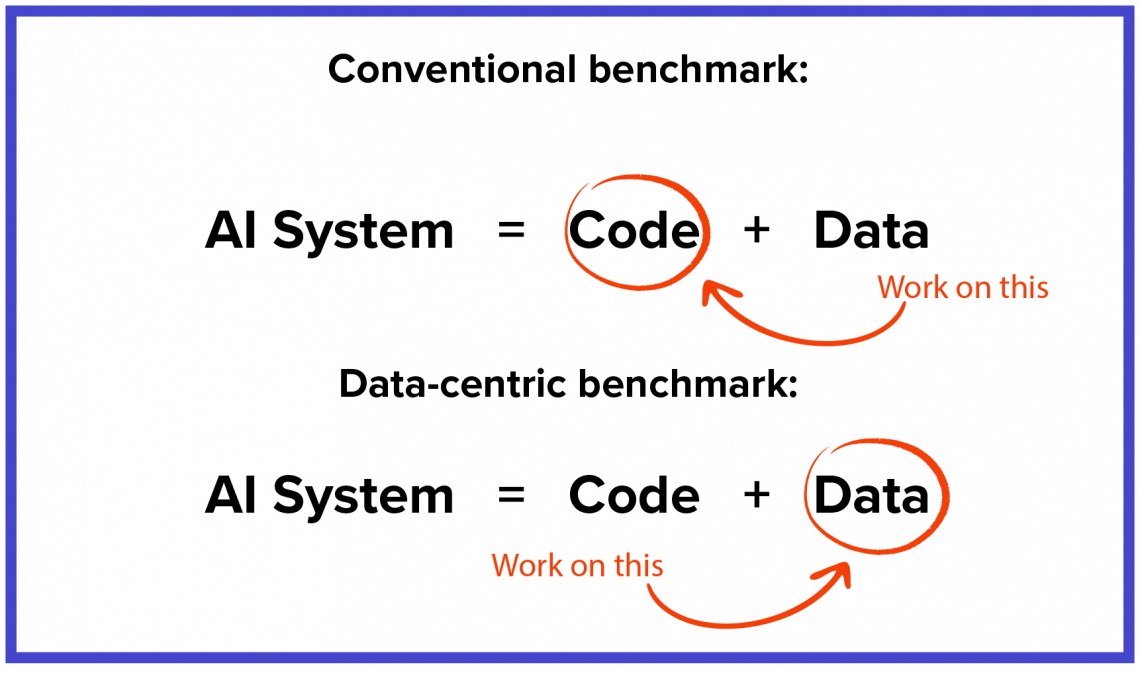
At the organisational level, there’s an eminent change in the approach to AI and a greater emphasis on data that is being collected and prepared correctly in order to be further processed. Companies are now understanding that AI is not only an algorithm, but also the data that stands behind it. To receive better results, the focus is now switching from algorithm and code tuning to a more holistic approach on how to design the high-quality data collection and processing system as a whole, so it would be easier to train better models. There’s also larger pressure on hiring for data engineering and MLOps roles as organisations are gradually more aware of the fact that these roles have a huge impact on whether AI projects will be successful.
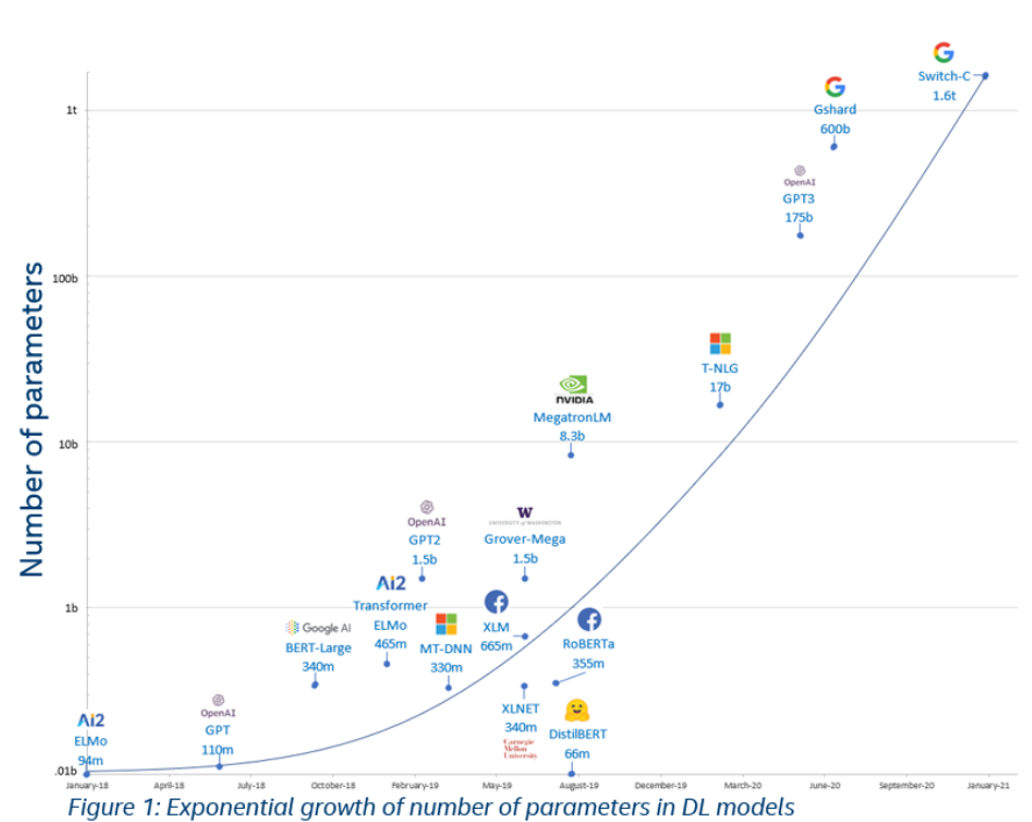
When it comes to the research area, there’s an increase in trends related to designing more and more advanced deep neural network architectures that uses large data sets and powerful computational clusters. Just look at what happens with AI language models – the number of parameters in these models grows exponentially. Google has already presented their model in Switch Transformer architecture that has 1.6 trillion parameters – 6 times more than the previous large model GPT-3 from OpenAI.
Another interesting trend is self-supervised learning, where random unlabelled examples are used to train a model. In April 2021, Facebook published their DINO model that has achieved better results using these mechanisms with more accurate prediction in image processing tasks, than would be possible using standard supervised learning techniques.
We can also see how deep neural networks are employed for solving problems that could not be resolved using traditional methods. One of the most striking achievements in this area comes from DeepMind. They created AlphaFold 2خوارزمية للتنبؤ بكيفية طي البروتينات بنسبة تصل إلى 90اختبار المسافة العالمية (GDT). Their project has recently won a competition that has been running since the ‘90s, where researchers from all over the world guess what the structure of new protein sequences will look like. It is considered that breaking 90 GDT is comparable with results obtained from experimental methods.
كيف يتطور الذكاء الاصطناعي القابل للتفسير في الوقت الحالي؟
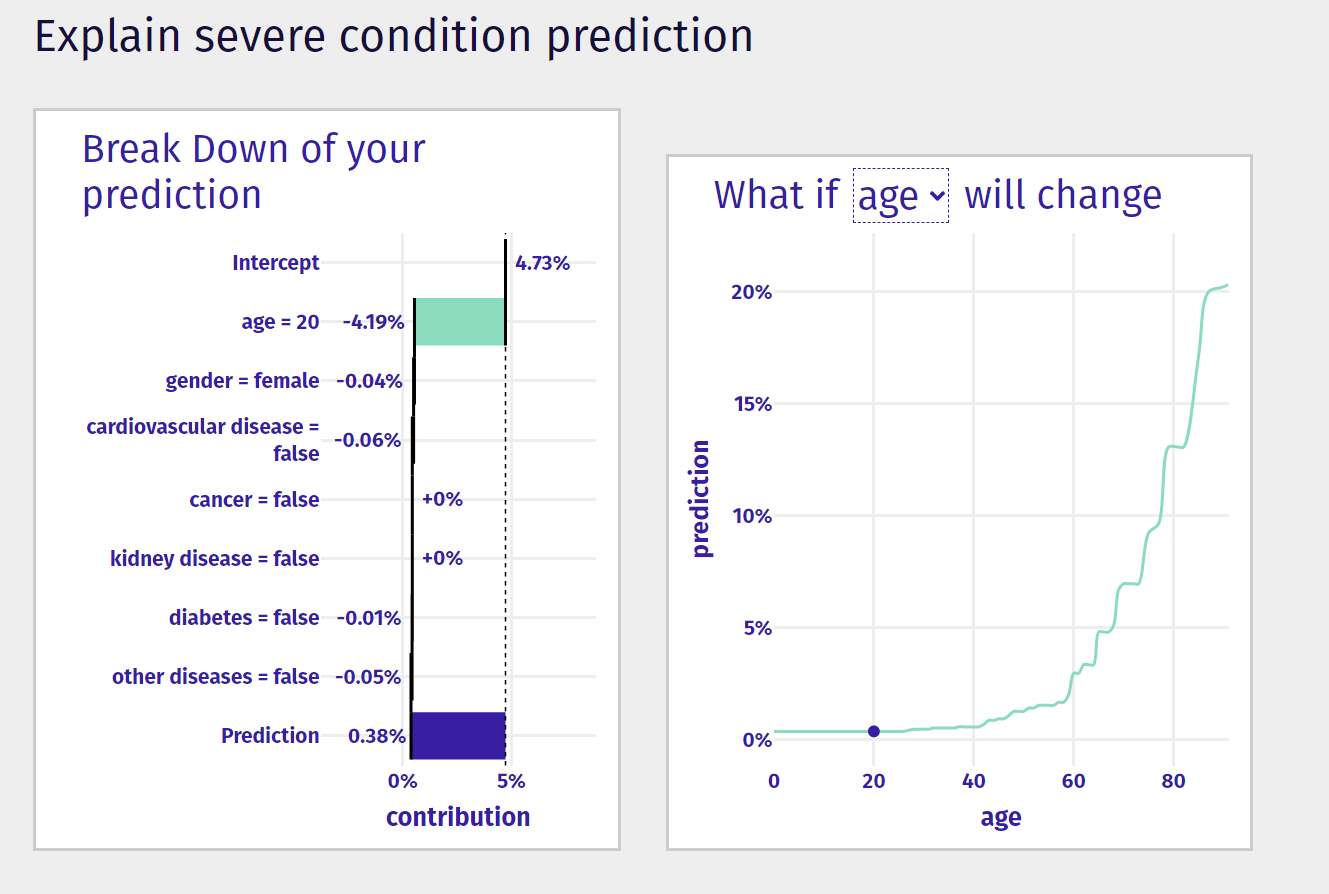
مثال مثالي على كيفية تطور الذكاء الاصطناعي القابل للتفسير في الوقت الحالي هو نموذج من MI2 DataLab وMOCOS. على موقعهم الإلكتروني، you can verify the prediction of how likely it is for a given patient to be severely ill or die from Covid-19, based on historical data. Using a form on their website, you can enter your age and accompanying diseases, and you get a more accurate prediction that’s presented clearly,ويمكنك أن ترى ما يؤثر على نتيجة النموذج.
تزداد هذه التقنيات أهمية لأنها يمكن أن تُستخدم لكشف التحيز في البيانات والتنبؤات. وهي أيضًا تتطور لتشخيص التحيز وتصويره بشكل أفضل، as some of the existing AI models can favour or become prejudiced against certain groups of people. Thanks to these bias exposing techniques, we can now create models that are more universal and explainable by adjusting how they work.
One of the examples of this bias is a Google translation where sentences in Turkish: ‘He/she is a nurse; He/she is a doctor’ were translated in English as ‘She is a nurse; He is a doctor’, and ‘He/she is lazy; He/she is hard-working’ as ‘She is lazy. He is hard-working’. This mistranslation has been fixed, and now the Turkish impersonal pronoun ‘o’ can be replaced with an appropriate pronoun in English automatic translations.
كانت الجائحة الحالية فترة اختبار صعبة للذكاء الاصطناعي – فقد ازداد عدد الأدوات التي يمكن استخدامها للتنبؤ بكيفية انتشار الجائحة على المدى الطويل.
في Spyrosoft، كنا نعمل على مثل هذاproject with financial support from the National Research and Development Centre where – together with U+GEO, a spin-off company from the Natural Science University in Wroclaw – using mobility data, we have been developing simulations for the spread of infectious disease. We are able to verify how closing shopping centres or restaurants will affect the spread. We can also test various scenarios that can be then used for making decisions about what actions to take with less impact on the economy.
هل يُعد نقص القدرة الحاسوبية عائقاً أمام تطوير الذكاء الاصطناعي؟
Surely, it is as text analysis models are becoming more and more advanced, so technical requirements for these models are – and will be – bigger. It’s important to add here that hardware is also evolving, with smartphones now being equipped with units exclusively for neural networks and prediction models for certain tasks. Just to give an example, the Apple A14 processor used in the iPhone 12 has special hardware for neural networks called the 16-core Neural Engine. It can process 11 trillion operations a second. It’s an unimaginable number of operations! These technologies are now being used in smaller and smaller devices, so it’s not only large server rooms that get upgraded.
كيف يمكن للذكاء الاصطناعي أن يساعد في حل قضايا أزمة المناخ، وكيف يمكن استخدامه للحد من استهلاك الموارد؟
AI can, and is already, used for tackling climate crisis issues worldwide. One of the examples is an algorithm that allows you to create a video showing how you would look in certain clothes, so you don’t have to order them from an online store. I’ve seen a tool like that recently, وعلى عكس الأدوات السابقة، فإن الفيديوهات المُنشأة في هذه الأداة عالية الجودة، ويمكن استخدامه بسهولة في قطاع التجارة الإلكترونية. وهذا من شأنه أن يسمح بعدد أقل من الطلبات عبر الإنترنت وعدد أقل من المرتجعات، مما يعني أيضًا استخدام موارد أقل ونهجًا أكثر صداقة للبيئة.
شكّلت الأمم المتحدة قائمة من17 هدفاً عالمياً للتنمية المستدامة, and one of them is tackling the climate crisis. Within this challenge, several AI-based projects have been set up, with one of the examples being a whale tracking tool that’s based on Machine Learning models and can automatically detect where these animals are located.
مثال آخر على كيفية استخدام الذكاء الاصطناعي لإلهام العمل وكونه قوة للخير هو من خلالusing data to confirm hypotheses and break the myth that the world is becoming a worse place to live. Data-based books such as ‘Enlightenment Now’ by Steven Pinker or ‘Factfulness’ by Hans Rosling present a unique perspective on the world,مما يدل على أن الناس يعيشون لفترة أطول وفي ظروف أفضل.
هل لا يزال هناك تركيز على تطوير الذكاء الاصطناعي العام؟
There are still research groups that are working on this, but I don’t think that reaching a point where general AI exists is possible in the next few years. The current situation with the Covid-19 pandemic has not changed that, but on the other hand, nothing that could prove these groups wrong has happened so far.
هل تحقيق الذكاء الاصطناعي العام ممكن على الإطلاق؟
كما ذكرت أعلاه، ليس لدينا أي دليل على أنه ممكن أو غير ممكن. نحن نعلم فقط أنه لن يحدث بالسرعة التي كان يُعتقد سابقاً.
Some media were quick to proclaim the GPT-3 model prepared by OpenAI a SkyNet of the future (which is a reference to the Terminator series), but this model has not shown any signs of basic language understanding so far. Its results are impressive, but it doesn’t make general AI any more achievable. على سبيل المثال, a human being understands that in the sentence ‘The corner table wants another glass of water’, it isn’t an actual table (an item of furniture) that needs some water, it’s a person that sits at the table in the corner. Existing models are not able to think this way.
AI development is shifting from tweaking algorithms to building high-quality data pipelines and scalable data-processing systems. Organisations are increasingly investing in data engineering and MLOps because these roles heavily influence project success. At the same time, research continues to advance through larger neural networks, self-supervised learning, and breakthroughs like AlphaFold 2.
Explainable AI is becoming more practical, with models that clearly show how predictions are made and what factors influence them. These tools are crucial for exposing bias in data and helping create fairer, more reliable algorithms. Real examples, such as correcting gender bias in Google Translate, show how quickly the field is improving.
es, because modern AI models, especially in text processing, require enormous computational resources. However, hardware is evolving rapidly, with devices like smartphones now featuring dedicated neural engines capable of trillions of operations per second. This means advanced AI capabilities are increasingly available both in large data centres and on small, everyday devices.
Some research groups continue to pursue AGI, but reaching that level is unlikely in the coming years. The pandemic has not accelerated its development nor proven it impossible. We simply lack evidence that AGI can be achieved with current methods.




arrow_circle_rightاتصل بنا
استفد من الذكاء الاصطناعي لتحقيق ميزة تنافسية. تواصل مع خبيرنا لمناقشة احتياجاتك.

Tomasz Smolarczyk
مدير الذكاء الاصطناعي