ضمان الامتثال لـ DORA من خلال خدمات تكنولوجية شاملة


The financial sector’s increasing dependence on technology and digitisation means that institutions must be ready to address growing cyber threats. No wonder that ensuring operational resilience is becoming a top priority for both financial organisations and technology providers. The Digital Operational Resilience Act (DORA) is a regulatory framework that aims to تعزيز القطاع المالي‘s ability to withstand and respond to ICT (Information and Communication Technology) disruptions. In this article, we explore the background and timeline of this regulation, its significance, the core requirements for DORA compliance, and how to establish such readiness for your company.
ما هو DORA؟
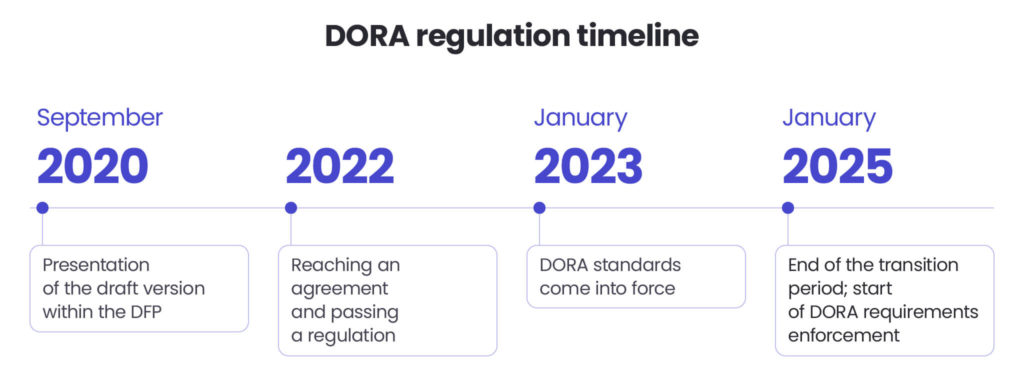
DORA، أو ما قانون المرونة التشغيلية الرقمية، هو لائحة تابعة للاتحاد الأوروبي designed to boost the financial sector’s cybersecurity and operational stability. Introduced in September 2020 as part of the EU’s Digital Finance Package (DFP), it aims to create a unified framework for managing ICT risks across financial entities and their external partners and providers.
DORA establishes guidelines for the EU on ICT risk management, incident reporting, digital operational resilience testing, information sharing, and third-party risk management. The legislation was developed in response to the increasing frequency of cyber threats and operational disruptions, and it is part of a broader effort to strengthen financial stability and security in the EU’s digital financial ecosystem.
متى يدخل DORA حيز التنفيذ؟
بعد تقديم النسخة الأولى وعقد المشاورات والتوصل إلى الاتفاقات المطلوبة بين سلطات الاتحاد الأوروبي المعنية، دخلت DORA حيز التنفيذ رسمياً في16 يناير 2023، عقب نشره في الجريدة الرسمية للاتحاد الأوروبي. ومع ذلك، مُنحت الكيانات المالية ومزودو خدمات تكنولوجيا المعلومات والاتصالات مهلة فترة انتقالية مدتها سنتان لتقييم إطار المرونة التشغيلية الحالي وتنفيذ التغييرات اللازمة لتلبية متطلبات DORA الدقيقة. انتهت النافذة في17 يناير 2025، مما يجعل الامتثال لـ DORA إلزامياً الآن لجميع المؤسسات المالية المتأثرة ومزودي التكنولوجيا لديها.
على من ينطبق DORA؟
ينطبق DORA على كيانات مالية متنوعة ومزودي خدمات تكنولوجيا المعلومات والاتصالات الحيوية التابعين لها. وعلى وجه التحديد، يغطي هذا التنظيم:
- البنوك والمؤسسات الائتمانية
- شركات التأمين وإعادة التأمين
- شركات الاستثمار
- مقدمو خدمات الدفع والمؤسسات
- مؤسسات النقود الإلكترونية (EMIs)
- مقدمو خدمات العملات المشفرة
مزودو خدمات تكنولوجيا المعلومات والاتصالات من الأطراف الثالثة (بما في ذلك مزودو الخدمات السحابية، وموردو البرمجيات، ومشغلو مراكز البيانات)
All of these parties must implement a comprehensive ICT risk management framework, meet requirements to effectively manage any disruptions or threats, and confirm that their operations can continue with minimal interruption in the event of cyberattacks or system failures. By covering such a broad spectrum of financial organisations, DORA aims to ensure that all critical aspects of the EU financial sector’s digital operations are adequately protected.
DORA is valid in all EU countries, mandating a consistent approach to ICT risk management across the entire financial industry. It is worth mentioning that although the regulation only directly applies to entities operating in the EU, it also affects third-party ICT providers located outside the European Union that deliver services to EU-based financial institutions and businesses.
لماذا يُعد الامتثال لـ DORA مهماً؟
The importance of DORA cannot be underestimated, especially given the sector’s heavy reliance on digital solutions and the associated growing risks of cyber incidents, system failures, and dependence on third-party vendors. Financial institutions, due to their nature and access to critical and sensitive data, can be prime targets for cyberattacks. And any disruption in such systems can have serious economic and reputational consequences.
يُعد لائحة DORA بالغ الأهمية للأسباب التالية:
- تعزيز الأمن السيبرانيوهي تفرض تدابير أمنية قوية لمنع التهديدات السيبرانية والتخفيف من حدتها وضمان مستويات عالية من الحماية.
- استمرارية العملياتيساعد الإطار في ضمان بقاء الخدمات والمنصات المالية متاحة على الرغم من الانقطاعات.
- توحيد اللوائح التنظيمية: إنه ينشئ نهجًا موحدًا عبر دول الاتحاد الأوروبي، مما يقلل من التناقضات في ممارسات إدارة المخاطر والتجزؤ التنظيمي.
- ثقة العملاء: يعزز ثقة المستهلك من خلال التأكيد على أن المؤسسات المالية مستعدة للتهديدات وقادرة على الصمود أمام الاضطرابات السيبرانية أو التسريبات المحتملة.
اكتشف الخدمات المالية المتوافقة تماماً مع معايير DORA
اعرف المزيد
ما هي متطلبات DORA؟
The EU legislation outlines a few key measures designed to guarantee that financial entities can effectively manage ICT risks and recover rapidly from disruptions. These regulations include five essential requirements that must be met to ensure DORA compliance:
إدارة مخاطر تكنولوجيا المعلومات والاتصالات:
- تطوير أطر قوية لإدارة مخاطر تكنولوجيا المعلومات والاتصالات والحفاظ عليها.
- تنفيذ عمليات تحديد المخاطر والحماية والكشف والاستجابة والتعافي.
- إجراء تقييمات ومراجعات منتظمة للمخاطر.
الإبلاغ عن الحوادث:
- وضع إجراءات وبروتوكولات واضحة للكشف عن الحوادث المتعلقة بتقنية المعلومات والاتصالات والإبلاغ عنها وإدارتها في الوقت المناسب.
- الإبلاغ عن حوادث تكنولوجيا المعلومات والاتصالات المهمة إلى الجهات التنظيمية ضمن أطر زمنية محددة وبطريقة موحدة.
اختبار المرونة التشغيلية:
- إجراء اختبارات روتينية لأنظمة تكنولوجيا المعلومات والاتصالات، بما في ذلك تقييمات الثغرات واختبارات الاختراق واختبارات الإجهاد القائمة على السيناريوهات.
- إشراك مزوّدي خدمات خارجيين بانتظام في اختبار المرونة والتحقق من متانة التدابير الأمنية المطبّقة.
إدارة مخاطر الأطراف الثالثة:
- ضمان الإشراف المناسب والمراقبة المستمرة لمقدمي خدمات تكنولوجيا المعلومات والاتصالات الحيوية.
- إجراء تحليل العناية الواجبة وإبرام اتفاقيات تعاقدية تحدد توقعات مستوى الخدمة وتعالج إدارة مخاطر تكنولوجيا المعلومات والاتصالات والمرونة.
تبادل المعلومات:
- تشجيع التعاون وتبادل المعلومات بين الكيانات المالية فيما يتعلق بالتهديدات السيبرانية وأفضل ممارسات الأمان.
- يساعد التعاون بين المؤسسات على اكتشاف التهديدات والاستجابة لها بشكل أكثر فعالية، مما يساهم في حماية القطاع المالي المحلي بأكمله.
خدمات تقنية شاملة للامتثال لـ DORA
To achieve compliance with DORA, financial companies and agencies require a comprehensive approach that integrates tech services across various domains. As an experienced technology partner, we can facilitate your efforts to reach and maintain DORA compliance. We propose a comprehensive offer designed to help financial institutions do just that. Here are the services we can deliver to enable your organisation to meet digital operational resilience requirements:
استشارات تقنية للامتثال للائحة DORA
We offer evaluations and gap analyses to identify ICT system vulnerabilities using all relevant security frameworks and protocols. By focusing on providing expert consultations and the best strategies, we create tailored roadmaps for DORA compliance. Legacy systems are modernised to meet resilience standards, while custom risk management plans are crafted to address unique operational challenges.
تطوير وتنفيذ أنظمة مرنة
To meet the operational resilience framework, our team designs systems that ensure business continuity and minimal disruption during failures or cyberattacks. We also build scalable, robust, fault-tolerant architectures and infrastructures using technologies such as .NET, Kubernetes and microservices. Deploying digital twin simulations and advanced monitoring tools allows us to proactively identify and address resiliency gaps and mitigate risk in real-time.
حلول الأمن السيبراني والامتثال
We incorporate secure coding practices, thorough reviews, and testing routines throughout the development process, as well as implement zero-trust architectures, and conduct regular vulnerability assessments and penetration tests. More so, we ensure that data storage and encryption are optimised to guarantee compliance with DORA’s strict requirements for secure information handling.
إدارة الحوادث واستراتيجية المرونة
تشمل خدماتنا تطوير خطط الاستجابة للأخطاء أو المشكلات ومنصات المراقبة في الوقت الفعلي. نقدم الخبرة فيما يتعلق بالتحقيقات في الحوادث والاستعادة، و تنفيذ استعادة الكوارث محاكاة لاختبار والتحقق من البروتوكولات لاستعادة الخدمة بسرعة والامتثال التنظيمي.
الترحيل السحابي والتحسين
We ensure secure, compliant migration to cloud platforms with risk mitigation strategies. With multi-cloud resilience frameworks, we create failover and redundancy setups aligned with DORA’s standards. We help maintain operational security while optimising cloud costs.
الذكاء الاصطناعي والتحليلات التنبؤية
By leveraging machine learning models to identify data patterns, we enhance fraud detection and system failure prediction. Implementing predictive analytics tools and monitoring dashboards allows us to provide actionable insights for proactive risk management and system supervision.
اطّلع على كيفية تأثير الذكاء الاصطناعي على منتجاتك وخدماتك المالية>>
التدريب والتوعية التنظيمية
To align your internal practices with DORA standards, we develop educational programs, deliver training modules, and conduct workshops on digital security, equipping your staff with the knowledge to sustain operational resilience strategies.
دعم مستمر للامتثال وخدمات استشارية
To provide real-time compliance status tracking and reporting, we offer the implementation of tools such as dynamic compliance dashboards. And our post-implementation support provides ongoing monitoring, system updates and consulting services to help you adapt to any future adjustments in DORA requirements.
الدور عليك
Ensuring DORA compliance requires a proactive and comprehensive approach to ICT risk management. Financial entities and their technology partners must invest in robust cybersecurity frameworks, operational resilience strategies, and regulatory alignment to avoid fines and enhance their defence against disruptions.
By leveraging comprehensive technology services, we help financial organisations get in line with DORA standards, meet all regulatory demands, and provide the cybersecurity and operational continuity that builds consumer confidence.
With the new guidelines already in effect, you should act now to assess your current capabilities and ensure complete DORA compliance. If you need support adapting to the new requirements or are البحث عن حلول مالية التي تلبيها، فلا تتردد في الاتصال بنا باستخدام النموذج أدناه.
الأسئلة الشائعة
DORA compliance refers to meeting the requirements set by the Digital Operational Resilience Act, which aims to strengthen how financial institutions handle ICT risks. It ensures that organisations can maintain stable services even during disruptions, cyber incidents or technology failures.
DORA introduces a unified framework for ICT risk management, testing, incident reporting and third-party oversight. It shifts resilience from an internal best practice to a regulated expectation, requiring consistent processes across the entire financial ecosystem.
The regulation focuses on ICT risk management, incident classification and reporting, testing digital resilience, managing third-party providers, and ensuring clear oversight of critical dependencies. These areas work together to protect the continuity of core financial services.
They can establish regular resilience assessments, run controlled failure scenarios, validate backup strategies, and ensure that recovery procedures are realistic and measurable. These activities help organisations demonstrate that their systems can withstand technical disruptions.
Yes. Institutions must assess the resilience of any ICT provider they rely on, monitor performance, and ensure that contractual arrangements include clear responsibilities. Providers offering critical services fall under enhanced scrutiny.
Many teams struggle with fragmented documentation, legacy systems, unclear incident processes and gaps in monitoring. Achieving consistent governance across distributed environments is often the most demanding part of the transition.
Teams need strong capabilities in risk management, cybersecurity, ICT architecture and regulatory interpretation. According to Spyrosoft, cross-functional collaboration is essential for creating processes that are both compliant and practical to maintain.
They can track incident response times, recovery effectiveness, audit findings and the maturity of their ICT risk controls. A well-aligned strategy shows clear accountability, reliable testing results and the ability to operate safely during technical stress.




لنناقش كيف يمكننا المساعدة في مشاريعك المالية

arrow_circle_right مقالات أخرى