تحصيل الديون الآلي: الاستفادة من التكنولوجيا المتقدمة لتحقيق النجاح


The debt collection industry is undergoing a transformation, driven by the need for greater efficiency, accuracy and compliance. Traditional methods, often based on manual processes and outdated systems, are no longer sufficient to meet the demands of modern debt collection. The pressure to reduce costs, improve recovery rates and maintain regulatory compliance has led many financial institutions and debt collectors to explore advanced technology solutions.
وفقًا لتقارير القطاع، أدى استخدام التقنيات المتقدمة إلى زيادة تحصيل الديون بنسبة 65%. أ Gartner تشير الدراسة أيضاً إلى أن مراكز الاتصال عالمياً يمكنها توفير ما يصل إلى 80 مليار دولار من الإيرادات بحلول عام 2026.
In this article, we will explore the key technology solutions for automating debt collection and how they can be effectively deployed to improve operational efficiency, optimise recovery strategies and ensure compliance.
التقنيات الرئيسية التي تدفع أتمتة تحصيل الديون
As debt collection evolves, several advanced technologies have emerged as game-changers in the industry. These advanced technologies streamline operations and increase the accuracy and effectiveness of debt collection efforts.
الذكاء الاصطناعي وتعلم الآلة (AI & ML)
Those technologies are changing the way debt collection works, introducing sophisticated tools that improve prediction, communication and decision-making. They enable debt collection agencies to operate with greater accuracy and efficiency, particularly by using predictive analytics to analyse large data sets and uncover patterns in debtor behaviour.
By understanding these patterns, agencies can anticipate payment delays or defaults and tailor their collection strategies to individual debtors, increasing the likelihood of successful recoveries. Artificial intelligence is revolutionising the way agencies interact with debtors through AI-powered communication channels, such as روبوتات الدردشة والمساعدين الافتراضيين. These tools can manage a significant proportion of debtor interactions, delivering timely, consistent and personalised communications without the need for human intervention, resulting in reduced workload for human agents and improved customer retention rates by providing debtors with the information they need quickly and efficiently.
بالإضافة إلى ذلك، الذكاء الاصطناعي وتعلّم الآلة بالغة الأهمية فيأتمتة عملية اتخاذ القرار. By analysing a debtor’s financial situation and risk profile in real time, these technologies can speed up or even automate decisions regarding debt settlement offers, payment plans or escalation procedures. It ensures that decisions are data-driven, unbiased and aligned with business objectives.
أتمتة العمليات الروبوتية (RPA)
RPA is another key technology driving the automation of debt collection activities. It focuses on automating repetitive, rule-based tasks that are common in the debt collection process, freeing up human resources to focus on more complex, value-added activities.
For example, RPA can be used to automate the sending of payment reminders, the processing of payments and the generation of reports, all of which are essential but time-consuming tasks. By eliminating manual intervention in these processes, RPA increases operational efficiency, and reduces the risk of error, resulting in faster and more accurate debt collection.
One of the essential strengths of robotic process automation is its ability to integrate seamlessly with existing legacy systems. Many financial institutions and debt collectors operate on a patchwork of legacy systems, making a complete overhaul of their IT infrastructure both costly and disruptive. RPA tools can interact with these الأنظمة القديمة، وسحب البيانات ومعالجتها حسب الحاجة للحفاظ على سير العمليات بسلاسة دون الحاجة إلى استبدال النظام بالكامل.
التحديات التي تواجه عملية تحصيل الديون
تصاعد التكاليف التشغيلية
The financial burden of managing the debt collection process can be significant and have a direct impact on the overall profitability of the business. These costs can include staff, technology, compliance and other overheads that, if not optimised, can erode margins and affect financial performance.
تأمين اتفاقيات المدينين
A significant challenge is the low rate of debtor compliance, reflecting the difficulty in convincing debtors to commit to repayment plans. This may be due to inadequate communication strategies, insufficient incentives, a lack of confidence in the process, or poor customer relationships.
الربحية تحت الضغط
High operating costs combined with sub-optimal collection success rates can have a significant impact on profitability. Inefficiencies in the collection process can lead to a mismatch between expenses and revenues, making it difficult to maintain financial viability.
صعوبات التواصل مع المدينين
Reaching debtors remains a critical challenge, often due to outdated contact information, unresponsive debtors, or legal and regulatory restrictions. This barrier can delay or derail collection efforts, resulting in longer recovery times and reduced effectiveness.
إدارة البيانات المجزأة
Storing debtor information in multiple systems can lead to disorganised data management, creating inefficiencies in accessing, updating and using critical information. This fragmentation can hinder the decision-making process and lead to missed opportunities for timely and effective collections.
نقص في الأتمتة وتحسين العمليات
Relying on manual processes for routine debt collection tasks increases the risk of errors and inefficiencies. A lack of workflow automation can slow down operations, reduce accuracy, and ultimately decrease the overall effectiveness of the debt collection process. Incorporating automation can streamline operations, reduce costs and improve consistency of results.
As experts in the financial sector, we understand the challenges our customers in the debt management sector struggle with. Our answer is to adjust your current solution to a digital, customer self-service era, using cutting-edge technologies, which will increase your debt collection rate.
ميشال كاليتا، مدير الخدمات المالية
كيف يمكن للأتمتة المدعومة بالذكاء الاصطناعي مساعدة شركات تحصيل الديون
زيادة كفاءة وكلاء التحصيل
Integrating AI automation into collections streamlines repetitive tasks such as data management and documentation, allowing agents to spend more time on high-impact activities such as negotiation and conflict resolution. By automating manual processes, artificial intelligence reduces the time and resources required to manage collections, leading to greater efficiency and productivity in operations.
خفض التكاليف
AI automation offers significant cost savings in debt collection by reducing the costs associated with staff, training and resource management. By minimising the need for human intervention and optimising workflows, AI enables collection agencies to strategically allocate resources and achieve significant savings. As a result, these cost reductions allow agencies to invest more in technology and innovation, increasing their overall profitability.
تحليلات تنبؤية متقدمة
AI algorithms use extensive historical data to anticipate debtor behaviour and predict future trends, enabling debt collectors to proactively target delinquent accounts. Through predictive analytics, AI increases the effectiveness of collection strategies, improves resource allocation and reduces the risk of non-compliance, which allows agencies to prevent defaults, minimise write-offs and ultimately maximise recovery rates.
تحسين تجربة العملاء
With AI automation, debt collection agencies can provide personalised and compassionate customer interactions, increasing overall satisfaction and the chances of successful debt recovery. AI-based tools can analyse debtor behaviour and preferences to tailor communication methods, payment plans and negotiation strategies to individual needs, building trust, transparency and collaboration. This level of personalisation increases customer satisfaction, and fosters stronger, long-term relationships.
حل آلي فريد لتحصيل الديون
DebtPro is highly customisable debt management software designed to optimise and simplify debt collection processes. It integrates seamlessly with existing systems, providing advanced customer self-service options while reducing operational costs.
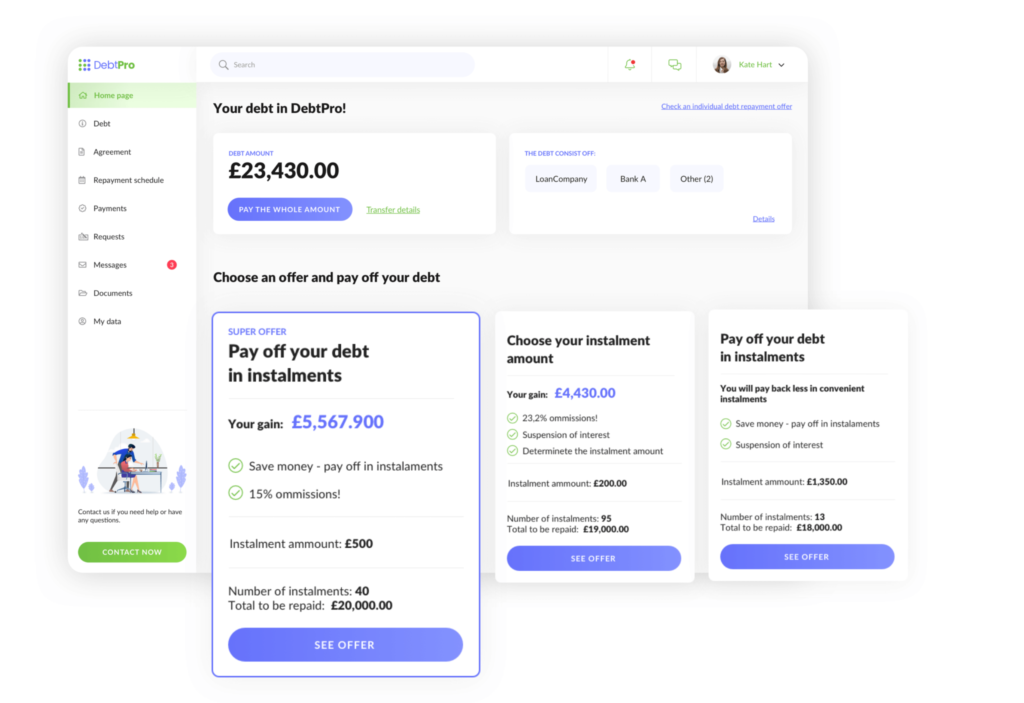
Our platform is fully customisable and can enhance current debt management systems or operate as a standalone solution. Key features include online payment management, electronic document signing and integrated communication tools, all accessible through an intuitive, user-friendly dashboard.
يوفّر البرنامج فوائد كبيرة مثل ما يقارب زيادة بنسبة 10% in contract signatures, reduced operational costs and easy online document access almost immediately after its full implementation. It is suitable for both B2C and B2B applications and operates independently of open banking services, ensuring it can be tailored to meet the unique needs of any business.
اجعل إدارة الديون أكثر كفاءة!
احصل على عرض توضيحي مجاني
الدور عليك
تتيح لك عملية تحصيل الديون الآلية التركيز على جوهر عملك وتحقيق أقصى فعالية لعملياتك.
You can leverage the full potential of data to benefit you and your customers. Industry leaders rely on well-implemented automation for its reliability and effectiveness. The bottom line is smoother cash flow, increased profits, reduced expenses and satisfied customers.
إذا كنت ترغب في معرفة كيفية عمل برامج إدارة الديون والتحصيل على أرض الواقع، فتواصل مع خبيرنا اليوم وألقِ نظرة على منصتنا القابلة للتعديل بالكامل!
Traditional debt collection methods rely heavily on manual processes and outdated systems, limiting efficiency, accuracy and compliance. Automation can help to overcome these challenges by streamlining operations, reducing costs, improving recovery rates and ensuring regulatory compliance. According to industry data, advanced technologies can increase debt recoveries by up to 65%.
AI and machine learning (ML) enhance the debt collection process by providing predictive analytics, personalised communication and automated decision-making. By analysing large data sets, these technologies can predict debtor behaviour, tailor repayment strategies and automate settlement offers, leading to faster, fairer and more effective recoveries.
RPA (Robotic Process Automation) is a technology that automates repetitive, rule-based tasks such as sending payment reminders, processing transactions and generating reports. It can be integrated with legacy systems, eliminating the need for costly replacements and reducing manual errors. This frees up human agents to focus on complex cases that require personal attention.
Key challenges include rising operational costs, difficulty contacting debtors, fragmented data management and limited automation. Many organisations also struggle with low debtor compliance and profitability pressures caused by inefficient manual processes. Implementing automation can help to address these issues.
DebtPro is a highly customisable debt management platform designed to optimise the collection process. It offers features such as online payments, e-signatures and integrated communication tools, all of which are accessible via an intuitive dashboard. Businesses using DebtPro typically experience reduced operational costs, faster access to documents, and an increase of up to 10% in contract signatures.




arrow_circle_right مقالاتنا
اختر قراءتك التالية





arrow_circle_rightاتصل بنا
