الذكاء الاصطناعي في التمويل: اكتشف أحدث الاتجاهات


Artificial Intelligence is growing rapidly in every sector, and the broadly understood financial sector is no exception. Banks and other financial institutions are currently looking for ways to make the most of both generative and traditional AI while maintaining high compliance and legal standards. We’ve analysed the latest trends that modern financial companies should be aware of if they want to implement AI (and believe us, they do!).
أولاً، من المهم فهم الوضع الحالي فيما يتعلق بالذكاء الاصطناعي في مجال التمويل. إذ تدّعي كل بنك كبير تقريباً أنه يستخدم الذكاء الاصطناعي بنشاط لأغراض متعددة. الذكاء الاصطناعي تدعم الحلول مجالات مثل كشف الاحتيال، إدارة المخاطر، وخدمة العملاء الآلية وغيرها الخدمات المالية. وقد ظهر هذا الطلب قبل وقت طويل من بزوغ الذكاء الاصطناعي التوليدي. لكن السؤال الكبير الأول الذي يجب أن نطرحه هو:
هل وصلنا بعد؟
From our perspective, the answer is: almost. Even though AI in finance is surely a dynamically growing trend, there are hardly any solutions that rely on the technology fully. Artificial Intelligence is still treated more as a component of a solution, not a solution itself. Take a look at this chart showing last year’s (2022) and predicted (2025) AI adoption rates in financial companies:
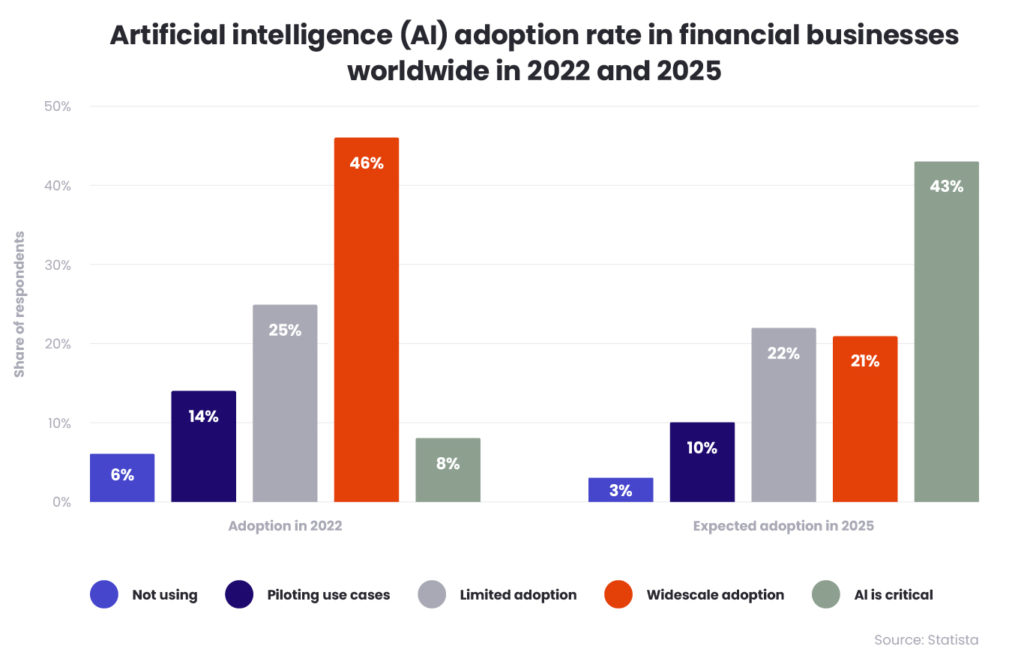
As you can see, back in 2022, 54% of financial companies had a widescale adoption of AI or considered it a critical asset. Worth mentioning here is the fact that in 2022, solutions such as GenAI hadn’t been so popular, since ChatGPT was published on November 30, 2022. The predictions are that in 2025, a higher percentage of companies will consider AI critical to their business than just a supportive element.
Chatbots and voicebots are a perfect example of how recent advances might completely change interaction with clients. A new generation of chatbots and voicebots are capable of having a natural conversation with clients and understanding their needs and requests without asking for hardcoded options. Banks more and more commonly introduce روبوتات محادثة مدعومة بالذكاء الاصطناعي لعملائها, but it is important to tightly control their behaviour and leverage Generative AI wisely, as Large Language Models may provide customers with the wrong information or suggestions, which can have severe consequences in this sector. That’s why, usually, the dialog flows must be monitored and managed to keep the communication at the expected but also safe level.
كيف يُستخدم الذكاء الاصطناعي في التمويل: تقرير NVIDIA
في وقت سابق من هذا العام، نشرت NVIDIA تقريراً showing the top applications for AI in finance (excluding China). Interestingly, of the 21 different use cases analysed in the survey, ten are used by over 20% of respondents, which shows big potential for future development:
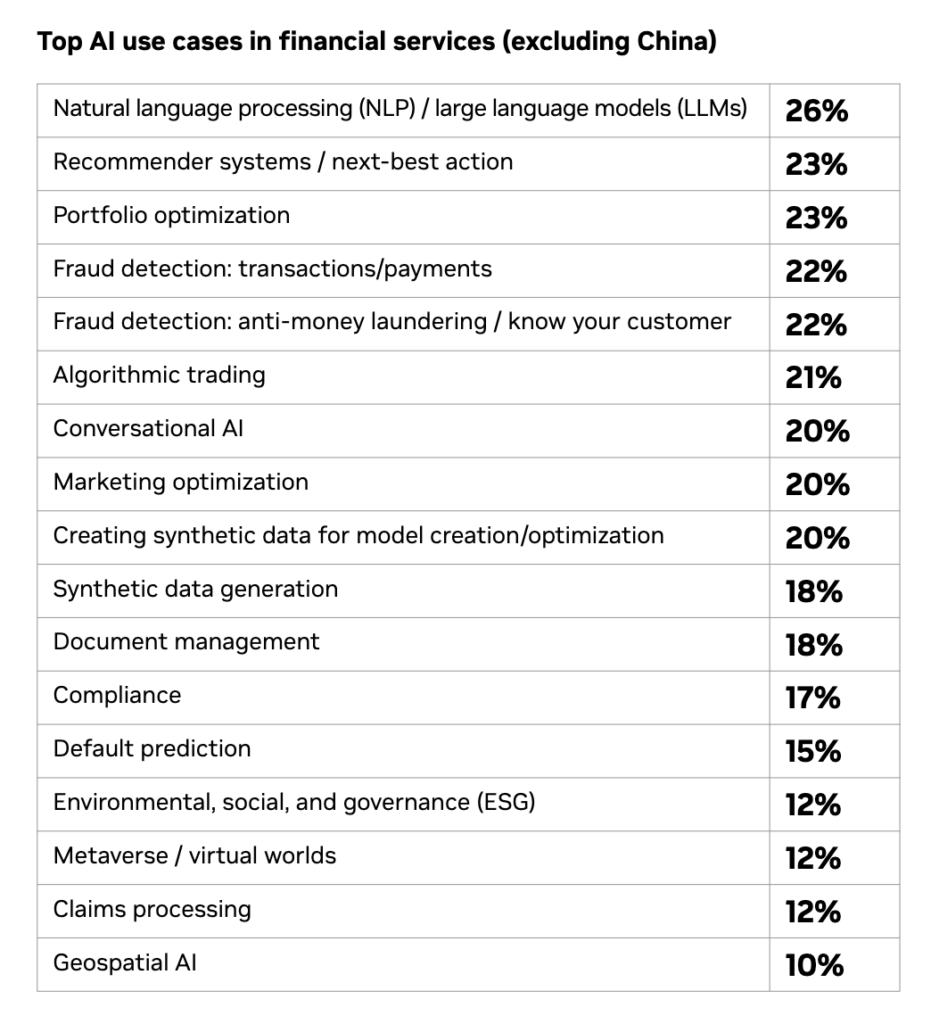
As you can see, the most popular applications include the use of generative AI (LLMs), but also personalisation systems and portfolio optimisation tools. We also mention these applications in this article.
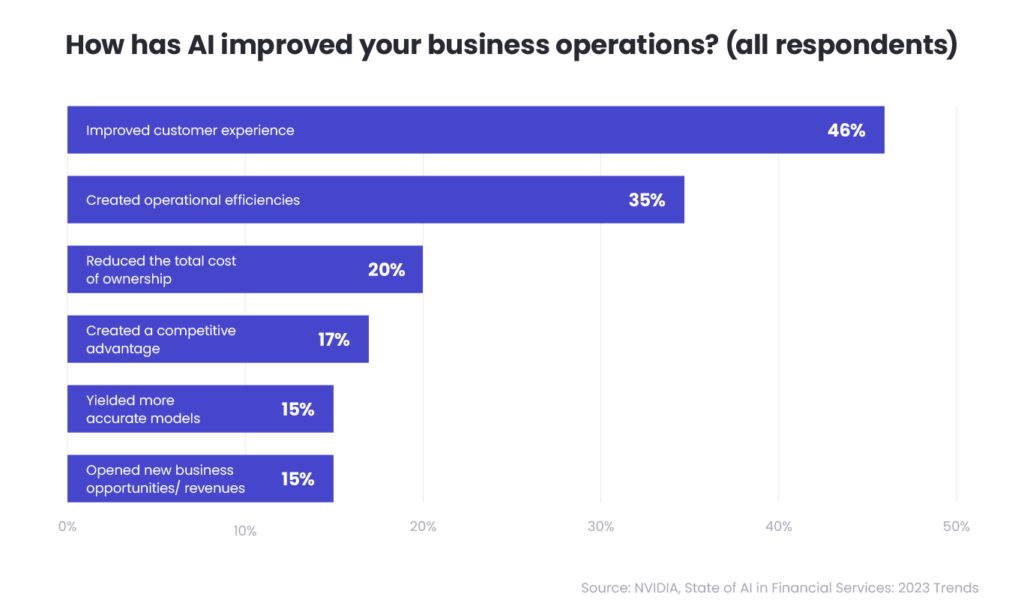
NVIDIA also asked respondents about the results of applying AI in finance in their companies. Not surprisingly, the majority of companies see several significant benefits, with improved CX being number one (almost 50% of answers):
الدور المتزايد للوائح القانونية
عندما يتعلق الأمر بالقطاع المالي، ليس البنوك فحسب بل أيضاً المؤسسات القانونية والتنظيمية are increasingly interested in the use of AI. Regulatory institutions need to know that AI in finance is, above all, safe and can be used with minimal risk to customers’ personal and financial information.
هذا أمر يحدث بالفعل. فعلى سبيل المثال، في نهاية عام 2022، أصدرت الولايات المتحدة وثيقة سياسات غير ملزمة شرعة حقوق الذكاء الاصطناعي. The AI Bill of Rights is not specific to the financial sector, but it provides instructive guidance on five fundamental rights that should be considered in the development of policy and use of AI in all industries, including finance and banking.
يتم اتخاذ إجراءات مماثلة على الجانب الآخر من المحيط. يعمل الاتحاد الأوروبي حالياً على قانون الذكاء الاصطناعي الأوروبي. وفقاً لـمجموعة سيتي، ينبغي أن يكون أول لائحة شاملة للذكاء الاصطناعي يُتوقع أن تنطبق على جميع الصناعات. والعمل عليه وصل بالفعل إلى مرحلة متقدمة، و تم الاتفاق على النص مبدئيًا من قبل المؤسسات الأوروبية المختصة، مما يوفر فرصة للاعتماد السريع لقانون الذكاء الاصطناعي الأوروبي في عام 2024.
لهذه اللوائح عدة أهداف ينبغي تحقيقها:
- يضمنون استخدام الذكاء الاصطناعي بطريقة آمنة لا ينطوي على أي مخاطر كبيرة على بيانات العملاء وقراراتهم.
- يحدّون من مخاطر الاحتيال المحتملة وإدخال تدابير السلامة اللازمة.
- يقلّلون من خطر التحيّز عند التعامل مع العملاء الذين يمثلون جنسيات وأعراقًا مختلفة.
The growing number and complexity of financial regulations will likely trigger the advent of more RegTech (Regulation Technology) tools and companies. RegTech allows financial institutions to more efficiently manage the ever-growing number of regulatory requirements they must comply with (source: Apertera).
استخدام الذكاء الاصطناعي والانتقال إلى الذكاء الاصطناعي التوليدي
كما ذكرنا سابقًا، تستخدم البنوك والمؤسسات المالية الأخرى الذكاء الاصطناعي بكثافة لدعم الموظفين، وخدمة العملاء، والحصول على المعلومات اللازمة.
In the financial sector, the integration of AI is a strategic imperative, not just a technological upgrade. AI’s role extends beyond automating routine tasks; it’s about enhancing analytical depth and operational efficiency. Financial institutions are now harnessing AI to refine decision-making processes and optimise client services. This shift is less about replacing human roles and more about augmenting human capabilities, allowing teams to focus on strategic initiatives and client engagement. We see AI as a critical driver in the future of finance and innovation reshaping the industry.
Tomasz Smolarczyk، رئيس قسم الذكاء الاصطناعي في Spyrosoft
One of the most popular Generative AI use cases is within customer service teams where they are enabling teams to work with customers in a more effective way. This is where the role of generative AI is becoming increasingly important. Banks want to use this technology because of the tremendous potential it offers.
يمكن للأدوات الذكية المدعومة بالذكاء الاصطناعي مساعدة البنوك في مهام مثل:
• تحليل أسرع للمستندات: لماذا تقرأ اتفاقية رهن عقاري من 50 صفحة بينما يمكن للذكاء الاصطناعي أن يفعل ذلك نيابة عنك في غضون ثوانٍ؟
• العثور على المستندات والملفات اللازمة: بفضل الذكاء الاصطناعي، يمكننا إنشاء محركات بحث دلالية فائقة التطور قادرة على البحث عن المستندات (حتى الممسوحة ضوئياً) التي تحتوي على معلومات محددة.
• إنشاء ملخصات للمستندات: باستخدام الذكاء الاصطناعي التوليدي، يمكننا بسهولة إنشاء التقارير والملخصات للاستخدامات الداخلية.
• تزويد العملاء بجميع المعلومات المطلوبة: يمكن للذكاء الاصطناعي دعم الموظفين أثناء محادثاتهم مع العملاء، من خلال منحهم وصولاً فورياً إلى جميع المعلومات الحيوية التي تتم مناقشتها خلال المحادثة.
• إجراءات اعرف عميلك (KYC): With AI, banks have access to enhanced due diligence (EDD) and customer due diligence (CDD) procedures, as well as other compliance measures. As a result, they can verify new customers in an effective and automated way.
The game is surely worth the candle! Deloitte predicts that the top 14 global investment banks will be able to increase front-office productivity by an average of 25% thanks to generative AI. This could translate to earning additional revenue of $3 million per front-office employee as soon as 2026 (source: PR Newswire).
اكتشف عروضنا القائمة على الذكاء الاصطناعي!
اكتشف المزيد
حالة الاستخدام: "ChatGPT الداخلي"
For one of our clients here at Spyrosoft, we built a chatbot that’s based on Azure OpenAI models (the same as ChatGPT) but works fully in the client’s internal cloud ecosystem and is intended to support employees in their daily tasks and communication with customers. Because everything is developed internally (we used Microsoft Azure), all the conversations conducted by employees are not used to train any language models and there is no risk of leaking any confidential or sensitive data to the market.
Such a solution is safe and effective and customer service agents’ work is streamlined significantly – they don’t need to spend a lot of time structuring notes or documents, brainstorming ideas, or writing emails.
إنه ليس نهجًا ثوريًا. فهناك العشرات من الأدوات المبنية على نماذج اللغة التي طورتها OpenAI، وتُستخدم لتحقيق مجموعة كاملة من النتائج المختلفة.
نهج جديد للذكاء الاصطناعي في التمويل: البيع المتقاطع المخصص
The integration of Generative AI in finance is paving the way for a more personalised approach to cross-selling. By harnessing this technology, financial institutions can tailor their offerings to each customer’s unique needs and preferences. The potential of AI lies in its ability to analyse vast amounts of data to identify the most relevant financial products, such as credit and debit cards, for individual customers. This targeted approach goes beyond traditional methods, engaging customers through intelligent, conversational interfaces within digital banking apps. Imagine a smart assistant that not only informs customers about the latest card offers but also explains their specific benefits in a context that resonates with the customer’s financial goals. This level of personalisation enhances customer experience, making interactions more engaging and increasing the likelihood of successful cross-selling. Ultimately, Generative AI stands to transform customer communication in finance, leading to higher conversion rates and a more nuanced understanding of customer needs.
تخصيص تجربة العملاء
This is another interesting field of generative AI application. With access to customer data and their purchasing habits, AI algorithms can provide customers with personalised information on how to improve their finances and what they can do to manage their home budgets more effectively.
هذا ما يفعله البريطانيون TSB Bank يعمل عليه الآن:
نريد استخدام الذكاء الاصطناعي وتعلم الآلة لتحديد الأحداث الرئيسية في حياة العميل التي قد تستدعي دعمًا ماليًا، واستخدام هذا الاستجابة لمساعدة العملاء على تحقيق طموحاتهم الحياتية في نهاية المطاف.
مع استخدام الذكاء الاصطناعي في التمويل، يمكن للبنوك تخصيص توصيات المنتجات، والاقتراحات المتعلقة بعادات الإنفاق، وحتى فرص الاستثمار.
تحدي تطوير الذكاء الاصطناعي للغات الأقل شيوعاً
In the realm of Generative AI, English understandably takes the lead due to its global prevalence. Developing AI solutions in English is more straightforward because of the vast array of existing resources and models. However, tailoring these solutions for less common languages, especially those with unique linguistic structures like Polish, presents a distinct set of challenges. The complexity lies not in starting from scratch, but in gathering enough training data and adapting and refining existing models to accommodate the nuances of these languages. Despite these challenges, progress is being made. A prime example is boost.ai‘s success in the Nordic countries. Their ability to effectively adapt AI solutions to Nordic languages demonstrates that with the right approach and dedication, it’s feasible to extend sophisticated AI capabilities to a broader linguistic spectrum. This success story provides valuable insights and methodologies for developing AI tools in other less-common language spheres, paving the way for more inclusive and diverse AI applications.
الخاتمة
Banks and other financial institutions will surely use Artificial Intelligence more and more frequently, especially the generative kind. This direction is obvious, and some solutions are already in place, even though there is still a lot to achieve. We still need to solve some of the pressing challenges, including compliance with privacy regulations and solutions for non-English-speaking countries. But there’s no doubt we will eventually get there!
وإذا كان هذا هدفك أيضًا، تواصل معنا عبر نموذج الاتصال أدناه، ولنرَ ما يمكننا إنجازه معًا!
AI supports banks and financial institutions in fraud detection, risk management, customer service, and data analysis. It helps automate processes and improve decision-making. While most solutions still combine AI with traditional methods, adoption is rapidly growing.
Financial companies report improved customer experience, faster processes, and better risk control as key outcomes. AI enhances efficiency by reducing manual work and supporting more accurate insights. Generative AI also helps personalise services and speed up operations.
The main challenges include meeting strict regulatory and compliance standards and protecting sensitive customer data. Additionally, managing AI’s potential biases and ensuring accuracy in customer interactions remain critical. Adapting generative models for non-English languages adds another layer of complexity.
Governments and institutions are introducing frameworks like the U.S. AI Bill of Rights and the EU AI Act to ensure safe, transparent AI use. These aim to minimise fraud, bias, and data risks. As a result, RegTech tools are becoming essential for compliance management.
Generative AI will continue transforming customer service, personalisation, and internal operations. Banks are increasingly adopting secure, internal AI tools to streamline work and protect data. The future lies in blending innovation with compliance for scalable, responsible AI growth.




arrow_circle_rightاتصل بنا
اترك بيانات الاتصال الخاصة بك وسنعاود التواصل معك في أقرب وقت ممكن

Tomasz Smolarczyk
مدير الذكاء الاصطناعي
arrow_circle_right مقالاتنا


![[hero] why manual trading is costing you more than you think](/wp-content/uploads/2025/08/hero-why-manual-trading-is-costing-you-more-than-you-think-scaled-1-1024x574.jpeg)
