لماذا يُعد اختبار السلامة الوظيفية بالغ الأهمية وكيف يتم إجراؤه


Nowadays, we have connected cars, which means that everything in our vehicles operates as a complex system of systems. Even a seemingly minor failure can ultimately lead to serious injuries for the driver or passengers. That’s why testing at every stage of development is so important – خاصةً عندما يتعلق الأمر بـاختبار السلامة الوظيفية. تؤدي وظائف ASIL، التي تُعد محورية في هذه العملية، دوراً بالغ الأهمية في ضمان سلامتنا ورفاهيتنا.
لماذا لا يكفي الاختبار القياسي عندما تكون السلامة الوظيفية على المحك
يغطي الاختبار في صناعة السيارات الجانب الأيمن بالكامل من نموذج V. وهو أمر بالغ الأهمية نظراً لمتطلبات مستويات ASPICE التي تطلبها شركات تصنيع المعدات الأصلية (OEMs).
When an organisation clearly defines and understands its ASPICE processes and avoids excessive tailoring, the team can execute the testing process correctly. Quality departments oversee its accuracy and verify it during ASPICE audits and assessments.
يبدو الأمر واضحًا ومألوفًا لمن يشاركون في عمليات تطوير السيارات، أليس كذلك؟
أين تكمن السلامة الوظيفية في هذا السياق؟
Is there any difference when a requirement is marked with an ASIL (Automotive Safety Integrity Level)? Maybe it’s simply an additional attribute for a requirement that we can overlook, and no one will notice? Do we really need to adjust our standard testing approach that has “always worked” without incident?
الجواب هو نعم، علينا أن نتكيّف.
أهمية عملية محددة جيداً لاختبار السلامة الوظيفية
كثيرًا ما اعتقدت أن التحقق المتعلق بالسلامة يُبخَّس تقديره ويُنظر إليه كشر لا بد منه. وفي الوقت نفسه، ورغم أنه مطلوب بموجب معايير ISO ويُقيَّم أثناء التحقق الوظيفي تدقيق السلامة والتقييمات، فإنها يمكن أن تقدم بالفعل قيمة كبيرة لنا كمختبرين.
منذ فترة، صادفت مقولة: ”لا تدرك قيمة الخطأ إلا عندما تدفع ثمنه". في رأيي، هذا مثير للتفكير، خاصة عند النظر في وظائف السلامة، حيث يمكن أن تكون "التكلفة" هي الأعلى.
ASIL functions are crucial for our health and safety, making them the highest priority during the development of embedded systems. ISO26262 outlines many restrictions for their implementation and testing. A well-defined process allows us to thoroughly and accurately verify the implementation, operation, and safety mechanisms specified for these safety functionalities.
ما تتطلبه ISO 26262 وIEC 61508
ISO26262 لا تُعرّف استراتيجية اختبار جديدة تماماً. Iبل هو بالأحرى مكمل لمنهج معروف من ASPICE وISTQB.
اطّلع على الجدول أدناه:
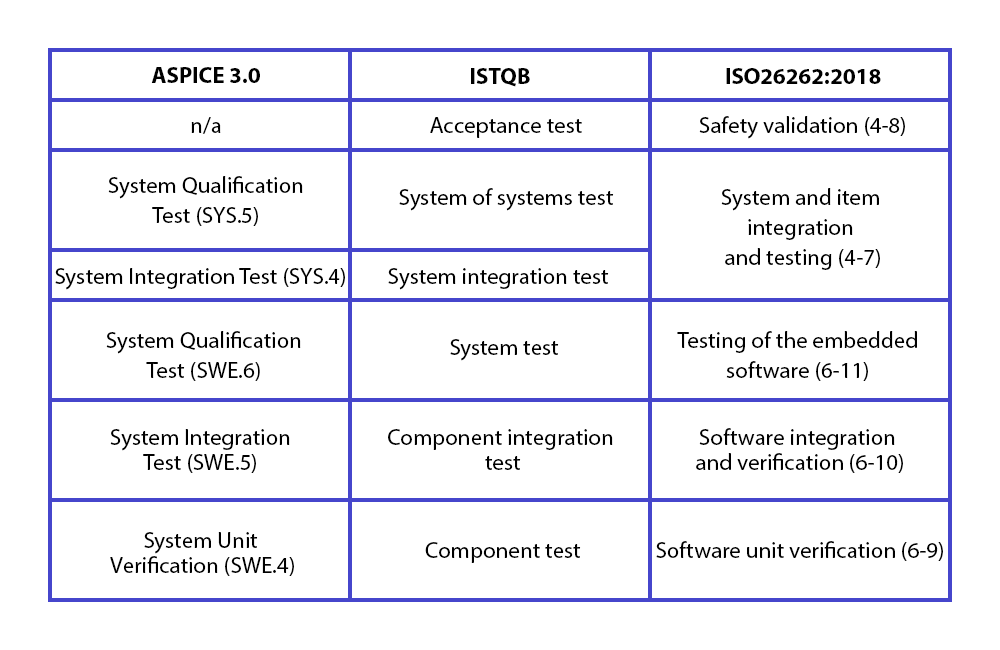 For each test level (unit tests, software integration tests, software qualification tests, system integration tests, system qualification tests), ISO26262 defines the methods to prepare a test environment, derive test cases, and conduct both functional and non-functional testing.
هل تريد معرفة المزيد عن ISO26262؟
اقرأ دليلناكيف نتعامل مع اختبار السلامة الوظيفية في Spyrosoft؟
أود وصف نهجنا في Spyrosoft بأنه "معقد". في خطط الاختبار لدينا، نحدد دائمًا السلامة الوظيفية عملية اختبار السلامة الوظيفية (FuSa).
نقطة انطلاقنا هي تحديد جميع الأساليب وتوليفاتها التي نعتزم استخدامها لمشروع معين.
The approach we take depends on various factors, including ASIL, the stage of development, the system, the architecture, the type of testing we’re responsible for, and the tools available. We utilise our own templates ذلك we أُنشئ بناءً على التوصيات الواردة في ISO26262.
اختيار المنهجية وتوثيقها
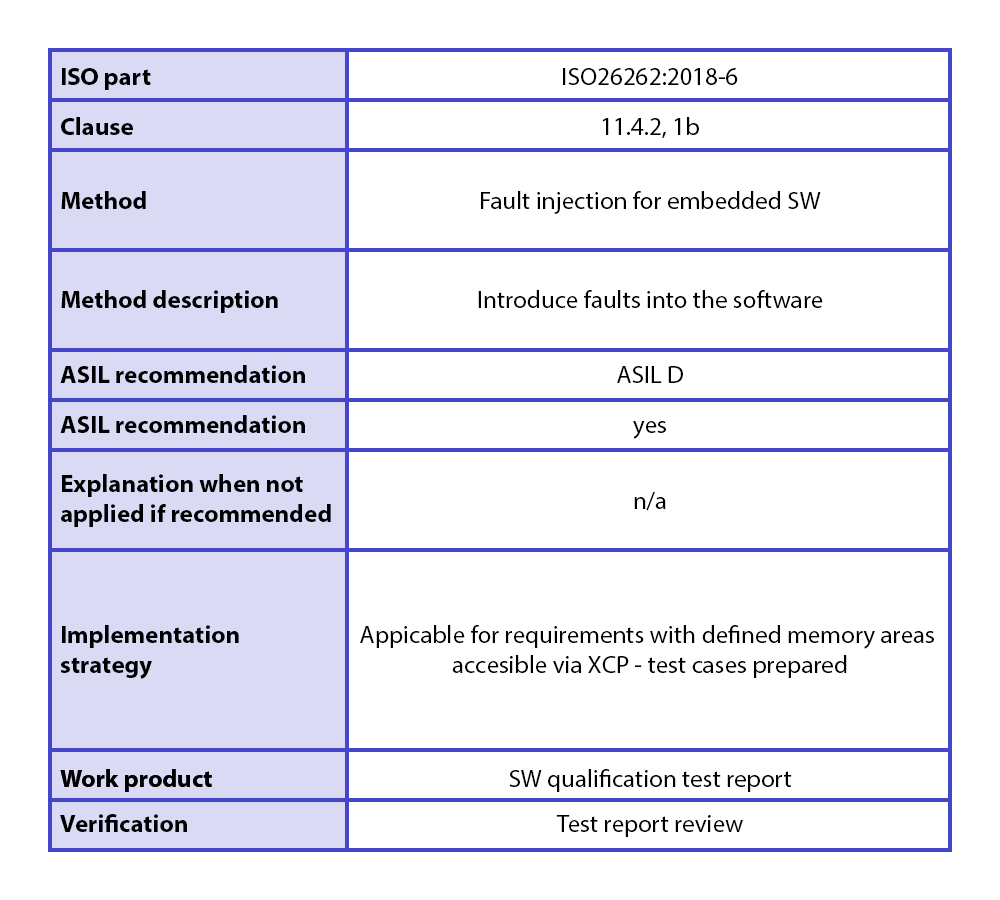
For each dedicated method listed in the ISO standards, we begin by assessing its relevance to our system. If a method is not applicable, we provide a clear explanation as to why it doesn’t fit our needs. Additionally, we outline the rationale for selecting a specific combination of methods.
تتضمن الخطوة التالية تحديد استراتيجية التنفيذ للطريقة المختارة. كما نحدد ناتج العمل الناتج عن استخدام الطريقة، إلى جانب استراتيجية التحقق منه.
إليك كيف يبدو الملخص:
ضمان السلامة من خلال التتبع والأدوات
We use وثائقنا ونصوصنا البرمجية الخاصة، المقيَّمة والمؤهَّلة وفقاً لمعيار ISO 26262. Tيتيح لنا ذلك ضمان التتبع الكامل المطلوب لـ ASPICE والامتثال لعملية ISO 26262n إعداد الاختبارات وتنفيذها وإعداد التقارير.
ندرك أن اختبار السلامة الوظيفية (FuSa) مفيد للغاية أثناء تأهيل مكونات الأجهزة (HW) والبرمجيات (SW).
Additionally, fault injection is an effective method to verify safety measures. It involves intentionally introducing failures into the system to check whether the detection and recovery mechanisms work as expected.
في Spyrosoft، نقدم مجموعة متنوعة من تقنيات حقن الأخطاء، مثل حقن الأعطال عبر بروتوكول XCP إلى البرمجيات قيد الاختبار (SUT) وإجراء محاكاات أعطال الأجهزة.
هل أنت مهتم بمعرفة المزيد؟ اتصل بنا لمزيد من التفاصيل.
ISO 26262 is a functional safety standard specifically tailored for the automotive industry, while IEC 61508 serves as a broader base for electrical, electronic, and programmable electronic control systems across multiple industries. ISO 26262 applies these general principles to address the complexities of achieving functional safety in road vehicles, focusing on safety lifecycle, safety integrity levels (ASIL), and risk assessment.
Yes. While some general testing practices overlap, ISO 26262 introduces specific methods, documentation, and traceability requirements that go beyond standard approaches. A well-structured process for functional safety is essential to meet safety certification criteria, ensure compliance, and pass safety assessments by bodies like TÜV SÜD.
Traceability ensures that each safety requirement is linked to its implementation and corresponding tests. This is critical for demonstrating that the safety system works as intended across the entire lifecycle and for achieving functional safety certification. ISO 26262 and ASPICE both emphasise full traceability as a foundational element of compliance.
Fault injection testing involves deliberately introducing failures into a system to verify the effectiveness of its safety mechanisms. In automotive functional safety, this helps confirm that systems can detect and recover from faults as required. Techniques like XCP injection into the software under test (SUT) and hardware fault simulations are commonly used in control system testing.
Functional safety directly influences the design and verification of both hardware and software in electronic systems. Developers must implement safety mechanisms, perform exhaustive safety-related testing, and follow structured processes to meet the safety integrity level (ASIL) assigned to each safety function. This ensures that the vehicle operates safely under all conditions.




arrow_circle_rightاتصل بنا