الدعم الفني بالذكاء الاصطناعي: حسّن الإنتاجية، وبسّط العمليات، ووفّر المال


AI، تعلم الآلة (ML) و تواصل معالجة اللغة الطبيعية (NLP) هيمنتها the front pages. These technologies and their applications in various industries are growing exponentially. One area where AI makes a massive positive change is technical customer support. AI technical support helps boost customer experiences and transform customer issues into positive interactions by providing instant support and accurate solutions. By quickly addressing customer issues, increasing response times, and offering proactive and comprehensive assistance, AI-driven support enhances satisfaction and builds trust, turning customer issues into positive experiences. This includes even the most specialised and technical sectors, where technical expertise is needed.
سواء كنت تصنّع وتدير توربينات الرياح، أو تشغّل خط إنتاج للتعبئة، أو تدير معدات تعدين تحت الأرض، ينبغي أن تفكر في تطبيق حلول الذكاء الاصطناعي لدعم العملاء.
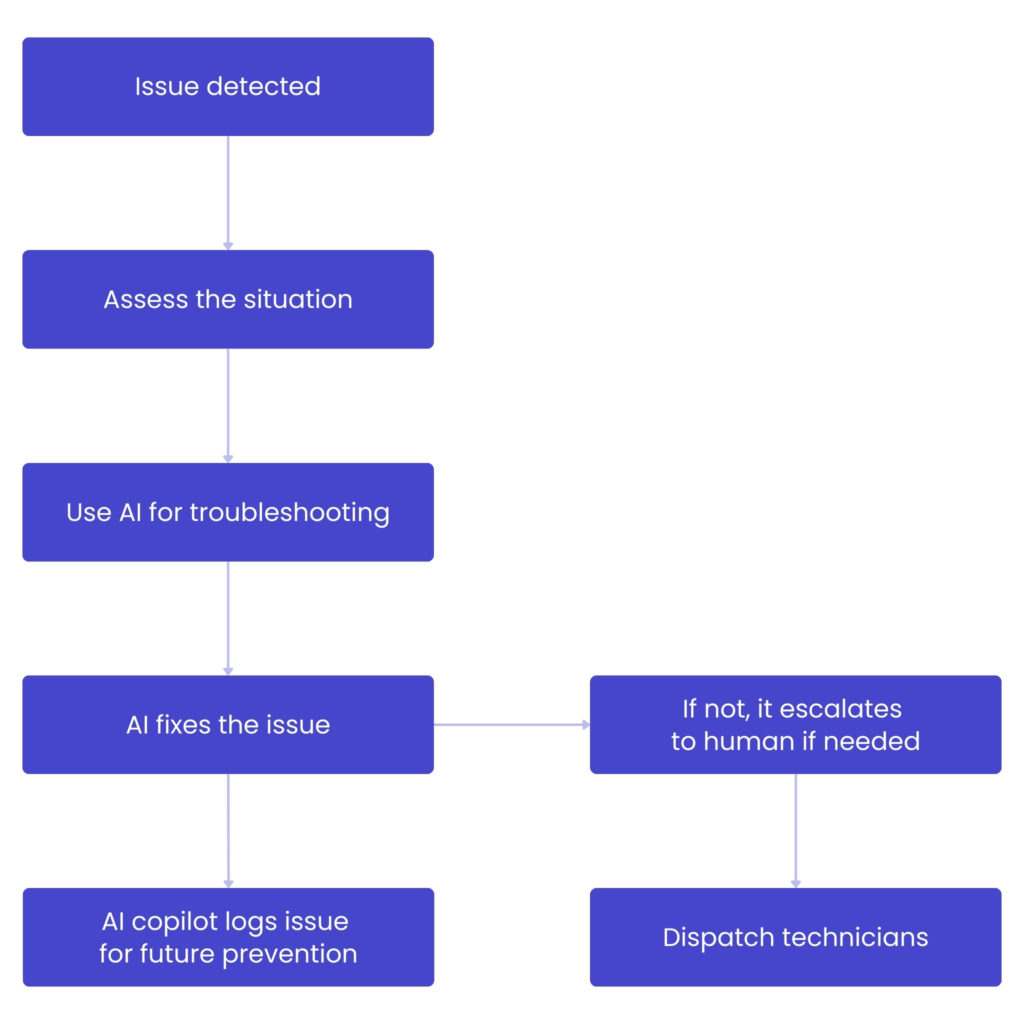
Technical support for software and hardware involves fully understanding the customer’s needs and context, analysing the situation using logs or application settings, identifying root causes and ultimately recommending the right solutions, delivering accurate and relevant answers, or dispatching technicians or human agents to fix the issue. AI can help with any of these steps.
Predictive analytics, ticket classification, advanced troubleshooting, AI-powered responses, 24/7 availability, and technician support are just some use cases that AI for tech support and customer service teams can handle. The great thing about AI in technical support is that it can be tailor-made and adjusted to specific needs to provide comprehensive assistance.
الحاجة المتزايدة للدعم الفني للذكاء الاصطناعي في الصناعات المتخصصة
As specialised industries become more complex, the demand for AI technical support is increasing. Businesses face high volumes of complex cases with customer questions and service requests, skill gaps in support teams, the need for faster support and 24/7 assistance, and many other obstacles. The list goes on. In the long run, they hinder the productivity of support, customer experience, and business performance.
Artificial intelligence is transforming the way businesses handle these obstacles, offering automated solutions that streamline support processes and continuously optimise performance. AI-driven chatbots, predictive analytics, and smart knowledge bases, or AI agents and assistants, can improve response accuracy and technical support operations in numerous industries. Since AI is highly customisable, it can work in various support channels and all three lines, as needed.
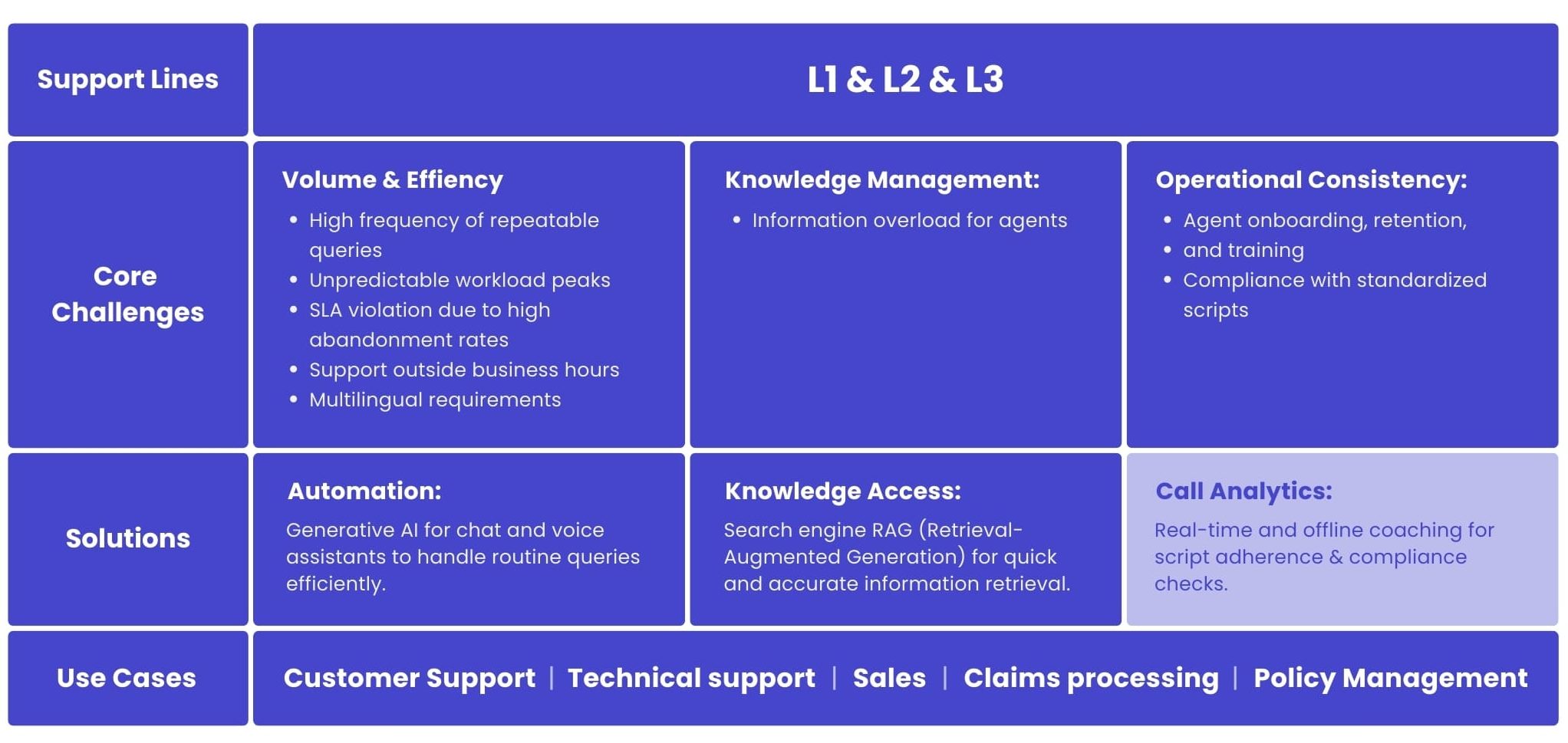
دعم أفضل من خلال النهج الشامل للدعم الفني للذكاء الاصطناعي
The great thing about AI in technical support is that it can be tailor-made and adjusted to specific needs. Artificial intelligence can be integrated with different technologies and in multiple areas of tech support. This allows bridging gaps between various fields and creating systems that are adaptable, insightful, and capable of addressing complex challenges in technical support.
وهذا يعني تعاونًا سلسًا بين الأدوات، مثل روبوتات الدردشة والروبوتات الصوتية وقواعد المعرفة والتحليلات التنبؤية أو المساعدين المشاركين لتقديم دعم تقني فعال ودقيق واستباقي.
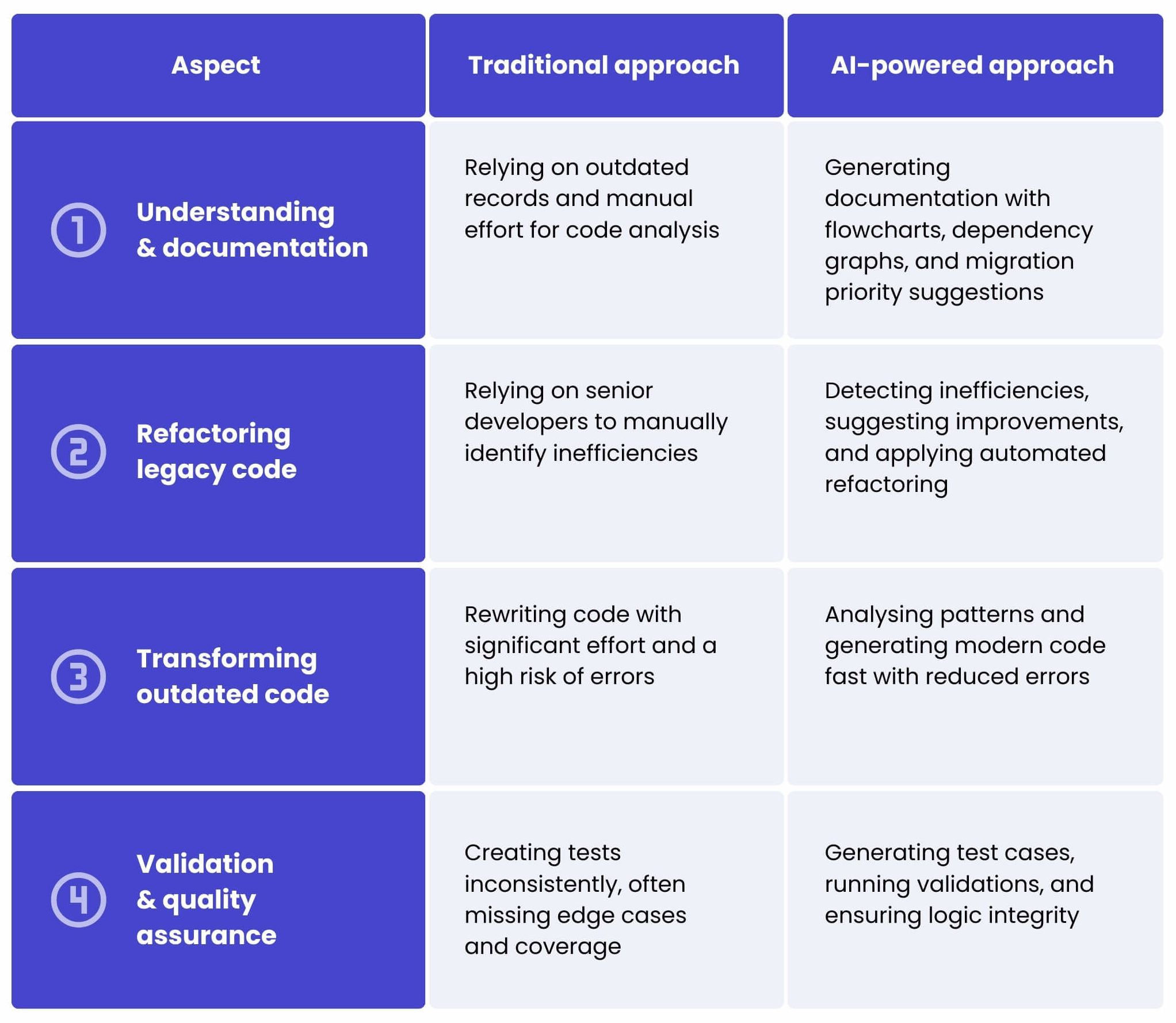
ستجد أدناه بعض دراسات الحالة القصيرة التي توضح كيف يمكن للذكاء الاصطناعي تعزيز الدعم الفني والتخفيف من بعض المشكلات.
المشكلة: حجم هائل من طلبات العملاء
Technical support teams sometimes face an overwhelming volume of requests. This can have a terrible impact both on your customer and their customers – the end users. In cases of significant breakdowns, it can be challenging to mitigate such crises with limited resources.
سيناريو من الواقع: A call centre was responsible for handling system restarts for electric vehicle (EV) charging stations. Whenever a charging station malfunctioned, drivers had to call a dedicated support number for assistance. This process was inefficient, leading to long wait times, delays in operations, and increased workload for support agents.
الحل: 24/7 support chatbot or voicebot. In high-pressure situations like this, AI-driven chatbots or voicebots can significantly ease the burden on support teams. Automating the restart process with an AI-powered solution can streamline issue resolution, reduce downtime, and save costs.
المشكلة: تصنيف وفرز التذاكر بشكل غير دقيق
Customer inquiries should be directed to the right teams. When ticket classification and routing are done manually, mistakes can happen. Urgent issues may be misclassified as low priority, tickets might be assigned to the wrong department, or critical cases could get stuck in a backlog, leaving your customer with an unresolved issue.
سيناريو من الواقع: A manufacturing plant operator notices discrepancies in downtime classification for several production lines following a power outage. The system reports the shutdowns as “Operator Error,” but the operator suspects they should be categorised as “External Factors” due to an unexpected grid failure.
An analyst receives an email from the plant’s shift supervisor stating that workers attempted to restart the production lines at 8:00 AM but were unable to due to ongoing electrical instability. However, the system logs show the downtime starting at 6:00 AM and incorrectly attribute the cause to “Operator Error.”
الحل: Automated ticket categorisation. This can be handled by an AI-powered system that automatically reads emails, classifies events, and generates reports. Integration with ticketing platforms will ensure that classified incidents are logged in real-time, reducing the potential for manual input errors. This can save technicians time and effort.
المشكلة: الإرسال غير الضروري لفرق الفنيين
قد يكون لهذه المشكلة سببان: تصنيف غير صحيح للتذاكر أو ضعف في استكشاف الأخطاء وإصلاحها.
Misdiagnosing the issue can lead to an unnecessary technician dispatch. If the initial assessment fails to pinpoint the root cause accurately, the team may end up responding to a false alarm or a problem that could have been resolved with more thorough analysis. This, however, requires detailed and smart troubleshooting.
سيناريو من الواقع: There was a problem on the bottle production line. A bottle fell over, and as the conveyor belt kept running, all the bottles behind it began tumbling down, smashing and causing chaos. The entire production line was in disarray. Instead of properly assessing the situation, the staff immediately assumed the issue was a serious mechanical failure and ordered a technician team to come out and fix the issue.
The real issue was poor troubleshooting. The production line had simply been disrupted by the falling bottle, but the staff didn’t take the time to properly assess the situation before calling for external help.
الحل: Chatbot handling simple and advanced troubleshooting. To avoid an unnecessary dispatch of technicians, you can implement an AI-powered chatbot that offers a powerful troubleshooting process of simple and advanced problems. These chatbots are designed to understand natural language, recognise user intent, access databases and logs to provide precise solutions to problems. In any other case, they’re smart enough to transfer a request to a human agent.
المشكلة: نقص موارد الخدمة الذاتية الفعّالة
Research shows that more and more customers are eager to find solutions to their problems on their own. This shift in behaviour shows a significant issue for many businesses: the lack of effective self-service resources that customers can access anytime they need.
وهذا لا يقلل من رضا العملاء فحسب، بل يؤدي أيضًا إلى زيادة عبء العمل على فرق الدعم الفني للعملاء.
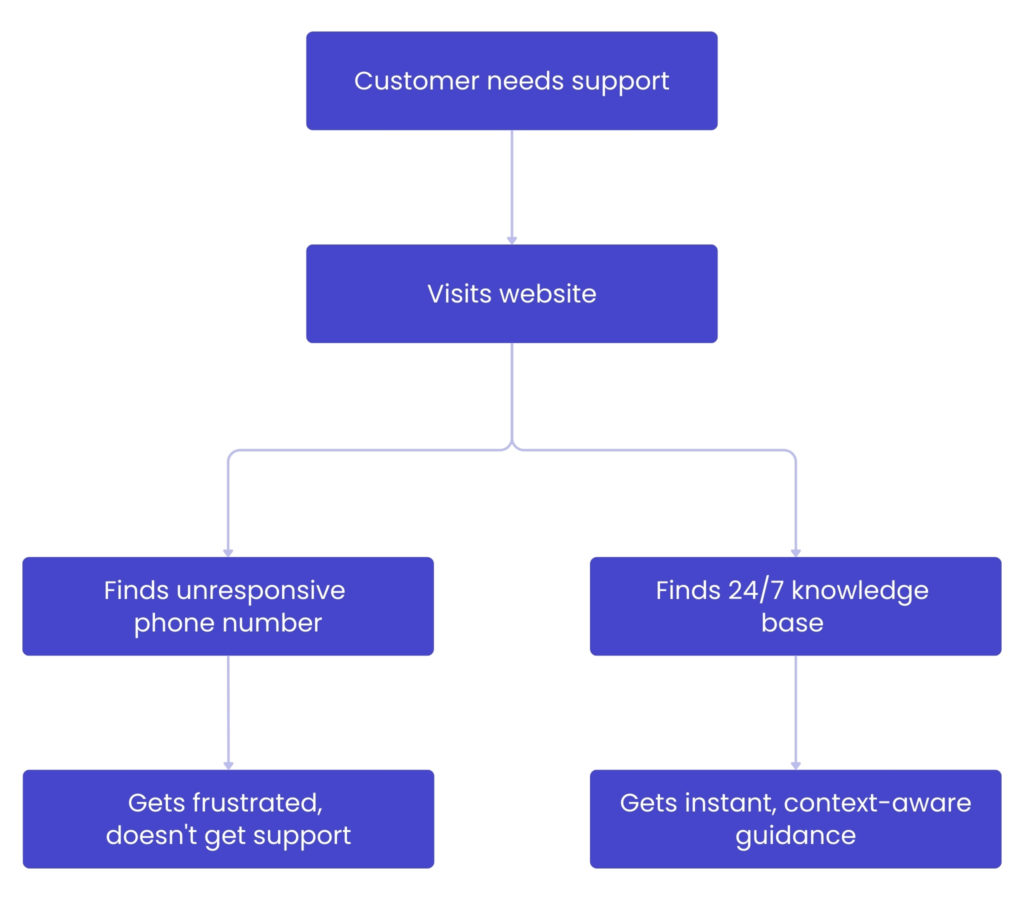
سيناريو من الواقع: A customer wants to buy paint but is unsure about which type of paint is best suited to their needs. They’re looking for a paint that is durable, easy to clean, and provides a smooth finish, but they aren’t sure whether to choose matte, satin, or gloss paint. They visit a paint manufacturer’s website to seek assistance, but all they get is a phone number which doesn’t respond.
الحل: Smart knowledge base. A great way to offer customer self-service is to implement an AI-powered knowledge base. It can improve customer support efficiency massively by leveraging internal knowledge bases and product documentation, so it can provide accurate and context-aware assistance.
المشكلة: غياب الكشف الاستباقي عن المشكلات
Without proactive detection, problems go unnoticed until they escalate. Since there is no system in place to identify early warning signs, minor faults, such as equipment wear, software glitches, or process inefficiencies, go unnoticed. However, sometimes, some malfunctions can be predicted.
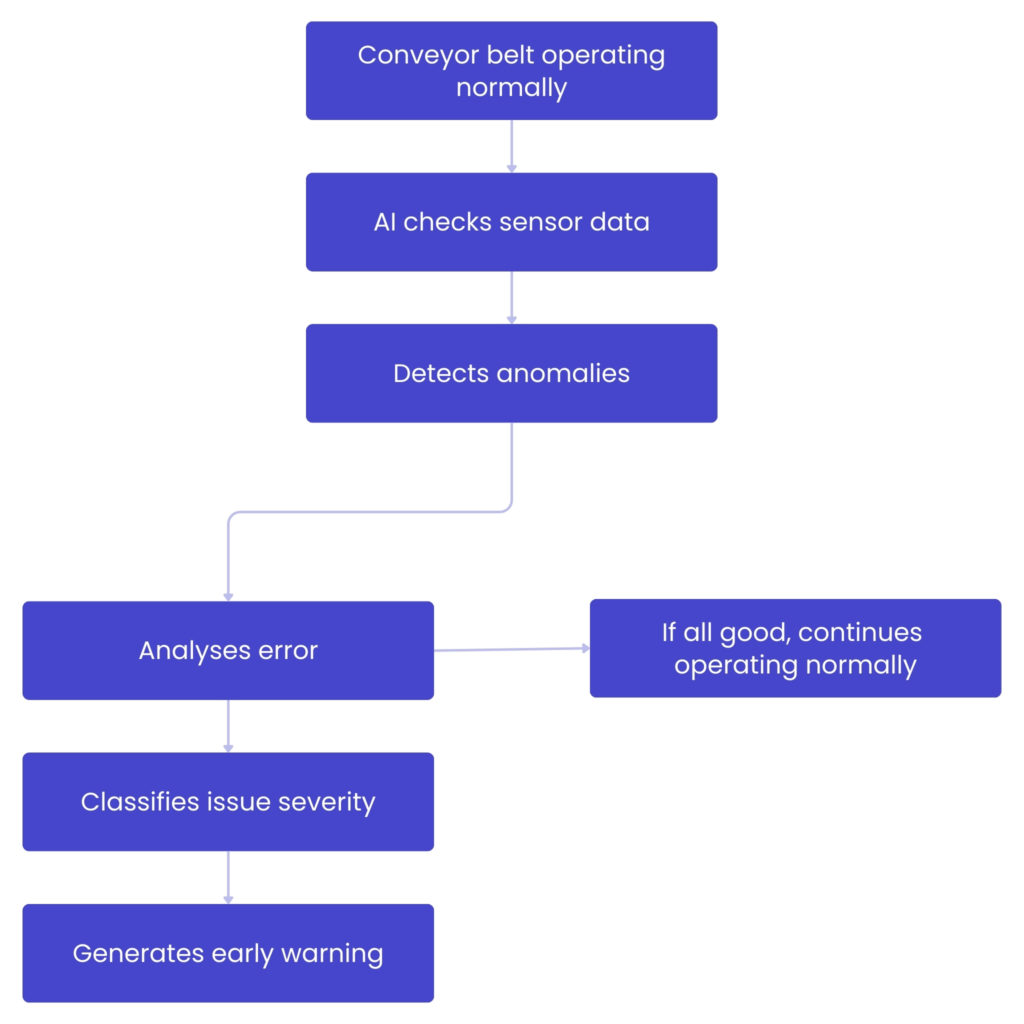
سيناريو من الواقع: في موقع تعدين، تنقل السيور الناقلة الفحم دون توقف، وتعمل في ظروف قاسية مليئة بالغبار. تتوقف السيور الناقلة عن العمل بانتظام، لكن لا أحد يعرف متى سيحدث ذلك.
الحل: Predictive analytics. An AI-driven monitoring system can analyse system, sensor, or user data to identify potential issues before they escalate into major disruptions. By detecting anomalies in real time, such as irregular performance patterns, increased error rates, or abnormal power consumption, the system provides early warnings to prevent failures. Automated issue classification helps prioritise responses, ensuring that critical problems are addressed as quickly as possible.
تطبيقات مفيدة أخرى للذكاء الاصطناعي في فرق الدعم الفني
يمكن للذكاء الاصطناعي أيضًا تحسين مجالات أخرى في عملك تؤثر على أداء فرق دعم العملاء لديك: إدماج الموظفين وإدارة المعرفة.
تهيئة أكثر ذكاءً
Hiring and onboarding new support agents can be hard, especially if you manage multiple products or services with various customer inquiries. New hires need to process a lot of information quickly. Navigating complex documentation, understanding troubleshooting steps, and adapting to different customer scenarios can be overwhelming.
برامج تدريبية مدعومة بالذكاء الاصطناعي
من خلال الاستفادة من الذكاء الاصطناعي، يمكننا إنشاء برامج تدريبية مخصصة تُدمج الموظفين وتضمن اكتسابهم الخبرة اللازمة لأداء أفضل ما لديهم.
One of our clients faced a challenge with their technicians, who were entering a new product domain. Despite their experience, these technicians struggled to grasp the specifics of the new products. Our solution helps address this gap by implementing AI-based tests and assessments that continuously evaluate their knowledge, providing personalised learning paths.
نقل المعرفة
One of the biggest challenges in technical support is the ageing workforce and the loss of expertise when experienced employees retire. Much of their knowledge goes undocumented and exists only in their minds. When they leave, critical troubleshooting skills, historical insights, and best practices risk being lost.
By implementing an AI-powered documentation tool, internal chatbots, or searchable knowledge bases, organisations can capture and retain knowledge. This allows new and existing team members to access expert insights even after senior employees have moved on.
مساعدو الدعم
Support copilots can be set up to provide real-time transcription, analysis, and intelligent assistance to support technicians, whether online or on-site. They not only offer instant access to troubleshooting guides, repair manuals, and best practices but also suggest possible failure causes, guide human agents with relevant diagnostic questions, and extract key insights during interactions.
يمكن لمساعدي الدعم إنشاء تمثيل رقمي في الوقت الفعلي لحالة الآلة، مما يساعد الفنيين على تشخيص المشكلات بشكل أسرع وبدقة أفضل.
اطّلع على كيفية تبسيط عملياتك من خلال حلول الذكاء الاصطناعي

هل تحتاج إلى دعم عملاء مدعوم بالذكاء الاصطناعي في شركتك؟
AI is a versatile tool. This allows businesses to address a wide range of challenges, from online stores to factories. Implementing AI into your operations will streamline troubleshooting, automate ticketing, and enhance decision-making, reducing response times and minimising operational costs.
في Spyrosoft، نحن نعرف الذكاء الاصطناعي من الألف إلى الياء and will be happy to share our expertise to help you improve your business. Whether your focus is chatbots, voicebots, AI agents, smart knowledge bases, or other custom solutions, we tailor our services to meet your unique needs.
الأسئلة الشائعة
يشير الذكاء الاصطناعي في الدعم الفني إلى استخدام تقنيات الذكاء الاصطناعي وتعلّم الآلة لأتمتة عمليات خدمة العملاء والدعم الفني أو تعزيزها. ويشمل ذلك استخدام أدوات مثل روبوتات المحادثة، والمساعدين الافتراضيين، وقواعد المعرفة، والتحليلات التنبؤية، ووكلاء الذكاء الاصطناعي والمساعدين الأذكياء.
يُستخدم الذكاء الاصطناعي لأتمتة الردود، وتصنيف التذاكر وترتيب أولوياتها، ومساعدة الوكلاء البشريين، وتوفير الدعم على مدار الساعة طوال أيام الأسبوع، وتحليل سلوك العملاء لتحسين تقديم الدعم. فهو يساعد في إدارة استفسارات العملاء، وتقديم ردود فورية، وعرض توصيات مخصصة، وحتى التنبؤ بالمشكلات المستقبلية بناءً على البيانات التاريخية – مما يحسن بشكل كبير أوقات الاستجابة وتجربة العملاء الإجمالية.
تشمل الفوائد الرئيسية لاستخدام الذكاء الاصطناعي في الدعم الفني أوقات استجابة أسرع، وتوافراً على مدار الساعة طوال أيام الأسبوع، والقدرة على التعامل مع كميات كبيرة من الاستفسارات المتكررة دون إرهاق بشري. يمكن للأنظمة المدعومة بالذكاء الاصطناعي أيضاً تقليل عبء العمل التشغيلي من خلال أتمتة المهام الروتينية وتحسين دقة حل المشكلات من خلال الرؤى المستندة إلى البيانات. يؤدي هذا إلى تجربة عملاء أكثر اتساقاً وقابلية للتوسع مع تحرير الوكلاء البشريين للتركيز على مشكلات أكثر تعقيداً وأهمية استراتيجية.
يمكن للذكاء الاصطناعي تعزيز جميع مستويات الدعم الفني من خلال أتمتة وتحسين المهام المختلفة بناءً على درجة التعقيد. في دعم المستوى الأول L1، يمكن للروبوتات المحادثة المدعومة بالذكاء الاصطناعي والمساعدين الافتراضيين التعامل مع الاستفسارات الشائعة وإعادة تعيين كلمات المرور وتقديم استكشاف الأخطاء الأساسي. بالنسبة للمستوى الثاني L2، يمكن لأدوات الذكاء الاصطناعي مساعدة الوكلاء البشريين من خلال تحليل السجلات واقتراح الحلول وأتمتة التشخيص. في دعم المستوى الثالث L3، يمكن للذكاء الاصطناعي دعم المهندسين من خلال تحديد الأنماط في مجموعات البيانات الكبيرة، وتسريع تحليل السبب الجذري، وحتى التنبؤ بمشكلات النظام المتكررة قبل أن تتفاقم.




arrow_circle_rightاتصل بنا
لنناقش كيف يمكننا دعم مشاريعك في مجال الذكاء الاصطناعي

Tomasz Smolarczyk
مدير الذكاء الاصطناعي
arrow_circle_right مقالات أخرى