كيفية بناء وكلاء ذكاء اصطناعي للمؤسسات وأنظمة متعددة الوكلاء تعمل في بيئة الإنتاج


Multi-agent systems have quickly become one of the most talked-about ideas in enterprise AI. On slides, the promise is compelling: multiple specialised agents coordinate work, use tools, analyse documents and data, and support faster decisions across the business. In a short demo, everything looks effortless. In practice, that’s usually where things start to get more complicated.
The problem is rarely the model itself. Most prototypes break down much earlier, when they hit production realities: integration complexity, latency, unclear ownership, weak guardrails, and limited observability. That’s the gap you should focus on as an executive. In an enterprise setting, the real question is not whether an agent can produce an impressive answer in a demo, but whether the system can operate reliably, securely, and quickly enough to deliver consistent business value – week after week, not just during a pilot.
وهذا، عمليًا، هو ما يعنيه تطوير وكلاء الذكاء الاصطناعي للمؤسسات فعلاً: أنت تبني نظام تشغيل للقرارات، وليس مجرد توليد فقرات نصية أفضل.
كيف تختلف وكلاء الذكاء الاصطناعي المؤسسي عن عمليات الدمج البسيطة للنماذج اللغوية الكبيرة؟
يبدأ الكثير من الالتباس من التعريفات.
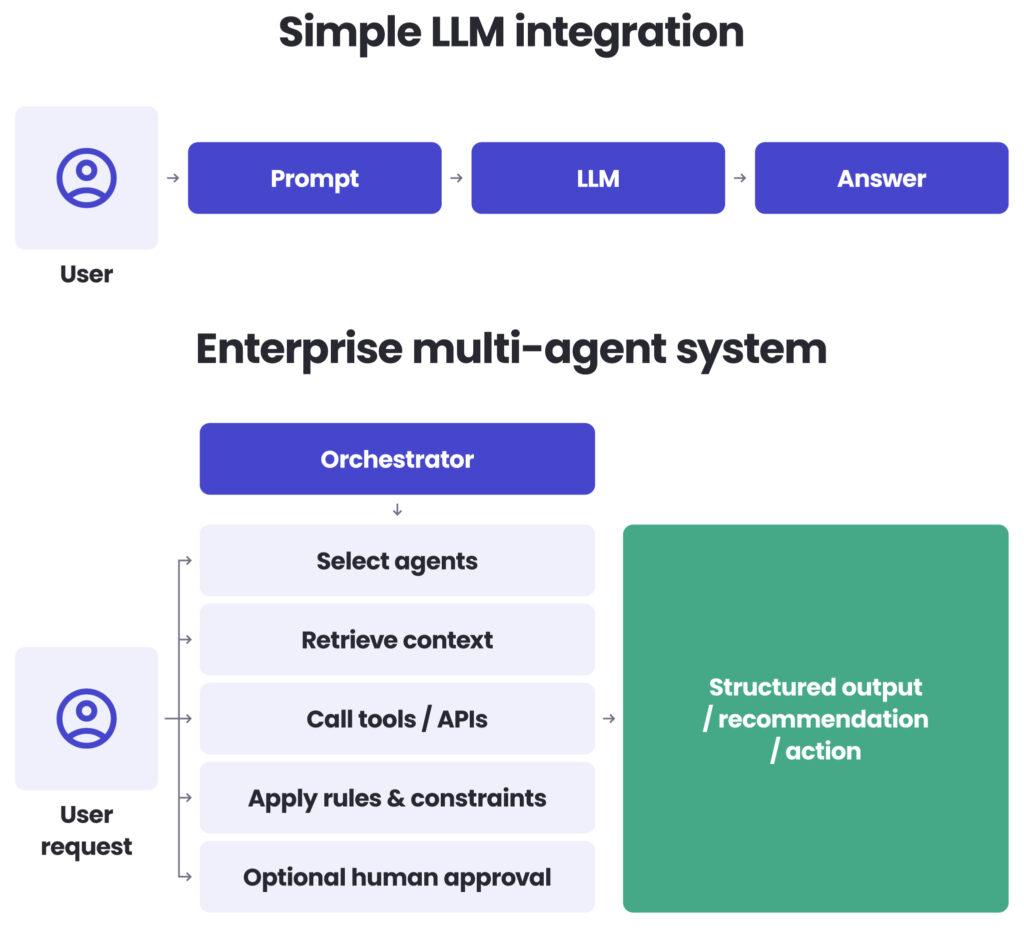
A simple LLM integration generates an answer from a prompt and some context. Think: “search and summarise this document for me.” An enterprise AI agent, especially as part of a multi-agent system, does more: it routes tasks, chooses tools, gathers information from multiple sources, applies constraints, and sometimes coordinates several specialised components before returning an output.
It is the difference between a capable assistant and an operations manager. One can answer questions; the other has to understand the process, talk to multiple systems and people, and still not break anything.
That distinction matters because it changes both cost and delivery risk. If a workflow only needs summarisation, drafting, or question answering over one bounded source, a multi-agent setup may be unnecessary. In many cases, a standard LLM workflow will be cheaper, faster, and easier for you to govern.
تبدأ وكلاء الذكاء الاصطناعي للمؤسسات والأنظمة متعددة الوكلاء في أن تكون منطقية عندما يتطلب العمل اتخاذ قرارات عبر أنظمة متعددة. على سبيل المثال:
- الجمع بين البيانات التشغيلية والمستندات السياساتية،
- التحقيق في المشكلات عبر أنظمة التذاكر وإدارة علاقات العملاء وقواعد المعرفة الداخلية،
- تنسيق عدة مساعدين متخصصين في مجالات محددة ضمن مسار تنفيذ واحد.
الخلاصة التنفيذية بسيطة: استخدم أنظمة الوكلاء المتعددين حيث يخلق التنسيق قيمة واضحة، وليس حيث يضيف فقط تعقيداً معمارياً.
ما الذي يجعل وكلاء الذكاء الاصطناعي في المؤسسات مفيدين فعلاً في بيئة الإنتاج؟
The strongest enterprise use cases are usually not about autonomy. They are about controlled execution across fragmented systems. In other words: less “digital employee”, more “disciplined workflow engine.”
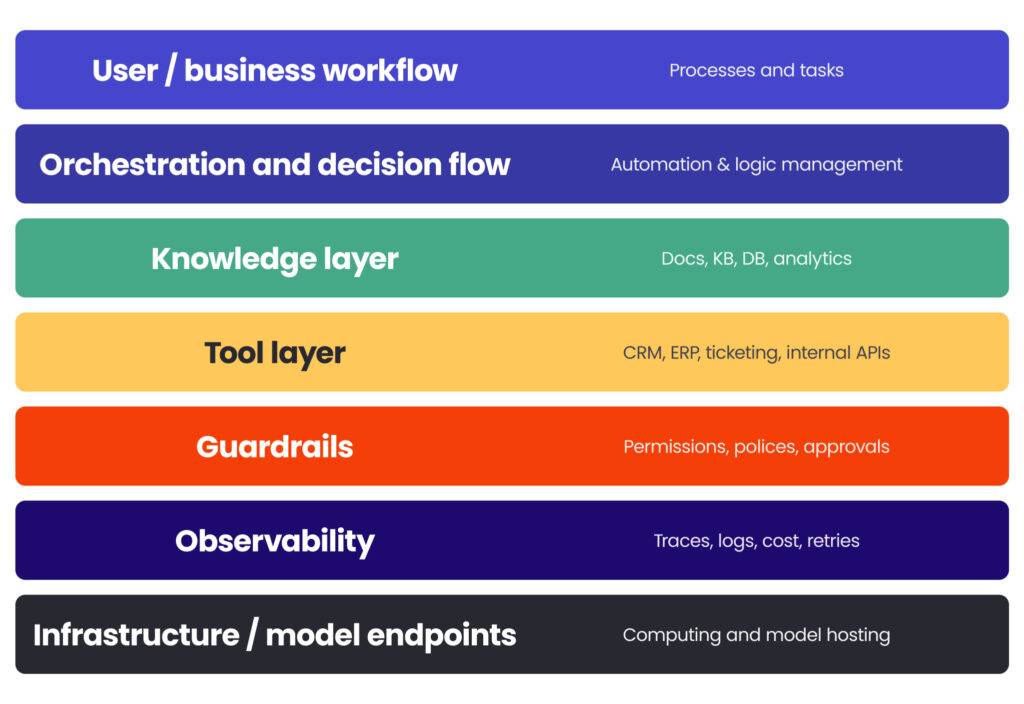
التنسيق هو طبقة التحكم
This is the part that decides what happens next, which tool gets called, when retries are allowed, and where the boundaries are. Without a clear orchestration layer, multi-agent systems quickly become hard to debug and even harder to trust. Every extra step may add useful capability, but it also adds coordination overhead and latency. You need to design that trade-off upfront, not discover it too late in the process.
تكامل الأدوات أهم من براعة النموذج
In production, agents are only as useful as the systems they can safely access. If they cannot retrieve the right records, query the right data, or trigger the right workflows, they remain polished interfaces rather than business tools. This is why enterprise agent projects often turn into integration projects with AI inside them. In practice, this means you should treat integration as a core part of the solution.
يجب أن تعمل البيانات المهيكلة وغير المهيكلة معًا
Many of the highest-value use cases emerge here. A system may need to interpret a policy document, check a contract clause, and compare it with operational or financial data before recommending an action. That sounds intuitive, but it requires discipline: entity alignment, source separation, context control, and a clear execution path between documents and systems of record.
إذا كنت تريد نتائج مبهرة دون هلوسة، فيجب هندسة هذا الجسر بين المستندات والبيانات، وليس الارتجال. هنا تنجح أو تفشل العديد من المبادرات.
يجب أن تظل البنية قابلة للتكيّف
Retrieval patterns, context-window assumptions, and model choices will evolve. A design that treats today’s implementation pattern as permanent will age badly. The better approach is to keep the architecture modular enough to change retrieval logic, routing rules, or execution paths without having to redesign the whole system.
ما هي بنية الذكاء الاصطناعي الوكيلي في الممارسة العملية (ولماذا يصبح الأداء مشكلة نظامية)؟
من أكثر الأخطاء الشائعة في المؤسسات افتراض أن زمن الاستجابة يعتمد بشكل أساسي على النموذج.
إنه لا يفعل ذلك.
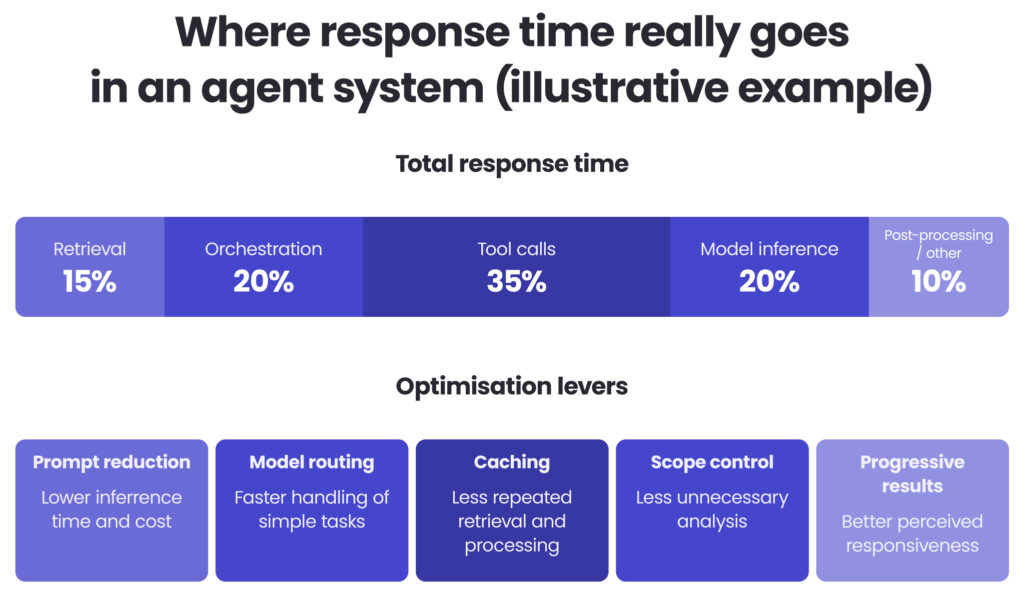
Performance in multi-agent systems is usually the sum of several layers: retrieval, orchestration, tool calls, model inference, and post-processing. That means performance issues rarely disappear with a single optimisation. They improve when you look at the whole execution path and optimise it end-to-end.
عادةً ما تكون الرافعات الأعلى تأثيراً عملية وليست معقدة:
- تقليل حجم الأوامر،
- توجيه المهام البسيطة إلى نماذج أصغر أو أقل تكلفة،
- تخزين العمليات الحسابية المتكررة مؤقتاً،
- تجنّب التحليل غير الضروري للطلبات منخفضة التعقيد،
- إرجاع نتائج تدريجية بدلًا من إبقاء المستخدمين في انتظار مخرج نهائي واحد.
This point matters more than many teams expect. UX is part of the performance story. Users don’t just look at response time – they judge whether the system feels responsive and predictable. Intermediate updates, partial outputs, or visible step-by-step execution can significantly improve trust, even before deeper performance gains are in place. If you want users to trust the system, responsiveness is just as important as raw speed.
In one enterprise rollout, the biggest speed improvements did not come from changing the model alone, but from coordinated optimisations across prompts, routing, caching, and orchestration. That is usually how production systems improve: through disciplined tuning of the whole stack.
Think of the agent platform as a restaurant: the model is just the chef. Retrieval, orchestration, tools, and UX are the kitchen, service, and billing. If those fall apart, the quality of the food stops mattering very quickly.
ما هي مخاطر وكلاء الذكاء الاصطناعي في بيئة الإنتاج (وكيف تخفف منها)؟
لا يمكن التعامل مع نظام يتخذ قرارات عبر الأدوات ومصادر البيانات مثل روبوت محادثة بهوية تجارية أفضل.
في بيئة الإنتاج، يحتاج فرقك إلى معرفة:
- ما خطط له الوكيل،
- الأدوات التي استدعاها،
- المصادر التي استخدمها،
- المدة التي استغرقها كل خطوة،
- ما تكلفته،
- حيث فشل،
- ولماذا أعاد توصية معينة.
هنا تصبح القابلية للمراقبة أمرًا بالغ الأهمية. فهي ليست إضافة للامتثال، بل متطلب تشغيلي أساسي.
In regulated environments, it’s also how you support compliance – through clear audit trails of what the system saw, did, and recommended. When a multi-agent system behaves unexpectedly, decision traces act like a flight recorder. They help teams diagnose routing mistakes, poor tool selection, retry loops, missing constraints, and cost anomalies before those issues start to undermine trust.
وينطبق الأمر ذاته على حواجز الحماية. فمخاطر الإنتاج الرئيسية معروفة جيداً: حقن الأوامر، وتسرب البيانات، وإساءة استخدام الأدوات، والتصعيد غير المنضبط.
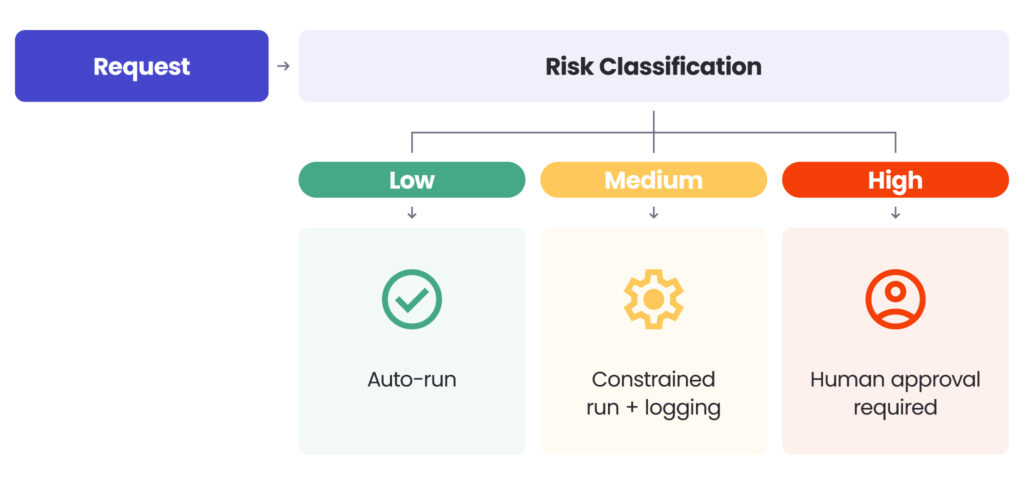
الاستجابة الصحيحة ليست تجنب الوكلاء، بل تصميم التنفيذ بناءً على مستويات المخاطر:
- يمكن تشغيل المهام منخفضة المخاطر تلقائياً،
- يجب تشغيل المهام متوسطة المخاطر ضمن قيود أكثر صرامة مع قابلية تدقيق كاملة،
- يجب أن تتطلب المهام عالية المخاطر موافقة بشرية.
A useful rule is simple: if you cannot explain why the system took a given action, it is not production-ready. That holds technically, operationally, and from a governance standpoint. “We asked the model nicely” is not an audit strategy.

تسجّل كل خطوة: التتبع، والمدخلات، واستجابة الأداة، وزمن الاستجابة، والتكلفة، وفحوصات السياسات.
الأخطاء الشائعة في تطوير الوكلاء
معظم إخفاقات وكلاء المؤسسات لا تنبع من نماذج ضعيفة، بل من أخطاء متوقعة في التسليم والبنية المعمارية.
تشمل بعض أكثرها شيوعاً:
- التعامل مع الوكيل باعتباره "مجرد أوامر نصية" بدلاً من نظام إنتاجي له ملكية واضحة وضوابط وقياس عن بُعد،
- إطلاق منصة واسعة قبل إثبات سير عمل شامل واحد مهيمن بمعايير نجاح قابلة للقياس،
- إضافة مكونات دون قياس تأثيرها على زمن استجابة مسار التنفيذ، وأنماط الفشل، والعبء الإضافي للتكامل،
- تأجيل المراقبة حتى بعد فقدان المستخدمين للثقة وظهور المشكلات بالفعل في بيئة الإنتاج،
- السماح للأدوات بالعمل دون حدود صارمة للأذونات وبوابات سياسات ومسارات تدقيق،
- بافتراض أن قيود المنصة هي تفاصيل تنفيذية وليست مخاطر تسليم تغيّر الأداء والجداول الزمنية،
- السماح للنطاق بالتوسع دون إعادة وضع خطوط أساس رسمية للجداول الزمنية والتكاليف والطاقة الاستيعابية.
The pattern behind these mistakes is simple: teams focus on model behaviour first and operating discipline second. In practice, you’ll get better results if you reverse that order from the start.
اكتشف كيف يمكن للذكاء الاصطناعي تحويل أعمالك
حدد موعدًا مع مستشار الذكاء الاصطناعي
كيف تتوسع من إثبات المفهوم إلى النشر على مستوى المؤسسة؟
Many enterprise agent initiatives become unstable long before go-live, not because of model quality, but because of delivery design. Once those common mistakes are avoided, scaling becomes much more manageable.
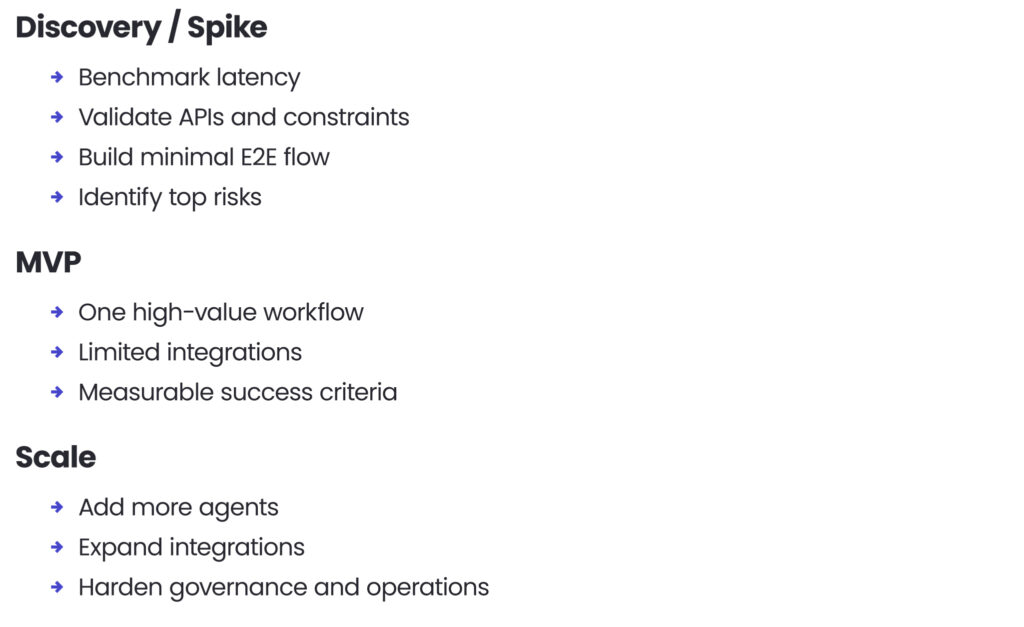
إجراء مرحلة الاستكشاف قبل تقديم التزامات صارمة
If the system relies on unfamiliar platforms, preview features, or complex integrations, a short feasibility phase is essential. Benchmark latency, validate rate limits, and build a minimal end-to-end prototype in the target environment. Identify risks early and assign ownership – this is far less costly than dealing with architectural friction during delivery.
ابدأ بسير عمل واحد محدد النطاق
A common mistake is trying to launch a full platform too early: multiple agents, document intelligence, analytics, admin features, governance controls, and broad integrations all at once. The better approach is to prove one dominant workflow first, then scale. That produces faster validation and a clearer ROI signal.
التعامل مع قيود المنصة كمدخلات تسليم من الدرجة الأولى
When a client mandates tools, cloud patterns, or framework choices, those decisions change performance, complexity, and timeline. They should be priced into the plan explicitly, not treated as neutral background conditions.
التحكم في النطاق بشكل رسمي
تصبح المبادرات متعددة الوكلاء هشة عندما يتوسع النطاق دون تعديل الوقت والطاقة الاستيعابية. فالتحكم الرسمي في التغييرات هو ما يحافظ على موثوقية التسليم المؤسسي.
من أين يأتي العائد على الاستثمار حقًا
ما يحتاجه المديرون التنفيذيون حقًا هو معرفة ما الذي يتحسن، وليس وعدًا مجردًا آخر حول التحول بالذكاء الاصطناعي.
بالنسبة للأنظمة متعددة الوكلاء، فإن أكثر مقاييس العائد على الاستثمار فائدة هي المقاييس التشغيلية:
- تقليل وقت التحقيق،
- دورات امتثال أو مراجعة أسرع،
- عمليات تسليم يدوية أقل،
- تكلفة أقل لكل تحليل،
- وصول أسرع إلى معلومات جاهزة لاتخاذ القرار.
لهذا السبب ينبغي أيضًا تأطير مسألة البناء مقابل الشراء من الناحية التشغيلية.
Buy when speed matters most, integrations are limited, and the goal is to validate a narrow use case. Build or heavily customise when governance, deep system integration, and multiple strategic workflows become core to the operating model.
تستقر معظم المؤسسات في المنطقة الوسطى: إعداد هجين يجمع بين مكونات الموردين وطبقة منصة وكيل مؤسسي للتنظيم الداخلي والتحكم والحوكمة.
كيف يبدو هذا في الممارسة العملية
عمليًا، تتعامل فرق المؤسسات الناجحة مع وكلاء الذكاء الاصطناعي كأنظمة إنتاجية، وليس كسير عمل قائم على الأوامر النصية.
That means focusing on three things from the start: architecture and integration, performance and cost control, and governance by design. The goal is not more autonomy for its own sake. It is reliable execution across real enterprise systems, with clear operational boundaries and measurable outcomes.
هذا هو النهج الذي تتبناه Spyrosoft في تقديم الذكاء الاصطناعي على مستوى المؤسسة.
الخلاصة
The future of enterprise AI will likely involve ecosystems of specialised agents. But the organisations that benefit first will not be the ones with the most sophisticated demos. They will be the ones that treat multi-agent systems as production software: bounded, observable, integrated, and governed.
المسار العملي ليس معقداً. ابدأ بسير عمل واحد عالي القيمة. صمّم القابلية للملاحظة وضوابط الحماية منذ اليوم الأول. أثبت الموثوقية قبل التوسع.
وهذا ما يحوّل الطموح القائم على الوكلاء إلى قيمة تجارية – وما يضمن أن يتحول العرض التوضيحي الرائع إلى نظام إنتاجي موثوق.
At Spyrosoft, we work with organisations to design and deliver production-ready AI systems – from early discovery and architecture design to integration, optimisation, and governance. If you want to explore how this could look in your environment, let’s have a conversation.
الأسئلة الشائعة: وكلاء الذكاء الاصطناعي المؤسسي وأنظمة الوكلاء المتعددين في بيئات الإنتاج
Enterprise AI agents work by combining orchestration, data access, and decision logic into one execution layer. In practice, enterprise AI agents rely on structured coordination rather than raw model intelligence. They integrate multiple tools, retrieve enterprise data, and follow predefined execution paths to complete complex workflows reliably. This is how artificial intelligence moves from isolated outputs to consistent operational impact.
AI assistants typically respond to prompts, while enterprise AI agents represent coordinated systems that can plan, act, and interact with multiple services. Enterprise AI agents work across systems, not just within a single interface. They integrate tools, apply constraints, and execute tasks end-to-end, which makes them suitable for complex workflows rather than simple question answering.
Autonomous agents make sense when decisions span multiple systems and require coordination. Enterprise AI agents rely on orchestration to manage dependencies, risks, and execution order. For simpler use cases, lightweight AI automation is often more efficient. The key is matching the solution to the complexity of the workflow rather than defaulting to autonomy.
Enterprise AI agents integrate through APIs, data pipelines, and controlled access layers. They rely on secure connections to enterprise data sources and use agent tools to retrieve, update, or validate information. This integration layer is critical, as enterprise AI agents work only as well as the systems they can safely access and coordinate.
The main risks include lack of observability, uncontrolled tool usage, and weak governance. Enterprise AI agents rely on traceability to show how decisions were made, which is essential for both trust and compliance. Without visibility into agent performance, even well-designed systems can fail silently or behave unpredictably in complex workflows.
Reliability comes from treating enterprise AI as a system, not a model. Enterprise AI agents work best when orchestration, monitoring, and guardrails are designed from the start. This includes clear execution paths, policy enforcement, and continuous tracking of agent performance across all steps of a workflow.
Agent tools are what allow AI agents to move beyond text generation. Enterprise AI agents rely on tools to interact with databases, APIs, and business applications. This is how AI agents integrate into real operations and execute complex workflows instead of just describing them.
AI automation improves consistency and efficiency, but it must be carefully controlled. Enterprise AI agents rely on balanced orchestration to maintain strong agent performance. Over-automation can introduce latency or errors if workflows become too complex, so optimisation across the full execution path is essential.




arrow_circle_rightاتصل بنا
لنناقش حالة استخدامك للذكاء الاصطناعي

Tomasz Smolarczyk
مدير الذكاء الاصطناعي
arrow_circle_right مقالاتنا