لماذا تكلفك تجارة السلع اليدوية أكثر مما تعتقد

![[hero] why manual trading is costing you more than you think](/wp-content/uploads/2025/08/hero-why-manual-trading-is-costing-you-more-than-you-think-scaled-1-1024x574.jpeg)
In the volatile world of commodity trading, timing is everything. Prices shift in seconds, margins vanish in moments, and the difference between profit and loss often comes down to how quickly your team can respond to changes. Yet across the industry, many trading firms still rely on outdated and fragmented systems.
تداول السلع يتحرك بسرعة. هل يمكنك مواكبته؟
Day-to-day operations depend on Excel spreadsheets, scattered email threads, manual data entries, and systems that are not designed to communicate with each other – let alone keep up with the pace of global markets.
This kind of setup might have worked a decade ago. Today, it’s both inefficient and expensive. And while traders struggle to keep pace, competitors who have embraced automation are already executing trades faster, scaling smarter, and maximising their margins.
لذا لم يعد السؤال هو ما إذا كانت العمليات القديمة تعيقك – بل كم تكلفك كل يوم.
التكلفة المرتفعة للعمليات غير المنظمة
Speed, precision, and seamless coordination – in commodity and currency trading, these are non-negotiables. Every order, every data point, and every decision must flow seamlessly between trading desks, operations teams, and executive leadership.
للأسف، لا تزال شركات كثيرة جداً تعمل وفق نظام صُممت فيه العمليات الرئيسية لعالم أبطأ، وتكافح لمواكبة متطلبات الأسواق اليوم.
وإليك كيف يبدو ذلك على أرض الواقع:
- يتم تتبع الطلبات باستخدام Excel.
- تُعدّ رسائل البريد الإلكتروني قناة الاتصال الأساسية لتحديثات الحالة.
- إعادة إدخال البيانات يدويًا هي الطريقة الوحيدة لنقل المعلومات من نظام إلى آخر.
- وإذا تغيّر شيء ما؟ إنها جولة أخرى من المراجعات والموافقات والتواصل المتبادل.
تؤدي كل خطوة من هذه الخطوات إلى تأخير، وكل واحدة منها تفتح الباب أمام الأخطاء.
لكل تأخير ثمن
In this kind of environment, even the smallest setback can lead to significant consequences. Manual data entry creates room for mistakes. Disjointed systems mean traders and operations teams are often working from slightly different versions of the truth – causing confusion and miscommunication.
علاوة على ذلك، بدون منصة مركزية لإدارة تغييرات الطلبات والموافقات، يمكن أن تتحول حتى التعديلات البسيطة إلى نقاط احتكاك.
The consequences stack up quickly: missed trades, rework, or bottlenecks that stop deals before they even start. All of it comes at the expense of what matters most: profitability, transparency, and the ability to respond to the market dynamics in the moment – not after the fact.
يكمن جوهر المشكلة في فجوة داخل سير عمل التداول نفسه: بين الفرق التي تنفذ الصفقات وتلك المسؤولة عن دعمها أو الموافقة عليها.
نظريًا، إنها عملية واحدة سلسة. لكن عمليًا، غالبًا ما تترك الأدوات غير المتصلة والعمليات غير الموحّدة هذه المجموعات تعمل في جزر منعزلة.
As a result, traders end up working with outdated data and waste time chasing down the status of orders instead of executing them. Meanwhile, operations teams struggle to keep pace with market changes – losing track of what’s been approved, and by whom. Additionally, leadership lacks the real-time visibility needed to make confident decisions quickly.
في بيئة تداول لا يزال فيها اتخاذ القرار البشري يلعب دورًا مركزيًا، فإن هذا الافتقار إلى الهيكلة ليس قديمًا فحسب، بل خطير أيضًا.
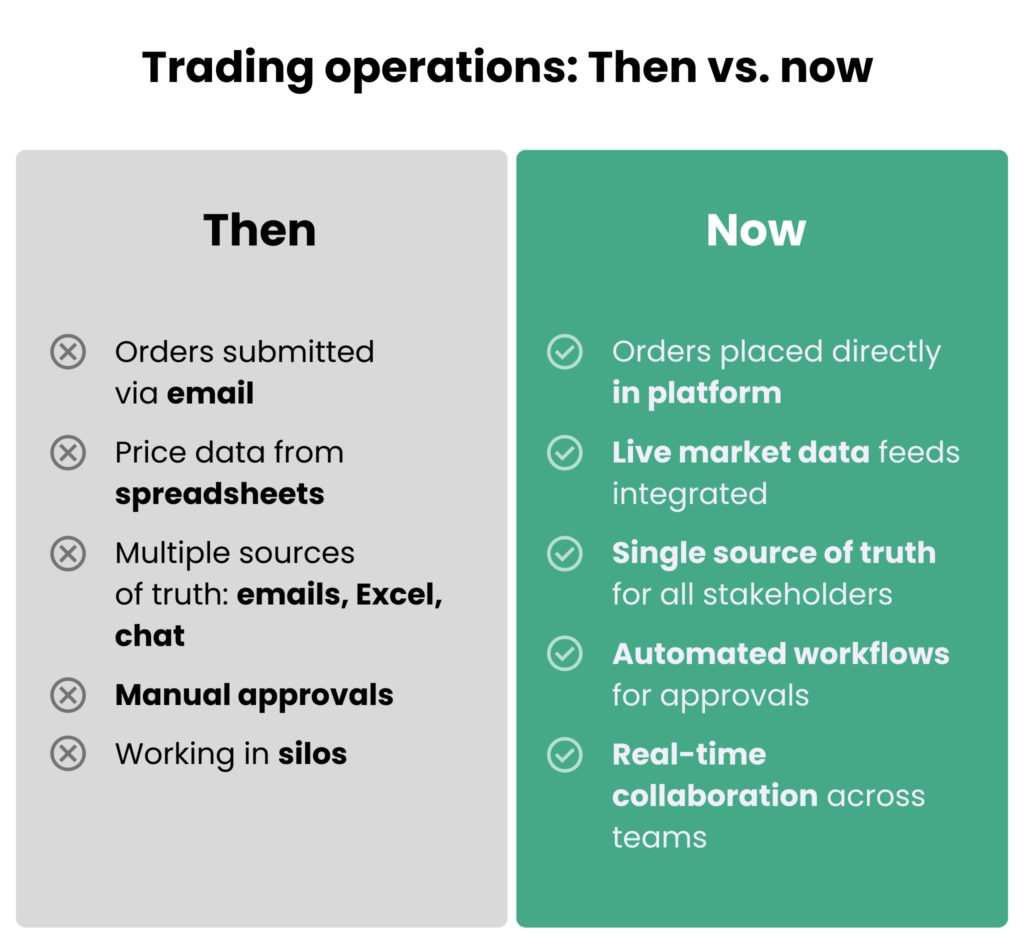
العواقب: عندما تتباعد الكفاءة والربحية
In trading, speed determines the difference between seizing an opportunity and incurring a loss. The time between making a decision and executing it is often measured in seconds. However, when your systems can’t keep up with the pace of the market, that gap grows wider really fast.
التوقيت هو كل شيء
Slow order processing surely is not just an inconvenience; it also poses a direct threat to profitability. In fast-paced markets, a five-minute delay in execution can mean the difference between purchasing at the best price and overpaying by thousands. The longer the delay, the higher the financial risk. Every moment of hesitation hands advantage to your faster competitors.
لا رؤية يعني لا سيطرة
Without real-time tracking and change management tools, traders and operations teams are forced to operate reactively. There’s no simple way to monitor the status of an order, approve changes, or trace its execution history. When things go wrong (and eventually they do) auditability becomes a nightmare, and trust in internal processes diminishes.
الأنظمة غير المرنة تتعثر تحت الضغط
Legacy tools can’t handle the intensity of modern trading. They fail to adapt when volumes spike or scale when complexity increases. Manual workflows can’t adapt fast enough, resulting in backlogs, missed windows of opportunity, and increased errors. This not only impacts profit margins but also introduces reputational risk, especially in client- or broker-facing interactions.
سيناريو: لحظة ضائعة، صفقة خاسرة
Imagine a trader spotting a sudden swing in the currency markets. The opportunity is clear: they need to execute a high-value order immediately. But instead of acting swiftly, they’re copying data from an email into Excel, manually updating quantities, and checking against a spreadsheet for pricing.
By the time the trader submits the order (via email or an outdated interface) the price has already shifted. The opportunity is gone. In fact, in many cases, the trade is never placed – not because the trader missed the signal, but because the data they relied on was outdated. What could have been a profitable and timely execution turns into another lost profit (and mounting frustration).
ما العبرة من ذلك؟ السوق لا ينتظر الأنظمة حتى تلحق بالركب، ولا ينبغي لك أن تنتظر أيضًا.
نظام أكثر ذكاءً، مصمم لتجار السلع
يواجه المتداولون اليوم مفارقة: يُتوقع منهم التحرك بسرعة، والتصرف باستراتيجية، والاستجابة لإشارات السوق المتغيرة – كل ذلك بينما يغرقون في المهام اليدوية والأنظمة القديمة.
Instead of making quick, informed decisions, they chase down information. This limits their ability to think ahead. And let’s be honest: every moment spent fixing broken workflows is a moment not spent seizing market advantages.
مع وجود الأدوات المناسبة، يمكن للمتداولين التوقف عن التفاعل مع العمليات والبدء في التركيز على إشارات السوق. تُمكّنهم الأتمتة والشفافية والوصول إلى البيانات في الوقت الفعلي من اتخاذ قرارات أذكى وأسرع – وقضاء وقتهم حيث يُحدث ذلك فرقًا حقيقيًا.
That’s exactly what we delivered in a recent project for a global commodity trading company. Their teams were struggling with disconnected tools and time-consuming manual processes. Traders were constantly context-switching and losing margin in the process. Our solution helped them transform their approach – integrating their operational workflows with a high-performance execution layer.
النتيجة؟ ضوضاء أقل ووضوح أكبر. يربط النظام البيانات، ويؤتمت الموافقات، ويوفر رؤى حاسمة حول الطلبات على الفور.
يتيح ذلك توفير الوقت والمساحة الذهنية للمتداولين للتركيز على ما يجيدونه: تعظيم القيمة من خلال صفقات ذكية وفي الوقت المناسب.
الأتمتة = ميزة تنافسية في تجارة السلع
Modern trading operations require more than just surface-level digitisation. They need systems that “think” and tools that actively detect, flag, and respond to changes as they happen. That’s the kind of intelligent automation we built into our solution.
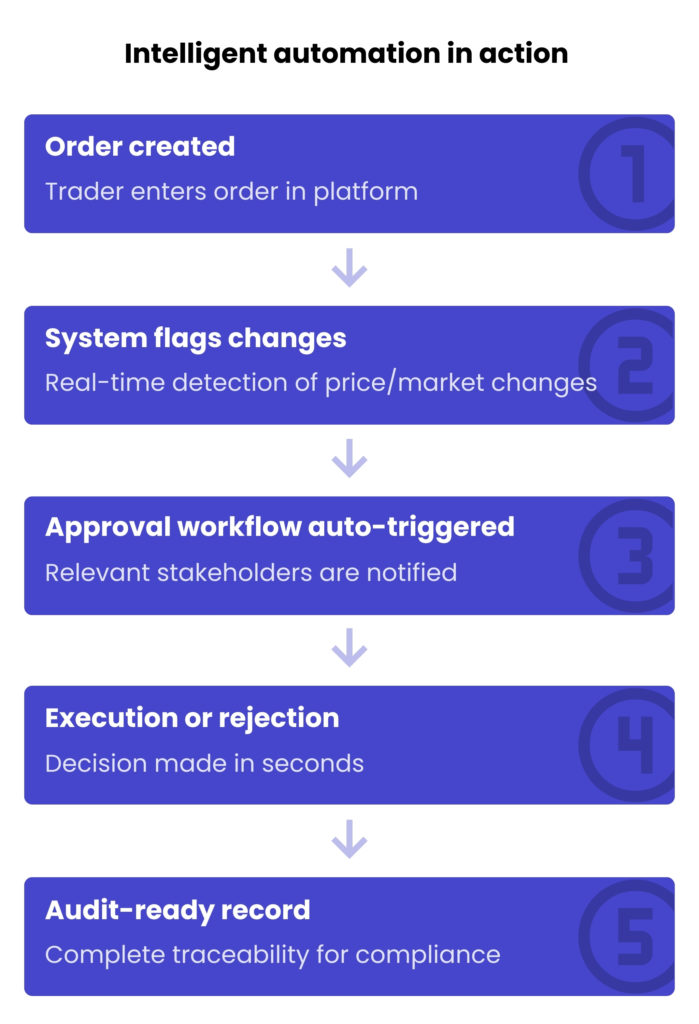
يقضي حلّنا على نقاط التواصل اليدوية البطيئة التي تستهلك الوقت وتُدخل المخاطر. فهو يؤتمت أهم نقاط الاحتكاك في عملية التداول:
- تعديلات الطلبات؟ يكتشفها على الفور ويطلق سير عمل موافقات ذكية ومحددة مسبقًا للموافقات أو الرفض.
- دقة البيانات؟ يتم التحقق منه تلقائيًا، مما يقلل من خطر الأخطاء المكلفة.
- رسائل بريد إلكتروني متبادلة؟ فهو يزيلها ويستبدلها بالمعالجة المباشرة والشفافية الكاملة عبر الفرق.
تأثير مثبت: من دقائق إلى لحظات
عملياً، يُترجم هذا إلى مكاسب كبيرة. خفّض عميلنا متوسط وقت تنفيذ الطلب من 5-6 دقائق إلى أقل من دقيقة. إنه تحول مكّن من استجابة أسرع للسوق، وتسعير أكثر دقة، وإنتاجية تشغيلية أكبر.
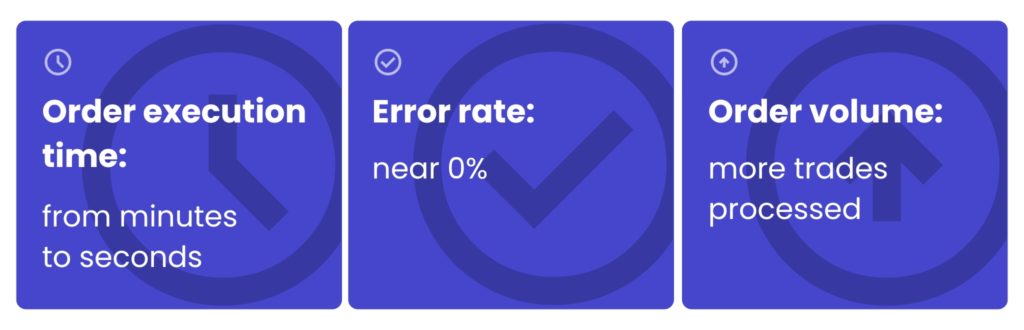
عندما تتسارع وتيرة التنفيذ، تتسارع كل الأمور الأخرى أيضاً: القرارات والتسويات وإعداد التقارير، وفي نهاية المطاف، الربحية.
ما يعنيه ذلك لعملك
The value of a modern, integrated trading solution goes far beyond speed. It reshapes how your entire organisation thinks and operates – from the front office to the back office. Let’s recap the benefits:
1. تنفيذ أسرع = توقيت أفضل للسوق
First, in commodity and currency trading, your ability to respond to market shifts in real time defines your competitive edge. When your systems eliminate manual steps and reduce execution time, you can act faster and with greater confidence. That means buying and selling at the optimal moment, not a minute too late.
2. زيادة الإنتاجية وتقليل الأخطاء
Next, automated workflows allow your team to process more orders without increasing headcount, and without sacrificing accuracy. By minimising human input, the system reduces the risk of miscommunication, incorrect pricing, or duplicate submissions. As a result, every trade becomes cleaner, quicker, and easier to audit.
3. مصدر واحد للحقيقة عبر الأعمال
Finally, when data, approvals, and workflows are unified in a single platform, organisational silos disappear. Traders gain immediate access to the information they need. Operations teams can track progress and identify issues in real time. Finance and compliance gain full visibility and traceability. Everyone’s working from the same playbook, which means fewer surprises and better results.

الخلاصة: الأنظمة القديمة مخاطرة لا يمكنك تحمّلها
To sum up, in today’s fast-moving markets, sticking with outdated tools and manual processes is inefficient and risky. Every delay, missed opportunity, and human error erodes your margins and threatens your hard-earned reputation.
الشركات التي تزدهر هي تلك التي تربط العمليات بالتداول، وتزيل الاحتكاك غير الضروري، وتمكّن فرقها من التصرف بحسم ووضوح.
لم تعد التكنولوجيا مجرد "رفاهية اختيارية". إنها أساس التداول التنافسي، إذ تتيح التنفيذ في الوقت الفعلي، واتخاذ القرارات المبنية على البيانات، والشفافية الكاملة عبر جميع الوظائف.
حان الوقت لتحديث عمليات التداول لديك بحل مصمم للأسواق في الوقت الفعلي وتحقيق تأثير حقيقي على الأعمال. اكتشف كيف يمكن لمنصة مخصصة، أثبتت جدارتها في بيئات تداول السلع الحية، تبسيط سير عملك. اطّلع على حلول أتمتة تداول السلع بالتفصيل.
الأسئلة الشائعة
In fast-moving commodity trading markets, speed and accuracy are essential. Automation reduces delays in executing trades, ensures real-time visibility, and removes manual errors from processes. Whether trading energy commodities, precious metals, or agricultural goods, an integrated trading platform helps investors and companies buy or sell at the optimal time, improving profitability and risk control.
Commodity prices are influenced by supply and demand imbalances, production costs, geopolitical tensions, currency fluctuations, and even seasonal trends. For example, energy commodities like crude oil and natural gas are highly sensitive to global demand forecasts, while agricultural commodities are influenced by harvest yields and climate conditions.
A futures contract is an agreement to buy or sell a specific quantity of an underlying commodity at a predetermined price on a set date in the future. Futures trading allows investors to speculate on price movements or hedge against risk. These contracts are standardised and traded on regulated futures markets.
لبدء تداول العقود الآجلة للسلع، تحتاج إلى:
افتح حساباً لدى وسيط يتيح الوصول إلى أسواق العقود الآجلة
افهم مواصفات العقد للسلعة التي اخترتها
استخدم منصة تداول توفر بيانات في الوقت الفعلي وأدوات لإدارة المخاطر
تعرّف على كيفية إدارة متطلبات الهامش والتعرض للسلعة.
غالبًا ما يبدأ المبتدئون بمركز صغير أو يستخدمون صناديق المؤشرات السلعية قبل الانتقال إلى التداول الكامل في العقود الآجلة.
Investors can gain exposure to the commodity market without storing physical commodities by using: commodity ETFs (exchange-traded funds), commodity futures (futures and options contracts), exchange-traded commodities (ETCs). These tools allow you to buy or sell based on the commodity price while avoiding storage and transportation costs.




arrow_circle_rightاتصل بنا
لنتحدث عن تبسيط عمليات تداول السلع الخاصة بك

arrow_circle_right مقالاتنا


