שחרור ערך עסקי באמצעות יכולת פעולה הדדית בתעשייה 4.0


Smart factories run on more than machinery – they rely on connectivity. In Industry 4.0, the real advantage isn’t just automation, it’s interoperability: the ability for machines, systems, and software to work together without friction. It’s how individual components become one intelligent, responsive whole.
For industrial suppliers, staying ahead means designing with integration in mind – right from the first line of code to the final product.
המקרה העסקי בעד יכולת פעולה הדדית
Disconnected systems come at a high price. When machines can’t communicate with each other, data gets trapped in silos, processes slow down, and valuable insights slip through the cracks.
The outcome? What should be a streamlined, intelligent production environment turns into a series of inefficiencies: from production delays to reactive maintenance and missed optimisation opportunities.
Did you know that disconnected systems also create friction at every stage of the value chain? Downtime becomes more frequent, decision-making takes longer (often based on incomplete or outdated information), and accuracy decreases.
In an era where industrial players are expected to respond in real-time, adapt quickly, and deliver consistently, these inefficiencies can cost much more than just time. Think about performance, think about reputation…
כאשר מכונות מדברות באותה שפה
Interoperability changes this equation. By establishing a common language among machines, platforms, and software (regardless of the vendor or their age), it allows industrial suppliers to:
- Reduce operating costs through better resource planning, predictive maintenance, and data-driven automation.
- Increase speed and quality with faster feedback loops and synchronised systems.
- Scale efficiently as new technologies and client requirements emerge.
In short, interoperability can be your strategic move toward a leaner and more resilient future.
הגישה של Spyrosoft לתפעול הדדי
Interoperability may be the goal, but the way you achieve it matters just as much.
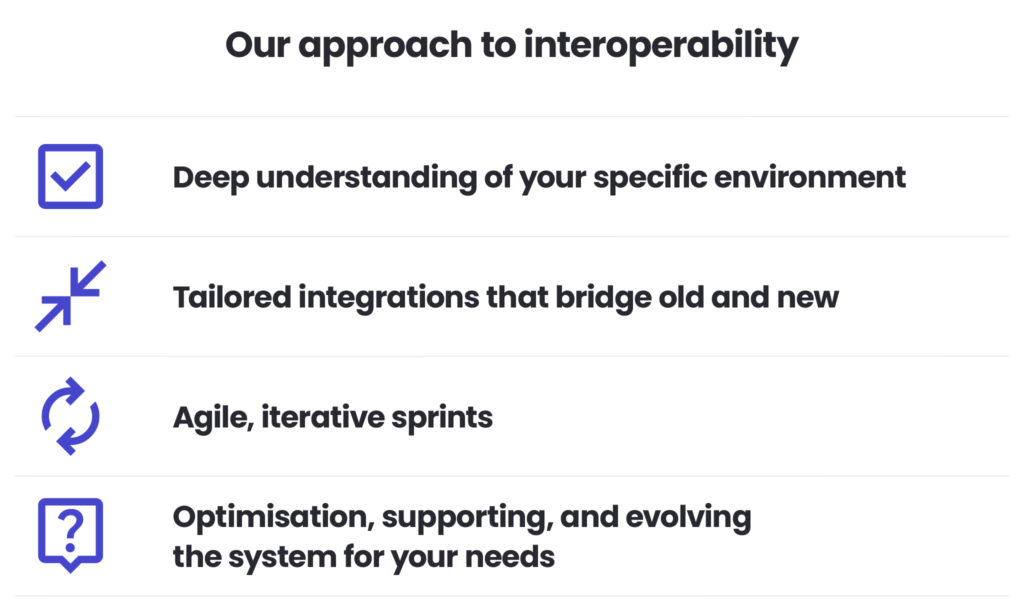
We understand that every production environment comes with its own ecosystem of machines, protocols, priorities, and constraints, and we design around that complexity, not in spite of it. We build integration strategies that meet manufacturers where they are today while preparing them for where they’re going next.
1. Tailored integration built around your environment
Firstly, we start with a deep understanding of each client’s specific setup: hardware, data architecture, vendor landscape, and business drivers. From there, we design solutions that bridge gaps between new and legacy systems, customising the integration to fit your unique context.
2. זריז, ממוקד ובנוי לספק תוצאות
Yes, speed matters – but so does direction. Our teams work in rapid, iterative sprints, allowing you to see value early and frequently. And because we align each release with measurable business outcomes, you’re never integrating tech for the sake of it. It’s always tied to real impact (such as cleaner data or faster workflows).
3. שותף לטווח ארוך
We don’t disappear after deployment. Our engineers stay close, adapting the system as needs evolve, providing ongoing support, training, and continuous optimisation to keep your interoperability strategy working at the speed of your business.
טכנולוגיה בפרקטיקה
Interoperability only delivers real value when it’s done right. What do we mean by that? Simply put, turning interoperability from theory to reality requires more than just vision – it demands the right technology stack, expertly applied.
That’s why at Spyrosoft, we only use proven tools that are designed to handle real-world complexities. Our technology approach is grounded in what industrial environments need most: precision, resilience, and future readiness.
אינטגרציה של תאום דיגיטלי
We connect physical assets with their digital counterparts to create a continuous feedback loop between operations and insights. These systems report, predict, simulate, and adapt. This two-way flow of insights enables real-time monitoring, smarter control, and predictive diagnostics. It also lays the foundation for intelligent, responsive production.
תשתית היברידית של קצה וענן
Some decisions can’t afford to wait for the cloud. We use hybrid architectures that combine the real-time processing power of edge computing with the flexibility and scalability of cloud platforms. This ensures critical data stays close to where it’s needed while still providing long-term storage, analytics, and control.
גישור פרוטוקולים עם תוכנת ביניים חכמה
Industrial environments speak many languages. We use middleware that acts as a translator, bridging both legacy and modern protocols (such as OPC UA, Modbus, and EtherNet/IP) to ensure that systems can communicate clearly and securely. It’s integration without the bottlenecks.
אבטחת סייבר וציות מלכתחילה
Interoperability means more data in motion – and at the same time, more potential risk. That’s why we embed cybersecurity and regulatory compliance into every layer of the integration process (including encryption and access control). We make sure data flows freely while maintaining safety and trust intact.

Smarter collaboration model for industrial suppliers
For industrial equipment suppliers, delivering value today means more than just delivering high-performance machines. It means delivering products that fit – seamlessly, smartly, and strategically – into your customers’ digital ecosystems and can grow with them.
In this landscape, interoperability has evolved from being merely a technical feature to becoming a strategic advantage in supplier-customer relationships.
When your machines and systems connect effortlessly to the rest of a factory’s ecosystem, you establish yourself as a trusted digital partner.
You deliver not only hardware but also readiness for integration, automation, and real-time insight. This is the kind of value that secures and maintains contracts.
At Spyrosoft, we help industrial equipment manufacturers shift from transactional delivery to shared digital strategies. We design tailored interoperability layers that make your products easier to adopt, connect, and scale – regardless of your clients’ existing setup.
מה זה אומר עבורכם:
- Faster integration into your clients’ existing environment.
- Streamlined adoption of digital services, from predictive maintenance to performance analytics.
- Stronger positioning in competitive tenders that demand plug-and-play readiness.
כיצד זה מתבטא בפועל
Imagine an original equipment manufacturer (OEM) delivering robotic assembly units. They’re facing challenges in securing contracts within plants using mixed-vendor environments. Their solution functions perfectly in isolation but causes friction when the integration is left to the customer.
By embedding interoperability from the very beginning, with native support for protocols like OPC UA and including a built-in edge module for local analytics, they may begin to sell more machines but also become the preferred supplier for fully connected lines.
This is what strategic interoperability looks like: not just working within systems but working for the business.
תוצאות עסקיות מדידות
When machines, systems, and platforms speak the same language, the benefits resonate throughout the entire operation.
Or, in other words: when systems connect, business accelerates.
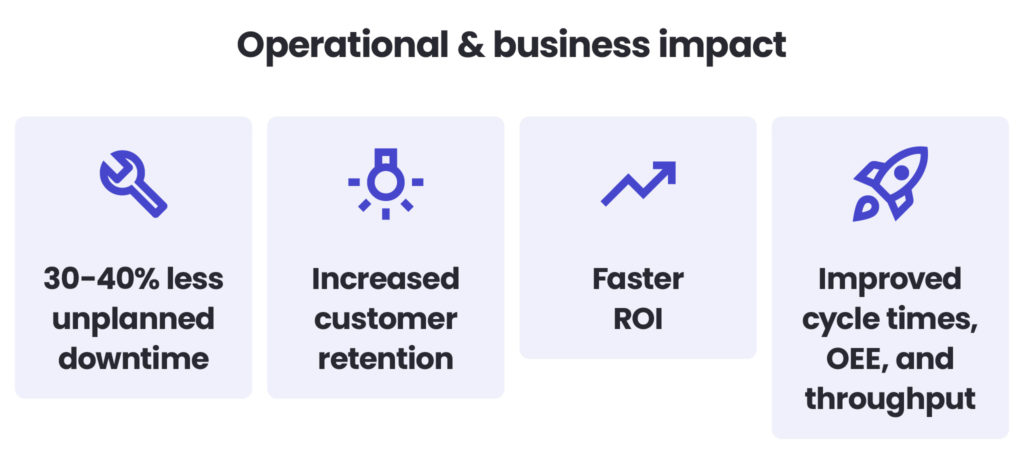
Here’s what strategic interoperability delivers in practice:
פחות זמן השבתה, יותר זמן פעילות
Integration enables predictive maintenance and real-time diagnostics, cutting unplanned outages by up to 30-40%, keeping production lines running smoothly and consistently.
שימור לקוחות גבוה יותר
Equipment that’s easier to connect and manage transcends being just a tool. It becomes an integral part of the customer’s digital strategy – and that’s what drives satisfaction, loyalty, and long-term retention.
החזר השקעה מהיר יותר
Streamlined data flows support better planning, resource allocation, and automation, ultimately reducing costs and shortening payback periods.
שיפור בביצועים התפעוליים
With connected systems driving synchronised processes, companies experience measurable improvements in cycle times, overall equipment effectiveness (OEE), and throughput.
For industrial suppliers, the value goes both ways.
By embedding interoperability into your offerings, you help clients move faster, scale smarter, and perform better – positioning yourself as more than just a vendor.
Ready to make interoperability your competitive edge?
Industry 4.0 is all about smarter connections. Interoperability is the key to integrating isolated systems into efficient, adaptive ecosystems. You already know the results: reduced costs, increased agility, and accelerated innovation.
At Spyrosoft, we’re aware that no two factories (or tech stacks) are alike. That’s why we work alongside industrial equipment suppliers to design and deliver tailored interoperability solutions that fit your unique environment. Whether you’re retrofitting legacy assets or engineering new product lines with connectivity in mind, we’re here to help you get it right.
If you’re ready to turn interoperability into a lasting advantage, reach out to us. Our experts are ready to discuss your goals and propose a solution that fits.
שאלות נפוצות: יכולת פעולה הדדית
Without interoperability, data becomes siloed, processes slow down, and decision-making is based on incomplete information. Connected systems enable real-time insights, predictive maintenance, improved efficiency, and faster responses to changing production demands.
מערכות מנותקות עלולות להוביל ל:
– עלייה בזמן ההשבתה
– קבלת החלטות איטית יותר
– עלויות תפעול גבוהות יותר
– Reactive instead of predictive maintenance
– הזדמנויות אופטימיזציה שהוחמצו
Over time, these inefficiencies impact performance, profitability, and competitive positioning.
When systems are connected, data flows continuously between machines and monitoring platforms. This enables predictive diagnostics and early fault detection, helping reduce unplanned downtime and keeping production lines running more consistently.
Yes. With the right integration strategy and middleware, legacy equipment can be connected to modern systems. Technologies such as protocol bridging (e.g. OPC UA, Modbus, EtherNet/IP) allow older and newer machines to “speak the same language” without requiring full hardware replacement.
הטכנולוגיות המרכזיות כוללות:
– Digital twin integration for real-time simulation and feedback
– Hybrid edge–cloud infrastructure for fast processing and scalable analytics
פיקוח חיצוני בשילוב עם הדרכה
– Built-in cybersecurity mechanisms to protect connected environments
When combined strategically, these technologies create a resilient and future-ready integration layer.
Seamless data exchange improves planning, automation, and resource allocation. This leads to faster implementation, reduced operational waste, and shorter payback periods on digital investments.




arrow_circle_rightצרו קשר