ما هو البث السحابي ولماذا يعيد تشكيل تقديم المحتوى الإعلامي؟


You’ve just finished production on your latest series and your stakeholders want it to be available worldwide by next week. In the old days, this would have meant frantically calling data centre vendors, setting up encoding servers across three continents and praying that nothing broke during the weekend launch. Now? You upload to the cloud and grab a coffee while algorithms handle the rest.
قُدِّر حجم سوق البث المرئي العالمي بـ129.26 مليار دولار أمريكي في 2024 ومن المتوقع أن يصل إلى 416.8 مليار دولار أمريكي بحلول عام 2030. وهذا ليس مجرد نمو — بل تحوّل كامل في الصناعة يحدث في الوقت الفعلي.
This guide breaks down everything you need to know about cloud streaming: how it works behind the scenes, why it’s becoming the go-to choice for innovative media companies and what it means for your content strategy.
ما هو البث السحابي؟
البث السحابي هو تقنية تنقل المحتوى مباشرة من الخوادم البعيدة إلى الأجهزة عبر الإنترنت، مما يلغي الحاجة إلى التخزين أو المعالجة المحلية. بدلاً من تنزيل الملفات على جهازك، يحدث كل شيء في السحابة – حيث تتولى خوادم قوية جميع المهام وترسل النتائج مباشرة إلى شاشتك.
Whether it’s video content, interactive games, live broadcasts, or other digital media, streaming technology handles all content processing and optimisation on server infrastructure before transmitting to user devices in real-time. Think of it as having a supercomputer do all the heavy lifting while your device simply displays the results.
وهذا يعني يمكن للمستخدمين الوصول إلى المحتوى عبر أي جهاز متصل بالإنترنت – laptops, smartphones, and smart TVs – regardless of their hardware specifications. A basic smartphone can stream high-quality video just as an expensive laptop can, because the processing occurs remotely on powerful servers, not on your device.
يغيّر البث السحابي جذريًا طريقة وصول المحتوى إلى الجماهير من خلالنقل العبء الحسابي من الأجهزة الفردية إلى شبكات الخوادم المركزية. يوفر هذا وصولاً فورياً إلى مكتبات محتوى ضخمة دون القيود التقليدية لسعة تخزين الجهاز أو قدرته على المعالجة.
Major streaming services from companies like Netflix and Microsoft demonstrate the maturity and scalability of this technology, delivering content to millions of users simultaneously while maintaining consistent performance and quality. تدعم البنية التحتية كل شيء من الفيديو عند الطلب إلى البث المباشر، مع ضمان البث التكيفي جودة مثالية عبر ظروف الشبكة المتفاوتة.
ملاحظة: في حين يشمل البث السحابي مجموعة واسعة من المحتوى، سيركز هذا المقال تحديداً على بث الفيديو.
كيفية عمل البث السحابي
يعمل البث السحابي من خلال شبكة متطورة من الخوادم الموزعة التي تتولى معالجة المحتوى وتخزينه وتوصيله إلى المستخدمين النهائيين. إنه في الأساس مثل امتلاك فريق إنتاج عالمي لا ينام أبداً، يعمل خلف الكواليس لضمان وصول محتواك إلى المشاهدين بشكل مثالي، في كل مرة.
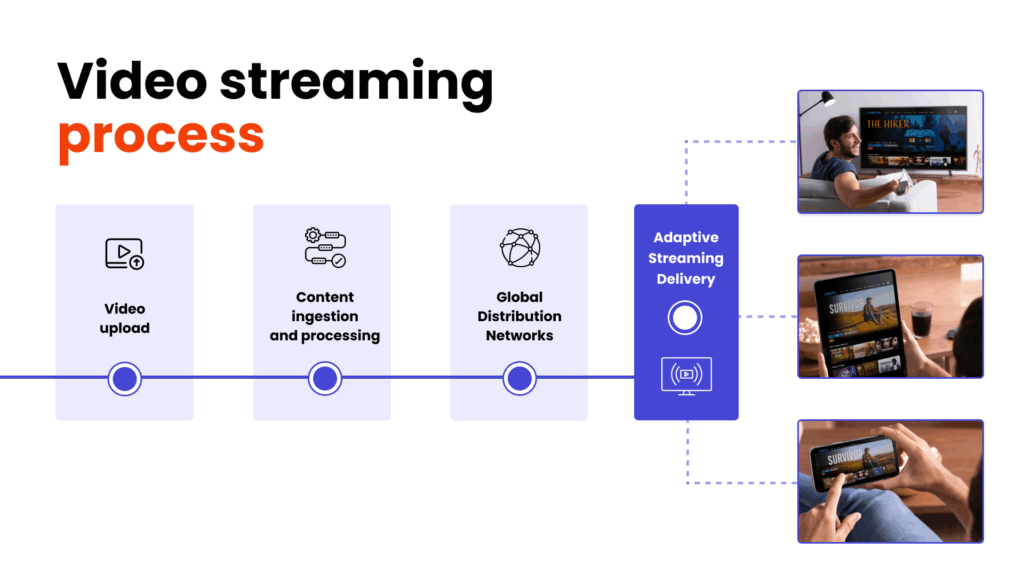
- تحميل الفيديو: يتم رفع محتوى الفيديو الخاص بك إلى منصة البث السحابية، حيث يُجهَّز فوراً للمعالجة والتوزيع العالمي.
- استيعاب المحتوى ومعالجته: Streaming technology receives the original files and prepares them for distribution. Servers then encode and transcode the content into multiple formats and resolutions, creating adaptive bitrate streams that automatically adjust quality based on each user’s internet connection bandwidth and device capabilities.
- شبكات توزيع عالمية: Cloud infrastructure leverages global server networks hosted in data centres worldwide, bringing content geographically closer to users to reduce latency and improve streaming quality. These distributed networks ensure that when someone accesses content, they’re connecting to the nearest available server, minimising the distance data must travel.
- تقديم البث التكيّفي: During playback, the system continuously monitors network conditions and automatically adjusts the quality level to maintain smooth streaming. If a user’s internet connection slows down, the technology seamlessly downloads lower-resolution segments to prevent buffering. When bandwidth improves, it automatically increases quality again.
الـ عملية بث الفيديو بالكامل occurs transparently to users, who simply access content through their preferred device – whether it’s a laptop, smartphone, or smart TV. The cloud handles all the complex processing, storage, and delivery logistics, ensuring consistent performance regardless of device type or location.
هل لديك أسئلة حول البث السحابي؟ فريقنا مستعد للمساعدة!
اعرف المزيد
فوائد البث السحابي للفيديو
لنكن صادقين – لم يعد البث السحابي مجرد ميزة إضافية لطيفة. لقد أصبح ضرورياً لأي مؤسسة جادة في تقديم الفيديو. إليك لماذا تتحول الشركات الذكية إلى ذلك.
قابلية توسع سلسة ووصول عالمي
أتذكر عندما كان بإمكان فيديو منتشر أن يُسقط خوادمك؟ تلك الأيام ولّت. تتوسع البنية التحتية السحابية تلقائياً للتعامل مع ذروات حركة المرور, whether you’re serving a thousand viewers or a million. The platform seamlessly expands capacity as your audience grows, without you having to predict demand or invest in hardware that might sit idle most of the time.
This distributed approach enables streaming services to serve millions of concurrent users while maintaining quality and reliability across diverse technology environments and geographical regions. As a result, your audience gets a flawless viewing experience, while you get to focus on creating content.
تعني هذه المرونة يمكنك دخول أسواق جديدة دون بناء بنية تحتية إقليمية أولاً. الإطلاق في جنوب شرق آسيا يوم الاثنين، وإضافة التوزيع الأوروبي يوم الثلاثاء – تجعل السحابة التوسع الجغرافي بسيطًا كقلب مفتاح.
تحسين إمكانية الوصول عبر جميع الأجهزة
Your content works everywhere. Laptops, smartphones, tablets, smart TVs, gaming consoles – if it has an internet connection, it can stream your content perfectly. No more worrying about device compatibility or maintaining separate apps for different platforms.
توسع إمكانية الوصول الشاملة هذه جمهورك المحتمل بشكل كبير مع تبسيط متطلباتك التقنية. تحميل واحد، إمكانيات مشاهدة لا حصر لها.
الفعالية من حيث التكلفة والمرونة المالية
يحوّل البث السحابي توصيل الفيديو من نفقات رأسمالية ضخمة إلى تكلفة تشغيلية يمكن التنبؤ بها. فبدلاً من شراء الخوادم، وصيانة مراكز البيانات، وتوظيف فرق تقنية، تدفع فقط مقابل ما تستخدمه فعليًا.
This model particularly benefits companies with fluctuating demand. Scale up during peak periods, scale down during quiet times, and only pay for the resources you consume. It’s like having enterprise-grade infrastructure without the enterprise-grade price tag.
أمان وامتثال بمستوى المؤسسات
تتضمن المنصات السحابية تدابير أمنية على مستوى المؤسسات لا تستطيع معظم المؤسسات تطبيقها بشكل مستقل. نحن نتحدث عنالتشفير وضوابط الوصول وإدارة الحقوق الرقمية وفرق أمنية متخصصة تراقب كل شيء على مدار الساعة طوال أيام الأسبوع.
Major cloud providers maintain compliance with international regulations like GDPR and industry-specific standards, handling the complex regulatory requirements so you don’t have to become a compliance expert.
أداء محسّن وتوصيل تكيّفي
تعمل الخوارزميات المتقدمة على تحسين توصيل المحتوى الخاص بك باستمرار، وتحويل الفيديوهات تلقائياً إلى تنسيقات ومستويات جودة متعددة. شبكات توصيل المحتوى توزّع محتواك من خوادم موزّعة جغرافياً، تقليل زمن الاستجابة والقضاء على مشكلات التخزين المؤقت للجماهير العالمية.
This adaptive approach maintains smooth streaming experiences regardless of internet connection quality or device capabilities, maximising viewer satisfaction and keeping audiences engaged with your content.
عمليات مبسطة وعبء تقني مُخفَّض
Cloud streaming eliminates the headache of managing physical infrastructure, server maintenance, and software updates. Your IT team can focus on strategic projects rather than keeping servers running, while تضمن التحديثات التلقائية بقاء منصتك محدثة بأحدث الميزات وتصحيحات الأمان.
يقلل هذا التبسيط التشغيلي بشكل كبير من الوقت اللازم لطرح المحتوى الجديد في السوق ويزيل حاجز الخبرة التقنية الذي كان سابقًا يجعل المحتوى الاحترافي منصات البث متاحة فقط للمؤسسات الكبيرة التي لديها فرق تقنية متخصصة.
هل أنت مستعد لتحويل استراتيجية بث الفيديو الخاصة بك؟
Cloud streaming represents the future of video delivery, offering unprecedented scalability, global reach, and cost-effectiveness for companies ready to modernise their content distribution. Whether you’re looking to launch a new streaming service, expand to global markets, or optimise your existing video delivery infrastructure, the technology has matured to support even the most demanding requirements.
في Spyrosoft، ساعدنا شركات الإعلام والترفيه على تحويل استراتيجياتها لإدارة محتوى الفيديو وتوصيله من خلال تطبيقات بث سحابية مثبتة الكفاءة.
اطّلع على عرضنا في مجال الإعلام والترفيه لمعرفة كيف يمكننا مساعدتك في إنشاء ميزة تنافسية من خلال حلول توصيل المحتوى الحديثة.
Cloud streaming delivers content directly from remote servers to a viewer’s device over the internet, with no local storage required. Traditional delivery relied on physical infrastructure and fixed broadcast pipelines. Cloud removes those constraints, allowing content to be processed, distributed, and adapted to each viewer in real time regardless of where they are or what device they are using.
During transcoding, content is converted into multiple formats and resolutions. As a viewer watches, the system monitors their available bandwidth and continuously adjusts the quality of the stream. This is called adaptive bitrate streaming. The result is uninterrupted playback across laptops, smartphones, tablets, and smart TVs without manual intervention.
Yes. Infrastructure scales automatically during traffic surges without requiring hardware investment or capacity planning in advance. A platform serving a few thousand viewers on a regular evening can handle millions during a major event without degrading performance. This is one of the core reasons cloud has become the default for live and on-demand delivery at scale.
Organisations move from large upfront capital expenditure on physical infrastructure to operational costs based on actual usage. Teams spend less time on hardware maintenance and updates, freeing capacity for product and content work instead. For media businesses, that shift changes how streaming fits into the broader financial model.
The video streaming market was valued at around $129 billion in 2024 and is projected to reach $417 billion by 2030. That growth reflects both consumer demand and the pace at which broadcasters, platforms, and enterprises are moving away from legacy delivery infrastructure towards cloud-native architectures.


arrow_circle_rightاتصل بنا
هل تحتاج إلى حل بث قابل للتوسع؟ يمكننا المساعدة!

بارتوميي لوزيا
الرئيس التنفيذي لـ Spyrosoft BSG
arrow_circle_right مقالاتنا


