كيف يحل الذكاء الاصطناعي أزمة الطاقة الاستيعابية لصيانة الطيران


في مقالنا السابق، استعرضنا التحديات المتزايدة التي تواجه صيانة الطيران. إذا لم تكن قد اطلعت عليه بعد، تعمّق في أسباب عدم كفاية الاستراتيجيات التقليدية بعد الآن. Now, let’s focus on the solution side. In this article, we’ll explore how predictive maintenance actually works, where the industry stands today, and what it takes to implement these systems in practice.
طيف نضج الصيانة التنبؤية
الصيانة التنبؤية ليست نهجًا شموليًا أو مفتاحًا ثنائيًا. ويتباين اعتمادها في قطاع الطيران بشكل واسع. ويمكن النظر إلى مستوى النضج على طيف من خمس مراحل:
- عمليات التفتيش على فترات ثابتة (الصيانة على أساس الوقت أو دورات التشغيل)
- المراقبة (جمع بيانات أساسي، رؤى محدودة)
- تحليلي (بعض التعرف على الأنماط وتحليل الاتجاهات، لكن آفاق تنبؤية قصيرة)
- قائم على البيانات (التنبؤ القائم على الذكاء الاصطناعي الذي يقدم رؤى قابلة للتنفيذ، وتكامل أوسع)
- التحسين المستمر (أنظمة متكاملة بالكامل تستخدم بيانات فورية متعددة المصادر والذكاء الاصطناعي للتعلم المستمر وتكييف قرارات الصيانة)
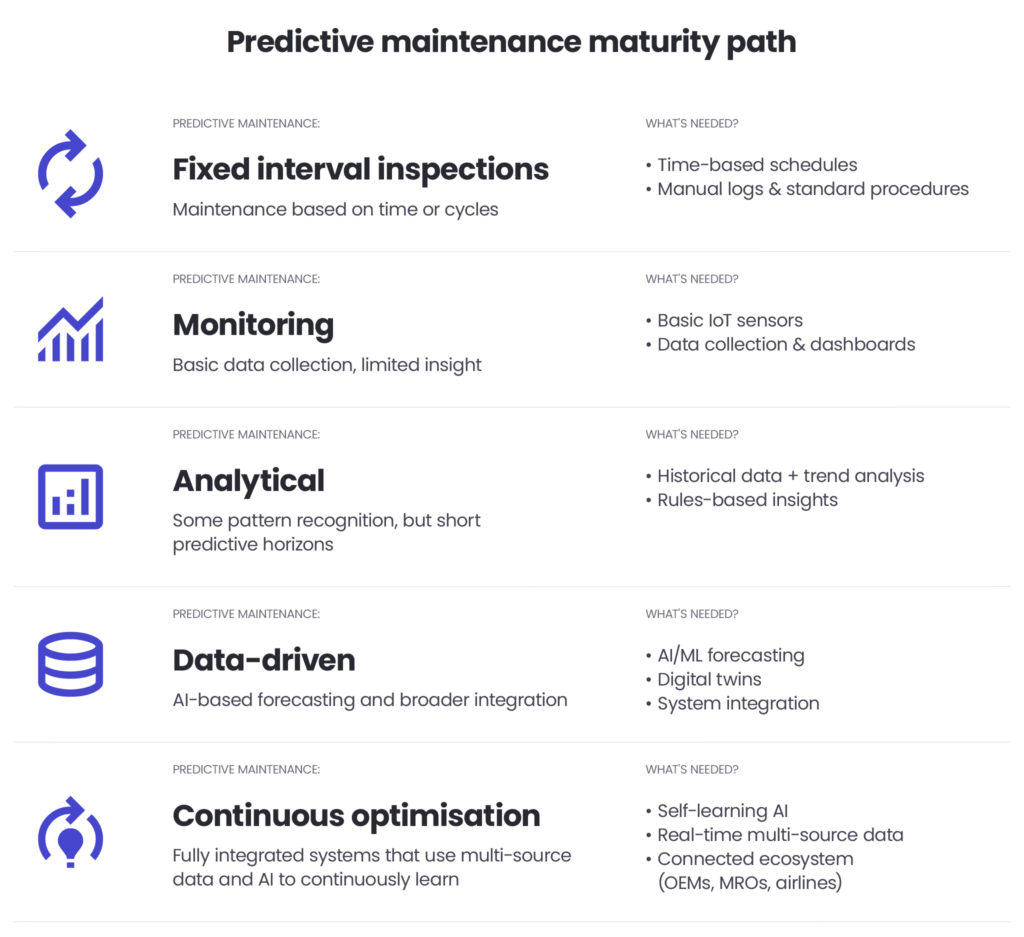
مع تقدم المؤسسات عبر هذه المراحل، لا تنمو فوائد الكفاءة والتكلفة فحسب، بل تنمو أيضًا السلامة التشغيلية. أكبر المكاسب تنتظر أولئك الذين يتقدمون نحو المستويين 4 و5.
الذكاء الاصطناعي والتوائم الرقمية في التطبيق العملي
Major aviation players are already using AI and digital twins to rewrite the rules of engine maintenance. What’s emerging isn’t just better data, but rather a connected ecosystem where insights from sensors, operations, and service histories flow into a single source of truth that drives smarter decisions.
عبر القطاع، نرى أمثلة قوية:
- GE Aerospace uses AI-powered digital twins across its engine fleet to model individual engine behaviour and forecast repair scope and part requirements before the engine arrives at the shop. Their predictive models provide recommendations down to the part number level, enabling precise logistics and minimising turnaround time.
- منصة Ascentia من Collins Aerospace (RTX), used by Japan Airlines, combines predictive analytics with operational data to help reduce unscheduled maintenance costs by up to 20%. It’s an example of how embedding intelligence into daily operations can deliver immediate savings.
- خيط البيانات الأزرق من رولز رويس creates two-way flow of insights between OEMs, airline operators, and MRO providers. It enables real-time updates on part usage, component behaviour, and upcoming deadlines, helping to avoid unplanned failures and supporting better scheduling. It also helps improve sustainability metrics by reducing unnecessary part replacement and optimising component life.
تعظيم وقت التشغيل – مؤشر الأعمال الجوهري
في قطاع الطيران، وقت التشغيل أكثر من مجرد مؤشر أداء.
Every grounded aircraft means lost revenue, cascading schedule disruptions, and a dent in passenger trust. Thanks to predictive maintenance, aircraft are kept in service longer, with fewer surprises.
من خلال اكتشاف المشكلات المحتملة قبل حدوثها، تساعد الأنظمة المدعومة بالذكاء الاصطناعي في إطالة متوسط الوقت بين عمليات الإزالة (MTBR) وتقليل حالات الطائرات المتوقفة عن العمل (AOG) المكلفة هذه بشكل كبير.

في Spyrosoft، نبتكر منصات تنبؤية تساعدك على:
- اطّلع على ما يحدث عبر أسطولك بالكامل في الوقت الفعلي.
- خطط للصيانة بذكاء أكبر مع توقعات قائمة على البيانات.
- تعزيز الأداء في الوقت المحدد والحفاظ على جاهزية أسطولك للانطلاق.
- دع المهندسين يحلون المشكلات مبكرًا بدلاً من التفاعل مع الأعطال.
في بيئة عالية الضغط ذات قدرة محدودة، يُعد وقت التشغيل الميزة التنافسية الحقيقية. ومع الصيانة التنبؤية (المُنفذة بشكل صحيح)، تصبح هذه الميزة مستدامة وقابلة للتوسع.
تحديات البيانات والتكامل: ما الذي يعيق القطاع؟
وبينما تكون الرؤية واضحة، فإن مسار التنفيذ ليس دائمًا سلسًا. لا تزال معظم الجهات الفاعلة في قطاع الطيران تتعامل مع أنظمة مجزأة وبيانات معزولة وبنى تحتية لتقنية المعلومات قديمة.
Valuable data is often locked away in disconnected sources, scattered across engine logs, OEM databases, maintenance records, and airline ERP systems. Even when the data is accessible, it’s not always clean, consistent, or easy to integrate.
لجعل الصيانة التنبؤية ناجحة على أرض الواقع، تحتاج المؤسسات إلى:
- بيانات مستشعرات المحرك النظيفة والمنظمة.
- تكامل البيانات عبر المنصات.
- تدريب ومواءمة فرق الصيانة مع سير العمل التنبؤي الجديد.
- التعاون بين تقنية المعلومات والهندسة وسلسلة التوريد وورش الإصلاح الشامل وشركات الطيران.
- إدارة سيادة البيانات، والحفاظ على حماية المعلومات الحساسة.
وهنا يمكن للشريك الاستراتيجي المناسب أن يُحدث فرقًا.
العائد على الاستثمار الاستراتيجي: تحويل التقنية إلى قيمة تجارية
Predictive maintenance is more than an operational improvement. For airlines, engine OEMs, and MRO providers alike, the value goes far beyond fewer breakdowns. The entire ecosystem becomes leaner, faster, and more resilient.
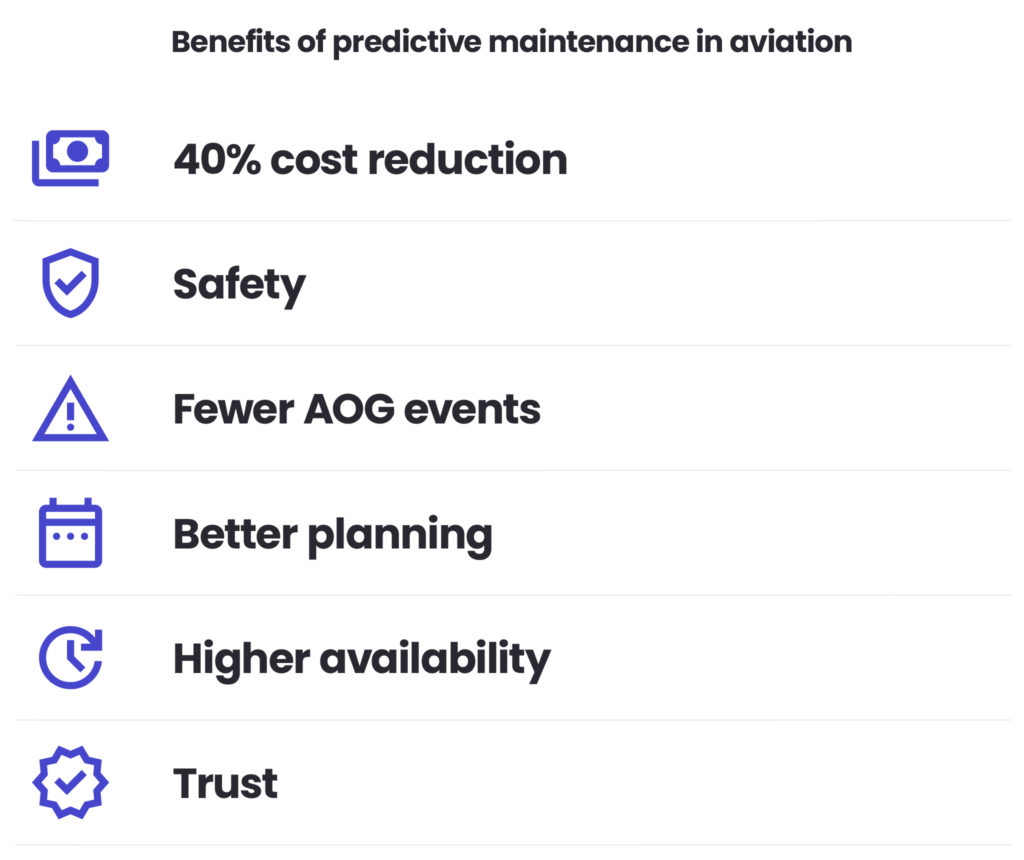
لنتحدث عن النتائج:
- حتىانخفاض بنسبة 40% في تكاليف الصيانة من خلال تقليل الاستبدال غير الضروري للأجزاء وإطالة عمر المكونات.
- تحسين السلامة من خلال تقليل خطر تعطل الأجزاء قبل موعدها.
- أحداث AOG أقل، حيث تُعالَج المشكلات قبل أن تسبب اضطراباً.
- تحسين متوسط الوقت بين الإصلاحات (متوسط الوقت بين عمليات الإزالة)، مما يدعم فترات خدمة أطول واستخدامًا أفضل للمحرك.
- تخطيط أذكى للأجزاء، مما يقلل من الهدر والاحتكاك في سلسلة التوريد.
- تجربة عملاء محسّنة بفضل تقليل التأخيرات وزيادة موثوقية الجدول الزمني.
Ultimately, in an industry defined by tight margins and rising demand, predictive maintenance helps airlines fly more passengers with fewer disruptions. It lets airlines scale with confidence, and deliver reliability that passengers notice.
لماذا تهم شركاء التكامل الرقمي
لسد الفجوة بين الرؤية والعمل، يحتاج العاملون في قطاع الطيران إلى مهندسي حلول يفهمون كلاً من عمليات الطيران والأنظمة الرقمية الذكية.
تساعد Spyrosoft المؤسسات على:
- جمع وتوحيد البيانات من أنظمة متعددة بطريقة آمنة.
- بناء منصات تحليلات تنبؤية مصمّمة خصيصاً لصيانة المحركات.
- دمج الذكاء الاصطناعي في تخطيط الصيانة اليومي.
- وسّع نطاق القدرات التنبؤية عبر الأساطيل العالمية.
We act as a trusted partner and the architect of customised solutions. We help our partners bridge the technical and operational gaps – and integrate secure, intelligent predictive systems into the heart of engine MRO strategies. كل دقيقة مهمة في الطيران، ومع البيانات الصحيحة تكونون متقدمين بخطوة.
اقرأ الجزء الأول: لماذا لم تعد الصيانة التنبؤية اختيارية في قطاع الطيران؟
الانتقال إلى المقال
الخلاصة
Predictive maintenance used to be seen as an emerging innovation. Today, it’s quickly becoming the industry standard. This approach is a natural next step that builds on existing procedures, simplifying maintenance while simultaneously enhancing safety.
Success in aviation won’t come from simply having the latest technology. Instead, it will belong to those organisations that quickly adopt and effectively use digital tools to manage maintenance in smarter, more integrated ways.
من خلال تحويل بيانات المحرك إلى وقت تشغيل فعّال باستخدام الذكاء الاصطناعي التنبؤي، ستكتسب الشركات ثقة أكبر لدى العملاء، وتوافراً أعلى لأسطول المركبات، واستخداماً أكثر ذكاءً لرأس المال والقوى العاملة.
مع الشركاء الرقميين المناسبين، لا يلزم أن تبقى هذه القدرات بعيدة المنال، بل يمكن حتى للتحديات الأكثر واقعية أن تصبح بوابات للتحول.
The industry operates across five stages: fixed interval inspections at level one, basic monitoring with limited insight at level two, analytical pattern recognition at level three, AI-driven forecasting with broader system integration at level four, and continuous optimisation using real-time multi-source data at level five. The biggest gains come from reaching levels four and five.
GE Aerospace uses AI-powered digital twins to forecast repair scope and parts requirements before engines arrive for servicing. Collins Aerospace’s Ascentia platform, used by Japan Airlines, combines predictive analytics with operational data to reduce unscheduled maintenance costs by up to 20%. Rolls-Royce’s Blue Data Thread creates bidirectional information flow between manufacturers, operators, and maintenance providers.
Organisations implementing AI-driven predictive maintenance report up to 40% reduction in maintenance costs, improved Mean Time Between Removals (MTBR), fewer Aircraft on Ground (AOG) incidents, and reduced risk of premature component failure.
Data is frequently locked in disconnected sources, scattered across engine logs, OEM databases, maintenance records, and airline ERP systems. The technical and organisational complexity of integrating these sources means that even organisations with rich data histories struggle to apply it systematically. Addressing this integration challenge is often the first practical step in a predictive maintenance programme.
Unscheduled maintenance, where a component fails unexpectedly, typically costs three to four times more than the equivalent planned intervention due to AOG time, expedited parts procurement, and disruption to operations. Predictive maintenance shifts the cost curve by identifying issues in advance and scheduling interventions at optimal times with parts and facilities already in place.
arrow_circle_rightاتصل بنا
اكتشف كيف يمكن للتقنيات التنبؤية أن تعمل لصالح أسطولك

arrow_circle_right مقالاتنا


