لماذا لم تعد الصيانة التنبؤية خيارًا في مجال الطيران؟


The aviation industry is hitting turbulence like never before – not in the skies, but on the ground. New aircraft deliveries are stuck in production backlogs, engine overhaul shops are overbooked months in advance, and global air traffic is surging. Aircraft (and engines) are flying more frequently to meet demand – accumulating flight cycles faster and hitting maintenance thresholds sooner.
والنتيجة؟ عاصفة من ضغوط الصيانة المتصاعدة عبر الأسطول، وندرة قطع الغيار القابلة للخدمة، وطواقم ماهرة تعمل إلى أقصى حدودها.
لماذا تحتاج صيانة الطيران إلى ثورة بيانات
في عام 2024 وحده، بلغ الإنفاق العالمي على MRO (الصيانة والإصلاح والعمرة) 114 مليار دولار – بزيادة قدرها 7.2% عن أعلى مستويات ما قبل الجائحة في عام 2019 – والارتفاع لا يتباطأ.
لم يعد السؤال الحاسم الذي تواجهه الصناعة الآن سؤالًا تقنيًا. إنه وجودي بطبيعته: كيف نحافظ على تحليق الطائرات في الجو عندما ينفد كل شيء على الأرض من المساحة والموارد والوقت؟
يجد عدد متزايد من قادة قطاع الطيران الإجابة على ذلك في البيانات. Predictive maintenance and health monitoring – powered by data science, digital twins, and real-time engine data – is becoming a smarter, faster, and more scalable way to manage aviation’s most urgent operational challenges, with the potential to cut maintenance costs by up to 40%.
من خلال تسخير البيانات، تعزز الصيانة التنبؤية كلاً من الأمان والكفاءة، من خلال تحديد المشكلات قبل أن تصبح حرجة لضمان رحلات أكثر أمانًا مع تحسين سير عمل الصيانة.
At Spyrosoft, we’ve seen how smartly integrated real-time analytics and AI can provide aviation decision-makers with the insights they need to act faster, reduce delays, and manage fleets more efficiently. Our teams combine deep expertise in data science and digital engineering to build tailored platforms that transform raw engine data into powerful insights.

أزمة الطاقة الاستيعابية في الصيانة والإصلاح والتشغيل
في ظل معاناة الشركات المصنعة للمعدات الأصلية (OEMs) مع ارتفاع الطلب وتأخيرات الإنتاج وتراكم الطلبات المتأخرة، تعتمد شركات الطيران بشكل أكبر على الطائرات الأقدم التي لا تزال ضمن حدود الخدمة لتلبية احتياجاتها التشغيلية.
While that strategy makes sense financially, it also means aircraft are flying more often and accumulating cycles faster, accelerating the need for maintenance across the fleet. The ripple effect?
Backlogged MRO facilities, longer turnaround times, and tough decisions around fleet availability. Grounded aircraft, delayed routes, and rising operational costs are becoming everyday realities.
يستكشف بعض مصنّعي المعدات الأصلية (OEMs) الآن الذكاء الاصطناعي والأدوات الرقمية لتسريع الإنتاج وتخفيف اختناقات التسليم، لكن التخفيف لا يزال بعيدًا.
ببساطة: النظام محمّل بشكل زائد، وتراكم أعمال الصيانة يدفع شركات الطيران إلى إعادة التفكير في كيفية الحفاظ على الجاهزية التشغيلية على نطاق واسع.
عنق الزجاجة في الأجزاء والأفراد
ما الذي يُبطئ كل شيء حقاً؟
هناك قوتان رئيسيتان:
- نقص العمالة الماهرة – many shops struggle to hire and retain qualified technicians fast enough to meet rising demand. Even when crews are available, they may not be in the right place at the right time (and sending them off-site for inspections or repairs adds further delay). Also, many experienced workers left during the pandemic, and training pipelines haven’t caught up.
- ندرة قطع الغيار وضغط سلسلة التوريد – أصبح من الصعب بشكل متزايد توفير الأجزاء القابلة للخدمة (مثل المكونات محدودة العمر أو الوحدات المُجدَّدة) في الوقت والمكان المحددين اللذين تُطلب فيهما. وفقاً لـاستبيانات القطاع، يُفيد 75% من متخصصي الصيانة والإصلاح والعمرة (MRO) بفترات خدمة أطول للمحركات، ويرجع ذلك إلى حد كبير إلى مشكلات توفر قطع الغيار.
معًا، يضخم هذان النقصان أحدهما الآخر. فمع وجود أيدٍ أقل للقيام بالعمل وقطع غيار أقل لإنجاز المهمة، يصبح كل حدث غير مخطط له اضطرابًا عالي المخاطر.
لماذا لم تعد استراتيجيات الفواصل الزمنية الثابتة مجدية
For decades, aviation maintenance largely relied on fixed interval schedules rather than real-time condition monitoring. While this planned approach ensured reliability, it can lead to unnecessary maintenance and missed early warning signs.
النموذج القديم أصبح مكلفاً وغير فعّال بشكل متزايد.
لماذا؟ لأن الصيانة على فترات ثابتة في قطاع الطيران، حيث تكون الجداول الزمنية ضيقة وتكاليف التوقف مرتفعة، تُعد ببساطة معطِّلة للغاية ومكلفة للغاية.
النتائج مذهلة:
- تُظهر الدراسات أن الصيانة غير المخططة يمكن أن تكلف أكثر بثلاث إلى أربع مرات من التدخلات المجدولة.
- تؤدي الإصلاحات الطارئة إلى ارتفاع تكاليف العمالة، والشحن المميز لقطع الغيار، والخدمات اللوجستية العاجلة.
- تتسبب أحداث AOG (الطائرة على الأرض) في إرباك الجداول الزمنية وتجربة الركاب.
في صناعة بالغة الدقة والتنظيم مثل الطيران، لا مجال (ولا ميزانية) للمفاجآت.
الصيانة التنبؤية، موضحة
تطالبنا الآفاق بشيء أكثر ذكاءً – وهنا يأتي دور الصيانة التنبؤية لتغيير قواعد اللعبة.
Imagine knowing exactly when your engine will need servicing, tailored to its unique condition and usage, weeks before a warning light appears. Imagine knowing exactly when your engine will need servicing, tailored to its unique condition and usage, weeks before a warning light appears.
هذا بالضبط وعد الصيانة التنبؤية، أو الصيانة القائمة على الحالة (CBM).
كيف يعمل
- خوارزميات متقدمة معالجة كميات هائلة من البيانات التاريخية والتشغيلية. ويشمل ذلك حالات عدم المطابقة السابقة، وحمل المحرك، وأنماط الاستخدام، واكتشاف نماذج الأعطال المحتملة وتراكم التآكل.
- بيانات المستشعرات المباشرة يلتقط الأداء الحالي والظروف البيئية أثناء الطيران.
- تولّد هذه الرؤى توصيات صيانة موجّهة، مع إعطاء الأولوية للعمل الصحيح في الوقت المناسب.
- بمجرد اتخاذ الإجراءات، يجمع النظام التغذية الراجعة وإعادة التعلم، مع تحسين نماذجه باستمرار في حلقة تعلّم.
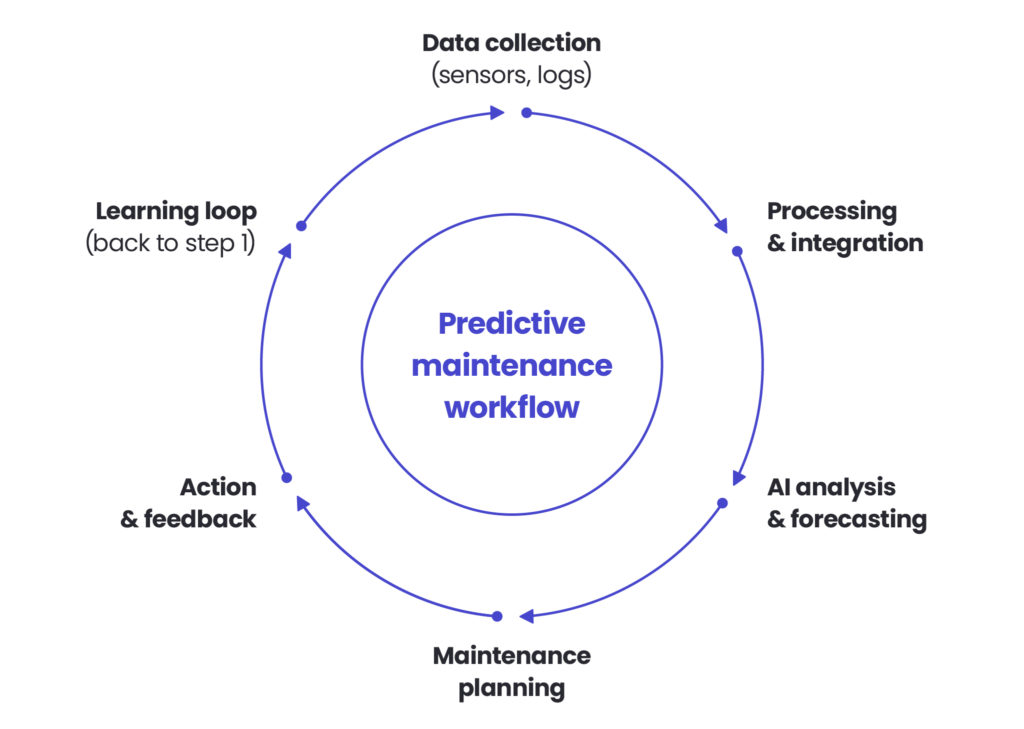
By analysing a mix of historical trends, production data, lifetime condition, environmental data, fleet-wide field experience (including Weibull analyses), and real-time engine sensor streams, AI-powered systems forecast wear, detect anomalies, and predict component issues before they ground the aircraft. Instead of waiting for components to fail, these systems model how, when, and why they will.
سير عمل الصيانة التنبؤية هذا ليس خطيًا: إنه ديناميكي وذكي. تُغذّي كل دورة مكتملة الدورة التالية، مما يخلق نظامًا أكثر ذكاءً وسرعة ودقة مع كل تكرار.
السلامة الاستباقية من خلال التنبؤ
In aviation, safety is non-negotiable. Predictive maintenance enhances it by identifying potential failures before they happen – preventing delays and protecting lives. By spotting early signs of wear or malfunction, AI-driven systems enable timely interventions that reduce in-flight incidents and unscheduled removals. In many cases, these systems catch what traditional schedules miss.
سلامة الطيران قائمة على العمليات. فهي تعتمد على إجراءات صارمة وعمليات تفتيش روتينية – كل ذلك لضمان الموثوقية حتى دون رؤى فورية حول سلامة المكونات.
Predictive maintenance doesn’t replace these checks, but enhances them. Adding an intelligent layer to existing procedures brings greater clarity, boosts efficiency, and increases confidence in every maintenance decision.
At Spyrosoftفي كل مرة ساعدنا فيها العملاء على الانتقال من استراتيجيات الفواصل الزمنية الثابتة إلى التحكم التنبؤي، شهدوا دورات تخطيط أسرع، وتحسينًا في الأمان، وتخطيطًا أكثر كفاءة للموارد.
من خلال إنشاء بنى تحتية قابلة للتوسع للبيانات، ولوحات معلومات بديهية، ونماذج ذكاء اصطناعي بمستوى الطيران، نمكّن فرق الطيران من التخطيط بشكل أفضل، والتحرك مبكراً، والطيران بأمان أكبر.
اقرأ الجزء الثاني: كيف يحل الذكاء الاصطناعي أزمة الطاقة الاستيعابية للصيانة في الطيران
الانتقال إلى المقال
الخلاصة
في نظام مدفوع إلى أقصى حدوده، توفر الصيانة التنبؤية مسارًا أكثر ذكاءً وأمانًا واستدامة للمضي قدمًا.
من خلال التحول من الإصلاحات التفاعلية إلى الرؤى الاستباقية، يساعد شركات الطيران والمصنّعين الأصليين ومنظمات الصيانة والإصلاح والعمرة على إبقاء أساطيلها في الجو، وتقليل التكاليف غير المتوقعة، وتحقيق استفادة أفضل من الطاقة المحدودة.
لتحقيق ذلك، تحتاج إلى الأدوات والتقنيات والبيانات الصحيحة، وعقلية استراتيجية.
في المقال التالي, we’ll dive into the practical side: what it takes to get started, how leading organisations are already doing it, and how you can begin implementing predictive maintenance in your own operations.
هل أنت مستعد لاتخاذ الخطوة الأولى؟ لنستكشف ما هو ممكن.
Predictive maintenance uses AI models to analyse historical data and real-time sensor readings from aircraft components, forecasting wear and potential failures before they happen. Rather than replacing parts on fixed schedules or waiting for failures to occur, airlines maintain components based on their actual condition.
Global MRO spending reached $114 billion in 2024, up 7.2% from 2019 levels, driven by aircraft accumulating flight cycles faster due to increased demand. Two main constraints limit capacity: a shortage of skilled maintenance technicians and a scarcity of serviceable parts. Industry surveys show 75% of MRO professionals report longer engine service times primarily due to parts availability.
Predictive maintenance can reduce maintenance costs by up to 40% by minimising unnecessary part replacements based on calendar schedules. The financial case is compelling: unplanned maintenance costs three to four times more than scheduled interventions, making proactive approaches significantly more cost-effective.
Condition-based maintenance replaces fixed-interval schedules with continuous monitoring. Sensors and AI systems track component health in real time, triggering maintenance actions when measurements indicate an actual need rather than when a calendar date arrives. This extends component life, reduces unnecessary interventions, and improves safety by catching issues before they become critical.
Valuable data is often locked in disconnected systems, scattered across engine logs, OEM databases, maintenance records, and airline ERP platforms. Integration across these sources is technically complex. Skilled labour shortages also affect implementation, as deploying and interpreting AI-driven maintenance systems requires specialised expertise that is in short supply across the industry.
arrow_circle_rightاتصل بنا
لنتحدث عن الصيانة التنبؤية الأكثر ذكاءً في مجال الطيران

arrow_circle_right مقالاتنا


