كيف يُحدث الذكاء الاصطناعي التوليدي تحولاً في تحديث الأنظمة القديمة


Legacy modernisation is costly, complex, and often blocks digital transformation. No surprise that 74% of modernisation efforts fail – talent shortages, technical debt, and high costs stand in the way. Now, generative AI is changing the game, removing the biggest obstacles and making the process faster, cheaper, and more reliable. This article explores why traditional methods fall short and how AI can help you modernise efficiently.
For decades, enterprises have relied on legacy systems to run critical operations. However, as technology evolves, these systems can become a burden – expensive to maintain, difficult to upgrade, and a major blocker to your digital transformation.
ليس من المستغرب أن تحويل الأنظمة القديمة كان يمثل تحديًا مكلفًا عبر التاريخ. ربما واجهت مشكلات أدت إلى إبطاء جهودك أو حتى إفشالها.
تدرك الشركات الحاجة إلى التحديث، وقد حاول معظمها ذلك، لكن الأساليب التقليدية غالباً ما فشلت.
74% of organisations admitted to starting a legacy system modernisation programme but failing to complete it in a survey conducted in 2020, highlighting the challenges companies faced before AI tools became widely available.
المصدر: تقرير مقياس الأعمال، المتقدم – تقرير تحديث الأنظمة المركزية، 2020
Now, الذكاء الاصطناعي التوليدي يغيّر هذا التركيز. فلم تعد بحاجة إلى السؤال عما إذا كانت أنظمتك القديمة قابلة للتحديث، بل عن مدى السرعة والكفاءة التي يمكنك بها تحقيق ذلك.
لماذا يفشل تحديث الأنظمة القديمة؟
تدرك المؤسسات في مختلف القطاعات، بما في ذلك الخدمات المصرفية والتأمين والقطاع الحكومي، أنها بحاجة إلى التحديث. ومع ذلك، فإن معظم الجهود تتعثر أو تفشل بسبب ثلاثة تحديات رئيسية.
تحديات الأنظمة القديمة
- تقلص مجموعة المواهب – Engineers with deep knowledge of legacy systems are retiring. Meanwhile, younger developers are not trained in outdated technology and languages. This knowledge gap makes maintaining and upgrading these systems increasingly difficult.
- التكلفة والتعقيد – Manually rewriting legacy software requires years of effort and substantial financial investment. You may have abandoned modernisation initiatives halfway through due to rising costs and uncertain outcomes.
- الدين التقني المتراكم – الأنظمة القديمة مترابطة بعمق مع أنظمة قديمة أخرى، مما يجعل فك الارتباطات أمراً صعباً دون تعطيل وظائف الأعمال الأساسية.
ونتيجة لذلك، تبقى محبوسًا في بنية تحتية جامدة وقديمة، غير قادر على التوسع أو المنافسة مع الشركات الرقمية أولًا.

لا يمكن المبالغة في أهمية تحديث التطبيقات القديمة، إذ يُعد تحويل هذه الأنظمة المتقادمة أمراً بالغ الأهمية لتعزيز كفاءة المؤسسة وقدرتها التنافسية.
اختر النهج الصحيح لتحديث أنظمتك القديمة
This is where generative AI comes in. Automating the most complex and time-consuming aspects of the process lets you overcome traditional roadblocks that have led to project failures in the past. Choosing the most appropriate modernisation strategy depends on factors like system complexity, budget, and risk tolerance.
تذكر أن الذكاء الاصطناعي لا يحل محل الخبرة البشرية – بل يعززها من خلال أتمتة المهام الأكثر تعقيدًا واستهلاكًا للوقت.
ما الذي يمكنك فعله من خلال تحديث الأنظمة القديمة بالذكاء الاصطناعي؟
يتيح لك الذكاء الاصطناعي:
- تحليل وفهم قواعد الأكواد القديمة على نطاق واسع
- إعادة هيكلة وتحسين الشيفرة البرمجية غير الفعالة
- حوّل اللغات القديمة إلى شيفرة حديثة قابلة للصيانة
- تسريع التحقق والاختبار من خلال الأتمتة
This structured, AI-assisted approach reduces manual bottlenecks and accelerates progress – alongside human expertise, ensuring your modernisation projects are completed quickly and successfully. Moreover, it lets you save costs. According to Gartner, من المتوقع أن يؤدي التحديث المدعوم بالذكاء الاصطناعي إلى خفض التكاليف بنسبة تصل إلى 70% بحلول عام 2027.
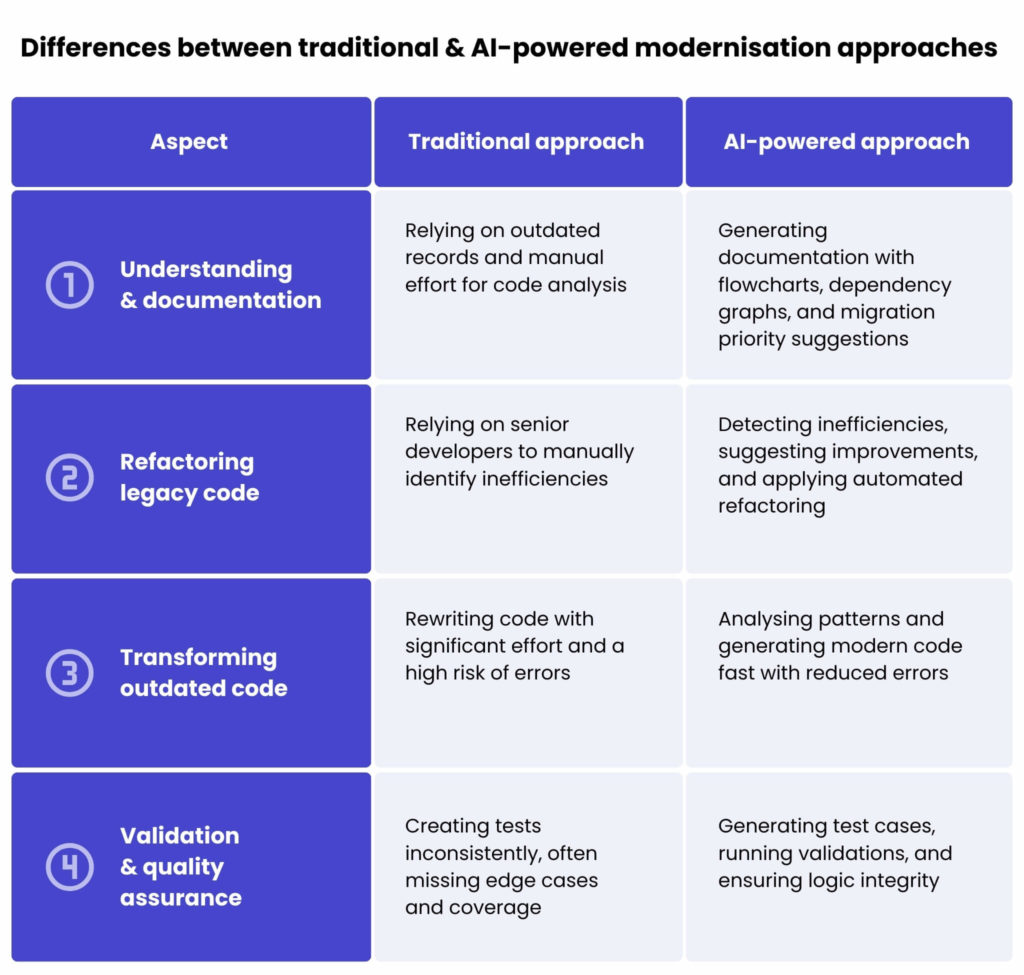
الجوانب الأربعة لتحديث الأنظمة القديمة المدعوم بالذكاء الاصطناعي
1. الفهم والتوثيق
One of the biggest challenges in legacy modernisation is a lack of documentation. Systems that have been running for decades often have limited or outdated records, making it difficult to understand dependencies and workflows within the existing system. AI automates it by analysing legacy code, mapping dependencies, and generating system diagrams.
For enterprises, this means significantly faster onboarding for developers and a clearer roadmap for modernisation. Companies using AI-driven documentation tools report up to 50% quicker developer onboarding.
2. إعادة هيكلة الشيفرة القديمة
Decades-old codebases are often inefficient and hard to maintain. Software modernisation is crucial for rejuvenating legacy applications, making them more efficient and aligned with contemporary business demands.
AI identifies redundancies and detects inefficiencies. It then suggests optimisations, resulting in cleaner, more maintainable code. This structured approach not only improves system performance but also reduces long-term maintenance costs and technical debt.
3. تحويل الشيفرة البرمجية القديمة
Instead of manually rewriting thousands of lines of legacy code, AI automates the transformation process by integrating new technologies. It analyses patterns in existing systems, converts outdated languages into modern equivalents, and ensures logical consistency. This approach accelerates modernisation while minimising errors.
One of the most obvious indicators is the percentage of code that’s now written by AI. I ask all the software companies I meet about this. The number is rarely lower than 40%. For some young programmers, it’s 90%.
بول غراهام، عالم حاسوب وكاتب ومستثمر في رأس المال الجريء
4. التحقق وضمان الجودة
Modernising a system is only successful if it performs reliably after the transition. AI automates validation by generating test cases and identifying vulnerabilities. This ensures higher system reliability, lower defect rates, and a seamless transition to modern infrastructure.
دراسة حالة: التوثيق الآلي واسترجاع المعرفة
A global staffing solutions provider faced a significant challenge: 25 years of fragmented legacy system documentation spread across multiple platforms. The lack of centralised knowledge made system maintenance inefficient and posed a high operational risk.
To solve this, AI-driven documentation tools mapped out the entire system architecture, creating clear visual diagrams and automated reports. Knowledge retrieval tools further streamlined the process, reducing search time from hours to seconds.
كان التأثير فوريًا. أصبح إدماج المطورين الجدد أسرع، وانخفض الاعتماد على المعرفة الشفهية، وتحسنت الكفاءة التشغيلية الإجمالية لعمليات الأعمال.
شاهد القصة كاملة:
الذكاء الاصطناعي هو مستقبل تحديث الأنظمة القديمة
Modernising legacy systems no longer has to be slow, costly, or high-risk. AI-driven transformation enables you to modernise faster, reduce costs, and eliminate technical debt. With AI solutions, you can fast-track transformation efforts, reap significant cost savings, and stay ahead of your competition.
كلما تأخرت أكثر، واجهت المزيد من أوجه القصور التشغيلية ونقص المواهب والثغرات الأمنية. لقد حان وقت التحرك الآن.
تواصل مع خبراء Spyrosoft لمعرفة كيف يمكن للذكاء الاصطناعي تحويل أنظمتك القديمة إلى حل حديث وقابل للتوسع – املأ النموذج أدناه!
الأسئلة الشائعة
If your systems are slow, difficult to integrate, expensive to maintain, or vulnerable to security risks, it’s time to modernise. Other signs include frequent downtime, limited scalability, compliance issues, and a shrinking talent pool for maintaining legacy code.
Yes. AI-driven legacy modernisation project enables gradual transformation, meaning systems can be updated in phases rather than through a high-risk, all-at-once migration. This minimises downtime and business disruption.
Not necessarily. In many cases, AI-powered refactoring and incremental updates can extend the life of your existing system while improving performance. A full replacement is only needed if the system is completely outdated, insecure, or incompatible with modern business needs.
Industries that rely on complex, mission-critical systems (including banking, insurance, healthcare, manufacturing, and government) see the biggest benefits. AI helps these sectors transition from outdated infrastructure to more agile, scalable solutions.
AI tools help ensure compliance by identifying security vulnerabilities, enforcing coding standards, and automating regulatory reporting. This is crucial for industries with strict data protection and security regulations.



arrow_circle_rightاتصل بنا
تواصل معنا ولنناقش كيف يمكننا مساعدتك

Tomasz Smolarczyk
مدير الذكاء الاصطناعي
arrow_circle_right مقالات أخرى