إدارة واجهات برمجة التطبيقات API: القطعة المفقودة في توسيع ثورة الذكاء الاصطناعي


As AI moves from pilot projects to enterprise-scale ecosystems, integration has become the real challenge. Traditional API management can’t handle the complexity of LLMs, token costs, and data privacy risks. Learn how the Agent Mesh transforms API management into intelligent infrastructure, enabling cost efficiency and scaling AI in enterprise ecosystems.
مقدمة: تحديات توسيع نطاق الذكاء الاصطناعي
Every organisation wants to harness the power of LLMs. But when it comes to scaling those successes across the enterprise, most hit the same wall. Each new model adds complexity, data risk, and unpredictable costs. The missing piece isn’t another AI model, but better infrastructure.
In the early days of digital transformation, APIs were the invisible framework that held systems together. Today, they’re becoming just as critical for artificial intelligence. Because the truth is simple: you can’t scale AI without intelligent API management. That means moving from gateways to interconnected, context-aware networks known as the Agent Mesh.
لماذا تُعد واجهات برمجة التطبيقات البنية التحتية الجديدة للذكاء الاصطناعي
لطالما كانت واجهات برمجة التطبيقات (APIs) تدور حول الاتصال. فقد جعلت من الممكن للأنظمة المتجانسة أن تتواصل، وللخدمات المصغرة أن تتعاون، وللمنتجات الرقمية أن تتوسع.
AI changes what “connection” means. Instead of static requests and predictable responses, AI systems exchange intent, probability, and reasoning. An LLM interprets data, adapts it, and sometimes even makes new decisions on its own. This kind of interaction creates new demands on infrastructure.
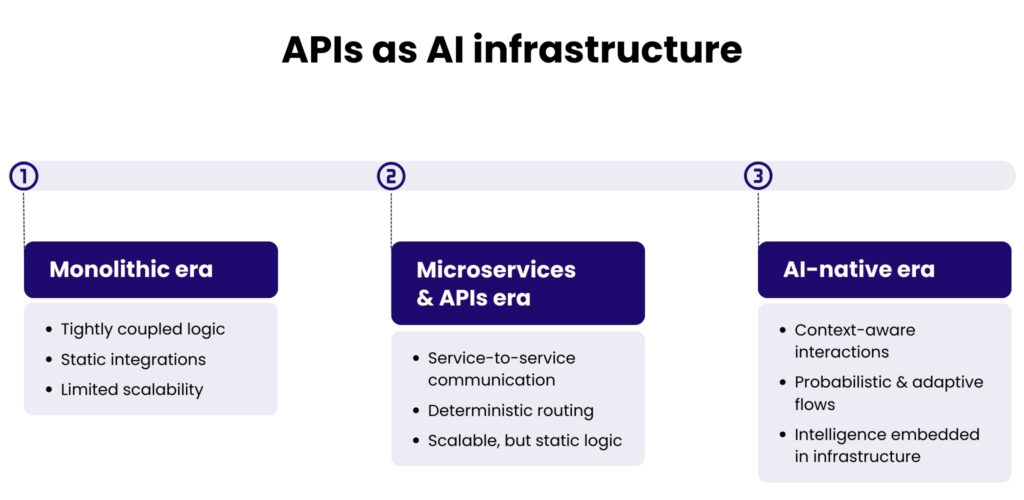
دون طريقة جديدة لإدارة التعقيد، تجد المؤسسات نفسها في حالة من الفوضى. وتواجه صعوبات في:
- تعقيد تنسيق النماذج،
- انفجار التكاليف الناتج عن المكالمات الزائدة،
- مخاطر الخصوصية الناجمة عن الأوامر غير المفلترة،
- نقص قابلية المراقبة عبر سير عمل الوكلاء المتعددين.
لهذا السبب تحتاج ثورة الذكاء الاصطناعي إلى نوع جديد من طبقة الإدارة – طبقة تفهم الدلالات والسياق والغرض.
من بوابة API إلى شبكة الوكلاء
The API Gateway was once a simple solution. It offered centralised control and visibility across distributed systems. It was also built for a deterministic world where you knew exactly which endpoint you were calling and what you’d get back.
لم يعد الذكاء الاصطناعي يعيش في ذلك العالم. ففي بيئة مدفوعة بنماذج LLM، تكون المسارات ديناميكية، ويتغير السياق باستمرار، ويجب على الأنظمة تفسير المعنى لا البنية النحوية.
وهنا يأتي دور Agent Mesh في الصورة.
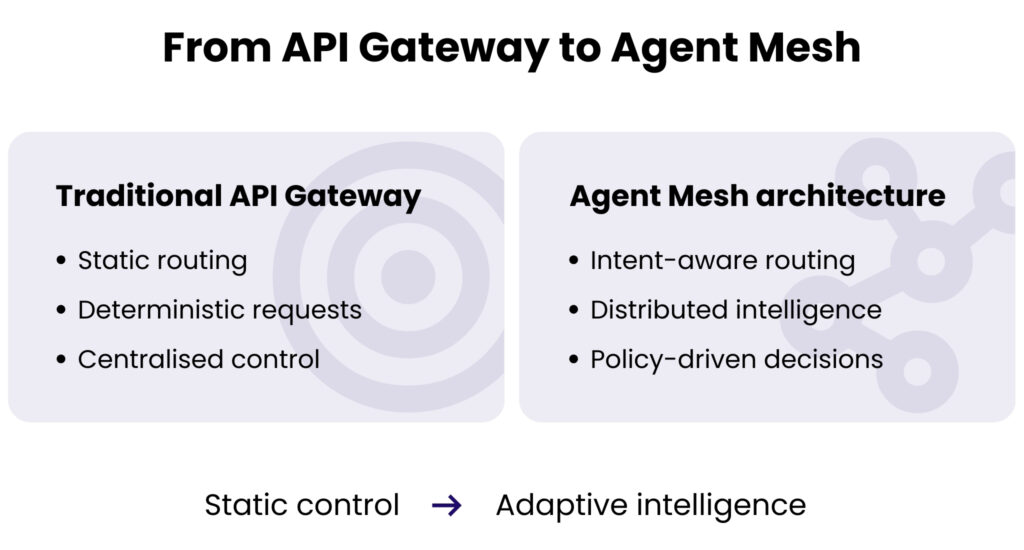
An Agent Mesh is a distributed, intelligent fabric connecting multiple Agent Gateways – each responsible not just for routing traffic, but for understanding the intent behind it. Together, they create an infrastructure capable of reasoning about data, policies, and performance.
في هذه الشبكة المتداخلة، تتطور واجهات برمجة التطبيقات إلى خدمات مستقلة وواعية بالسياق. فهي لا تنتظر التعليمات بل تُحسّن وتصحّح ذاتها في الوقت الفعلي. وهكذا تبدأ منظومات الذكاء الاصطناعي في التوسع.
داخل شبكة الوكلاء
في شبكة الوكلاء (Agent Mesh)، تتدفق الذكاءات (بين النماذج والبوابات والخدمات)، موجّهةً بطبقة من التنسيق تتعلم باستمرار.
تساهم كل بوابة وكلاء (Agent Gateway) بجزء من الذكاء الجماعي للنظام:
- يتولى بعضها التخزين المؤقت الدلالي، أي تخزين الأنماط على مستوى المعنى لتقليل التكرار،
- يدير آخرون ضوابط الحماية التي تراقب سلامة المحتوى وخصوصية البيانات،
- يتخصص البعض في تتبع الرموز، مما يوفر رؤى دقيقة حول التكلفة والأداء.

يخلق هذا النهج الموزع شيئًا جديدًا تمامًا: نظامًا بيئيًا ذاتي التحسين. تُصلح سير العمل نفسها بنفسها، وتُحدَّث الوثائق تلقائيًا، وتحدث حماية البيانات في الوقت الفعلي.
أمثلة من الواقع العملي
يمكنك رؤية أمثلة مبكرة على ذلك تظهر بالفعل:
- تنسيق Kestra: ينفذ خطوط أنابيب تعلم الآلة، ويتتبع التنفيذ، ويعالج نفسه تلقائيًا بعد الأخطاء.
- SpecGen: واجهات برمجة تطبيقات تكتب وتحدّث وثائقها الخاصة ديناميكيًا بناءً على بيانات الاستخدام الفعلية.
- BlackBird: أتمتة المستودع إلى المواصفات – التوثيق الحي كخدمة.
من الواضح أن الذكاء الاصطناعي ينتقل من كونه مستخدمًا عبر واجهات برمجة التطبيقات إلى كونه مدمجًا فيها.
الأسس الوظيفية لتوسيع نطاق الذكاء الاصطناعي
ما يجعل شبكة الوكلاء أكثر من مجرد مفهوم هو ركائزها الوظيفية الأساسية – وكل منها يعالج قيداً حقيقياً في البنية التحتية للذكاء الاصطناعي اليوم.
1. التوجيه الذكي
يختار ديناميكياً أفضل نموذج أو مجموعة بيانات أو خدمة مصغرة اعتماداً على السياسة أو الأداء أو السياق في الوقت الفعلي.
2. التخزين المؤقت الدلالي
يتعرّف على الاستعلامات المتشابهة دلاليًا ويعيد استخدام النتائج السابقة، مما يقلل من زمن الاستجابة والتكلفة معًا.
3. إخفاء المعلومات الشخصية وتنقيحها
يكتشف البيانات الشخصية ويجعلها مجهولة الهوية عبر الأوامر النصية، باستخدام نماذج مثل GLiNER للتعرّف متعدد اللغات على الكيانات المسماة دون أمثلة تدريبية.
4. تتبع الرموز
يوفر رؤية عميقة لاستخدام الرموز والتكلفة، مما يساعد المؤسسات على فهم كيفية توسع أحمال عمل الذكاء الاصطناعي وأين تكمن أهمية التحسين.
5. الضوابط الوقائية
الحماية من حقن الأوامر والهلوسة وتسرب البيانات الحساسة، بما يضمن الاستخدام المسؤول للذكاء الاصطناعي.
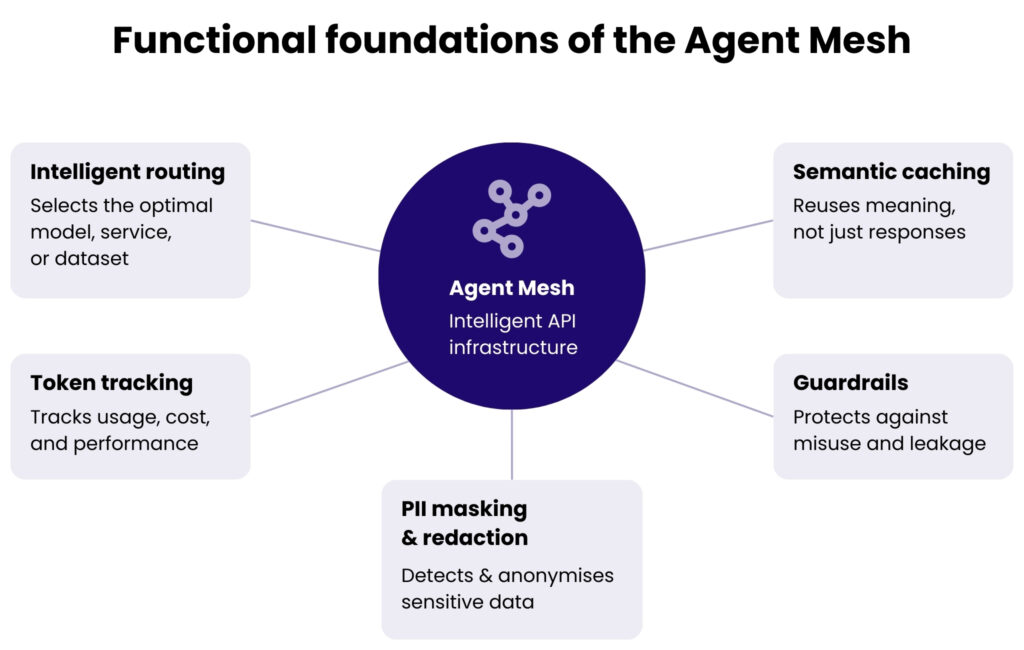
كل من هذه القدرات تحوّل الحوكمة التقليدية إلى معمارية ترى وتستنتج وتتفاعل. وهكذا تتطور إدارة API إلى إدارة الذكاء.
تأمين وتحسين منظومة الذكاء الاصطناعي
Security no longer ends at the endpoint but extends into the semantics of what the system is processing. A traditional API Gateway can enforce authentication or rate limits. An Agent Mesh can detect when a model is asked for something it shouldn’t reveal, or when sensitive data slips into a prompt.
With integrated guardrails and PII detection, the system understands context, not just content. It can flag risks, redact private details, or even adjust responses based on organisational policies.
GLiNER – a multilingual, zero-shot Named Entity Recognition model, detects PII in context, even without labeled data. It recognises names, organisations, addresses, and sensitive entities in multiple languages, ensuring compliance and user trust.
At the same time, the mesh continuously optimises performance. Intelligent routing ensures that workloads are distributed efficiently between providers and models. The result is a system that’s more secure, faster, leaner, and more sustainable.
مواءمة المنظومة والآفاق المستقبلية
The rise of the Agent Mesh aligns with a broader shift across enterprise AI architecture. Concepts like MLOps, data observability, and hybrid-cloud orchestration are all converging toward one goal: making intelligence operational at scale.
استكشف خدماتنا في مجال التقنيات المتقدمة
اعرف المزيد
تعمل شبكة الوكلاء (Agent Mesh) كطبقة رابطة تربط هذه المجالات معاً، مما يضمن انتقال الرؤى بسلاسة من النماذج إلى التطبيقات، ومن خطوط أنابيب البيانات إلى محركات القرار.
Looking ahead, this evolution points toward self-governing API ecosystems – systems that can negotiate, optimise, and secure themselves autonomously. It’s a glimpse of an AI-native service fabric, where intelligence is no longer an add-on to infrastructure but an integral part of it.
الخلاصة
As enterprises scale their use of AI, effective API management becomes essential for maintaining control and security. Traditional gateways are no longer enough. The focus must shift from routing calls to orchestrating meaning.
يمثل Agent Mesh الخطوة التالية: بنية لا تنقل فيها واجهات برمجة التطبيقات البيانات فحسب، بل تفسرها وتحميها أيضاً – حيث تكون الحوكمة ديناميكية، وتتعلم الأنظمة من كل تفاعل.
كيف يغيّر الذكاء الاصطناعي إدارة واجهات برمجة التطبيقات؟
اقرأ المزيد
من خلال تضمين الوعي بالسياق والأمان مباشرة في البنية التحتية، يمكن للشركات أخيرًا توسيع مشاريع AI بمسؤولية وكفاءة.
Spyrosoft يساعد المؤسسات على اتخاذ تلك الخطوة. تواصل معنا باستخدام النموذج أدناه لمعرفة كيف تدعم خبرتنا في إدارة واجهات برمجة التطبيقات البنى الجاهزة للذكاء الاصطناعي والقائمة على الوكلاء.
الأسئلة الشائعة: إدارة واجهات برمجة التطبيقات وتوسيع نطاق الذكاء الاصطناعي المؤسسي
Most AI pilots succeed in isolation because they bypass enterprise realities: shared infrastructure, cost controls, compliance, and cross-team dependencies. Scaling fails when each new model or agent is integrated ad hoc. Without intelligent API management, complexity compounds faster than value.
No. While LLMs accelerate the need for an Agent Mesh, the architecture benefits any system with dynamic decision-making, multi-model strategies, or hybrid AI stacks (ML + rules + heuristics). Even predictive or classical ML systems gain from semantic observability and intelligent routing.
By abstracting intent from execution, the mesh allows organisations to swap models, providers, or tools without rewriting integrations. Policies and routing logic live at the orchestration layer, not inside applications, enabling real multi-vendor AI strategies.
No, it complements MLOps. While MLOps governs model training, deployment, and lifecycle, the Agent Mesh governs how intelligence is used in production. It connects models to real-world applications, policies, and users in a controlled, adaptive way.
إذا كانت مؤسستك تواجه:
– نمو سريع في حالات استخدام الذكاء الاصطناعي
– ارتفاع تكاليف LLM مع عائد استثمار غير واضح
– زيادة مخاطر الامتثال أو تعرض البيانات
– تعدد موردي أو نماذج الذكاء الاصطناعي
…عندها يصبح Agent Mesh شرطاً أساسياً للتوسع.




arrow_circle_rightاتصل بنا