بوابة الوكلاء: كيف يغيّر الذكاء الاصطناعي إدارة واجهات برمجة التطبيقات


API management is entering a new era. As AI agents reshape how systems interact, a new paradigm emerges – the Agent Gateway. Learn how intelligent orchestration, semantic caching, and AI-native governance are redefining digital connectivity for the AI age.
مقدمة: فجر الاتصال الذكي
The evolution of digital systems has always been about connection: first systems, then services, now intelligence. APIs became the nervous system of digital enterprises – but AI is now the brain that requires a new type of interface.
مرحباً بكم في عصر بوابة الوكيل، القفزة التطورية التالية في إدارة واجهات برمجة التطبيقات المصممة لعالم قائم على الذكاء الاصطناعي.
In this article, we explore how API management evolved from monoliths to microservices, and now toward intelligent, AI-driven ecosystems – where APIs don’t just connect systems but help them understand each other.
تطور إدارة API
السنوات الأولى: الأنظمة المتجانسة والبساطة
Early applications were built as monoliths. One codebase contained everything: product pages, pricing logic, order handling, customer records. That simplicity felt like freedom. While monoliths weren’t always quick to set up, once they were in place teams could iterate rapidly – until every new feature hit another wall. A tiny change in checkout code could require redeploying the entire application. Monoliths taught us the painful lesson that simplicity at the start can result in cascading failures at scale.
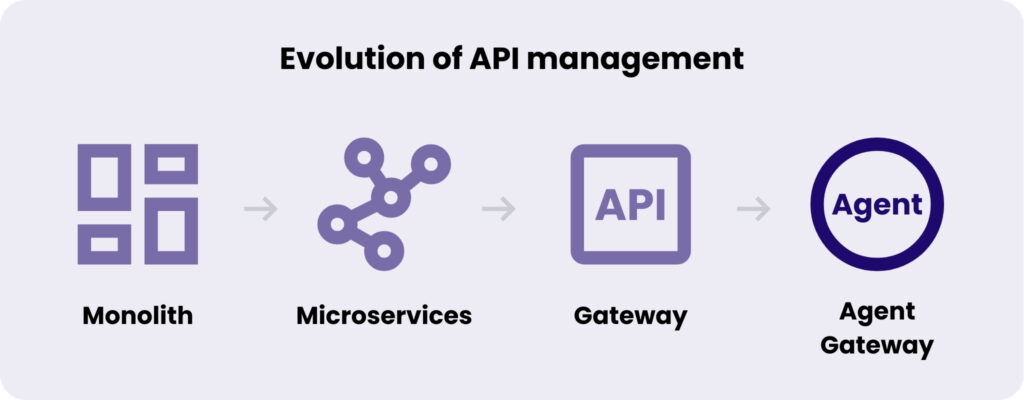
ثورة الخدمات المصغرة
Then came microservices – a new way to break down applications into smaller, autonomous parts. Teams could ship in parallel, scale only what needed scaling, and adopt technology choices suited to each domain. It brought agility and flexibility but also introduced new problems – increased operational overhead, more moving parts, and far more communication between services. Suddenly, the network replaced a single process, and the architecture became distributed: powerful, but noisier.
عصر بوابة API
To tame this complexity, organisations adopted API gateways: the central nervous system for distributed systems. Gateways unified security, observability, and access management, enabling scalable growth. For a long time, the gateway was the best engineering trade-off we had. It reduced client-side complexity and restored control. It was the pragmatic glue between teams, clouds and customers.
But the world is changing again. The arrival of AI (especially large language models and agentic workflows) exposes the limits of gateway thinking. Traditional API management expects deterministic calls: a client knows the endpoint; the server returns a predictable schema. AI does not play by those rules. Agents make decisions and reason with context. The contracts we relied on (static routing, predefined contracts, and manual documentation) limit how adaptive systems can become.
الأنظمة البيئية الذكية
This is where the next phase begins. The Agent Gateway reframes the gateway role – instead of routing by URL, it routes by purpose. It understands intent: what the caller means, what data is sensitive, which model or service is optimal, and how to protect the context as it moves through the system.
Importantly, this doesn’t replace existing services or their APIs. What changes is the workflow layer above them: AI helps orchestrate when and how APIs are used, and turn static integrations into more adaptive, context-driven sequences.
Just as microservices broke the monolith, AI is now breaking static APIs – not by removing them, but by enabling more fluid, context-aware, self-optimising workflows on top of existing interfaces.
لماذا يُغيّر الذكاء الاصطناعي إدارة واجهات برمجة التطبيقات
APIs have always assumed predictability. You send a request, you get a response. Artificial intelligence, however, operates in probabilities, not certainties. Instead of following fixed routes, LLMs and AI agents explore multiple paths. They learn, adapt, and make decisions in real time. What used to be a straight line between a client and a server has become a dynamic conversation between intelligent systems.
Through mechanisms like ChatGPT plugins or OpenAI’s function calling, AI models can analyse intent, determine which API is relevant, and invoke it on their own. That’s the essence of intent-driven integration – an ecosystem where the system itself decides what to connect, when, and why. It’s a level of orchestration that traditional API gateways were never built to handle.
This shift exposes a deeper limitation: traditional API management governs requests, not reasoning. As AI agents choose paths dynamically, orchestration itself becomes the architectural concern.
في هذا العالم الجديد، تتضاعف التحديات:
- تنسيق النماذج: اتخاذ القرار في الوقت الفعلي بشأن أي نموذج لغوي كبير أو خدمة أو مجموعة بيانات لاستخدامها لمهمة محددة.
- نقل السياق والتخزين المؤقت الدلالي: نقل ليس البيانات فحسب بل المعنى بين النماذج والخدمات، مع تقليل الاستدعاءات المكررة أو غير الضرورية.
- إدارة الخصوصية والبيانات الشخصية: تحديد المعلومات الحساسة وإخفاؤها وحمايتها تلقائياً عبر سير عمل الذكاء الاصطناعي الديناميكي.
- المراقبة على مستوى الأوامر النصية: تتبع وفهم والتحكم في كيفية تطور المطالبات (وما تكشفه) أثناء تدفقها عبر الأنظمة.
كل من هذه المشكلات يكشف الحقيقة ذاتها: الأدوات القديمة لإدارة واجهات برمجة التطبيقات لم تُصمم أبداً للأنظمة البيئية الذكية.
التحول معماري. للازدهار في مشهد يركز على الذكاء الاصطناعي أولاً، يجب على المؤسسات الانتقال من إدارة نقاط النهاية إلى إدارة تدفقات النوايا (=من الإشراف على الطلبات إلى الإشراف على الاستدلال).
وهنا تحديدًا يأتي دور Agent Gateway: بوصفه النسيج الرابط الذي يفهم الغاية ويجعل ما لا يمكن التنبؤ به قابلًا للإدارة مرة أخرى.
بوابة الوكيل
تظهر بوابة الوكيل (Agent Gateway) استجابةً لواقع بسيط لكنه صعب: لا يمكن حوكمة الأنظمة الذكية بالطريقة نفسها التي تُحوكم بها الأنظمة الحتمية.
إنها طبقة تنسيق أصلية بالذكاء الاصطناعي تربط البشر وواجهات برمجة التطبيقات والوكلاء الأذكياء. فهي لا تنقل البيانات بين نقاط النهاية فحسب، بل تفسرها وتقيّمها وتحميها.
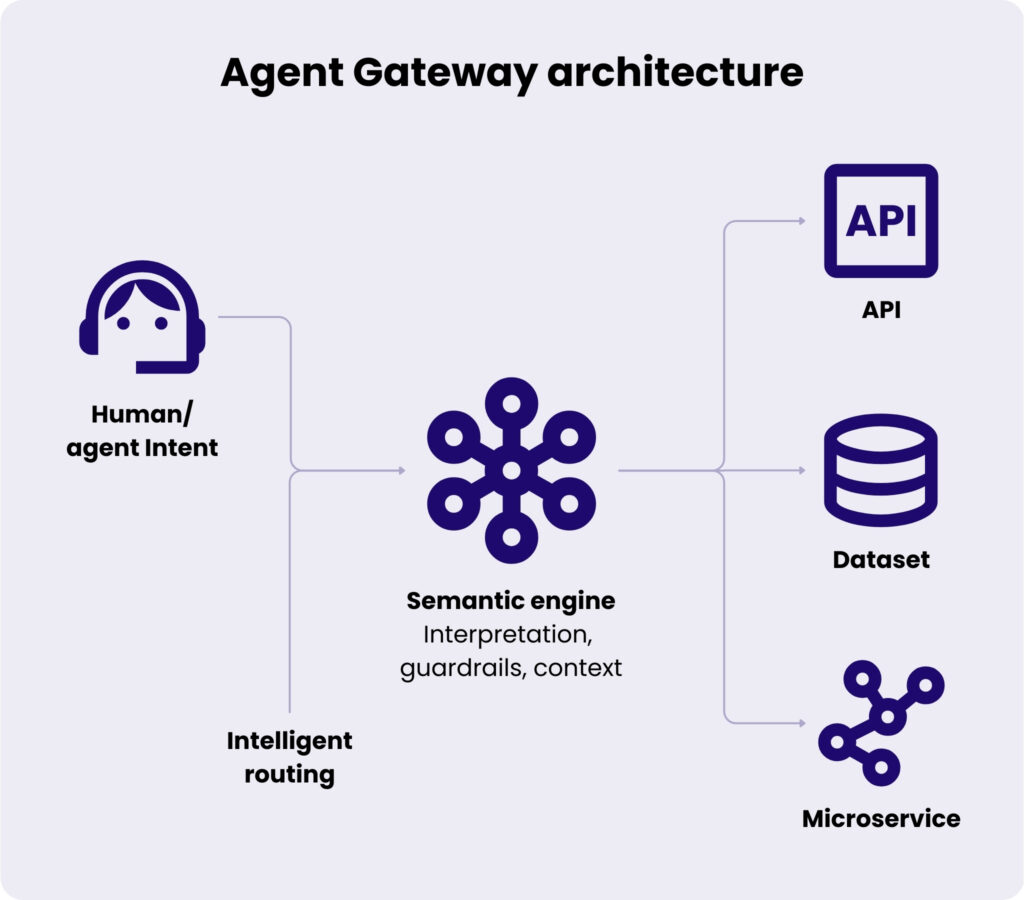
فبدلاً من التوجيه حسب نقطة النهاية، يوجّه حسب النية والسياق. ويمكنه أن يقرر، على سبيل المثال، أي نموذج أو مجموعة بيانات أو خدمة مصغرة تخدم هدفاً معيناً على أفضل وجه، بناءً على إشارات في الوقت الفعلي.
الركائز الوظيفية لبوابة الوكلاء
- التوجيه الذكي – يختار تلقائياً النموذج أو الخدمة الأكثر كفاءة لكل طلب.
- التخزين المؤقت الدلالي – يخزّن الاستعلامات المتشابهة دلاليًا لتحسين السرعة وتقليل تكاليف الحوسبة.
- إخفاء وحجب البيانات الشخصية – يكتشف ويحمي المعلومات الشخصية القابلة للتعرّف عليها في الوقت الفعلي.
- تتبع الرموز – يراقب كيفية استخدام رموز الذكاء الاصطناعي، مما يوفر رؤية واضحة للأداء والتكلفة.
- الحواجز الوقائية – يضمن استخدامًا آمنًا ومتوافقًا للذكاء الاصطناعي من خلال منع تسرب البيانات أو الأوامر الخبيثة.
معاً، تعيد هذه الميزات تعريف حوكمة واجهات برمجة التطبيقات (API). فما كان يتعلق بإدارة حركة المرور أصبح الآن مراقبة الذكاء الاصطناعي والتحكم التكيفي – وهي خطوة رئيسية نحو بنية تحتية ذكية.
شبكة الوكلاء
عندما تتصل بوابات الوكلاء المتعددة ببعضها البعض، فإنها تشكّل شبكة وكلاء (Agent Mesh): نسيج من الخدمات الذكية ذاتية التحسين التي تتواصل من خلال المعنى، وليس المنطق المُبرمج بشكل ثابت.
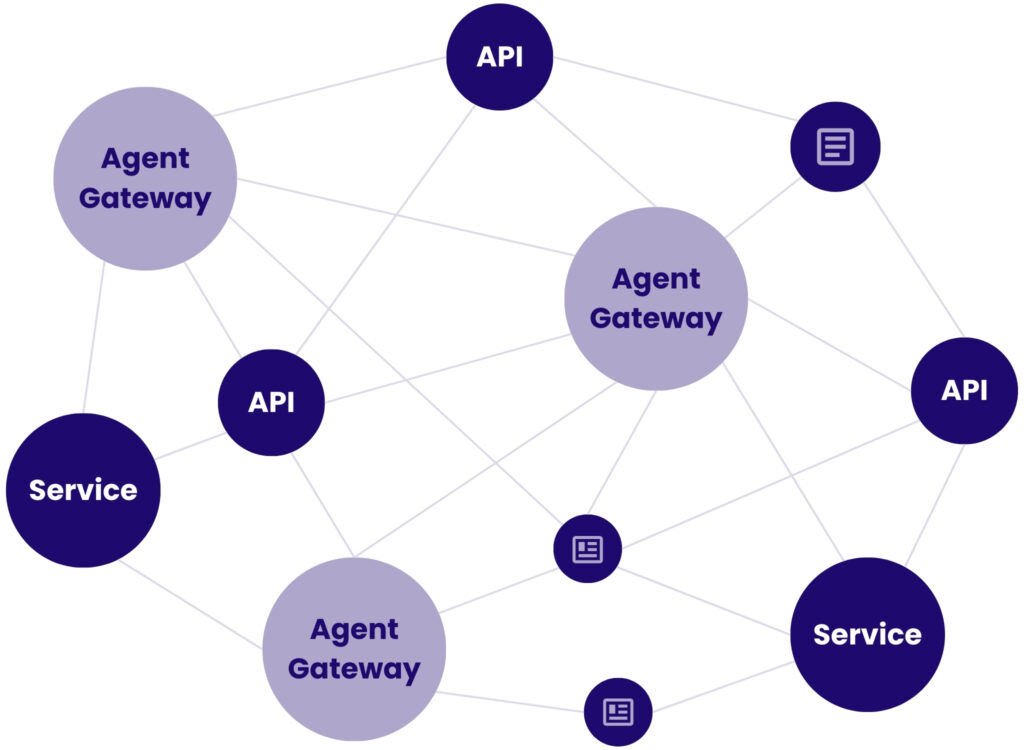
في هذا النظام البيئي:
- تتطور واجهات برمجة التطبيقات إلى عقد واعية بذاتها تفهم النوايا.
- تتعاون الخدمات وتتفاوض وتحسّن التوجيه في الوقت الفعلي.
- تنفذ أدوات تنسيق الذكاء الاصطناعي (مثل Kestra) خطوط أنابيب تعلم الآلة، وتتتبع التنفيذ، وتعالج نفسها تلقائيًا عند حدوث أعطال.
- تُظهر مشاريع مثل SpecGen وBlackBird هذا التطور — واجهات برمجة تطبيقات قادرة فعليًا على توليد وتحديث وثائقها الخاصة استنادًا إلى بيانات الاستخدام الفعلية.
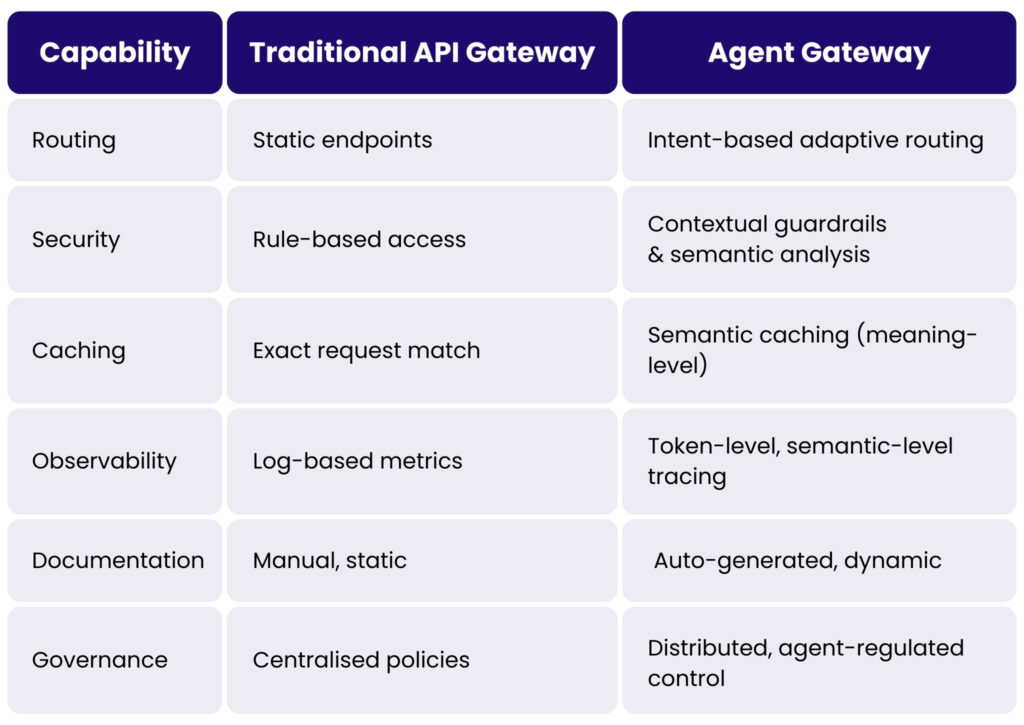
مقارنة: إدارة واجهات برمجة التطبيقات التقليدية مقابل القائمة على الوكلاء
يتجلى التحول بشكل أوضح في كيفية اختلاف البوابات التقليدية والنهج القائمة على الوكلاء من الناحية العملية.
ما يعنيه ذلك لقادة التكنولوجيا
لمديري التكنولوجيا ومديري معلوماتية الأعمال
For technology leaders, this shift is a fundamental rethinking of how digital ecosystems operate. The move toward AI-native API management demands new skills, new architectures, and a new philosophy of control.
Traditional API management was about structure and predictability. But in an agentic environment, control becomes orchestration. CTOs and CIOs must now oversee systems that reason, adapt, and make autonomous decisions.
From a governance perspective, the Agent Gateway also adds a critical layer of security and visibility. Instead of scattered safeguards, sensitive data handling and compliance rules can be enforced consistently across AI workflows. Detailed logging makes it possible to see what happens beneath the surface – which models are invoked, how tokens are used, and how decisions evolve over time.
Observability, too, takes on a new meaning. It’s no longer enough to know what was called – leaders must understand why. Modern observability tracks prompt usage, model drift, and end-to-end decision flows, offering insight into how agents choose, reason, and evolve over time.
ظهور أدوار جديدة
New roles are already emerging. AI Orchestration Engineers will design workflows that blend APIs and models. AgentOps specialists will maintain fleets of intelligent agents – monitoring, optimising, and securing them. Some organisations will even introduce an AI Agent Orchestrator, a role that oversees the performance and collaboration of autonomous systems across the enterprise.
وفي الوقت نفسه، سيصبح مسؤولو أخلاقيات وحوكمة الذكاء الاصطناعي ضرورة أساسية. فهم مسؤولون عن الحفاظ على الشفافية والثقة والامتثال في اتخاذ القرارات القائمة على الوكلاء الأذكياء.
استكشف خدماتنا في مجال التقنيات المتقدمة
اعرف المزيد
لرؤساء المنتجات والابتكار
بالنسبة لقادة المنتجات والابتكار، تفتح بوابة الوكلاء مساحة جديدة تمامًا للتجريب.
Where traditional integration models slowed teams down with dependencies and documentation, AI-native connectivity accelerates innovation. Products can now tap into intelligent ecosystems that adapt in real time.
The Agent Gateway creates a foundation where new AI-driven capabilities can be deployed incrementally. Instead of replacing existing systems, teams can layer intelligence on top of what already works.
إدارة واجهات برمجة التطبيقات: الطريق إلى الأمام
For many enterprises, the transformation will be gradual. Re-architecting everything at once isn’t realistic. The smarter approach is to layer Agent Gateway capabilities on top of existing infrastructure, enabling AI-native behaviour step by step.
وهنا يأتي دور Spyrosoft acts as a trusted engineering partner. We help organisations bridge from static gateways to dynamic, intelligent ecosystems, designing a roadmap that introduces semantic monitoring, automated routing, and AI observability – without disrupting core operations.
هدفنا بسيط: جعل الرحلة من واجهات API إلى الوكلاء الأذكياء استراتيجية ومستدامة.
الخلاصة
لم تعد الإدارة الثابتة لواجهات API كافية بمفردها. ما يأتي بعد ذلك هو التعاون الديناميكي الذكي – أنظمة تتبادل الفهم.
As AI agents multiply across enterprises, APIs are evolving from technical endpoints into living components of an intelligent mesh. The early signs are already here: autonomous agents calling APIs, models orchestrating workflows, systems learning from their own interactions.
ما القطعة المفقودة في توسيع نطاق ثورة الذكاء الاصطناعي؟
اقرأ المزيد
To lead in this new landscape, organisations have to treat API management as an AI-first discipline. That means replacing hand-written documentation with self-describing interfaces or fixed routing with intent-driven orchestration.
The Agent Gateway stands at the centre of this transformation. It bridges the world of human intent, traditional software, and machine intelligence – translating purpose into action. Step by step, it enables companies to evolve toward architectures that are not only connected but also cognitive.
In the age of AI, success doesn’t belong to those who build the loudest systems – it belongs to those who build the ones that listen. Contact us via the form below to learn how we respond to the needs of AI agents in our API management projects.
المصادر: استندنا إلى أبحاث القطاع وتحليلات الخبراء طوال هذه النظرة العامة، بما في ذلك: Imaginet.com, Business-reporter.com, Apideck.com, Portkey.ai, Gravitee, Medium.com, ISO. وتؤكد هذه الرؤى أن Agent Gateway ليس ضرباً من الخيال العلمي، بل هو الخطوة المنطقية التالية في إدارة واجهات برمجة التطبيقات (API) لعالم الذكاء الاصطناعي.
الأسئلة الشائعة: إدارة واجهات برمجة التطبيقات القائمة على الذكاء الاصطناعي
The Agent Gateway is best understood as an architectural pattern rather than a single off-the-shelf product. Different vendors may implement parts of it (routing, guardrails, observability, orchestration), but its real value lies in how these capabilities are composed. In practice, organisations may build it using a combination of existing gateways, AI orchestration tools, LLM providers, and custom logic.
No. One of the core strengths of the Agent Gateway approach is that it layers intelligence on top of existing APIs. Your current services remain intact. The gateway operates at the orchestration level, deciding when, how, and why APIs are invoked.
Agent Gateways are designed with observability and guardrails precisely because AI systems are probabilistic. When a suboptimal decision occurs, the gateway provides traceability: which intent was inferred, which model or service was chosen, and why. This makes failures debuggable, auditable, and improvable.
Instead of scattering compliance rules across services, the Agent Gateway centralises policy enforcement at the reasoning layer. This makes it easier to enforce GDPR, data residency, or sector-specific regulations consistently (even when AI agents dynamically compose workflows across multiple systems and vendors).
المسار الأكثر فعالية هو التبنّي التدريجي:
– إدخال المراقبة الدلالية وتتبع الرموز.
– إضافة توجيه قائم على النية لحالات استخدام مختارة.
– أضف ضوابط الحماية وحماية البيانات الشخصية.
– توسيع نطاق التنسيق تدريجيًا عبر المجالات.
هذا هو النهج الذي توصي به Spyrosoft: التطور نحو اتصال أصيل بالذكاء الاصطناعي دون زعزعة استقرار المنصات الحالية.



arrow_circle_rightاتصل بنا