Les 5 principaux risques et opportunités des chatbots IA dans le secteur bancaire


The financial sector has witnessed a surge in the adoption of AI-powered chatbots. These intelligent virtual assistants are streamlining processes, changing customer interaction and banking services. The CFPB has released a report on integrating chatbots into financial institutions. Le rapport montre que plus de 110,9 millions d'utilisateurs devraient interagir avec le chatbot d'une banque d'ici 2026. Dans un contexte d'optimisme prudent du secteur bancaire quant aux avantages potentiels des chatbots, il est urgent d'examiner les risques et les opportunités en jeu.
This article addresses the top five risks and opportunities associated with AI-powered chatbots in banking. By exploring the potential benefits and pitfalls, we provide an overview of this technology, equipping you with the knowledge to make informed decisions as a banking professional.
Quel est le véritable potentiel de l'IA conversationnelle dans le secteur bancaire ?
Conversational AI in banking opens the door to 24/7 customer service, personalised assistance and streamlined transactions. Customers can effortlessly check their balances, transfer funds or even apply for loans using simple conversational commands. AI-powered chatbots can leverage LLM engines and create this conversational experience by personalising interaction, initiating actions, and improving the banking experience.
Financial institutions are under pressure to improve the efficiency of their customer service. Our voicebot solution addresses this need by using artificial intelligence to automate common queries and standard tasks. This frees up human advisors to deal with more complex customer issues. To see the effectiveness of our voicebot in optimising operations for a Polish bank, take a look at our full étude de cas!
The integration of AI is not just a technological upgrade, but a strategic imperative in the financial sector. Its role extends beyond automating tasks; it’s about enhancing operational efficiency. Financial institutions are now leveraging AI to refine decision-making processes and optimise client services. This shift is less about replacing human roles and more about augmenting human capabilities, allowing them to focus on strategic initiatives and client engagement.
Tomasz Smolarczyk, Responsable de l'intelligence artificielle
Les avantages des chatbots personnalisés pour les banques
Banks struggle daily with digital transformation and changing consumer expectations, so they turn to innovative solutions to improve their service offerings. By leveraging emerging technologies such as artificial intelligence, machine learning, or natural language processing, banks can tailor chatbots to their customers’ unique needs.
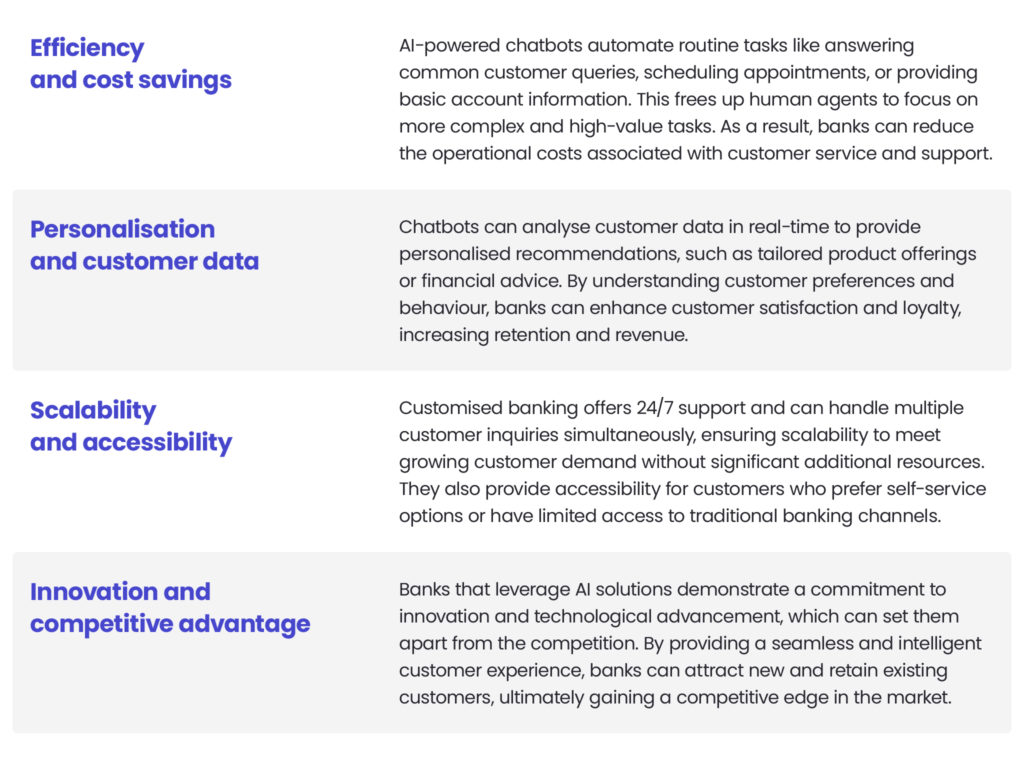
Financial institutions are increasingly turning to chatbots and virtual assistants, although many of these solutions are relatively older models based on rigid scenarios and often direct customers to live consultants. However, ING stands out as an interesting example, as in partnership with McKinsey, it transformed its virtual assistant, leveraging advanced GenAI technology. This allows the bank to provide customers with immediate, personalised assistance while maintaining high-security standards. Their innovative approach is based on a multi-stage process of generating the best responses, using data from various sources and evaluating them for usefulness. If multiple options arise, the system suggests diverse solutions to the customer.
Ces améliorations permettent une résolution des problèmes plus rapide et plus évolutive, comme l'ont confirmé les tests menés auprès des clients ING aux Pays-Bas, qui ont montré que le nouveau chatbot traitait 20 % de plus de clients que son prédécesseur.
Avez-vous besoin d'aide pour mettre en œuvre l'IA dans la finance ?
Parlons-en !Comprendre les risques potentiels et les considérations
As banks decide to implement AI-driven solutions to upgrade customer interactions and streamline operations, it is crucial to be aware of the potential risks and considerations associated with this approach. While the benefits of integrating chatbots are vast, ranging from improved efficiency to enhanced customer insights, overlooking the possible pitfalls can undermine the effectiveness of these systems and compromise trust.
Now it’s time to look at the considerations banks must address when deploying bespoke chatbots, ranging from privacy concerns, regulatory compliance, algorithmic bias and human oversight. By understanding and proactively addressing these challenges, financial institutions can support the potential of chatbot technology while mitigating its associated risks.
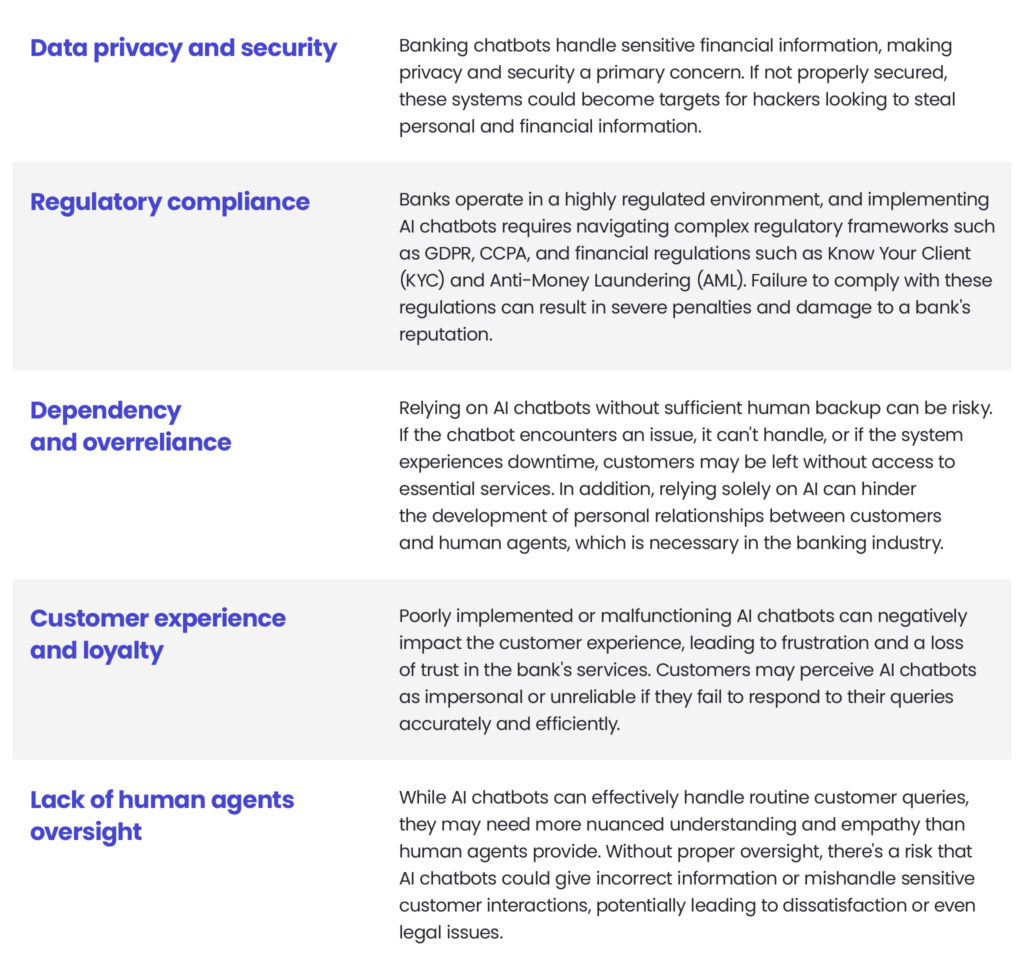
Un exemple du manque de supervision des agents humains peut être observé dans le cas deAir Canada, where a chatbot misled a passenger, resulting in a lawsuit. The court disagreed despite the airline’s defence that the chatbot was a separate legal entity responsible for its actions. Air Canada must now compensate the passenger for providing incorrect information about a discount on a ticket. This incident highlights the need for companies to ensure accountability for all information provided through their platforms, whether it comes from static web pages or chatbots.
Nous sommes votre partenaire pour la création de chatbots IA sur mesure
Grâce à notre expertise en développement technique et à notre compréhension des besoins spécifiques du secteur bancaire, nous créerons un chatbot parfaitement adapté à vos besoins.
En savoir plus sur nos services de conseil technologique pour les institutions financières.
Pour un aperçu complet de la mise en œuvre de solutions vocales dans les opérations bancaires, consultez nos articles Les voicebots IA dans le secteur bancaire polonais (partie 1) et Les voicebots IA dans le secteur bancaire polonais (partie 2). Faites le pas suivant pour transformer vos stratégies d'engagement client et garantir une expérience bancaire fluide !
AI-powered chatbots are virtual assistants that use artificial intelligence and natural language processing to automate customer service tasks in banks. They enable customers to check balances, transfer funds or apply for loans through simple, conversational interactions.
Les chatbots personnalisés offrent efficacité et économies de coûts, une personnalisation accrue et des informations précieuses sur les clients. Ils améliorent également l'évolutivité, l'accessibilité et l'innovation, aidant les banques à rester compétitives sur un marché numérique en évolution rapide.
L'IA conversationnelle permet une communication naturelle et humaine entre les clients et les banques. Elle personnalise les interactions, fournit des réponses instantanées et simplifie les processus bancaires quotidiens, offrant ainsi une expérience plus fluide et plus engageante.
The main risks include data privacy issues, regulatory compliance challenges, algorithmic bias and insufficient human oversight. Without proper governance, these risks may lead to misinformation, reputational damage or even legal consequences, as shown by recent industry incidents.
Banks can mitigate risks by maintaining human supervision, ensuring transparent data management and regularly auditing chatbot algorithms. Following compliance standards and establishing clear accountability frameworks are vital to using AI safely and responsibly.
Les chatbots IA automatisent les tâches répétitives, augmentent l'efficacité opérationnelle et améliorent la prise de décision. Cela permet aux institutions financières de se concentrer sur l'innovation, la stratégie et les relations clients – des aspects clés de la transformation numérique.
Spyrosoft combines technical expertise with in-depth knowledge of the financial sector. We design and build bespoke chatbot and voicebot solutions that comply with regulations, enhance user experience and align with the strategic goals of banks and financial organisations across the UK and Europe.




arrow_circle_rightContactez-nous
Contactez-nous pour discuter de la manière dont nous pouvons vous aider

arrow_circle_right Notre blog