حسّن اتصال الروبوتات مع Staex


Robots are no longer just machines programmed to perform a specific task. The future of robotics depends on the ability of these machines to work together in complex networks and coordinate their actions effectively. As a result, the topic of connectivity in robotics has gained significant importance, becoming a key factor in ensuring the overall efficiency and success of robotic systems.
At Spyrosoft Synergy, we recognise the needs of robotics in the field of communication and we strive to meet them by implementing the best possible solutions. To this end, we have established a الشراكة مع Staex، الذي يتميز منتجه ويضيف جودة جديدة إلى مجال الاتصالات في الروبوتات (وما هو أبعد من ذلك).
في هذه المقالة، سأشرح تحديات الاتصال التي تواجهها الروبوتات هذه الأيام، وسأستكشف الاستخدامات المحتملة لتقنية Staex لحلها.
ما هو Staex؟
«Staex ثوري منصة الربط الشبكي وتنسيق البرمجيات. إنه نظام موثوق ومشفّر وسهل الإدارة يوفر اتصالاً كاملاً من نظير إلى نظير دون أي نقطة فشل واحدة."
يتكون Staex من مكونين:
– StaexMCC (Mesh Companion Container) – للربط الشبكي
– StaexD (Staex Daemon) – لتنسيق أجهزة الكمبيوتر أحادية اللوحة في أنظمة موزعة واسعة النطاق
كلاهما مصمم ليكون نداً لند بشكل كامل ويعمل على أجهزة محدودة الموارد، مثل إنترنت الأشياء الصناعي والروبوتات.
In this article, we’ll focus on StaexMCC, as it offers certain distinctive features that could be potentially used to solve some of the connectivity challenges that the robotics industry is facing these days.
ما هو StaexMCC؟
StaexMCC is an industrial-grade VPN. It provides an overlay network for all robots and clouds that enables full connectivity between applications running on nodes within the network. The connection is reliable, encrypted and fully transparent for the applications. It is designed to provide reliable connectivity over unreliable networks. Thanks to the state-of-the-art congestion control algorithms and distributed architecture, StaexMCC provides the best performance, even for networks with high packet loss.
يعتمد MCC على جدول تجزئة موزع (DHT) – Kademlia كتقنية DHT الأساسية.
ما هو Kademlia؟
Kademlia is a decentralised, peer-to-peer (P2P) network protocol that enables nodes in a distributed network to locate each other and share information efficiently. It was introduced in 2002 by Petar Maymounkov and David Mazières and is known particularly for its use in the distributed hash table (DHT) of the BitTorrent protocol.
تشمل الميزات الرئيسية لـ Kademlia ما يلي:
1. اللامركزية: لا توجد سلطة مركزية أو خادم في الشبكة. تتمتع جميع العُقد بأدوار ومسؤوليات متساوية في الحفاظ على وظائف الشبكة.
2. قابلية التوسعصُمم Kademlia للتعامل مع عدد كبير من العقد، مما يجعله مناسبًا للتطبيقات ذات قاعدة مستخدمين واسعة.
3. التوجيه: تستخدم Kademlia مقاييس مسافة فريدة قائمة على XOR لتحديد القرب بين العُقد، مما يتيح توجيهاً فعّالاً ويقلل عدد القفزات اللازمة لتحديد عقدة معينة.
4. تحمل الأخطاء: The protocol ensures data redundancy by storing multiple copies of each data item across different nodes in the network. This redundancy makes the network more resilient to node failures and data loss.
5. التنظيم الذاتي: تنظم شبكات Kademlia نفسها وتتكيف لتحقيق الأداء الأمثل بناءً على عدد العقد وقدرات اتصالها.
نظراً لكفاءته وقابليته للتوسع ومرونته، فقد اعتُمد Kademlia على نطاق واسع في تطبيقات الند للند (P2P) المتنوعة، مثل مشاركة الملفات والحوسبة الموزعة وتوزيع المحتوى.
كيف يعمل؟
في بروتوكول Kademlia، يعتمد التوجيه على مقياس مسافة فريد قائم على عملية XOR، مما يساعد على تحديد مواقع العُقد بكفاءة ومشاركة المعلومات في شبكة موزعة.
Each node in the network has a unique identifier (Node ID). The distance between two nodes is calculated using the bitwise exclusive OR (XOR) operation on their Node IDs. Each node maintains a routing table containing information about other nodes in the network.
When a node wants to find another node or a particular piece of data, it initiates a lookup process. The searching node starts by querying the nodes in its own routing table that are closest to the target Node ID. These nodes, in turn, provide information about nodes closer to the target. This iterative process continues until the searching node has found the target node or has exhausted its search.
يظهر مثال على عملية البحث في الرسم البياني:
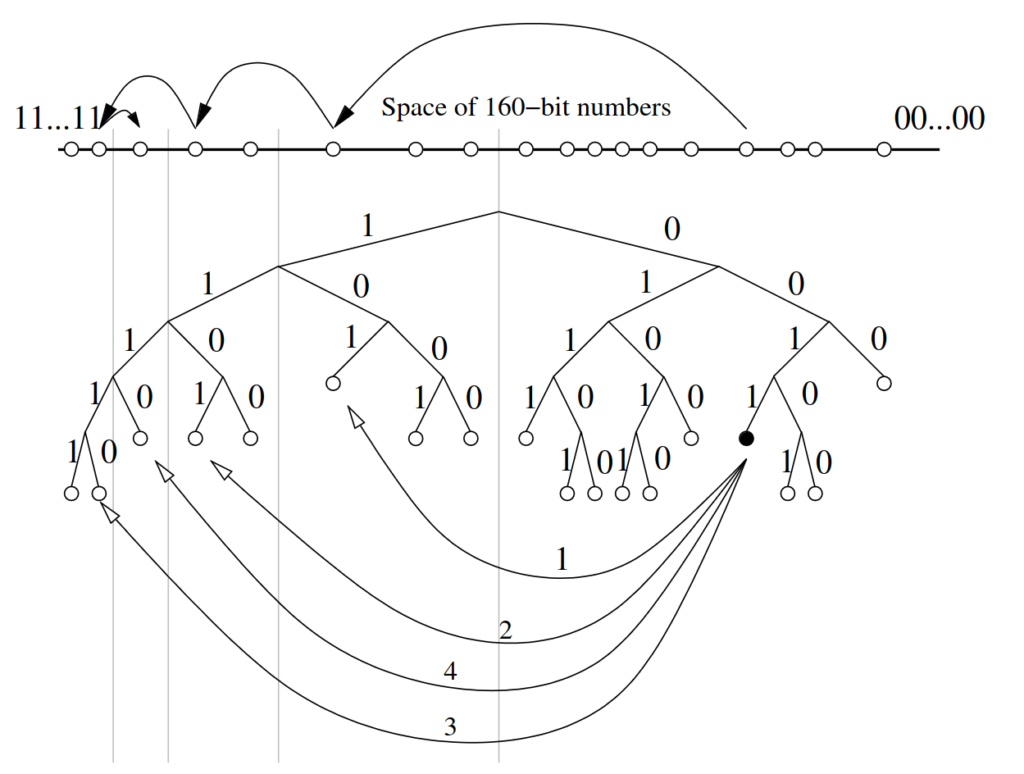
المصدر: https://pdos.csail.mit.edu/~petar/papers/maymounkov-kademlia-lncs.pdf
كما ترى، تبلغ تعقيد عملية البحث O(log2 (n)). وهذا يعني أنه بالنسبة لشبكة تضم 2^n عقدة، سيستغرق العثور على تلك العقدة n خطوة على الأكثر!
The original Kademlia protocol defines a 1-to-1 key/value lookup, while it’d be desirable to have a 1-to-many discovery, so that many providers can be registered for the same service, allowing for fault-tolerance and scalability. Staex has expanded the capabilities of the protocol to include that feature.
كيف يمكن لـ Staex مساعدتنا في حل تحديات الاتصال؟
من الضروري للغاية أن تكون الشبكات في مجال الروبوتات موثوقة وآمنة وقابلة للتوسع وفعالة. يضيف StaexMCC قيمة كبيرة لتحقيق هذه الخصائص.
الموثوقية
StaexMCC is designed to provide reliable connectivity over unreliable networks. Thanks to the state-of-the-art congestion control algorithms and distributed architecture, it provides the best performance, even for networks with high packet loss.
الأمن
StaexMCC provides end-to-end key-based encryption for all connections within the MCC network. It uses certificates to alleviate key distribution problems for large scale deployments. MCC is written in Go, but it’s worth noting that it’s currently being rewritten in Rust – a modern, safety-oriented programming language.
قابلية التوسع
Thanks to MCC being based on an augmented Kademlia DHT protocol, the network is fully decentralised, self-organises and adjusts to achieve the best performance depending on the number of nodes and their connection capabilities. As a result, it is more resistant to large-scale traffic, damage or even DoS attacks.
الكفاءة
In the mobile robots industry, energy efficiency is one of the key aspects. Mobile devices are battery-powered, so their capabilities relies heavily on power consumption. Even though electric energy storage technology is evolving quickly, mobile robots still relies on imperfect chemical batteries. It would be highly inefficient and imprudent to unnecessarily consume electrical energy just to ensure reliable connectivity. The Staex MCC strives to limit the device resource usage to minimum by optimizing the software for small IoT devices and minimising network traffic overhead.
Staex في روبوتات Spyrosoft
Since at Spyrosoft Synergy we develop solutions for robotics, having a technology that solves so many connectivity challenges seemed not only beneficial for our customers, but also for our internal research. We have evaluated Staex internally and verified its capabilities in two use case scenarios: a distributed DHT database for data sharing and an overlay network for simplified connectivity.
بيئة الاختبار
For testing, a set of virtual machines running Ubuntu 22.04 Server connected within private networks behind NAT. One node has been made publicly available to all other nodes with public IP address to enable Staex network bootstrap. This setup enabled testing most of the Staex key features.
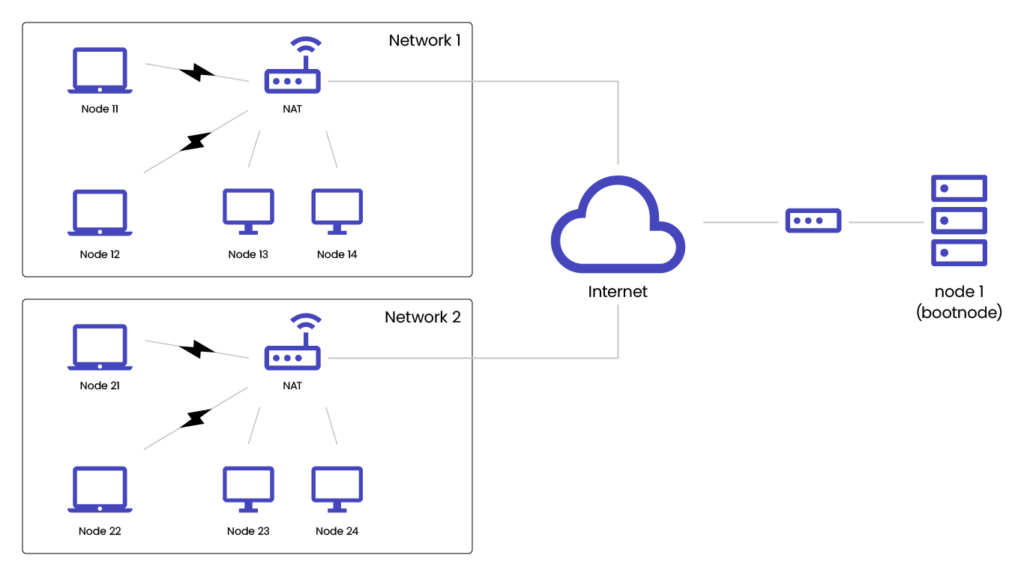
الحالة 1 – تبادل البيانات عبر قاعدة بيانات DHT
في هذا السيناريو، اختبرنا قدرة Staex على تبادل البيانات بين العُقد عبر قاعدة بيانات لامركزية (DHT) واستخدام واجهة REST API المتاحة.
We simulated a node joining the network and publishing some arbitrary data. At the end, the node was disconnected from the network and the data it published was tested whether it was still available within DHT.
مثال على إضافة بيانات إلى قاعدة البيانات:
user@demo_node1:$ curl -X POST http://127.0.0.1:8080/value -H "Content-Type: application/json" - d '{"key": "demos", "value": "demo1", "expiration": 24}' مثال على استرداد البيانات من DHT:
user@demo_node2:$ curl -X GET http://127.0.0.1:8080/value/demos The distributed nature of the Staex network is a big advantage. There’s no need for any central database to keep the whole product networking ecosystem. This means there’s no single point of failure!
It is, however, designed for relatively large number of nodes. Typically the data in DHT is spread over 20 closes neighbours in the network. While Staex doesn’t add much value to small networks of nodes, it’s worth noting its capabilities to scale over a huge number of nodes.
الحالة 2 – الربط الشبكي المباشر مع شبكة تراكب افتراضية
في هذا السيناريو، تم اختبار شبكة Staex التراكبية وتقييمها. وفي البيئة الافتراضية، تم ربط شبكتين خاصتين ببعضهما البعض، مع إبقاء العُقد خلف NAT:
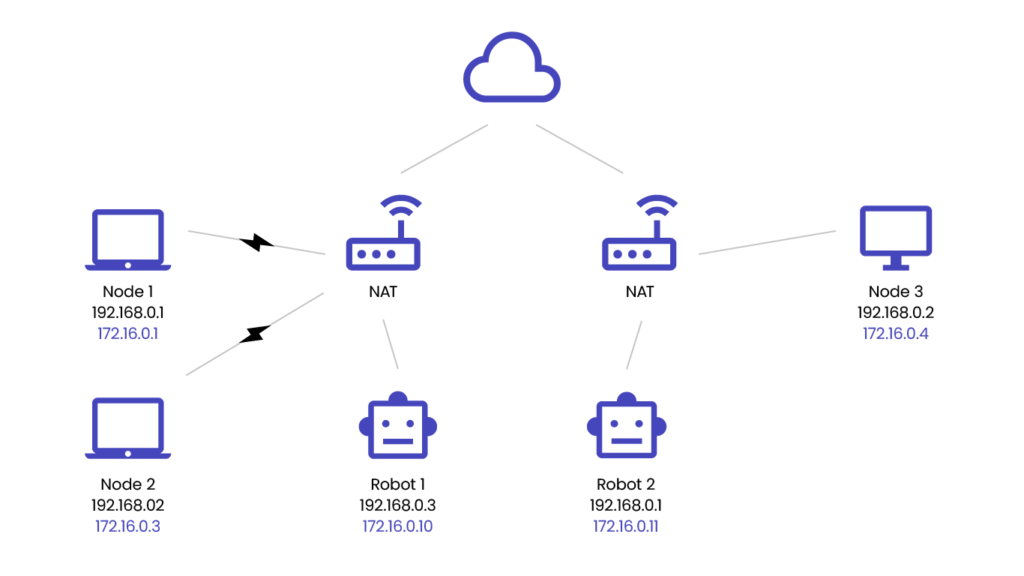
تم تعيين عنوان IP افتراضي فريد لكل عقدة ضمن شبكة Staex. لتشغيل العقدة مع تمكين VPN، الأمر بسيط كما يلي:
$ mcc -net -net-ip 172.16.0.xx/16 في الختام، لم تكن هناك حاجة لإعداد خادم VPN معقد ومستهلك للوقت. تمكنت العُقد من الترابط مع بعضها البعض بطريقة لامركزية بالكامل!
إن بساطة شبكة Staex المتراكبة واللامركزية والتشفير الآمن من طرف إلى طرف يضيف قيمة كبيرة سيستفيد منها العديد من مصنّعي الروبوتات.
الخلاصة
Staex MCC is a very good tool that can solve many connectivity challenges in the robotics industry. The simplicity of its use, security and decentralisation make Staex a distinctive technology that brings innovation to the market.
It is worth mentioning that Staex can bring benefit to many related industries, like transport, or public services. Nowadays, the boundary between a regular device and a robot is gradually blurring. Many cars or everyday devices are slowly becoming full-fledged robots, for which Staex may prove to be a valuable technology addressing communication challenges.
هل تبحث عن شركة يمكنك أن تأتمنها على مشروعك في مجال الروبوتات؟ هنا يمكنك معرفة المزيد عن نطاق خدمات الروبوتات الاحترافية وكيف نُحوّل الأفكار إلى واقع.
الأسئلة الشائعة: Staex
As robots evolve from isolated units into connected, collaborative systems, their ability to communicate reliably and securely becomes critical. Modern robotics relies on networks of devices that must exchange data in real time, coordinate actions, and maintain uptime – even in unstable network conditions. Without strong connectivity foundations, scalability, safety, and performance are compromised.
StaexMCC هي شبكة VPN صناعية موزعة بالكامل. على عكس شبكات VPN التقليدية التي تعتمد على خوادم مركزية:
– يستخدم الاتصال من نظير إلى نظير، لذا تتفاعل العُقد مباشرة.
– يتجنب الاختناقات أو نقاط الفشل الفردية.
– يحسّن أداءه ذاتيًا مع الشبكات غير الموثوقة أو ذات زمن الاستجابة المرتفع.
– يمكن تشغيله بكفاءة على الأجهزة محدودة الموارد، بما في ذلك الروبوتات ولوحات IoT وأجهزة الحوسبة الطرفية.
Staex removes the need for complex VPN configurations, firewall changes, port forwarding, or centralised servers. Each robot receives a unique virtual IP and automatically connects to the mesh network. This significantly reduces engineering effort and long-term maintenance costs, especially for distributed or mobile fleets.
Staex offers the biggest advantages in medium to large deployments, where decentralisation and dynamic service discovery become essential. Small networks can also benefit from secure peer-to-peer communication, but the value grows exponentially with network size.
Spyrosoft Synergy supports robotics companies in system design, connectivity architecture, software development, and fleet-level solutions. Staex complements this by providing a strong, reliable networking backbone. Together, they enable faster development, seamless device-to-device communication, and better long-term system stability.


arrow_circle_rightاتصل بنا


