إرساء الأساس للجودة – منهجنا في مرحلة ما قبل التسليم


The first step in developing high-quality software is to gain a clear understanding of the requirements and how they interact within the with already existing part of the system. At the PreDelivery stage, these requirements are captured, analysed and organised before any code is written. Any misunderstandings, missing dependencies or conflicting specifications that are discovered later in the development process can lead to costly rework, delays and reduced system reliability.
Early involvement of the QA team is critical at this stage. This ensures that functional gaps, edge cases, and potential inconsistencies are identified before development begins. AI tools can enhance this process further by analysing requirement consistency, detecting conflicts and suggesting scenarios that have been overlooked, which enables teams to resolve issues early on and maintain alignment with business objectives and technical constraints.
This article explores our structured PreDelivery approach, the ways in which AI can augment requirement verification, and the benefits of integrating these practices into a formal quality strategy for نجاح المشروع على المدى الطويل.
التحقق من المتطلبات عند التسليم المسبق
The PreDelivery stage is the phase during which requirements are still in the conceptual stage and no code has been written yet. This is a critical moment for embedding quality from the outset. Our approach to requirement verification at this stage involves careful analysis, the early involvement of the QA team, and structured collaboration.
عندما يشارك العميل طلب ميزة جديدة، نركز على فهم أهدافه التجارية وتقييم كيفية تكاملها مع النظام الحالي.
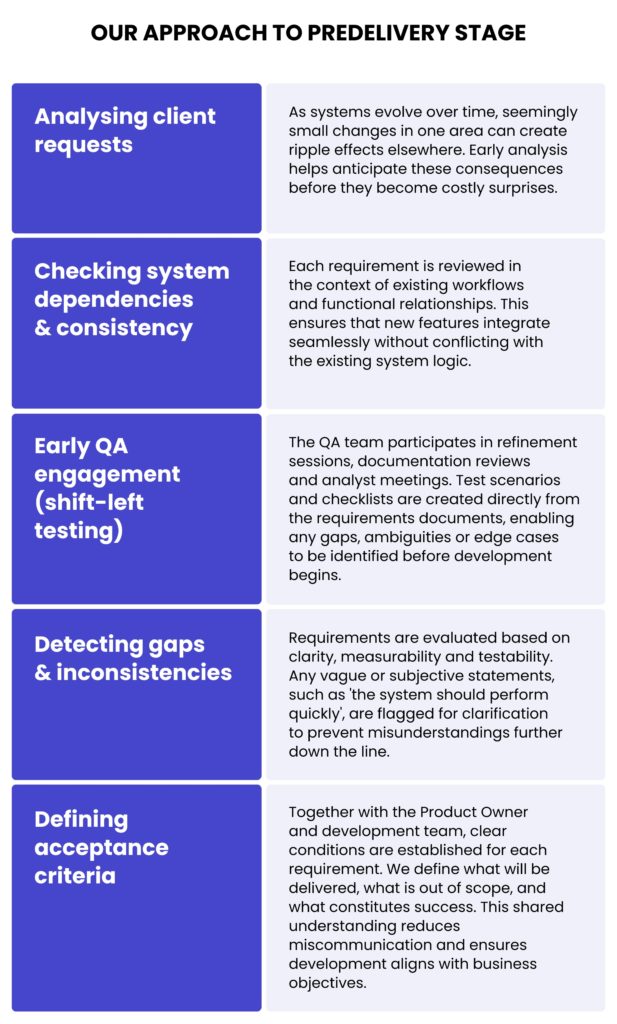
By embedding these practices, our team can transform potential risks into actionable opportunities. The sooner gaps, conflicts and dependencies are identified, the more smoothly development will run, with fewer last-minute fixes and less rework, resulting in a more predictable path to delivering a high-quality, reliable system.
دور الذكاء الاصطناعي في التحقق من المتطلبات
Verifying requirements early on can be challenging because systems are often large and complex and evolve over the years. Manually detecting gaps, conflicts or inconsistencies in requirements is therefore time-consuming and error prone. This is where AI can be a powerful ally, augmenting QA efforts and accelerating PreDelivery verification.
يساعد الذكاء الاصطناعي الفرق على تحديد الرؤى والمشكلات المحتملة التي قد تُغفل لولا ذلك، ليعمل كـ"مساعد ذكي" طوال دورة حياة المتطلبات.
تحليل مدرك للسياق
AI tools can read requirement documents and identify the relationships between features. This goes beyond simple keyword searches, allowing teams to identify similar or overlapping requirements that could cause conflicts.
كشف التناقضات والثغرات
AI can identify ambiguities, missing dependencies or contradictory statements in requirements. For instance, it can identify requirements that conflict with existing functionality or lack clear acceptance criteria. Integrating AI with backlog and test management systems enables it to rapidly cross-reference new requirements with existing features and suggest relevant test cases, preventing redundant work and ensuring alignment with the system’s current behaviour.
دعم تحديد معايير القبول
AI can help generate clear, measurable acceptance criteria based on historical examples and best practices. This helps teams to maintain consistency in their requirements and reduces the risk of them being misinterpreted by developers or testers.
تسهيل اتخاذ القرارات المبكرة
By identifying potential risks and dependencies at an early stage, AI helps teams to make informed decisions about which requirements are feasible, which require further clarification and how changes might affect the broader system.
اطّلع على عروض الخدمات المُدارة لدينا!
اكتشف المزيد
كيفية إعداد استراتيجية جودة مشروع مُثبتة
A robust project quality strategy is established at the PreDelivery stage, providing a concrete framework for engineering quality throughout the lifecycle. This strategy specifies the scope and depth of testing, defining the mix of functional, integration, غير وظيفي، واختبارات الأمان وقابلية الاستخدام. كما يضع توقعات واضحة للتغطية وقيمة العميل.
The strategy explicitly assigns responsibilities for verification, defect reporting and test automation, thereby ensuring accountability among QA engineers, developers and DevOps teams. It also establishes a consistent and repeatable toolchain comprising testing frameworks, CI/CD integrations, defect management systems, and quality metrics.
Risk assessment here is a critical component. Modules with a high business impact or complex dependencies are identified for more intensive testing. The automation plan then determines which scenarios enter the pipeline and which remain manual, in order to maximise efficiency without compromising depth.
ما الدور الذي يلعبه الذكاء الاصطناعي في استراتيجية الجودة؟
AI enhances this process by performing a large-scale analysis of historical defect and test data to rapidly identify patterns of instability or regression hotspots. It supports prioritisation by quantifying risk across interconnected components and providing evidence-based recommendations on where to invest in automation first. By embedding these insights, the quality strategy evolves from a static checklist into a data-driven, adaptive framework that proactively mitigates defects and optimises testing resources. In practice, mentioned technology contributes in several concrete ways:
- تحليل البيانات التاريخية – تحديد المجالات التي تكررت فيها العيوب بشكل أكبر في المشاريع السابقة، وتسريع مراجعة المستندات لاكتشاف الفجوات أو التناقضات في وقت مبكر.
- ترتيب المخاطر حسب الأولوية – تحليل التبعيات بين مكونات النظام لإبراز الوحدات الأكثر عرضة للانحدارات، والتوصية بتغطية اختبارية مركزة.
- اقتراحات للتحسين – استخدام نتائج الاختبارات السابقة لتحديد السيناريوهات التي ينبغي أتمتتها أولاً وتلك التي ينبغي أن تبقى يدوية، وبالتالي مواءمة جهود الأتمتة مع المخاطر والقيمة الفعلية.
دمج CI/CD والذكاء الاصطناعي في ممارسات الجودة قبل التسليم
Integrating CI from the PreDelivery phase transforms the way quality is managed. Rather than waiting for late-stage testing, automated test suites are triggered by every commit, enabling integration issues to be identified close to their source while they are still easier and less costly to resolve.
تتجاوز خطوط أنابيب CI أيضًا التحقق الوظيفي من خلال التحقق المستمر من المتطلبات غير الوظيفية. على سبيل المثال:
- اختبارات الأداء والأمن يمكن تنفيذها مباشرة في عملية البناء، مما يضمن مراقبة الامتثال منذ البداية بدلاً من تأجيله حتى المراحل النهائية.
- لوحات المعلومات في الوقت الفعلي provide transparency into build status, test coverage, and defect trends, giving the entire team visibility into project health and reducing the risk of last-minute surprises at the end of a sprint.
في هذه الحالة، يعزز الذكاء الاصطناعي قدرات CI من خلال تحليل الكميات الكبيرة من البيانات الناتجة عن عمليات البناء وتشغيل الاختبارات.
- تحليل السجلات – اكتشاف أنماط الأعطال المتكررة أو الاختبارات غير المستقرة أو اختناقات الأداء التي تقلل كفاءة خط الأنابيب.
- التحليلات التنبؤية – التنبؤ باحتمالية فشل عمليات البناء قبل حدوثها وتمكين اتخاذ إجراءات وقائية.
- توصيات الاختبار – اقتراح حالات الاختبار التي ينبغي إعطاؤها الأولوية أو تحسينها، مما يساعد على استقرار خطوط الأنابيب وتحسين وقت التنفيذ.
معًا، يحوّل التبني المبكر للتكامل المستمر والرؤى المدعومة بالذكاء الاصطناعي عملية التكامل من نقطة تفتيش سلبية إلى مُمكّن فعّال للجودة المستمرة والموثوقة.
التحديات الرئيسية في ضمان الجودة قبل التسليم
متطلبات غير واضحة أو غير مكتملة
At this stage, the requirements are often too vague or lack critical details, which makes it difficult to design reliable test scenarios. If left unresolved, this can lead to scope creep or misunderstood functionality further down the line. To address this issue, we organise workshops to refine requirements, bringing QA, developers and stakeholders together to challenge assumptions, clarify ambiguities and document precise acceptance criteria before coding begins.
توثيق غير متسق أو مجزأ
Maintaining alignment between business goals, implementation, and testing becomes difficult when specifications are scattered across different sources or contain contradictions. Our approach involves applying a traceability matrix that links requirements to test cases and acceptance criteria, thereby ensuring full coverage. In addition, AI-based document analysis enables us to cross-check consistency, detect overlaps and identify missing references much faster than manual reviews.
ضغط الوقت
The PreDelivery phases are often subject to tight deadlines, which can lead to corners being cut when it comes to verification. To prevent a decline in quality, we introduce automation at an early stage in the process, focusing on repetitive and high-volume checks such as validating the consistency of requirements or setting up baseline tests, enabling QA engineers to focus their efforts on complex, high-risk areas that require human judgement, while still meeting delivery expectations.
تباين توقعات أصحاب المصلحة
Different stakeholders often interpret ‘quality’ differently for the project, which can lead to misalignment during later stages. To mitigate this, we establish and document acceptance and quality criteria in a transparent manner that is agreed upon by all parties. This shared baseline then serves as the reference point throughout the project, minimising disputes and ensuring that QA efforts remain aligned with actual business value.
ما فوائد استخدام الخدمات المُدارة؟
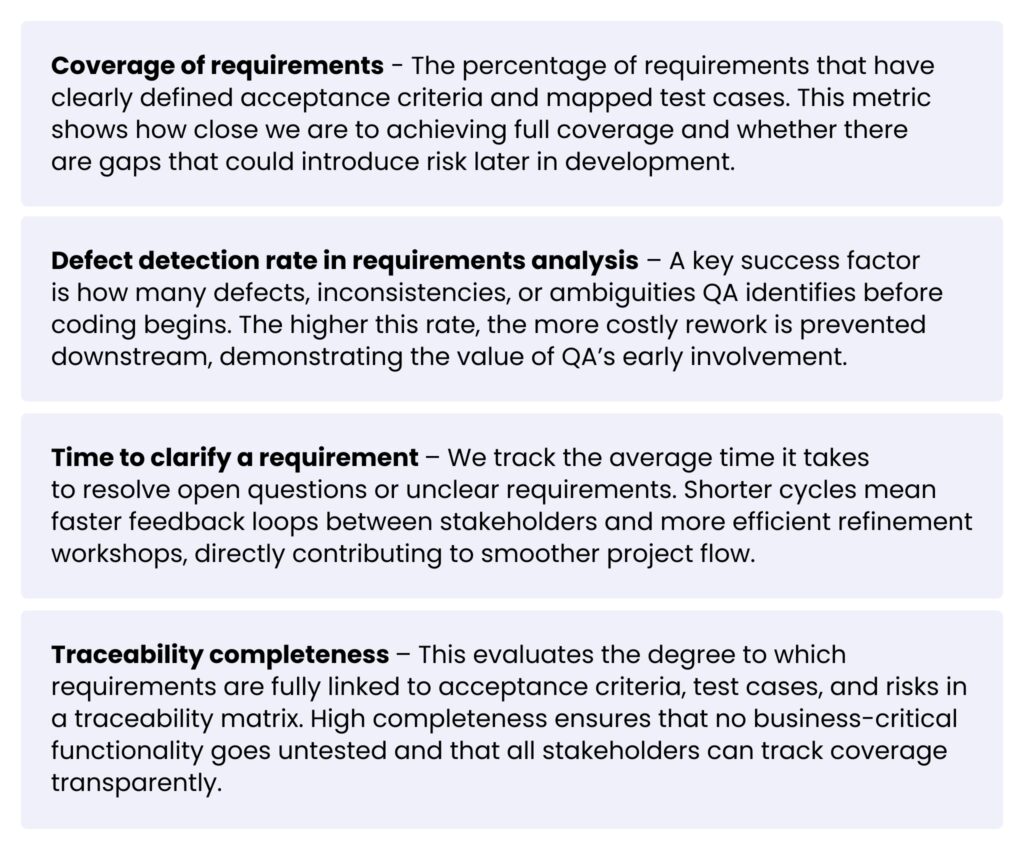
To measure the effectiveness of QA activities at the PreDelivery stage, we need metrics that reflect not just how many defects we find, but also how well we are preventing issues before they reach the development stage. At this stage of the lifecycle, success is not determined by the number of bugs found in the code, but by our ability to identify risks, clarify ambiguities and ensure that requirements are testable and consistent. The aim is to lay the groundwork for minimising rework, accelerating delivery and increasing confidence in the scope and quality of what will be built. To this end, we focus on a set of indicators that track the intrinsic quality of requirements and the efficiency of the processes used to validate them. These metrics provide an objective assessment of whether QA activities in the PreDelivery phase are adding measurable value, reducing uncertainty and ensuring development begins from a stable baseline.
الخلاصة
Integrating quality into the PreDelivery phase involves identifying potential issues early on and establishing a robust, transparent foundation for development. By focusing on thorough requirement checks, a robust quality assurance process, the early adoption of CI/CD and intelligent AI integration, we can transform QA from a reactive to a proactive function.
If you would like to discuss how this approach could be tailored to your team, simply complete the form below to arrange a consultation with one of our experts. We’d be happy to show you how to embed quality right from the outset of your projects.
It is the phase that comes before coding begins, during which requirements are analysed, clarified and aligned. Addressing issues early on reduces the need for rework, delays and risks, and establishes a solid foundation for quality.
QA teams review requirements, identify any gaps and define acceptance criteria from the outset. This proactive approach ensures clarity and prevents misinterpretations before development begins.
يحلل الذكاء الاصطناعي المتطلبات من حيث الاتساق، ويكتشف التعارضات ويقارن المراجع مع قوائم المهام المتراكمة. يسرّع المراجعات، ويقترح معايير القبول، ويسلط الضوء على المخاطر التي قد يغفل عنها البشر.
تُستخدم فحوصات التبعيات ومصفوفات التتبع ومراجعات قائمة المهام للتحقق من صحة كل متطلب. وتُحدد معايير قبول واضحة لضمان قابلية الاختبار والتوافق.
We address unclear requirements, fragmented documentation, time pressure and misaligned expectations. Success is measured by requirement coverage, defect detection rate, clarity, speed and traceability.


arrow_circle_rightاتصل بنا
ركّز على عملك الأساسي، بينما نتولى نحن صيانة البنية التحتية لتكنولوجيا المعلومات لديك

Filip Rozanski
رئيس الخدمات المُدارة
arrow_circle_right مقالات موصى بها


