مفتاح جودة النظام: المتطلبات غير الوظيفية


Non-functional requirements (NFRs) are often overshadowed by their functional counterparts in software development, but they are no less critical to project success. A non-functional requirement defines and clarifies the specifications of a software project, highlighting system qualities and constraints.
Let’s look at the role and importance of non-functional requirements in software architecture. By understanding and prioritising NFRs, you can build robust, reliable and high-performing systems that meet both your current and future needs.
أهمية المتطلبات غير الوظيفية في هندسة البرمجيات
NFRs in software architecture directly influence the overall quality and performance of a system. They define how the system should behave under various conditions to ensure that it meets user expectations and operational standards. The quality attributes are essential in determining system metrics such as scalability, security, reliability and maintainability, all of which contribute to the long-term success and sustainability of the software.
For example, a software may meet all its functional requirements but become unusable if it crashes under heavy user load or is vulnerable to security breaches. By incorporating NFRs into the architectural design from the outset, architects and developers can anticipate potential challenges and build systems that are functional, robust, secure and adaptable to future needs.
Prioritising NFRs offers better understanding of business goals and technical constraints, allowing for a more effective breakdown of requirements into manageable scenarios. As such, NFRs are essential when designing software architectures that are resilient, efficient and capable of delivering quality user experience.
اطّلع على عروض الخدمات المُدارة لدينا!
اكتشف المزيد
المتطلبات الوظيفية مقابل المتطلبات غير الوظيفية
Functional requirements specify what the system should do in terms of specific features, functionalities, and behaviours. They define the actions the system must take when certain conditions are met, including how it handles inputs, processes data, and generates outputs. In contrast, non-functional requirements define all the underlying mechanisms required to run the application. While FRs ensure that the system delivers the required functionality, NFRs guarantee that it does so in a way that meets business standards, covering all demanded attributes.
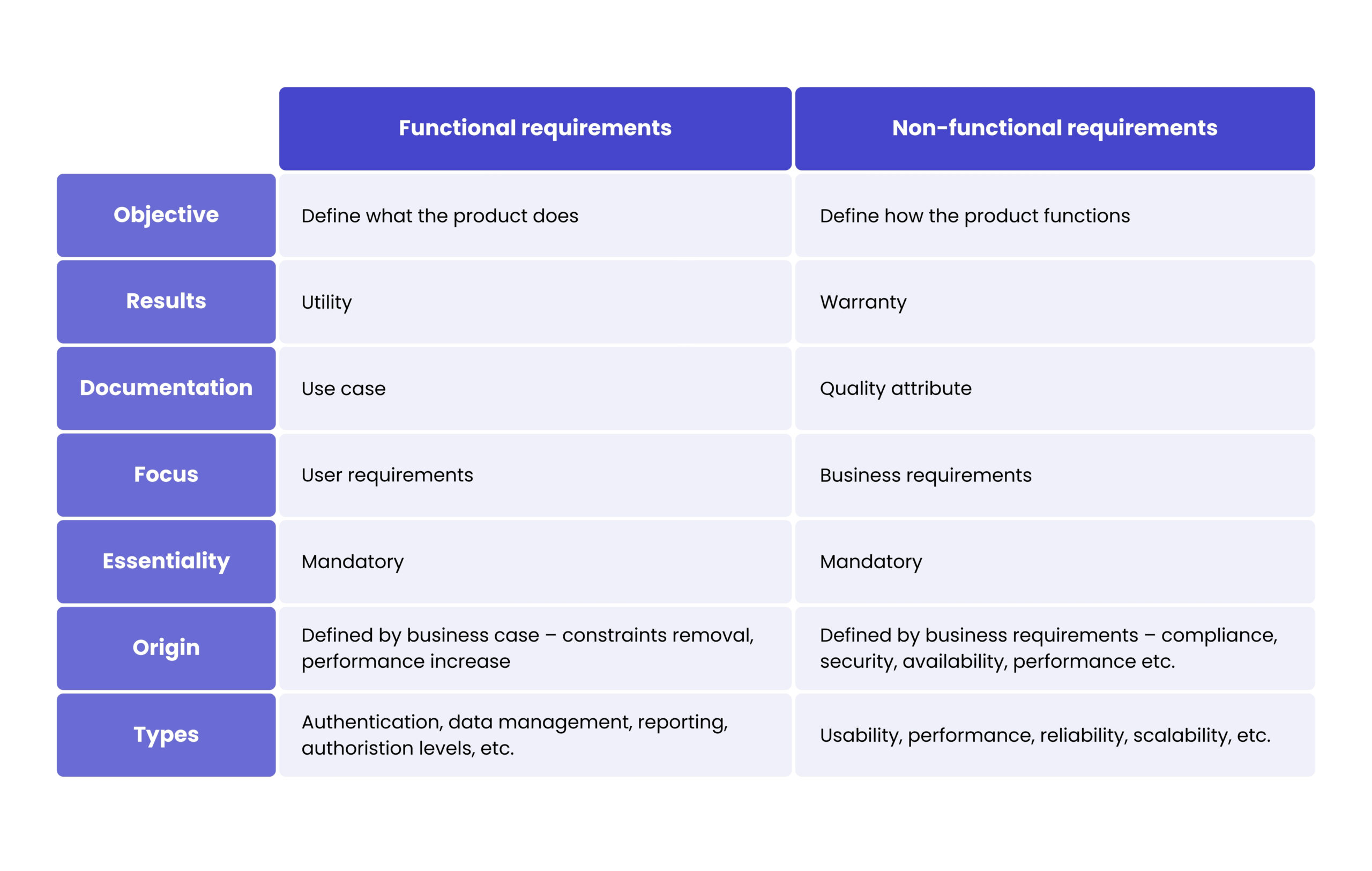
أنواع المتطلبات غير الوظيفية
التوافر – يحدد الفترة التي يكون فيها النظام قابلاً للتشغيل بالكامل ويمكن الوصول إليه، وهو أمر بالغ الأهمية لضمان استمرارية الأعمال كما هو موضح في اتفاقيات مستوى الخدمة.
مثال: يجب أن يحافظ النظام على وقت تشغيل بنسبة 99.9%، مع التحويل التلقائي إلى خادم احتياطي في حالة فشل الأجهزة.
التعافي من الكوارث – يشير إلى عملية استعادة خدمات تكنولوجيا المعلومات والبنية التحتية إلى وضعها الطبيعي بعد حدث تخريبي مثل كارثة طبيعية أو عطل في الأجهزة أو هجوم إلكتروني.
مثال: The system must be able to recover and resume operations within a maximum downtime of 4 hours following a disaster or significant service interruption. The system should not lose more than 12 hours’ worth of data.
قابلية التشغيل البيني – قدرة النظام على التكامل بسلاسة مع البرمجيات والأجهزة الأخرى، مما يتطلب مناقشات مفصلة حول تبادل البيانات وواجهات النظام والالتزام بالمعايير.
مثال: يحتاج النظام إلى التكامل مع برنامج CRM الحالي عبر واجهات RESTful APIs، باستخدام JSON لتبادل البيانات ودعم OAuth 2.0 للمصادقة.
الأداء – يشير إلى قدرة النظام على تلبية متطلبات زمن الاستجابة والإنتاجية والسعة، ويؤثر بشكل كبير في قرارات تصميم الأجهزة والبرمجيات.
مثال: يجب أن يعالج النظام ما يصل إلى 10,000 معاملة في الثانية بحد أقصى لزمن الاستجابة يبلغ ثانيتين في ظروف الحمل الأقصى.
الموثوقية – يقيس قدرة النظام على العمل دون أعطال بمرور الوقت، وغالبًا ما يتم قياسه بمقاييس مثل متوسط الوقت بين الأعطال ومعدلات الأعطال.
مثال: يجب أن يتعامل النظام مع الأخطاء دون فقدان البيانات.
الأمن – يركز على حماية النظام من الوصول غير المصرح به والتهديدات، بما في ذلك اعتبارات مثل المصادقة والتشفير ومسارات التدقيق.
مثال: يجب أن يستخدم النظام تشفير AES-256 لجميع البيانات المخزنة، ويجب أن يتطلب المصادقة الثنائية لجميع عمليات تسجيل دخول المستخدمين، وأن يحتفظ بسجلات تدقيق مفصلة لجميع محاولات الوصول.
قابلية الاستخدام – يتعلق بمدى سهولة تعلم المستخدمين للنظام واستخدامه بكفاءة، بما في ذلك جوانب مثل منع الأخطاء ووقت إنجاز المهام وإمكانية الوصول.
مثال: ينبغي أن يكون المستخدمون الجدد قادرين على إكمال عملية الإعداد الأولي خلال 5 دقائق، بمعدل خطأ في إدخال البيانات أقل من 2%.
قابلية الصيانة – يصف سهولة إصلاح النظام أو تحسينه أو تكييفه، مع التأكيد على أهمية الكود القابل للفهم والتعديل.
مثال: يجب أن تلتزم قاعدة كود النظام بمعايير البرمجة وأن تكون موثقة بشكل شامل بحيث يمكن لأي مطور تنفيذ تحديثات طفيفة خلال ساعتين.
قابلية التوسع – قدرة النظام على التعامل مع أحمال العمل المتزايدة، سواء من خلال ترقيات الأجهزة أو تحسين البرمجيات، وهو أمر ضروري للنمو المستقبلي.
مثال: يجب أن يدعم النظام التوسّع لاستيعاب زيادة في حركة المستخدمين خلال عام واحد، مع تأثير أدنى على الأداء.
كيفية إدارة المتطلبات غير الوظيفية
Effectively managing non-functional requirements requires a multi-faceted approach that combines technical acumen with strategic foresight. Unlike functional requirements, which typically articulate discrete capabilities, NFRs encapsulate the broader operational characteristics of a system.
To manage these requirements, it is crucial to integrate them early in the software development lifecycle to ensure that they are not relegated to an afterthought. This involves clearly defining NFRs with quantifiable metrics and embedding them in the architecture design, test frameworks and deployment strategies. A holistic approach requires ongoing validation through performance benchmarks, security audits and user feedback loops, so that the system is continually refined to meet evolving needs.
In addition, effective prioritisation is key – balancing trade-offs between competing NFRs, such as performance versus security, to align with the system’s overarching business objectives. Balancing technical rigour with business imperatives is fundamental to ensuring that the system functions and thrives in its intended operational context.
ما التهديدات المحتملة للمتطلبات غير الوظيفية؟
Non-functional requirements are crucial in identifying potential threats to system performance and security. Ignoring these requirements can lead to vulnerabilities that compromise the integrity and efficiency of the system. It is essential to address NFRs early in the development process to mitigate risks and ensure robust system architecture.
الأداء السلبية وقابلية الاستخدام
It arises when NFRs related to system speed, responsiveness and user interface are poorly defined or ignored. It can result in a system that is slow, unresponsive or difficult to navigate, leading to user frustration, reduced productivity and potential abandonment of the system. Over time, these problems can damage the organisation’s reputation and undermine customer confidence.
خفض الأولوية
Very often, deprioritisation happens when functional requirements take precedence, especially under tight deadlines or budget constraints. When non-functional aspects are overlooked or inadequately addressed, the result is a system that may meet functional requirements but fails to perform reliably in real-world conditions. It may lead to frequent system failures, performance bottlenecks, security vulnerabilities, technical debt, where the cost and effort to address these requirements grows exponentially after the system is in use.
نطاق متزايد باستمرار
It occurs when projects expand beyond their original intent, adding new performance, security, or compliance demands without proper evaluation or prioritisation. The expansion can lead to scope creep, making the project more complex, time-consuming, and costly than initially planned. The resulting delays can extend development timelines, causing project delivery to be pushed back and increasing costs. In addition, as the scope grows without a corresponding increase in resources or budget, the development team may become overstretched, leading to lower quality outcomes as they struggle to meet the increasing demands.
“The potential dangers of neglecting or inadequately addressing non-functional requirements cannot be overstated. When these essential facets are ignored, the system’s resilience, security and user experience is precariously compromised, exposing the organisation to the risk of failure. Non-functional requirements are the foundation of system reliability. So, the real challenge is to define the right set of NFRs for your case, ensuring that the architecture is designed to meet current needs, and hardened against unforeseen threats.”
Filip Rozanski، رئيس الخدمات المُدارة
الدور عليك
إذا كنت ترغب في تقييم احتياجات شركتك واكتشاف الحل الأمثل لأهدافك التجارية، فاستكشف خدماتنا المُدارة المرنة أو تواصل مباشرة مع أحد خبرائنا من خلال ملء النموذج أدناه!
Non-functional requirements define how a system performs, rather than what it does. These critical attributes include performance, security, scalability and reliability. NFRs ensure that software operates efficiently and securely under different conditions. Without NFRs, even systems that are functionally correct can fail to meet user expectations or business needs.
Functional requirements specify the actions or features that the system should perform, such as processing data or generating reports. Non-functional requirements, on the other hand, define how these actions should be performed. These address qualities such as speed, usability and maintainability, ensuring the system delivers its functionality effectively and to the expected standard.
تشمل الأنواع الرئيسية للمتطلبات غير الوظيفية ما يلي:
التوافر: ضمان تشغيل النظام واستمراريته.
الأداء: تحقيق أهداف زمن الاستجابة ومعدل الإنتاجية.
الأمان: الحماية من الوصول غير المصرح به والاختراقات.
قابلية التوسع: دعم النمو المستقبلي وزيادة الأحمال.
قابلية الاستخدام: توفير تجربة مستخدم بديهية وفعّالة.
قابلية الصيانة: تسهيل عمليات التحديث والإصلاح.
قابلية التشغيل البيني: التكامل السلس مع الأنظمة الأخرى.
التعافي من الكوارث: ضمان استعادة سريعة بعد الانقطاعات.
يساهم كل نوع في مرونة النظام وكفاءته وطول عمره.
Overlooking NFRs can lead to severe issues such as slow performance, frequent crashes, data breaches, and poor user experience. This often happens when teams prioritise functional requirements under tight deadlines or budgets. Ignoring NFRs can also create technical debt, where fixing these issues later becomes significantly more costly and complex.


arrow_circle_rightاتصل بنا
ركّز على عملك الأساسي، بينما نتولى نحن صيانة البنية التحتية لتكنولوجيا المعلومات لديك

Filip Rozanski
رئيس الخدمات المُدارة
arrow_circle_right مقالاتنا


