كيف يمكن لهندسة المنصات أن تعزز إنتاجية فرق التطوير وتخفض التكاليف


The adoption of cloud platforms such as AWS, Azure and Google Cloud has transformed the way businesses develop and expand their technology. While these platforms offer remarkable flexibility and capability, they also introduce a new level of complexity. In the early stages of cloud adoption, it was common for each product team to design its own approach to infrastructure, monitoring and deployment. With every team running its own strategy, often with a dedicated DevOps engineer – this worked well enough on a small scale.
However, as organisations grew, this fragmentation became a major challenge. Different infrastructure setups created silos and inconsistent monitoring practices made system-wide observability difficult, and cloud costs began to spiral without unified controls.
Although initial attempts to address these issues, they didn’t eliminate the root cause. Every team was still solving the same infrastructure problems in isolation. The result was frustration, and inefficiency. Platform engineering came about precisely to solve these issues. By creating a standardised abstraction layer over cloud infrastructure, platform teams can unify deployments, streamline monitoring, optimise costs and empower product teams to focus on delivering business value rather than managing infrastructure.
In this article, we explore the key differences between cloud and developer platforms, explore the common issues that arise when they aren’t used, and explain how platform engineering addresses these problems through standardisation, automation and self-service.
منصات الحوسبة السحابية مقابل منصات المطورين
In the context of cloud computing, major platforms such as AWS, Azure and Google Cloud are often referred to as landing zones. These are foundational environments that enable organisations to organise, provision, and secure server resources in the cloud according to enterprise governance, compliance, and security policies. A landing zone generally includes pre-configured networking, security controls and policies, ensuring that applications and workloads can run safely and consistently in the cloud. Cloud platforms primarily focus on infrastructure management, scalability, and resource allocation.
However, while these landing zones are vital, they do not fully address the day-to-day challenges that developers face. In such cases, developer platforms, or internal developer platforms, can provide a solution. These represent a significant emerging trend, specifically designed to address common challenges faced by developers, including reducing cognitive load, automating repetitive tasks, and standardising development workflows. Developer platforms are tailored environments built on top of cloud platforms, providing developer-centric features such as self-service provisioning, reusable templates, CI/CD pipelines, and automation for compliance and observability. The result is a streamlined and efficient developer experience, designed to maximise productivity.
عزّز إنتاجية المطورين وقلّل تكاليف السحابة بنسبة تصل إلى 30%
اكتشف المزيد
Put simply, while cloud platforms lay the foundations enterprise-level requirements, developer platforms pave the path for developer efficiency and velocity. Developer platforms offer the valuable benefit of abstraction and automation above the landing zone, enabling developers to focus on the core task of building and shipping applications. This is because they are no longer required to expend time and effort on infrastructure setup, access management or compliance processes. The combination of well-governed cloud landing zones and robust developer platforms is key to enabling development teams to deliver business value quickly, efficiently and securely.
ما هي هندسة المنصات؟
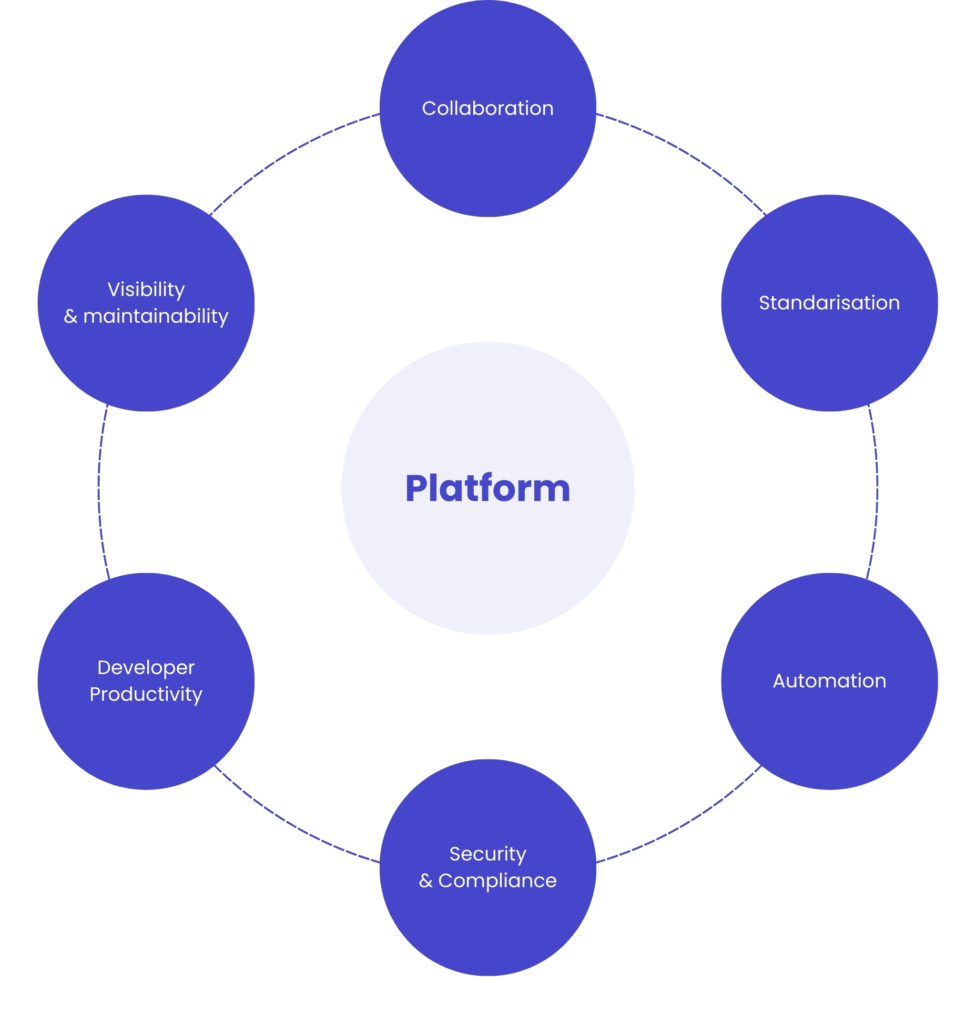
Platform engineering is the practice of developing and maintaining unified, developer-centric platforms that provide a stable foundation for software delivery. Unlike traditional approaches, in which teams work with fragmented tools and environments, platform engineering centralises workloads and creates a consistent, standardised ecosystem. This improves visibility and maintainability and makes it easier to manage costs and optimise resources.
At its core, platform engineering is about enhancing the developer experience. By embedding automation, security and compliance into the platform, engineering teams can accelerate delivery, reduce errors and enable faster, more reliable releases. Developers benefit from self-service capabilities, reusable templates and streamlined workflows that reduce cognitive load and free them up to focus on building features rather than dealing with infrastructure or repetitive setup tasks.
A well-designed platform also promotes collaboration and standardisation across teams, ensuring that everyone works with the same practices, tools and governance. This stability doesn’t limit innovation, instead, it encourages it. With a robust and secure foundation in place, businesses can experiment with, adapt to, and deploy new technologies more effectively, thus enabling rapid development without compromising reliability.
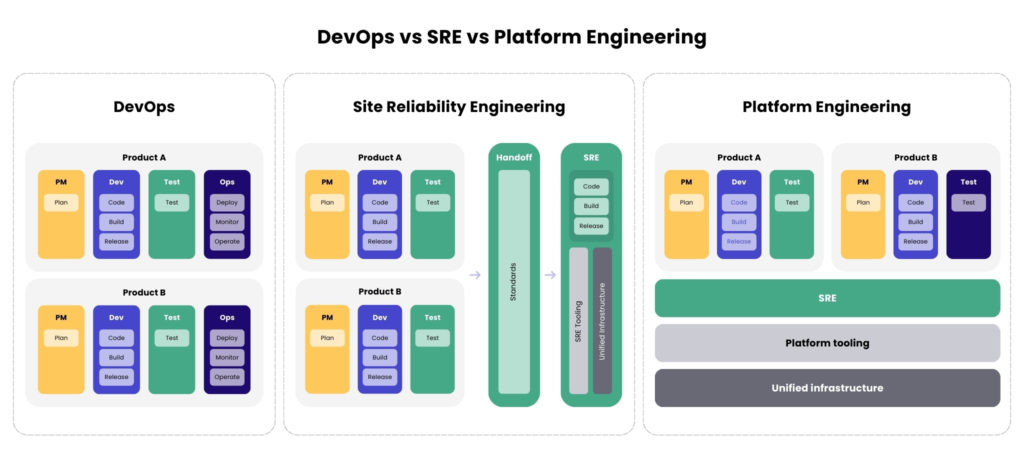
DevOps مقابل SRE مقابل هندسة المنصات
DevOps, Site Reliability Engineering and Platform Engineering. Although these fields share common roots and goals, they address different layers of the software delivery lifecycle. It is essential to understand how they differ and complement one another in order to build scalable, reliable and cost-efficient systems.
- DevOps is a cultural and organisational approach that aims to eliminate the barriers between the development and operations teams. Its main objectives are to encourage collaboration, automate processes and deliver software more quickly and reliably. Rather than being a role or a single toolset, DevOps is a philosophy supported by practices such as continuous integration and delivery (CI/CD) and infrastructure as code.
- هندسة موثوقية المواقع originated at Google and can be seen as a concrete implementation of DevOps principles, focusing strongly on reliability and operational excellence. SRE teams use software engineering methods to solve operational problems, ensuring that systems are scalable, robust and accessible. They use metrics such as service-level objectives (SLOs) and error budgets to strike a balance between innovation and reliability.
- هندسة المنصات, by contrast, provides the structured foundation on which DevOps and SRE practices can prosper. Rather than each development team building its own pipelines and tooling, platform engineers create a shared internal developer platform (IDP). This standardises workflows, integrates automation and security, and provides self-service capabilities, thereby reducing the cognitive load on developers and ensuring operational consistency.
التحديات التي تحلّها هندسة المنصات
غياب التوحيد القياسي
In many organisations, each development team sets up its own tools, pipelines and monitoring methods. While this offers flexibility, it quickly leads to fragmentation and inconsistent practices. These inconsistencies complicate debugging and incident response, and increase operational risks when scaling across teams or regions.
الدقة -> Platform engineering establishes a consistent layer of tooling, processes, and environments, eliminating duplicated efforts and ensuring teams adhere to well-defined best practices. The result is improved reliability, reduced cognitive load and faster onboarding for new engineers.
ارتفاع التكاليف
While the cloud offers flexibility, it also comes at a price. Without proper oversight, expenses can escalate due to underutilised resources, shadow IT or poorly optimised deployment strategies. Various industry studies have highlighted that cloud spending is now one of the fastest-growing areas of IT budgets.
الدقة -> A cloud-smart platform integrates cost monitoring, automated rightsizing and resource governance directly into the workflows of developers. This gives teams visibility of actual usage patterns, leading to more responsible consumption. Organisations that have adopted these practices have reported significant savings, with infrastructure spending often being reduced by up to 60% while maintaining performance.
إنتاجية منخفضة للمطورين
Development teams often spend an excessive amount of time on tasks such as provisioning infrastructure, configuring CI/CD pipelines and troubleshooting cloud environments. This diverts their focus away from their core mission of delivering customer value. In highly competitive markets, this inefficiency results in a slower time-to-market.
الدقة -> By abstracting infrastructure management behind self-service capabilities and reusable components, developers can focus on building business-critical features instead of reinventing the wheel. Platform engineering provides teams with secure, ready-to-use environments, thereby improving delivery speed, job satisfaction and innovation capacity.
الفوائد الأساسية لهندسة المنصات
تعزيز إنتاجية المطورين وتجربتهم
- تبسيط سير العمل والأتمتة – Platform engineering removes infrastructure complexities, letting developers focus on building software rather than managing environments and configurations. This leads to higher velocity and job satisfaction.
- الخدمة الذاتية والتوحيد القياسي – يمكن للمطورين توفير الموارد ونشر التطبيقات بأنفسهم، مما يقلّل الاختناقات ويسرّع دورات التسليم.
- بيئات تطوير متسقة – تؤدي إعدادات التطوير والنشر الموحدة إلى تقليل الأخطاء والتبديل بين السياقات، مما يتيح تسهيلاً أسرع وتعاوناً أكثر كفاءة
مرونة الأعمال وقابلية التوسع وكفاءة التكلفة
- سرعة الوصول إلى السوق – تتيح خطوط أنابيب CI/CD الآلية والعمليات الموحّدة إطلاق الميزات والمنتجات بسرعة، مع الحفاظ على القدرة التنافسية.
- قابلية التوسع حسب التصميم – تتيح المنصات توسعًا سلسًا للتطبيقات والخدمات، مع التكيف بسهولة مع نمو الأعمال أو المتطلبات المتغيرة.
- تحسين التكاليف – Resource usage and cloud expenses are managed and rightsized, reducing waste and improving operational efficiency. Typically, these costs are reduced by 15–30% in the initial stage of implementation.
الأمان والامتثال والتعاون
- الأمان والامتثال المدمجان – تضمن الإدارة المركزية ضوابط أمنية قوية وفحوصات الامتثال والحوكمة بشكل افتراضي، مما يخفف المخاطر.
- عمليات موثوقة – تعمل أنظمة المراقبة والتنبيه والتراجع الآلية على تحسين وقت تشغيل النظام ومرونته، مما يعزز ثقة العملاء.
- تعزيز التعاون بين الفرق – من خلال كسر الجزر المنعزلة، توفر المنصات أدوات مشتركة وعمليات موحّدة تعزز التواصل بين فرق التطوير وDevOps وفرق الأعمال.
الخاتمة
The message is simple – the more time your development teams spend grappling with infrastructure issues, the less time they have to deliver value. Platform engineering solves this problem by providing teams with the right tools, standardised processes and automation to enable them to work smarter, faster and with greater cost control.
لذا، إذا كنت تتطلع إلى تعزيز إنتاجية المطورين وإدارة نفقات السحابة بشكل أكثر فعالية وإنشاء أساس للنجاح على المدى الطويل، فقد حان الوقت لاعتماد هندسة المنصاتتواصل مع متخصصينا لمعرفة كيف يمكننا مساعدتك في تصميم وتنفيذ منصة مخصصة لأعمالك.
Cloud platforms such as AWS, Azure and Google Cloud provide the foundational infrastructure (landing zones) necessary for running applications in a governed, secure and scalable manner. By contrast, developer platforms are built on top of cloud platforms to reduce cognitive load for developers. They offer self-service provisioning, reusable templates, continuous integration/continuous delivery (CI/CD) pipelines, and automation. This allows developers to concentrate on developing applications rather than managing infrastructure.
As companies grow, inconsistent infrastructure and practices across teams can create silos and inefficiencies, as well as rising cloud costs. Platform engineering tackles these problems by providing a unified, standardised developer platform that automates infrastructure management, streamlines workflows, incorporates security and compliance measures, and optimises costs.
Platform engineering streamlines infrastructure processes by automating repetitive and manual tasks, providing developers with self-service capabilities and pre-configured environments. This reduces the time spent on context switching and setup, enabling developers to focus more on building and delivering business-critical features.
غياب التوحيد القياسي – يلغي الأدوات والعمليات المجزأة.
ارتفاع تكاليف السحابة – يوفر الحوكمة ومراقبة التكاليف والتحسين الآلي للموارد.
إنتاجية منخفضة – تجرّد تعقيدات البنية التحتية، مما يتيح للمطورين التركيز على الابتكار.
DevOps promotes collaboration between development and operations, while SRE applies engineering practices to ensure reliability. Platform engineering complements both by providing a shared internal developer platform (IDP) that standardises workflows, embeds automation and compliance, and enables DevOps and SRE to scale more effectively.


arrow_circle_rightاتصل بنا
ركّز على عملك الأساسي، بينما نتولى نحن صيانة البنية التحتية لتكنولوجيا المعلومات لديك

Filip Rozanski
رئيس الخدمات المُدارة


