البنية المحلية مقابل السحابة: مقارنة الإيجابيات والسلبيات لتبديد كل شكوكك


هل السحابة آمنة؟ ما الذي ستحققه أعمالي منها؟ هل تستحق كل هذا العناء فعلاً؟
إذا ظهر موضوع السحابة مؤخرًا على جدول أعمالك التجاري، فمن المحتمل أنك طرحت هذه الأسئلة على نفسك مرات عديدة.
There are a lot of myths and misconceptions around the cloud, especially in terms of security and costs. In this post, we’ll look at the pros and cons of the cloud vs. on-premise to help you decide whether the cloud is the way to go for you.
اعرف المزيد عن حلول السحابة!
اقرأ الدليلما فوائد الحوسبة السحابية مقارنة بالبنية المحلية؟
عملية إعداد أقل تعقيداً
With on-premise infrastructure, your team is responsible for all the setup: from connecting the machines to electricity through to installing all the software. With the cloud, this responsibility lies to a greater or lesser extent on the cloud service provider. The scope of it is determined by the cloud service model you choose.
For example, when you use the IaaS cloud service model your developers need to take care of the environment setup: install the operating system and all the necessary applications. In SaaS, on the other hand, you don’t need to worry about any such thing – you get a ready-made solution that you can start using straight off.
اكتشف الفروق بين IaaS وPaaS وSaaS!
اقرأ المزيدمزيد من المرونة وقابلية التوسع
With the cloud, it’s easier to scale the infrastructure up or down according to your changing needs. If you need more computing power, you can have another virtual machine allocated to your use or the other way round in case you don’t need so many resources. Having the infrastructure on-premise, you’re limited to your server room’s space.
هل يتطلب عملك توزيع بياناتك في بلد معين؟إذا كان مزوّد الخدمات السحابية يوفّر مثل هذا الخيار، يمكنك القيام بذلك.
كفاءة التكلفة
Don’t need to use your resources round-the-clock? Public cloud offers a pay-per-use payment model. This means you pay only for the time you actually use it, let’s say during your company’s working hours, and at night the service will be switched off. This way you can use your budget more efficiently and make some savings.
Also, with the cloud, you can save on infrastructure management. Keeping it on-premise is connected with investing in it upfront and having responsibility for its maintenance. Not to mention, the time and effort that goes with it. You need an in-house IT team or hired third-party support to fix any possible technical issues and make necessary upgrades to keep the machines in shape.
Another advantage the cloud (in this case the public cloud) has over on-premise is that the software licence is often included in the price and you can use it as long as you use the service without any extra cost.
ما عيوب الحوسبة السحابية مقارنة بالحلول المحلية؟
تحكم أقل في الأجهزة
However, just a bit less. In the IaaS cloud service model, you can control the resources such as the memory, RAM, CPU, or what kind of drives you want to use (however, not their brand), which allows you to customize the solution to your specific needs.
مشكلات الامتثال المحتملة
In general, cloud providers offer tools to keep their user’s data secure and ensure compliance with various regulations, such as PCI DSS or HIPAA / HITECH. However, you should do your due diligence check to make sure this is really the case.
هل السحابة أكثر أماناً من البنية المحلية؟
Cloud providers, especially big vendors who offer public cloud model maintain high-security standards and have access to the cutting-edge security solutions that a middle-sized company with on-premise servers may never afford.
However, in both cases, cloud and on-premise, taking care of data security is your job. Cloud providers give you the tools to keep your data secure (according to the shared responsibility principle), but you need to know how to make good use of them to stay safe.
هل الحوسبة السحابية أرخص من البنية المحلية؟
In general, the cloud requires significantly lower investment upfront in comparison to on-premise. This makes it a go-to option for startups or companies that can’t afford big, long-term capital expenditure and would rather retain flexibility.
Once set up, all the ongoing costs are included in your subscription fee, which may vary based on your specific configuration. Plus, using a public cloud, you don’t have to pay extra for the software licence.
وكيف تcompare الحلول المحلية؟ لنُجرِ تحليلاً مبسّطاً للتكاليف:
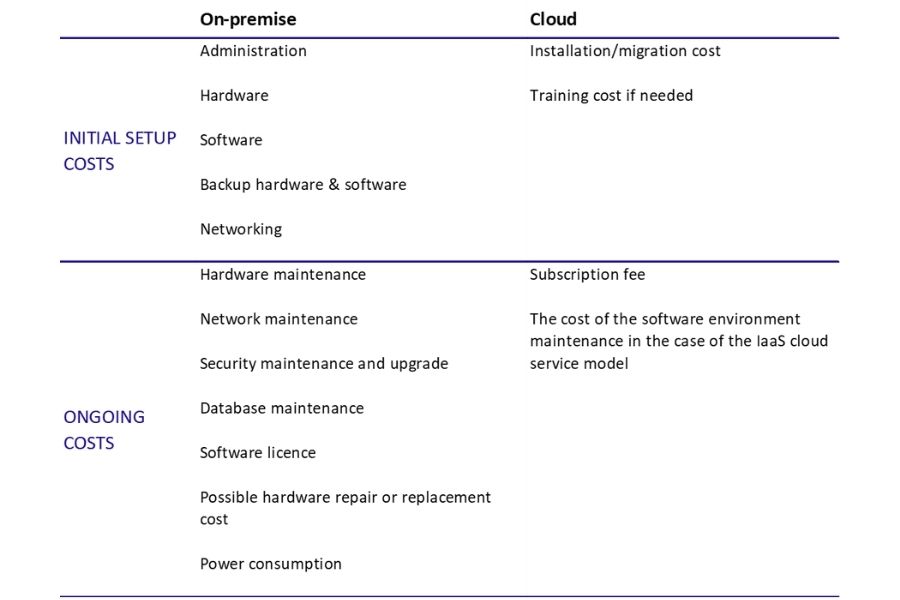
Nonetheless, the simplified cost breakdown above shows that if you decide on on-premise, you need to take into consideration the ongoing hardware maintenance, upgrade and possible repair costs or even buying new machines in case some break down in the meantime. That’s quite a high entry barrier for companies that aren’t ready for such investments. من الصعب تقديم تقديرات دقيقة وموحدة للتكلفة لكلا الحلين، إذ يعتمد الكثير على المزود الذي تختاره والتكوين المحدد المصمم وفقاً لاحتياجاتك.
هل ينبغي لك الانتقال إلى السحابة أم البقاء على الخوادم المحلية؟
الـ مزايا الحوسبة السحابيةتتجاوز بكثير ما يمكن أن توفره البنية المحلية. بالإضافة إلى ذلك، لا توجد تقريبًا أي قيود أو مخاطر مرتبطة باستخدام السحابة. وهذا يجعل السحابة خيارًا مفضلًا في معظم الحالات.
ومع ذلك، في بعض السيناريوهات، على سبيل المثال، عندما تحتاج إلى خادم مخصص للغاية أو نوع خاص جداً من البيئات، قد لا تكون السحابة خياراً مثالياً وتبقى البنية المحلية ضرورة.
هل تفكر في تبنّي الحوسبة السحابية؟ يمكننا تقديم المشورة لك بشأنالخيار الأنسب لحالة عملك المحددة وتولّى العملية بأكملها.
Yes. Major cloud providers invest heavily in advanced security technologies and maintain high compliance standards. However, as security follows the shared responsibility model, businesses must properly configure and manage their cloud environments to stay protected.
The cloud typically requires a smaller initial investment as there is no need to purchase physical hardware. Pay-per-use models allow businesses to optimise costs and avoid the ongoing maintenance and upgrade expenses that are typical of on-premises environments.
Compared to on-premises infrastructure, the cloud offers greater scalability and flexibility, as well as faster setup. It enables companies to adjust their resource allocation and distribute their data geographically as required, without being constrained by the capacity of physical servers.
On-premises infrastructure may be the better choice when highly customised hardware or very specific environments are required. In some niche or legacy scenarios, maintaining full physical control of the infrastructure is still necessary.


arrow_circle_right مقالاتنا
اختر قراءتك التالية


استفد إلى أقصى حد من الحلول السحابية. تواصل مع خبيرنا لمناقشة احتياجاتك.

Marcin Zyga
الرئيس التنفيذي للذكاء الاصطناعي والمعلومات