قانون الذكاء الاصطناعي الأوروبي: ما التغييرات التي يجلبها للصناعة الكيميائية؟


The European Union recently introduced a comprehensive regulatory framework for artificial intelligence, the AI Act. These regulations ensure that AI technologies are safe, transparent, and fair. For companies involved in chemical production, certain AI systems are classified as “high-risk” and require specific considerations to meet the requirements of the AI Act. This article will help you understand which AI applications fall under the high-risk category, why they are considered high-risk, and how to manage them effectively.
ما هو قانون الذكاء الاصطناعي الأوروبي، ومن يتأثر به؟
The Artificial Intelligence Act (also known as the EU AI Act) is a European Union-wide legal framework that sets transparency and reporting obligations for AI systems in the EU market or those which affect EU users. It applies to companies placing AI systems on the European Union market or whose outputs are used within the EU countries, regardless of development or deployment location. The EU AI Act has entered into force on the 1st of August 2024.
الهدف من قانون الذكاء الاصطناعي الأوروبي
The EU AI Act aims to create a comprehensive legal framework that regulates the development, deployment, and use of artificial intelligence (AI) in the European Union. The EU AI Act seeks to strike a balance between protecting citizens from the potential risks of AI while fostering innovation and maintaining the EU’s global leadership in ethical technology regulation. It considers aspects such as ensuring safety and fundamental rights, establishing trust in AI, promoting innovation, preventing fragmentation of AI regulation, ensuring accountability and transparency, and positioning the European Union as a leader in AI governance.
أربعة مستويات مخاطر محددة في قانون الذكاء الاصطناعي الأوروبي
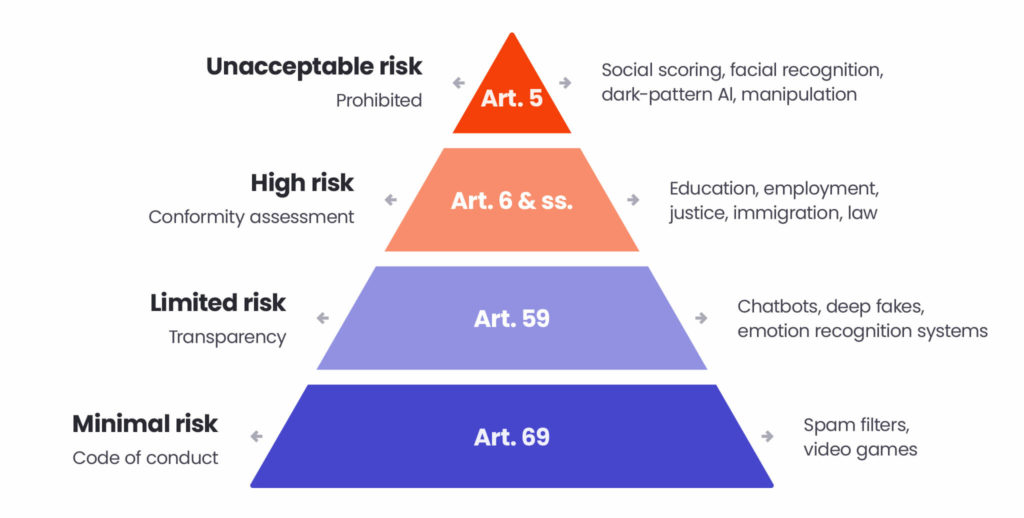
يضع قانون الذكاء الاصطناعي الأوروبي نهجاً قائماً على المخاطر لتنظيم أنظمة الذكاء الاصطناعي، حيث يصنفها إلى أربعة مستويات من المخاطر بناءً على الضرر المحتمل الذي قد تلحقه بالأفراد أو المجتمع:
- مخاطر غير مقبولة: AI applications that are banned as they are deemed to pose significant threats to safety, fundamental rights, or democratic values. Those may be AI systems used for social scoring by governments, manipulative AI for exploiting one’s vulnerabilities, or real-time biometric identification in public spaces.
- مخاطر عالية: AI systems in critical sectors that can significantly impact safety, fundamental rights, or vital services; for example, AI for medical devices, law enforcement systems, transport safety, or hiring algorithms. Those AI-based applications are subject to strict requirements such as rigorous risk assessments, transparency measures, human oversight, and data governance.
- مخاطر محدودة: AI systems that don’t pose direct risks to safety or fundamental rights but still require transparency obligations. The user must be informed that they are interacting with artificial intelligence, for example, when using AI chatbots or artificial intelligence-powered customer service systems.
- الحد الأدنى من المخاطر أو انعدامها: Many AI applications that don’t impact individual’s rights or safety fall into this category and don’t require rigorous oversight or regulation. Those can, e.g., be spam filters or AI used in video games.
العقوبات المترتبة على عدم الامتثال لقانون الذكاء الاصطناعي الأوروبي
قد يؤدي عدم الامتثال لقانون الذكاء الاصطناعي الأوروبي إلى عقوبات مالية كبيرة، وهي مصممة وفقًا لخطورة الانتهاك:
- حتى7% من إجمالي حجم الأعمال السنوي أو35 مليون يورو (أيهما أعلى) لعدم الامتثال لأنشطة الذكاء الاصطناعي المحظورة.
- حتى3% من إجمالي حجم الأعمال السنوي أو15 مليون يورو (أيهما أعلى) لمعظم المخالفات الأخرى.
- حتى1.5% من إجمالي حجم الأعمال السنوي أو7.5 مليون يورو (أيهما أعلى) لتقديم معلومات غير صحيحة أو غير كاملة أو مضللة إلى الهيئات المُبلَّغة أو السلطات الوطنية.
اطّلع على حلول الذكاء الاصطناعي لدينا للشركات الكيميائية
اعرف المزيد
كيف يُستخدم الذكاء الاصطناعي في الصناعة الكيميائية؟
الذكاء الاصطناعي is revolutionising industries, and chemical production is no exception. From optimising production schedules to predicting equipment maintenance needs, AI has become a powerful tool that enhances efficiency, safety, and quality control. However, not all AI applications are created equal – some carry more inherent risks, and these high-risk applications must be closely monitored to ensure compliance and safety.
In الإنتاج الكيميائي، يمكن استخدام الذكاء الاصطناعي في عدة مجالات رئيسية:
- تحسين العمليات: يمكن لخوارزميات الذكاء الاصطناعي تحليل التفاعلات الكيميائية لتعظيم الإنتاج مع تقليل استخدام المواد الخام والطاقة.
- الصيانة التنبؤية: تساعد نماذج التعلم الآلي في التنبؤ بأعطال المعدات قبل حدوثها، مما يقلل من وقت التوقف غير المخطط له وتكاليف الصيانة.
- مراقبة الجودة: يمكن للأنظمة المدعومة بالذكاء الاصطناعي تقييم جودة المنتج في الوقت الفعلي، مما يقلل الهدر ويحسّن الاتساق.
- مراقبة السلامة: يمكن لأنظمة الذكاء الاصطناعي مراقبة سلامة العمال وتحديد المخاطر المحتملة وتنبيه الأفراد عند الحاجة إلى التدخل.
- تطوير تركيبات البحث والتطوير: يمكن للذكاء الاصطناعي المساعدة في تصميم تركيبات كيميائية جديدة من خلال تحليل مجموعات بيانات معقدة لتحديد التركيبات المثلى من المكونات والتنبؤ بنتائج الأداء.
تقييم مستوى مخاطر الذكاء الاصطناعي في التطبيقات الكيميائية
The EU AI Act categorises certain AI applications as high-risk due to their potential impact on worker safety, environmental integrity, and operational reliability. In chemical production, high-risk AI applications include systems that directly influence:
- سلامة العمال: تُعتبر أنظمة الذكاء الاصطناعي التي تراقب العمليات الكيميائية أو سلوك الموظفين عالية المخاطر، إذ قد تؤدي الأخطاء إلى ظروف عمل غير آمنة.
- المخاطر البيئية: يجب أن تكون نماذج الذكاء الاصطناعي المستخدمة للتحكم في الانبعاثات أو النفايات أو المواد الخطرة دقيقة لمنع أي ضرر بيئي محتمل.
- الموثوقية التشغيلية: يجب أن تكون أنظمة الذكاء الاصطناعي التي تحسّن العمليات الكيميائية المعقدة قوية وخاضعة لرقابة صارمة، إذ يمكن أن تؤدي حتى الأخطاء الطفيفة إلى اضطرابات في الإنتاج أو حوادث خطيرة.
مثال 1: البرمجيات التقليدية مقابل أنظمة الذكاء الاصطناعي في الإنتاج الكيميائي
لفهم مخاطر الذكاء الاصطناعي وفوائده على نحو أفضل، دعونا نقارن بين نظام برمجي تقليدي غير قائم على الذكاء الاصطناعي وحل حديث مدفوع بالذكاء الاصطناعي.
برمجيات قديمة الطراز: In traditional chemical production, process optimisation was handled by rule-based software. This software followed pre-defined parameters to manage production. For instance, if the temperature of a chemical reactor went beyond a certain threshold, the software would trigger an alert or shut down the process. While effective, these systems were rigid and could not adapt to changing conditions or predict issues before they arose.
برمجيات مدعومة بالذكاء الاصطناعي: An AI-driven system, by contrast, can continuously learn from data and optimise processes in real time. For example, it can predict temperature fluctuations before they occur and make adjustments to prevent a shutdown. While this adaptability offers significant benefits, it also brings new risks, such as incorrect predictions or biased training data leading to unsafe conditions.
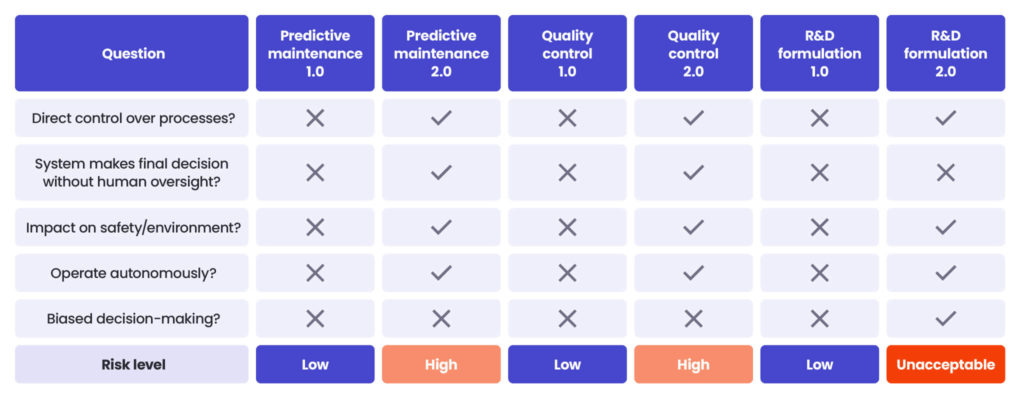
تقييم المخاطر الأولي والامتثال: Let’s assume a company implements an AI-driven predictive maintenance system that monitors the health of chemical reactors. The system uses historical data to predict maintenance, reducing downtime and improving efficiency. During the initial risk assessment, the system is classified as منخفض المخاطر لأنه يساعد بشكل أساسي أفراد الصيانة دون التحكم المباشر في العمليات الحرجة. تُجري الشركة فحوصات الامتثال، ويجتاز النظام هذه الفحوصات دون مشكلات كبيرة.
تعديل على نظام عالي المخاطر: Now, consider modifying this system: instead of merely predicting maintenance needs, the AI system is given direct control to shut down equipment when it detects a potential issue. This change significantly increases the risk level because the AI now has direct influence over critical operations. A malfunction or incorrect prediction could lead to an unsafe shutdown, resulting in potential safety hazards or production losses. As a result, the system is now classified as high-risk.
مثال 2: مراقبة الجودة في الإنتاج الكيميائي
برمجيات قديمة الطراز: Traditionally, quality control in chemical production was carried out through manual sampling and rule-based software that used fixed thresholds for detecting product deviations. Operators would manually inspect samples at regular intervals, and the software would flag any inconsistencies that exceeded the set parameters. Although this method worked, it was labour-intensive and sometimes too slow to prevent significant waste.
برمجيات مدعومة بالذكاء الاصطناعي: An AI-based quality control system can analyse data from sensors in real time, detecting subtle deviations in product quality that traditional methods might miss. It can even predict which batches are at risk of failing quality standards and recommend adjustments to the process to ensure conformity. However, this comes with risks such as over-reliance on AI decisions or incorrect training data, leading to faulty predictions.
تقييم المخاطر الأولي والامتثال: لنفترض أن نظام مراقبة الجودة المدعوم بالذكاء الاصطناعي يساعد المشغلين من خلال تقديم التوصيات. يُصنَّف في البداية على أنهمنخفض المخاطر حيث لا يزال المشغلون البشريون يتخذون القرارات النهائية. تُظهر فحوصات الامتثال عدم وجود مشكلات كبيرة، والنظام مُنشر.
تعديل على نظام عالي المخاطر: Consider a scenario where the AI system is automatically modified to reject or adjust batches without human intervention. This shifts the responsibility from human operators to AI, creating a high-risk situation. Incorrect AI decisions could lead to substantial financial losses or safety concerns if non-conforming products are mistakenly approved or safe products are rejected. The system now needs to be classified as high-risk.
مثال 3: البحث والتطوير في تطوير التركيبات
برمجيات قديمة الطراز: In traditional R&D for formulation development, researchers used rule-based methods and manual experimentation to determine the best combination of ingredients for a given product. This was a time-consuming process requiring a lot of trial and error, and often, the insights gained were limited by human interpretation of experimental data.
برمجيات مدعومة بالذكاء الاصطناعي: An AI-based formulation development system can analyse vast datasets, including ingredient properties, experimental results, and performance metrics, to recommend the best combinations for optimal product performance. The system can rapidly identify trends and propose new formulations, significantly speeding up the R&D process. However, it also introduces risks such as the reliance on biased training data, which could lead to suboptimal or even hazardous formulations.
تقييم المخاطر الأولي والامتثال: لنفترض أن نظام البحث والتطوير المدعوم بالذكاء الاصطناعي يساعد الباحثين من خلال تقديم توصيات التركيبات. في البداية، يتم تصنيفه على أنهمنخفض المخاطر حيث لا يزال الخبراء البشريون يتخذون القرارات النهائية. تُظهر فحوصات الامتثال عدم وجود مشكلات كبيرة، ويتم تنفيذ النظام.
تعديلات أخرى لتحويل المخاطر غير المقبولة: Consider another modification: the AI system is altered to preferentially recommend products and ingredients from a single supplier, potentially due to limited training data or commercial agreements. This bias reduces the diversity of possible formulations, leading to biased and suboptimal decisions. As a result, the AI may overlook better or safer alternatives, increasing the likelihood of hazardous outcomes and compromising product quality. Therefore, the system would need to be classified as an unacceptable risk.
جدول ملخص الفروقات
معايير الأمان للتطبيقات عالية المخاطر
To comply with the AI Act, companies must ensure that high-risk AI applications meet strict regulatory standards. This involves implementing a proper risk management system, understood as a continuous iterative process planned and run throughout the entire lifecycle of a software, documentation, testing for fairness, and mitigating biases in AI systems. Furthermore, the AI Act emphasises the importance of human oversight in AI decision-making processes.
تشمل الخطوات الرئيسية لإدارة مخاطر الذكاء الاصطناعي في الإنتاج الكيميائي:
- تقييم المخاطر: تحديد جميع أنظمة الذكاء الاصطناعي المستخدمة وتقييم مخاطرها المحتملة.
- فحوصات الامتثال: ضمان استيفاء أنظمة الذكاء الاصطناعي لمتطلبات الاتحاد الأوروبي التنظيمية، لا سيما تلك المصنفة عالية المخاطر.
- المراقبة والاختبار: راقب واختبر نماذج الذكاء الاصطناعي باستمرار لضمان عملها كما هو مقصود وعدم إدخال مخاطر غير متوقعة.
- الإشراف البشري: تعيين مشغلين بشريين للإشراف على اتخاذ القرارات عالية المخاطر المتعلقة بالذكاء الاصطناعي. التدخل البشري أمر بالغ الأهمية لمنع النتائج الكارثية المحتملة، خاصة في المواقف الحرجة للسلامة.
اجعل شركتك متوافقة مع قانون الذكاء الاصطناعي الأوروبي بدعم من Spyrosoft
Spyrosoft is a consulting-led technology services provider specialising in software development and the application of Artificial Intelligence accelerators. Our domain specialists in the chemical industry will help you prepare your company to be compliant with the EU Artificial Intelligence Act, conducting activities in three stages:
- تسجيل شامل لنظام الذكاء الاصطناعي. Assistance in creating a complete inventory of your AI systems, including both in-house and third-party solutions, that will enable quick risk categorisation once the AI Act is implemented in country regulations of EU member states.
- استراتيجية إدارة مخاطر الذكاء الاصطناعي. إرشادات في تطوير أو اختيار مسارات عمل الحوكمة لتحديد مخاطر الذكاء الاصطناعي وإدارتها والتخفيف منها – وهو شرط حاسم لأنظمة الذكاء الاصطناعي عالية المخاطر بموجب قانون الذكاء الاصطناعي الأوروبي.
- دعم الوثائق الفنية. اختيار أو إنشاء الأدوات المناسبة لتتبع الامتثال، وضمان استيفاء أنظمة الذكاء الاصطناعي لجميع المتطلبات ذات الصلة بالقانون.
إذا كنت تبحث عن دعم في تنفيذ متطلبات قانون الذكاء الاصطناعي في شركتك، فتواصل معنا عبر النموذج أدناه أو تعرّف على المزيد حول عرض للشركات الكيميائية. سنجيب على أسئلتك ونرشدك خلال العملية بأكملها.
الأسئلة الشائعة: قانون الذكاء الاصطناعي الأوروبي
The EU AI Act entered into force on 1 August 2024. The specific application dates for different types of obligations will be phased in over the coming years, but companies are encouraged to start preparing now to ensure full compliance once enforcement begins.
AI in the chemical sector becomes high-risk when it directly impacts worker safety, environmental protection, or operational reliability. Examples include AI controlling chemical reactions, monitoring emissions, or managing process safety – where incorrect predictions could lead to accidents, pollution, or production failures.
الغرامات كبيرة وتُحدَّد وفقًا لنوع المخالفة:
– ما يصل إلى 7% من حجم الأعمال السنوي العالمي أو 35 مليون يورو لأنشطة الذكاء الاصطناعي المحظورة.
– ما يصل إلى 3% أو 15 مليون يورو لعدم الامتثال العام للقانون.
– ما يصل إلى 1.5% أو 7.5 مليون يورو لتقديم معلومات كاذبة أو غير كاملة للسلطات.
تُبرز هذه العقوبات أهمية الإعداد المبكر والشامل للامتثال.
Human oversight means that qualified personnel must be able to understand, intervene, and override AI-driven decisions when necessary. In the chemical industry, this often means that operators or engineers must remain in control of AI recommendations or automated actions, especially in safety-sensitive environments.
تقدم Spyrosoft دعمًا شاملًا للامتثال لقانون الذكاء الاصطناعي (AI Act)، مصممًا خصيصًا للصناعة الكيميائية. ويساعد خبراؤنا في:
– تسجيل نظام الذكاء الاصطناعي وتصنيف المخاطر.
– استراتيجيات إدارة مخاطر الذكاء الاصطناعي المتوافقة مع لوائح الاتحاد الأوروبي.
– التوثيق التقني والتحضير للتدقيق لتلبية معايير الشفافية والمساءلة.
نساعد المؤسسات على بناء خارطة طريق للامتثال تضمن الكفاءة التشغيلية والجاهزية التنظيمية في آنٍ واحد.




arrow_circle_rightاتصل بنا
لنتحدث عن كيف يمكننا مساعدتك في تلبية متطلبات قانون الذكاء الاصطناعي الأوروبي

Piotr Wierzba
شريك مؤسس ومدير وحدة الأعمال الكيميائية
arrow_circle_right مقالاتنا