ASPICE 3.1 vs 4.0 : défis et opportunités


Automotive SPICE (ASPICE) est un cadre conçu pour évaluer et améliorer les processus d'ingénierie logicielle et système dans l'automobile. Avec la publication de la version 4.0, le cadre a fait l'objet de mises à jour importantes pour répondre aux besoins en constante évolution de l'industrie automobile.
Élargissement du périmètre d'Automotive SPICE
ASPICE 4.0 élargit son champ d'application pour mieux couvrir l'ensemble du processus de développement mécatronique. Cela inclut l'intégration de modèles de processus pour l'ingénierie matérielle et ingénierie de l'apprentissage automatique,les domaines qui n'ont pas été traités de manière exhaustive dans ASPICE 3.1. Wcouverture des identifiants ensures that ASPICE can support the development of complex, integrated systems that are essential in modern automotive projects. Imagine an electric vehicle where software controls everything from battery management to autonomous driving – ASPICE 4.0 is designed to ensure all these integrated systems work seamlessly together.
Modèles de maturité
Les modèles de maturité actualisés d'Automotive SPICE 4.0 fournissent des évaluations plus détaillées et plus précises des capacités des processus. Significant changes in GP 2.1.1 strategies and alignment with international standards aim to enhance assessment consistency and applicability. For instance, if you’re developing a new infotainment system, the updated maturity models help ensure that every stage of development, from initial design to final implementation, meets rigorous quality standards.
Gestion de la sécurité
Safety management has become a focal point in ASPICE 4.0. The new version mandates a more detailed approach to safety and cybersecurity management throughout the product lifecycle. While ASPICE 3.1 included general safety guidelines, the newer version introduces more stringent requirements and practices, highlighting the growing importance of these areas. Consider the safety-critical systems in a self-driving car—ASPICE 4.0 ensures that every component, from the sensors to the decision-making algorithms, adheres to the highest safety standards.
Téléchargez notre Guidebook sur ASPICE
Obtenir l'ebook
Détail du processus
One of the key improvements in ASPICE 4.0 is the increased detail in process descriptions and project roles. This allows for more accurate audits and assessments, contributing to higher-quality end products. ASPICE 3.1 provided more general guidelines, which sometimes fell short in enabling precise process evaluation. For example, a team developing a new braking system can now follow clearer, more detailed guidelines, ensuring that each step of the process is thoroughly checked and verified.
ASPICE 4.0 : changements critiques et décisifs
De notre point de vue
As providers of advanced technological solutions, ASPICE 4.0 is essential for enhancing the quality and safety standards of our products. With more detailed guidelines and better integration with other standards, we can offer our clients solutions that meet the highest requirements of the automotive market. Imagine working on cutting-edge projects like mobilité intelligente infrastructure— ASPICE 4.0 nous aide à garantir que nos contributions sont sûres, fiables et conformes aux normes mondiales.
Additionally, ASPICE 4.0 introduces changes such as the modification of SYS.5 to focus on verification. This shift highlights the importance of comprehensive verification processes in ensuring product quality and reliability. As a result, our testing procedures will be expanded to include new testing methods. These enhanced testing protocols will allow us to identify and address potential issues more effectively, leading to more robust and reliable automotive solutions.
En adoptant ces méthodes de test avancées, nous pouvons garantir que nos produits non seulement répondent, mais dépassent les exigences strictes établies par ASPICE 4.0, offrant ainsi une valeur et une sécurité accrues à nos clients et aux utilisateurs finaux.
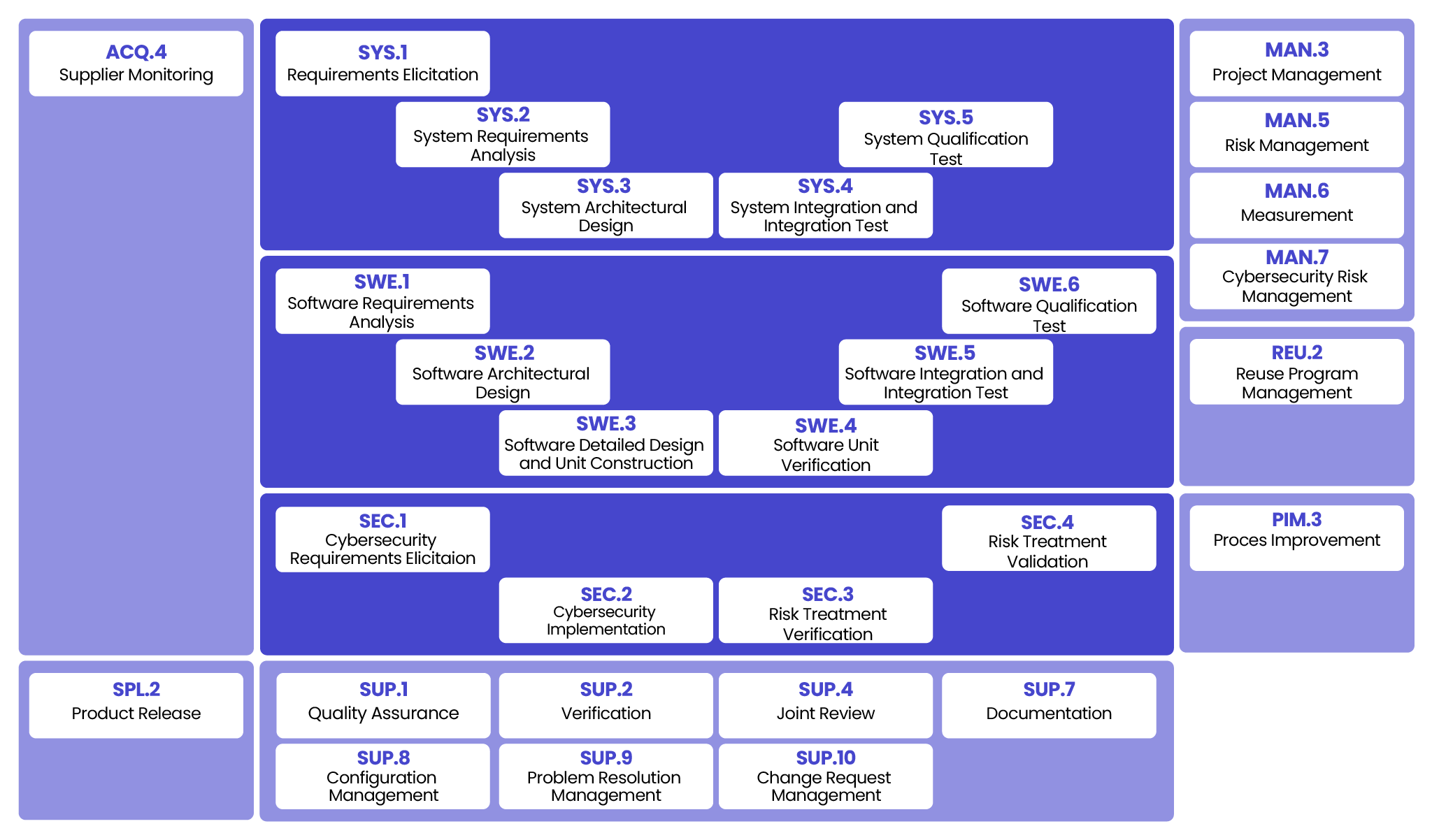
MODÈLE V ASPICE
Du point de vue des utilisateurs
For end users, the introduction of ASPICE 4.0 means improved safety and reliability of automotive products. The increased focus on risk management and cybersecurity results in safer and more technologically advanced vehicles, crucial in an era of growing automation and connectivity.
ASPICE 4.0 : réactions et attentes des OEM
OEMs (Original Equipment Manufacturers) have responded positively to the introduction of ASPICE 4.0, viewing it as a tool to improve product quality and safety. They expect the new standard to facilitate better project management, enhance process transparency, and ensure compliance with international norms. For OEMs, ASPICE 4.0’s support for more efficient technology integration and risk management is critical in boosting consumer confidence in end products. Think about the next generation of hybrid or electric vehicles—OEMs can rely on ASPICE 4.0 to streamline development and ensure top-notch quality and safety.
Informations exploitables
Implementing ASPICE 4.0 effectively involves several practical steps. First, investing in comprehensive training for your team is crucial. Workshops, online courses, and certifications can help your team grasp the new standards thoroughly. Conducting a gap analysis is also essential to identify areas where current processes fall short of ASPICE 4.0 requirements, allowing for prioritised changes and resource allocation. Utilising tools and software to automate parts of the compliance process can reduce manual workload, make operations more agile, and minimise errors. Engaging all relevant stakeholders early in the process ensures that everyone understands the benefits and requirements of ASPICE 4.0, fostering support and smoother implementation. Adopting a mindset of continuous improvement is vital—regularly review and update processes to not only meet ASPICE 4.0 standards but also to enhance efficiency and quality over time. Finally, ensure that your implementation aligns with other standards and regulations your organisation follows, such as ISO 26262 for functional safety and ISO/SAE 21434 for cybersecurity.
Exemple concret : Véhicules de livraison autonomes
Consider the development of autonomous delivery vehicles, which are becoming increasingly popular for last-mile logistics. These vehicles must navigate complex urban environments, avoid obstacles, and ensure the safe delivery of goods without human intervention. Implementing ASPICE 4.0 in such a project involves several key steps:
1. Extension du périmètre: L'équipe projet peut utiliser ASPICE 4.0 pour intégrer les processus de développement logiciel et matériel, garantissant que les capteurs, les algorithmes de navigation et les systèmes mécaniques fonctionnent en harmonie.
2. Modèles de maturité : The updated maturity models provide a more structured approach for assessing and improving process capabilities, enabling the team to ensure consistency and high standards throughout the development of the vehicle’s autonomous systems, from initial design to final production.
3. Gestion de la sécurité: Compte tenu de la nature critique pour la sécurité de la conduite autonome, les exigences strictes d'ASPICE 4.0 en matière de sécurité et de cybersécurité garantissent que le véhicule peut gérer en toute sécurité divers scénarios, notamment des obstacles imprévus et des menaces de cybersécurité.
4. Détail du processus: Des descriptions détaillées des processus et des rôles aident l'équipe à maintenir des normes élevées tout au long du développement, avec des audits et des évaluations réguliers pour détecter et résoudre les problèmes rapidement.
En respectant ASPICE 4.0, l'équipe de développement peut créer un véhicule de livraison autonome fiable, sûr et efficace, établissant ainsi une norme élevée pour le secteur et renforçant la confiance des consommateurs.
Résumé et défis
Although implementing ASPICE 4.0 may seem costly, challenging, and time-consuming, the benefits of maintaining high quality far outweigh the potential costs. The challenges include financial and resource investments, the need for personnel training, system integration, and meeting customer expectations. These challenges, though demanding, are essential for achieving higher standards of quality and safety in the automotive industry.
Vous souhaitez mieux comprendre ASPICE ? Consulteznotre guide complet sur Automotive SPICE et accédez à l'expertise de nos spécialistes.
Automotive SPICE est un référentiel qui aide à évaluer et à améliorer les processus d'ingénierie logicielle et système dans l'industrie automobile. Il garantit que les produits répondent à des normes élevées de qualité, de sécurité et de fiabilité.
Version 4.0 expands its scope to include hardware and machine learning engineering, reflecting the needs of modern mechatronic systems. It also introduces more detailed process descriptions, updated maturity models, and stronger focus on safety and cybersecurity.
ASPICE 4.0 met davantage l'accent sur la sécurité et la cybersécurité tout au long du cycle de vie du produit. Cela garantit que les systèmes critiques, tels que ceux des véhicules autonomes ou électriques, répondent aux normes de sécurité les plus élevées.
Les entreprises devraient investir dans la formation des équipes, réaliser des analyses d'écarts et utiliser des outils d'automatisation pour rationaliser la conformité. L'amélioration continue des processus et l'alignement sur des normes telles que l'ISO 26262 et l'ISO/SAE 21434 sont également essentiels à une mise en œuvre réussie.




arrow_circle_right nos articles
Choisissez votre prochaine lecture




arrow_circle_rightContactez-nous
