ما هو نظام webOS من LG؟ كل ما تحتاج إلى معرفته


When choosing a TV, one of the important factors influencing consumers’ decisions is the operating system it runs on. People used to be guided by appearance or price, but today awareness is increasing, and customers want to be able to use their favourite applications or devices. While platforms like Android TV are widely recognised, webOS is less talked about. Despite this, webOS is a highly efficient operating system that is steadily gaining popularity thanks to its user-friendly interface, reliable performance, and growing app ecosystem.
ما هو webOS؟
webOS is a user-friendly operating system designed for smart TVs, connected devices, and more. Originally developed by Palm and now maintained by LG, it’s built on the Linux kernel and leverages familiar web technologies like HTML5 and JavaScript. This solid foundation ensures a simple and intuitive interface that is easy for anyone to navigate.
With support for a wide range of apps and services, webOS delivers a smooth and consistent experience across devices. Its emphasis on security, reliability, and ease of use has earned it a strong reputation among both manufacturers and everyday users.
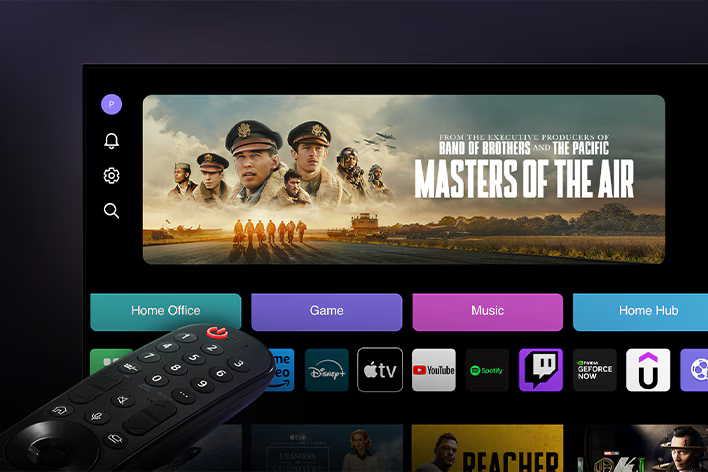
webOS حالياً. المصدر: LG
تاريخ ونشأة webOS
webOS first appeared in 2009, when it was launched by Palm as a smartphone operating system. It was praised for its innovative features, such as intuitive gesture controls and tab-based multitasking. However, despite the initial excitement, Palm faced strong competition and was bought by HP in 2010. HP tried to extend webOS to tablets and printers, but these efforts did not last long and ended in 2011.
In 2013, LG acquired webOS and turned it into a platform for smart TVs and connected devices. This was a turning point as webOS became an easy-to-use and versatile system. It now supports millions of LG Smart TVs and other devices, cementing its reputation as a reliable and intuitive operating system.
The first webOS TVs went on sale in 2014, and people loved their simplicity, speed and responsiveness. Since then, LG has used webOS in other connected devices such as refrigerators, projectors and IoT products. In 2021, LG allowed other manufacturers to use webOS, making it even more popular.
مزايا webOS
يتمتع webOS بالعديد من المزايا التي تجعله المنصة المفضلة للأجهزة الذكية، وخاصة أجهزة التلفزيون والأنظمة المتصلة.
واجهة مستخدم بديهية
webOS is known for its clean, simple interface that makes navigation effortless. Features like card-based multitasking and tab-style menus allow users to easily switch between apps and content.
منظومة تطبيقات واسعة
The platform supports a growing selection of applications, including popular streaming services, games, and productivity tools. Developers benefit from clear SDKs and extensive documentation, thus providing a dynamic and growing library of applications.
أداء موثوق
With short boot times, smooth transitions and low resource consumption, webOS provides users with a seamless experience. Its lightweight architecture makes it an efficient choice for manufacturers.
اتصال سلس
يتكامل webOS مع مختلف الأجهزة والأنظمة البيئية، بما في ذلك إعدادات المنازل الذكية وأجهزة إنترنت الأشياء والمساعدين الصوتيين مثل Alexa وGoogle Assistant.
أمان معزز
تحمي الميزات المدمجة مثل الإقلاع الآمن وعزل التطبيقات بيانات المستخدم وتضمن سلامة الجهاز، بما يلبي المعايير الصناعية العالية.
تعدد المهام القائم على البطاقات
كان تعدد المهام القائم على البطاقات دائماً سمة مميزة لنظام webOS. فهو يتيح للمستخدمين تصفح وإدارة التطبيقات المفتوحة بشكل بديهي، مما يزيد الإنتاجية وسهولة الاستخدام.
مكونات نظام webOS TV
نظام webOS TV مبني على بنية معيارية تتكون من عدة مكونات رئيسية. تعمل هذه المكونات معاً لضمان تشغيل التلفزيون الذكي بكفاءة.
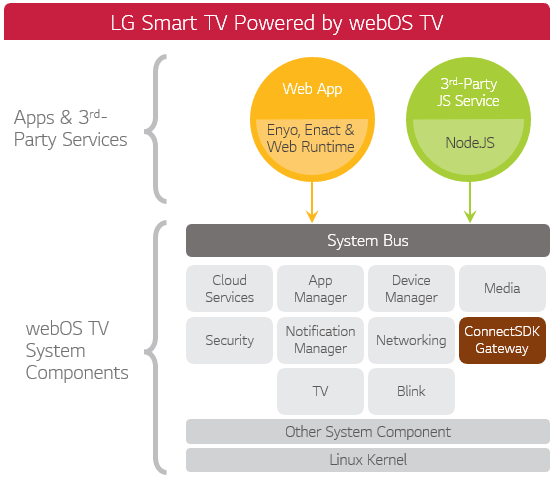
مكونات webOS. المصدر: LG
التطبيقات وخدمات الطرف الثالث
تطبيقات الويب: These are applications built using frameworks such as Enyo, Enact, and Web Runtime, using modern web technologies (HTML5, JavaScript, CSS). These apps provide content and functions that users interact with directly on their smart TVs.
خدمات JavaScript من طرف ثالثهذه الخدمات، المدعومة بـ Node.js، تُمكّن المطورين من تشغيل JavaScript من جانب الخادم على webOS، مما يدعم منطق التطبيقات المتقدم والتكامل مع الأنظمة الخارجية.
المكونات الرئيسية
ناقل النظام يعمل كمركز رئيسي، مما يتيح التواصل بين التطبيقات والخدمات ومكونات النظام الأساسية. على سبيل المثال، مدير التطبيقات يضمن التعامل الفعّال مع دورات حياة التطبيقات ويتيح تشغيل التطبيقات والتبديل بينها وإغلاقها بسلاسة. خدمات السحابة، من ناحية أخرى، تتيح الوصول إلى الميزات عبر الإنترنت، بما في ذلك تحديثات التطبيقات ومزامنة المحتوى. معًا، تخلق هذه المكونات نظامًا بيئيًا قويًا للتلفزيون الذكي يركز على المستخدم.
تطبيقات webOS
webOS web applications are very similar to standard web applications. The webOS TV platform supports standards-based web technologies such as HTML, CSS, and JavaScript. Anyone with experience in web app development can easily start creating web apps for webOS TV. Applications for LG webOS can be implemented by various JavaScript application frameworks such as Enact, jQuery, and others.
تطبيق ويب أساسي
تطبيق ويب أساسي لتلفاز webOS، المعروف أيضاً باسم تطبيق ويب محزَّم، يُقدَّم كحزمة كاملة.
This package contains all the necessary resources for the app. When a user downloads and installs the app, these resources are installed on their device. Any updates to the app’s code or resources require submitting a new version of the package with the changes included.
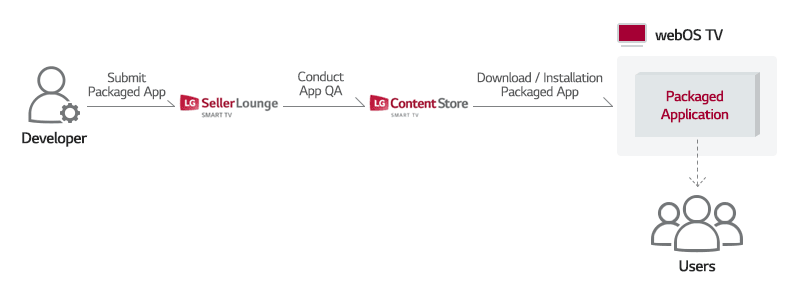
مخطط تطبيق ويب أساسي. المصدر: LG
تطبيق ويب مستضاف
A hosted web app stores its content on a remote web server. It consists of a lightweight local app that users download and install on their devices, along with the web app hosted on the server.
عندما يفتح المستخدم التطبيق المحلي، فإنه يعيد التوجيه إلى عنوان URL لتطبيق الويب على الخادم. ثم يتم تنزيل الموارد اللازمة من الخادم إلى الجهاز.
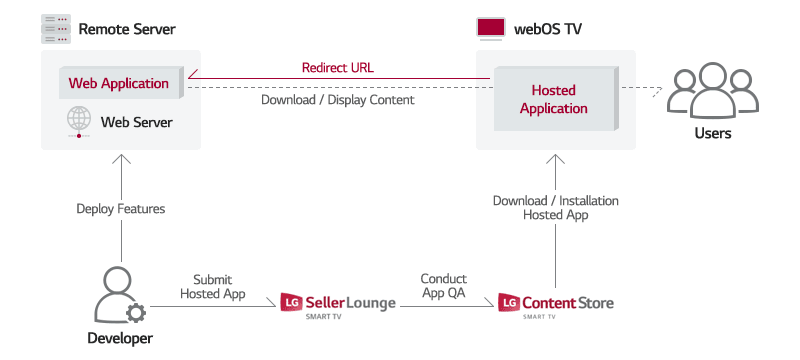
مخطط تطبيق الويب المستضاف. المصدر: LG
تقنيات LG المدعومة بالذكاء الاصطناعي
تستخدم أجهزة تلفزيون webOS من LG تقنيات متقدمة قائمة على الذكاء الاصطناعي لتوفير تجربة مشاهدة أكثر ذكاءً. على سبيل المثال، معالج الصورة بالذكاء الاصطناعي تتيح الميزة للمستخدمين ضبط إعدادات الصورة بناءً على تفضيلاتهم للحصول على تجربة مشاهدة مخصصة. مساعد الذكاء الاصطناعي يعزز الواجهة ويوفر توصيات مخصصة للتطبيقات والأفلام والبرامج والمحتوى الآخر بناءً على عادات المشاهدة والتفضيلات.
بالإضافة إلى ذلك، AI Picture Pro يحلل الصورة ويجري تعديلات في الوقت الفعلي لتحسين الوضوح والسطوع والألوان. AI Sound Pro provides immersive audio by recognising the type of content (e.g. movies, music, or dialogue) and adjusting audio profiles for best results. These features make webOS TVs smart and user-centric.
مركز LG للمنزل الذكي
LG Smart Home Hub is a central feature of LG webOS TVs. It was designed to provide smart home control directly from the TV screen. It acts as a smart home dashboard and allows users to monitor and control connected devices such as lights, thermostats, air conditioners, washing machines, and more – all from the comfort of their couch.
With an intuitive interface, LG Home Hub visually displays all connected devices in one place, showing their status and enabling quick changes. LG ThinQ AI integration and compatibility with popular IoT ecosystems such as Google Home and Amazon Alexa make it easy to manage smart home systems via voice commands or remote control.
جهاز التحكم LG Magic Remote
Magic Remote is a key feature of LG’s webOS TVs that allows users to interact with their TV intuitively. With the point-and-click function, users can effortlessly navigate through menus and applications. The scroll wheel makes browsing content or settings faster and more convenient.
In addition to navigation functions, the Magic Remote supports voice control, allowing users to search for content, adjust settings, or control connected smart devices with simple voice commands. It also features dedicated buttons for popular streaming apps such as Netflix and Prime Video, giving users quick access to their favourite services.
بفضل قدرات التحكم الشاملة، يمكن لـ Magic Remote تشغيل الأجهزة المتصلة الأخرى مثل أجهزة الاستقبال ومكبرات الصوت، مما يقلل الحاجة إلى أجهزة تحكم متعددة.
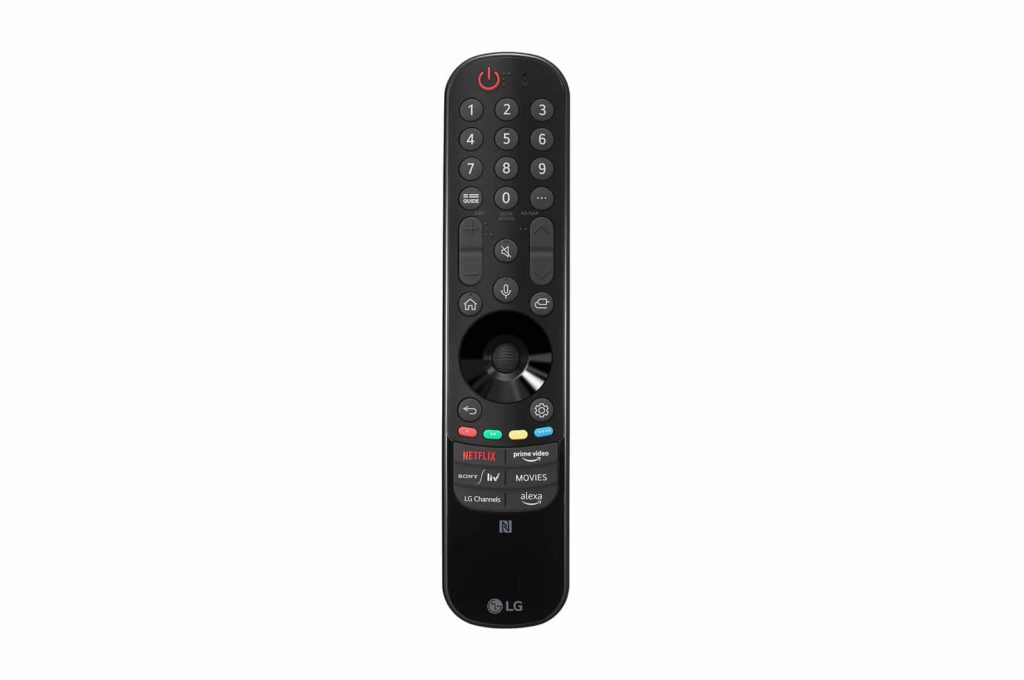
جهاز التحكم Magic Remote من LG لعام 2024
الاتصال المحمول في أجهزة تلفاز webOS
WebOS lets users easily link, share, and manage content between their phones, tablets, and TVs. Screen mirroring and streaming technologies such as Miracast and AirPlay 2 allow users to show their phone or tablet screens on the TV. The LG ThinQ app, which works on both iOS and Android, boosts mobile connectivity by turning smartphones into TV remotes. Users can adjust settings like volume and picture modes open apps, and handle content on the TV through the app.
To share media webOS TVs have DLNA support built in, which lets users stream videos, photos, and music files from their mobile devices straight to the TV. Mobile connectivity also works well with popular voice assistants like Google Assistant and Amazon Alexa.
Mobile connections make gaming more enjoyable for gamers. Apps like Xbox Cloud Gaming and GeForce Now sync your game progress across all your devices. You can also control streaming apps like Netflix and Spotify from your phone and stream them directly to your TV.
هل يستحق الأمر تطوير تطبيقات على webOS؟
Developing apps for webOS is becoming a smart move for developers and companies looking to take advantage of the booming smart TV market. WebOS runs on millions of LG Smart TVs and other connected devices around the world, giving app developers a good chance to reach a wide and growing audience.
WebOS has the big advantage of being easy for developers to use. It uses popular web technologies such as HTML5, CSS and JavaScript. This makes it easy to use for developers who are familiar with web development, which helps them learn it faster.
الحصة السوقية المتنامية of webOS TVs also makes it an appealing platform.LG has not only established webOS as the default operating system for its smart TVs, but has also begun licensing it to other manufacturers. This expansion increases the potential reach of apps developed for webOS, creating a larger user base.
From a business perspective, developing apps for webOS is a very wise investment. The fact that the platform integrates with smart home devices, voice assistants and IoT ecosystems makes it particularly attractive for companies looking to exploit the connected living trend.
كلمة أخيرة
webOS is a user-friendly and reliable system that combines simplicity with a diverse selection of applications. It supports current web technologies, provides robust development tools and is becoming increasingly popular with users. This makes it an excellent choice for those who use it and those who develop applications for it.
في Spyrosoft BSG، نحن متخصصون في تطوير تطبيقات التلفزيون الذكي، بما في ذلك منصات مثل webOS. نساعد الشركات على تطوير تطبيقات عالية الجودة مصممة وفقاً لاحتياجاتها الفريدة. تواصل معنا، ولنُنشئ معاً تطبيقاً بديهياً يركز على المستخدم!
الأسئلة الشائعة
LG’s webOS is a smart TV operating system developed by LG Electronics. It offers a user-friendly interface that allows users to stream content, browse the internet, and access various apps directly on their LG smart TVs.
Key features include an intuitive launcher bar, voice control, AI-based content recommendations, multi-tasking capabilities, and support for major streaming services like Netflix, Disney+, and YouTube.
Compared to platforms like Android TV or Tizen, webOS focuses on simplicity and smooth navigation. Its interface is minimalist, making it easy to switch between live TV, streaming apps, and connected devices.
نعم. فتحت LG نظام webOS لمصنّعين آخرين من خلال webOS Hub، مما سمح لعلامات تجارية مثل RCA وKonka وAyonz بدمج المنصة في أجهزة التلفاز الذكية الخاصة بها.
webOS integrates with LG’s AI ThinQ ecosystem and supports voice assistants like Google Assistant and Amazon Alexa. This allows users to control compatible smart home devices directly through their TV.


arrow_circle_rightتواصل معنا
ابنِ تجارب سلسة للتلفاز الذكي من خلال تطوير التطبيقات المتخصص لدينا

بارتوميي لوزيا
الرئيس التنفيذي لـ Spyrosoft BSG
arrow_circle_right مقالات أخرى


