HLS مقابل DASH: اختيار بروتوكول البث المناسب لمنصتك


You’ve built amazing content. Your video streaming platform is ready to launch. But there’s one critical decision that will determine whether your viewers in Tokyo can watch as smoothly as those in Toronto, whether iPhone users see the same video quality as Android fans, and whether your platform scales to millions without breaking: choosing your streaming protocol.
Unfortunately, not all video streaming protocols reach all audiences equally. Pick the wrong one, and you’ll either lock out significant portions of your potential viewers or face unnecessary technical complexity that slows your time-to-market.
The two dominant players are HLS (HTTP Live Streaming) and DASH (Dynamic Adaptive Streaming over HTTP). Both deliver high-quality video streaming that adjusts to network conditions. Both power the world’s biggest streaming services. Yet they solve the streaming video challenge in fundamentally different ways, each with distinct advantages depending on your audience and technical requirements.
يخترق هذا الدليل المصطلحات التقنية لمساعدتك على فهم ما تفعله HLS وDASH فعليًا، وكيف تختلفان عمليًا، والأهم من ذلك، كيفية اختيار البروتوكول المناسب.
ما هي بروتوكولات البث؟
Streaming protocols are standardised sets of rules that govern how video content travels from your streaming servers to viewers’ devices over the internet. They’re the invisible infrastructure that makes video streaming work smoothly across millions of devices simultaneously.
كيف تعمل بروتوكولات البث؟
Here’s what happens when someone presses play on your streaming platform: the streaming protocol splits your video into small video segments—typically just a few seconds each. These segments travel across the internet to the viewer’s device, where they’re reassembled and played back in the correct order.
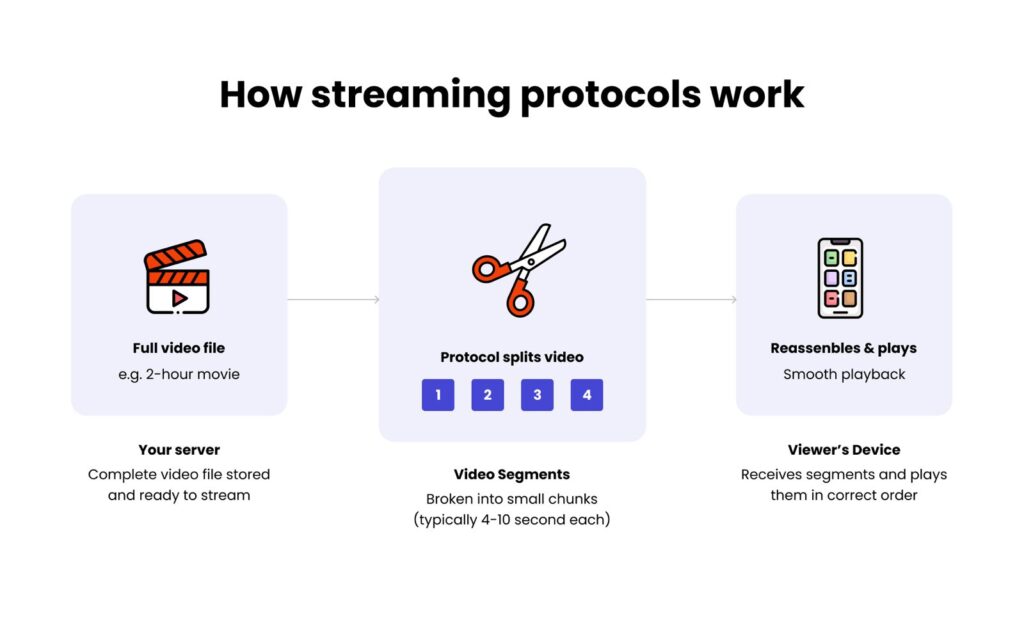
This chunking approach solves a fundamental problem: instead of downloading an entire two-hour film before watching, viewers can start watching within seconds while the rest of the content loads in the background.
بروتوكولات البث مقابل برامج الترميز: ما الفرق؟
غالبًا ما يخلط الناس بين بروتوكولات البث وبرامج ترميز الفيديو، لكنهما يؤديان وظائف مختلفة تمامًا.
Video codecs (such as H.264 or H.265) compress your video files to reduce their size. Think of a codec as a compression tool—it takes a massive raw video file and shrinks it down so it doesn’t consume huge amounts of bandwidth.
تتولّى بروتوكولات البث (مثل HLS أو DASH) عملية التوصيل. فهي تأخذ ذلك الفيديو المضغوط، وتقسّمه إلى أجزاء، وتدير كيفية انتقال تلك الأجزاء عبر الإنترنت للوصول إلى المشاهدين.
Here’s a simple analogy: if you’re sending a package internationally, the codec is how you pack the box to make it lighter and smaller. The protocol is the shipping service that actually delivers it—deciding the route, handling customs, and ensuring it arrives intact.
Both are essential for video streaming, but this guide focuses on video streaming protocols—the delivery mechanism that determines which devices can watch your content and how smoothly it plays.
ما هو البث التكيّفي بمعدل البت؟
الآن فهمت الأساسيات، لكن هناك نقطة حاسمة أخرى: ماذا يحدث عندما يكون لدى المشاهدين سرعات إنترنت مختلفة، أو عندما تتغير اتصالاتهم بالإنترنت أثناء البث؟
هنا يأتي دور ABR.
Adaptive bitrate streaming (ABR) is the technology that makes video streaming actually work in the real world. It automatically adjusts video quality in real time based on each viewer’s internet connection.
Without ABR, you’d be stuck with an impossible choice: deliver high-quality video that buffers constantly for slower connections, or deliver low-quality video that works everywhere but looks rubbish even when viewers have bandwidth to spare.
Adaptive bitrate streaming solves both problems simultaneously by creating multiple versions of your video—maybe 1080p, 720p, 480p, and 360p. Each version gets split into small video segments (typically 2-10 seconds each).
When someone presses play, their device starts conservatively with a quality level it knows will work. After each segment, it checks: “Did that download smoothly? Can I go higher?” If yes, it requests better quality for the next segment. If the connection struggles, it drops down to prevent buffering.
This is why you sometimes notice streaming content looking slightly softer for a moment when your Wi-Fi hiccups, then sharpening back up when the connection recovers. That’s ABR preventing the spinning buffer wheel.
يدعم كل من HLS وDASH البث التكيفي بمعدل بت متغيّر — لكنهما يتبعان نهجين مختلفين. لنرَ ما يعنيه ذلك لمنصة البث الخاصة بك.
ما هو HLS (البث المباشر عبر HTTP)؟
HTTP Live Streaming (HLS) is the most widely used streaming protocol today. Originally developed by Apple in 2009, HLS has become the default choice because it plays on nearly every device your viewers own.
HLS divides content into short chunks (typically 6-10 seconds each) and delivers them over standard HTTP connections—the same technology websites use. This means you don’t need expensive specialised infrastructure. Standard web servers and content delivery networks handle everything.
The protocol uses a text-based playlist file (.m3u8) that lists available segments and quality options. As network conditions change, the viewer’s device automatically switches between them—that’s the adaptive bitrate streaming we discussed earlier.
HLS works with H.264 and H.265 codecs—formats that virtually all devices understand. The main trade-off is latency: standard HLS introduces 6-30 seconds of delay, prioritising reliability over speed. For real-time applications like live sports betting, Apple introduced Low-Latency HLS (LL-HLS), reducing delays to around 2 seconds.
HLS – المزايا والعيوب
الإيجابيات:
- الوصول الشامل: Plays natively on iOS through Safari and AVPlayer, on Android via ExoPlayer, and in all major browsers using JavaScript libraries like HLS.js. Smart TVs, gaming consoles, and streaming devices support it universally
- بساطة البنية التحتية: تعمل خدمات CDN القياسية بشكل مثالي—لا حاجة لخوادم بث خاصة
- مرونة الشبكةيُبرز النمو السريع للدراما القصيرة مدى سرعة تطور الترفيه الرقمي.
- خيارات الأمان: يحمي التشفير المدمج المحتوى من المشاهدة غير المصرّح بها
السلبيات:
- متطلبات الإعداد: يتطلب التنفيذ السليم معرفة تقنية لسير عمل الترميز وتكوين سلّم الجودة
- قيود الترميز: يعمل فقط H.264 وH.265 — التنسيقات الأحدث مثل VP9 أو AV1 غير مدعومة
- عامل التأخير: يقدّم بروتوكول HLS القياسي زمن استجابة ملحوظًا (يساعد LL-HLS في ذلك لكنه ليس مدعومًا عالميًا بعد)
ما هو DASH (البث التكيفي الديناميكي عبر HTTP)؟
Dynamic Adaptive Streaming over HTTP (DASH), also known as MPEG-DASH, is an open-standard alternative to HLS. Created by the Moving Picture Experts Group in 2011, DASH delivers the same adaptive bitrate capabilities without being tied to any single company.
DASH uses an XML-based manifest file (.mpd) that provides detailed information about available segments and quality options. Instead of linking to each segment directly, it supplies a template that tells the player how to calculate segment locations.
ما يميز DASH هو مرونته في دعم برامج الترميز. على عكس HLS، الذي يقيّدك بـ H.264 وH.265، يدعم DASH أي برنامج ترميز تقريبًا، بما في ذلك الصيغ الحديثة مثل VP9 وAV1.
DASH – المزايا والعيوب
الإيجابيات:
- حرية الترميز: يعمل مع أي برنامج ترميز فيديو، مما يمنحك المرونة لتبني صيغ أحدث وأكثر كفاءة عند ظهورها
- معيار مفتوح: لا يوجد ارتباط بمورد بعينه—المواصفات متاحة للعموم ومستقلة عن الموردين
- دعم واسع لإدارة الحقوق الرقمية: يتكامل مع أنظمة متعددة لإدارة الحقوق الرقمية دون قيود
- تعدد استخدامات المنصات: يعمل بشكل أصلي عبر أجهزة Android، ومعظم أجهزة التلفزيون الذكية المصنّعة بعد عام 2012، وجميع متصفحات الويب الحديثة التي تدعم مكتبات JavaScript مثل dash.js
السلبيات:
- الفجوة في منظومة Apple: Not natively supported on iPhones, iPads, Macs, or Apple TV. This means you either miss iOS users entirely or add JavaScript libraries for browser support (native apps need third-party libraries)
- تعقيد التنفيذ: المزيد من خيارات التخصيص يعني المزيد من القرارات التي يجب اتخاذها. عندما تنشأ المشكلات، لا تكون الحلول دائماً واضحة ومباشرة.
- تبنٍّ مجزأ: على الرغم من تفوقه التقني من بعض النواحي، لم يحقق DASH الدعم الشامل الذي يتمتع به HLS
HLS مقابل DASH: مقارنة جنبًا إلى جنب بين بروتوكولات البث
الآن أصبحت تفهم ما يقدمه كل بروتوكول من بروتوكولات بث الفيديو. لكن أياً منها ينبغي أن تختار؟ إليك كيف تتقارن فيما بينها وفقاً للعوامل التي تهم فعلاً.
| الميزة | HLS | DASH |
|---|---|---|
| طُوِّر بواسطة | Apple | MPEG (فريق خبراء الصور المتحركة) |
| دعم iOS/Apple | أصلي (iOS، macOS، tvOS) | غير مدعوم أصليًا |
| دعم Android | أصلي (ExoPlayer، Media3) | أصلي (ExoPlayer، Media3) |
| دعم المتصفح | يتطلب مكتبات JavaScript (HLS.js) | يتطلب مكتبات JavaScript (dash.js) |
| دعم الترميز | H.264، H.265، AAC | أي برنامج ترميز (H.264، H.265، VP9، AV1، AAC) |
| زمن الاستجابة | عادةً أطول (6–30 ثانية) | زمن استجابة أقل يمكن تحقيقه (2–10 ثوانٍ) |
| نسخة منخفضة زمن الاستجابة | LL-HLS متاح | LL-DASH متاح |
| تنسيق البيان | نصي (.m3u8) | قائم على XML (.mpd) |
| دعم DRM | FairPlay | Widevine وPlayReady وFairPlay وClearKey |
ما يعنيه هذا عمليًا
- توافق الأجهزة: HLS works natively on iOS, macOS, and tvOS, as well as on Android devices. DASH is not supported natively on Apple devices or browsers—you’ll need third-party libraries for iOS apps. If your audience includes Apple users, HLS provides native support without additional implementation.
- مرونة الترميز: HLS supports H.264 and H.265 codecs. DASH is codec-agnostic, supporting any format including H.264, H.265, VP9, and AV1. If you want flexibility to use different codecs, DASH provides options that HLS doesn’t.
- البث المباشر: HLS typically delivers higher latency (6-30 seconds), whilst DASH achieves lower latency (2-10 seconds). Both protocols offer low-latency variants (LL-HLS and LL-DASH) for applications where timing matters.
- اعتبارات التنفيذ: HLS is an industry-standard format that plays almost everywhere. DASH is more customizable, but this comes with trade-offs—the ability to customise means when problems arise, solutions aren’t always straightforward.
HLS مقابل DASH: أي بروتوكول بث أفضل للبث؟
The streaming protocol you choose determines which devices can access your content, how smoothly your live streaming performs, and whether you can adopt modern video codecs as they emerge. Both streaming protocols deliver reliable adaptive bitrate streaming, but they make different trade-offs between compatibility, flexibility, and implementation complexity.
يعتمد قرارك على جمهورك المحدد ومتطلباتك التقنية:
اختر HLS عندما:
- تشمل جمهورك مستخدمي iOS (وهو ما يفعله معظمهم)
- تريد تقنية مُثبتة مع دعم واسع النطاق
- أنت تعطي الأولوية للوصول على مرونة الترميز
- تحتاج إلى أبسط مسار للتنفيذ
اختر MPEG DASH عندما:
- جمهورك يستخدم أندرويد بشكل أساسي
- تحتاج إلى مرونة الترميز للتنسيقات الحديثة (VP9، AV1)
- أنت تريد تجنّب الارتباط بمورّد واحد
- دعم iOS ليس ضرورياً لسوقك
فكّر في تنفيذ كليهما عندما:
- لديك موارد تطوير للتنفيذ المزدوج
- التوافق الأقصى أمر ضروري
- تريد مرونة في الترميز على Android، مع دعم iOS
Many large streaming platforms use both video streaming protocols: HLS for Apple devices, DASH for Android. This maximises compatibility whilst offering codec flexibility where supported. The added development complexity often pays off in broader reach.
هل أنت مستعد لإطلاق منصة البث الخاصة بك؟
الاختيار بين HLS وDASH هو مجرد البداية. يتطلب التنفيذ الناجح لأي من بروتوكولي البث الحديثين خبرة تقنية تتجاوز فهم المواصفات.
Whether you’re building a live streaming service for sports, entertainment, or corporate events, or launching a video-on-demand service that needs to work flawlessly across devices, the technical implementation determines whether viewers experience smooth playback or frustrating buffering.
في Spyrosoft، نحن متخصصون في بناء منصات بث آمنة وفعّالة.
استكشف خدماتنا في مجال الإعلام والترفيه واكتشف كيف يمكننا مساعدتك في تقديم تجارب بث استثنائية.
الأسئلة الشائعة
In many cases, yes. Large streaming services often use HLS for Apple devices and DASH for Android and web environments. This approach maximises compatibility while allowing codec flexibility where supported. However, maintaining both protocols increases technical complexity and operational overhead, so it’s important to evaluate whether the additional reach justifies the extra resources.
Neither protocol directly determines video quality. Quality depends on the codec (e.g., H.264, H.265, AV1), bitrate configuration, and encoding workflow. Both HLS and DASH support adaptive bitrate streaming, meaning they can deliver equally high-quality playback when properly configured.
Both HLS and DASH offer low-latency variants (LL-HLS and LL-DASH). Traditionally, DASH achieved lower latency, but recent improvements in LL-HLS have significantly reduced the gap. The right choice depends on your target devices, CDN setup, and how critical ultra-low latency is for your use case (e.g., sports betting, auctions, or interactive live events).


arrow_circle_rightاتصل بنا
تكوين واجهة المستخدم المدعوم بالذكاء الاصطناعي

بارتوميي لوزيا
الرئيس التنفيذي لـ Spyrosoft BSG
![[hero] media and entertainment - vega os](/wp-content/uploads/2025/10/hero-media-and-entertainment-vega-os-scaled-1-1024x681.jpg)

![[hero] media and entertainment - essential ott metrics](/wp-content/uploads/2025/10/hero-media-and-entertainment-essential-ott-metrics-scaled-1-1024x683.jpg)
![[hero] media and entertainment - Subscriber acquisition vs retention](/wp-content/uploads/2025/09/hero-media-and-entertainment-subscriber-acquisition-vs-retention-scaled-1-1024x683.jpg)