دليل إلى التلفزيون القابل للتسوق: البث التفاعلي والتجارة عبر الفيديو


It’s hard to ignore how much the internet has changed media and the world of streaming TV seems to be at the heart of that shift. We’re now seeing streaming, digital advertising and e-commerce converge into one powerful ecosystem: Shoppable TV. This comprehensive guide explains how this technology works, why it’s becoming a must have for any modern marketing strategy and how advertisers can use it to drive sales with tangible results.
ما هو التلفزيون القابل للتسوق؟ تحديد المعيار الجديد
At its core, Shoppable TV refers to interactive video content that allows viewers to engage directly with their screen to purchase products or learn more about a brand—all without leaving the streaming environment. Unlike traditional TV, where ads are a one-way street, these new shoppable formats turn Smart TV screens into dynamic storefronts. This model leverages video ads through seamless integration technologies, effectively closing the gap between watching content and making a transaction.
تطور الإعلان الرقمي على التلفزيون المتدفق
Not long ago, digital advertising was something that happened mostly on websites and mobile devices, where tracking customer interaction was straightforward. TV was the outlier; a great tool for building a brand, but a bit of a black box for direct sales data. The rapid growth of Connected TV (CTV ads) has changed all that. Advertisers can now bring the precision of internet marketing to the big screen and we’re seeing ad spend shift to streaming platforms for exactly that reason—better targeting for their audience.
لماذا يُعد الفيديو القابل للتسوق "ضرورة لا غنى عنها"
For most business leaders today, adopting shoppable video is becoming less of an option and more of a necessity. Modern consumers expect convenience. If they see a product they like, they want to understand it and buy it right away. Removing friction from this process is the key advantage of shoppable TV. These formats deliver tangible results because they shorten the sales funnel, which almost always helps optimise conversion rates and justify your ad budgets
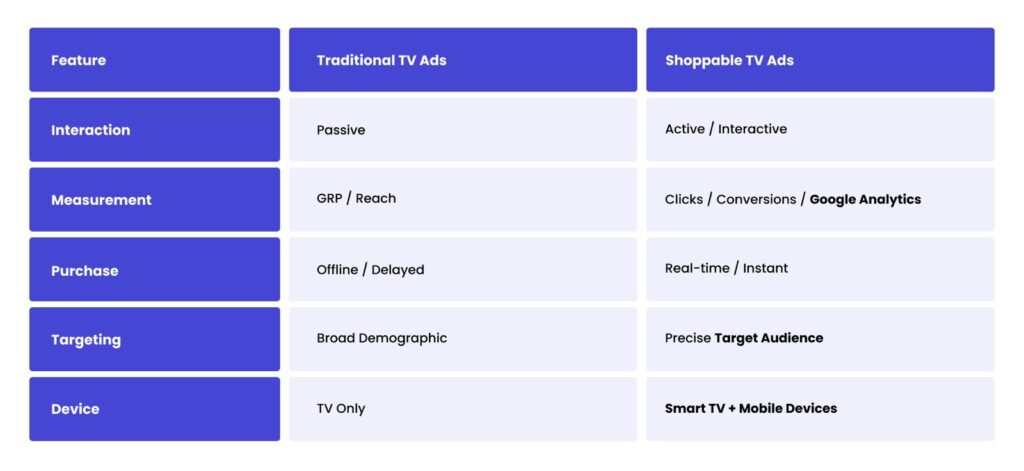
يوضح الجدول أدناه الاختلافات الرئيسية:
حزمة التقنيات والبيانات في الوقت الفعلي
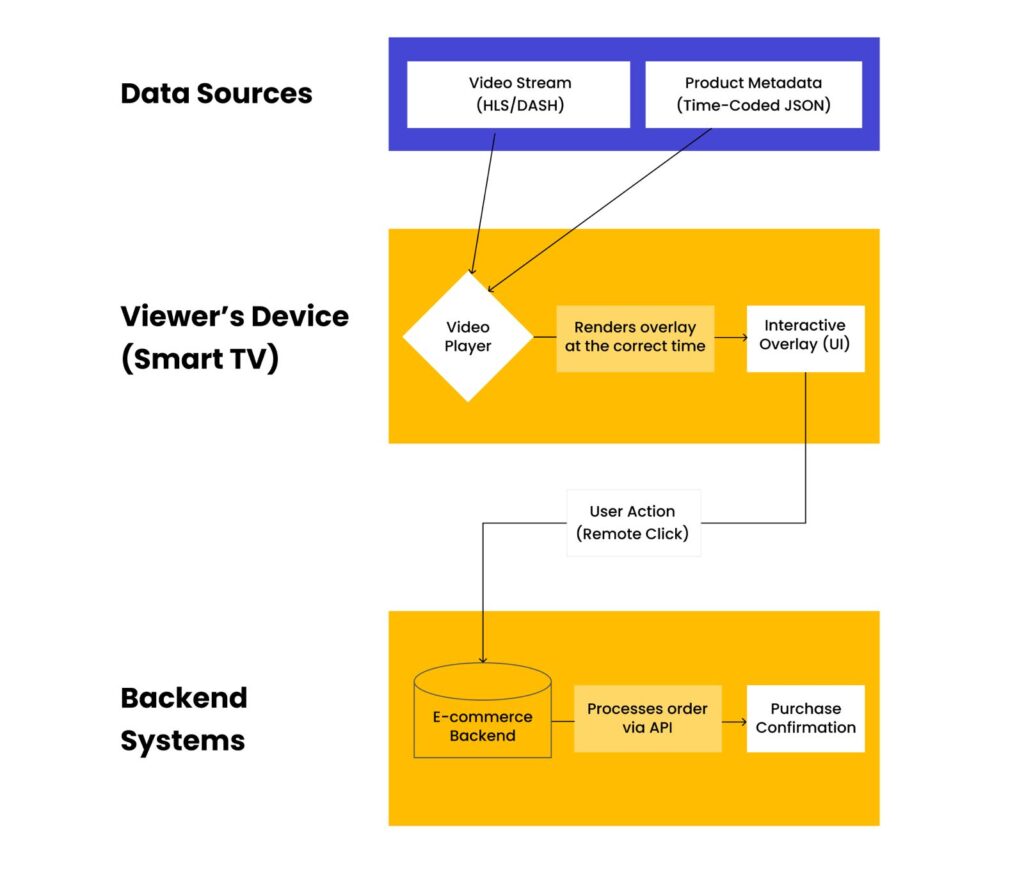
إذن، كيف يعمل كل هذا "في الخفاء"؟ إنشاء تجربة تلفزيون قابلة للتسوق رائعة يعود في جوهره إلى ثلاثة مكونات أساسية تعمل معاً في الوقت الفعلي:
- التكامل السلس: يجب أن يتزامن مشغل الفيديو بشكل مثالي مع مصدر بيانات، مثل نظام إدارة معلومات المنتج، لعرض المنتج الصحيح في الوقت المناسب.
- بيانات وصفية مرمّزة زمنياً: هذا هو العمود الفقري الحقيقي للتقنية. إنها البيانات الحاسمة التي تخبر التطبيق بدقة متى يظهر منتج على الشاشة.
- ضمان الجودة: In a complex network of video ads, technical glitches cost money. That’s why we use anomaly detection systems to monitor real time data streams, ensuring the ads shown are always of broadcast quality.
المنصات الرئيسية: Amazon وYouTube وما بعدهما
When we talk about shoppable video platforms, Amazon Ads are often the first to come to mind, leveraging their massive e-commerce infrastructure. At the same time, YouTube has integrated powerful shopping tools that allow creators to tag products, making their video content highly actionable for a huge audience. Of course, other streaming services like Roku and Peacock are also rolling out their own shoppable video capabilities, giving advertisers a wider network for their campaigns.
بناء استراتيجية تسويقية للتلفزيون القابل للتسوق
An effective marketing strategy here relies on deeply understanding your target audience. Data from Smart TV platforms enables very granular targeting, allowing ad budgets to be allocated to campaigns proven to deliver results. It’s also critical to design for the user experience—whether that means a second-screen strategy for mobile devices or, what we see as more effective, a smooth remote control interaction directly on the TV.
البناء التنقل بين خصوصية البيانات والتخصيص الأخلاقي
While data drives personalisation, consumer trust is everything. In an era of GDPR, how you handle viewer data must be transparent. The good news is that modern shoppable TV strategies are shifting towards contextual targeting—showing ads relevant to the content being watched, not a user’s private browsing history. This approach not only respects the privacy of your customers but also builds brand trust.
قياس الأداء وتعزيز معدلات التحويل
While data drives personalisation, consumer trust is everything. In an era of GDPR, how you handle viewer data must be transparent. The good news is that modern shoppable TV. To understand if your CTV ads are working, you need robust analytics. Integrating tools like Google Analytics lets you see the full customer journey. Marketers must measure performance beyond just views, focusing on metrics like Engagement Rate, Click-Through Rate, Cost Per Acquisition (CPA) and Return on Ad Spend (ROAS). For example, a fashion brand can often see a significant increase in its conversion rates from a well-executed shoppable video campaign.

التغلب على تحديات النظام البيئي المجزأm
It’s not all easy, of course. Developing custom shoppable TV solutions can be complex. The primary challenge is the fragmented ecosystem—the difference between operating systems like Tizen, WebOS and tvOS makes it hard to build a “write once, run anywhere” solution. This is where a technology partner who understands how to build bespoke apps and handle these data integrations becomes invaluable.
مستقبل الفيديو القابل للتسوق واكتشاف محتوى الفيديو
It’s not all easy, of course. Developing custom shoppable TV solutions can be complex. The future of this space is clearly driven by AI and real-time optimisation. You can imagine AI that changes the product in an ad based on the viewer’s location. Voice commands will also make it easier for users to purchase items. Furthermore, as shoppable video becomes more common, it will impact search behaviour. If users can buy instantly, they may search less on Google, which could change how brands allocate digital advertising funds toward video content production.
الخاتمة: الطريق إلى الأمام
Shoppable TV is transforming the internet of things into the internet of commerce. It offers advertisers a way to reach consumers with real impact. By combining a smart marketing strategy, robust technology and engaging video content, brands can drive sales and build much deeper connections with their audience. The era of passive viewing is over; the future is interactive.
هل أنت مستعد لبناء مستقبل البث؟
At Spyrosoft BSG, we provide professional services focused on engineering complex solutions for the Media and Entertainment industry. Instead of offering a one-size-fits-all product, we build tailored solutions to solve your unique challenges. We help our partners navigate the technical complexities of interactive streaming—from custom player development to large-scale data integration for shoppable TV.
استكشف أعمالنا فيالإعلام والترفيهولنناقش كيف يمكن لبنية تلفزيون التسوق القابلة للتخصيص أن ترتقي بمنصتك.
الأسئلة الشائعة
The initial investment can vary significantly depending on the complexity of your existing technology stack. However, it’s more helpful to view it as an investment in a new, high-margin revenue stream. While ROI differs, we typically see significant uplifts in conversion rates and average revenue per user (ARPU). The long-term value also comes from the rich first-party data you gather on consumer preferences, which can inform future content and marketing decisions.
Not necessarily, and that’s a key point. The most flexible Shoppable TV solutions are built with an API-first, “headless” approach. This means they can act as an integration layer that connects your existing video player with your current e-commerce backend (like Shopify, Magento, or a custom solution). Our expertise lies in building these custom bridges, so you don’t have to start from scratch.
That’s a critical question, and the answer is: it depends entirely on the implementation. Poorly executed, intrusive pop-ups will absolutely annoy viewers. However, when done right, shoppable elements feel like a natural feature, not an ad. Contextual, user-initiated interactions—like clicking on a product seen in a “Pause Ad” or exploring an actor’s wardrobe on demand—add value to the viewing experience instead of detracting from it.


arrow_circle_rightاتصل بنا
البث التفاعلي والتجارة بالفيديو

بارتوميي لوزيا
الرئيس التنفيذي لـ Spyrosoft BSG
![[hero] media and entertainment - vega os](/wp-content/uploads/2025/10/hero-media-and-entertainment-vega-os-scaled-1-1024x681.jpg)

![[hero] media and entertainment - essential ott metrics](/wp-content/uploads/2025/10/hero-media-and-entertainment-essential-ott-metrics-scaled-1-1024x683.jpg)
![[hero] media and entertainment - Subscriber acquisition vs retention](/wp-content/uploads/2025/09/hero-media-and-entertainment-subscriber-acquisition-vs-retention-scaled-1-1024x683.jpg)