L'avenir du HMI multimodal : voix, tactile, gestes et agents intelligents


Modern Human-Machine Interfaces (HMIs) are evolving beyond single modes of interaction. Multimodal HMI which combines voice recognition, touch/tactile controls, gesture input, and intelligent agent support is rapidly becoming the norm across industries, from automotive to industrial and consumer electronics. This trend is driven by a simple truth: no single interface method is perfect on its own, but together they can complement each other’s strengths. By harnessing multiple input modalities, designers can create user experiences that are more intuitive, safer, and more personalized than ever before.
Dans cet article, nous explorons comment la voix, le tactile, les gestes et les assistants basés sur l'IA façonnent l'avenir de l'HMI, les défis liés à l'intégration de ces technologies et ce que tout cela signifie pour l'expérience utilisateur dans différents secteurs.
Une évolution naturelle vers les interfaces multimodales
Pendant des décennies, interagir avec les machines signifiait appuyer sur des boutons physiques et tourner des molettes.
Today, those traditional controls are giving way to smart displays, voice assistants, and mid-air hand gestures. The automotive sector has been a bellwether for this change: luxury cars introduced touchscreens and voice commands years ago, and even added features like gesture control (as seen in BMW’s 7 Series) as optional enhancements.
Now, this multi-modal approach is sweeping across most vehicle segments and inspiring similar shifts in other fields. Users have grown to expect the same kind of seamless, multimodal HMI in their cars, industrial equipment, boats, and even home appliances.
Not only do multiple input methods give users choice in how they interact, they also improve overall reliability and accessibility. Each interface modality has pros and cons: touchscreens offer rich visual feedback but can be hard to use with gloves; voice control allows hands-free operation but might falter in noisy environments; gestures can feel intuitive but often require learning proper motions.
A multimodal interface allows one method to fill in the gaps of another. For example, a driver might use a quick hand gesture to skip a music track, then a voice command to set navigation, and finally touch a screen icon to confirm a selection – whatever is most natural at that moment.
Cette flexibilité répond non seulement aux préférences personnelles, mais améliore également l'accessibilité pour les utilisateurs ayant des capacités différentes ou des besoins situationnels.

La reconnaissance vocale arrive à maturité dans l'IHM
La technologie de reconnaissance vocale s'est considérablement améliorée ces dernières années, au point que parler à nos appareils est devenu monnaie courante.
In vehicles especially, voice control has surged in adoption as drivers demand safer, hands-free ways to interact with infotainment and controls. Virtual assistants like Amazon Alexa and Google Assistant – as well as automakers’ own AI voice agents – are now taking center stage in the car, allowing drivers to adjust climate settings, get directions, or even send messages without taking their hands off the wheel.
Point crucial, les avancées en traitement du langage naturel (NLP) signifient que ces systèmes deviennent bien plus intuitifs, comprenant le contexte, les accents régionaux et l'intention de l'utilisateur avec une bien plus grande précision.
Du point de vue de l'expérience utilisateur, les interfaces vocales peuvent être autonomisantes et utiles, car elles permettent aux personnes d'accomplir des tâches tout en restant concentrées sur leurs activités principales (comme conduire ou utiliser des machines). Études have noted that voice control is a safer alternative to manual interfaces because it reduces the need for drivers to look away from the road or remove their hands from the controls. A well-implemented voice HMI can feel like an honest conversation with your car or device, rather than a series of rigid commands.
Cependant, concevoir une bonne interface vocale nécessite également de comprendre ses limites.
Le bruit de fond, les interlocuteurs multiples ou les accents prononcés peuvent encore poser défis for accurate recognition. Automakers and device manufacturers are working to improve microphone arrays and noise-cancellation so that voice commands can be understood even in a noisy factory or at motorway speeds. They also face the task of making voice responses understanding and helpful – an intelligent agent should confirm or clarify commands in a supportive way, rather than just failing silently.
Malgré ces défis, la trajectoire de l'IHM vocale est clairement ascendante, les améliorations continues portées par l'IA faisant de la voix un pilier central des systèmes multimodaux.
L'importance durable du toucher et du retour tactile
Touchscreens have become nearly ubiquitous in modern HMIs – from the tablet-like displays in car dashboards to the control panels of industrial machines. A well-designed touch interface is passionate in the way it engages users: vivid graphics, swipe and pinch gestures, and context-sensitive menus can make interacting with a system feel almost as familiar as using a smartphone.
Modern HMIs are indeed highly touch-oriented, offering functions like swiping, tapping, and pinch-to-zoom to enable intuitive and efficient interaction. In consumer and automotive contexts, large high-resolution displays provide rich visual feedback and can adapt to show exactly the information needed at any given moment.
Pourtant, même si les interfaces tactiles dominent, les designers ont appris que le retour tactile et les commandes physiques conservent une place essentielle.
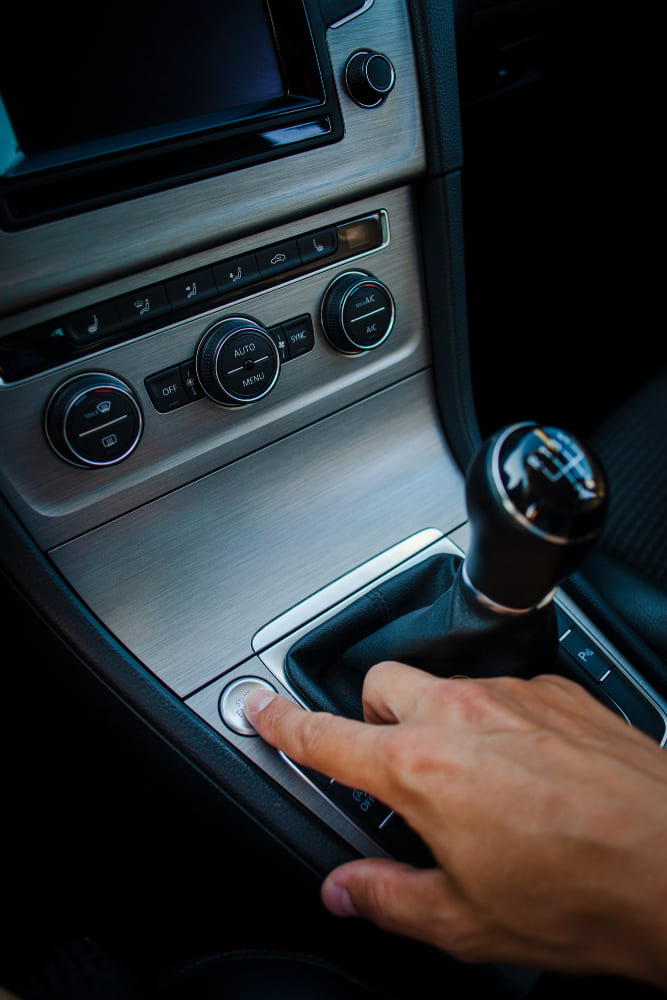
Toutes les fonctions ne sont pas optimales sur un écran plat. « Les éléments haptiques restent extrêmement importants, en particulier pour l'utilisation « à l'aveugle » de fonctions essentielles comme la conduite ou lorsqu'un retour clair est nécessaire », note l'un expert en HMI industriels.
In a car, for instance, a physical knob for volume or temperature allows adjustment by feel, without requiring the driver’s eyes on a screen. In critical environments – say, adjusting a machine setting in a factory – a solid button press or a detent in a dial provides reassurance that the command has been registered. Moreover, environmental conditions can interfere with touch: cold weather can render touchscreens sluggish or unusable with gloved hands, and bright sunlight or water on a screen can make touch inputs unreliable.
le système augmente la température de son côté, active le chauffage du siège et répond,
Touch technology itself is advancing to bridge the gap with physical feedback. Haptic feedback on touchscreens (through vibrations or adaptive textures) can simulate the feeling of pressing a button. Some research prototypes even explore mid-air haptics – using ultrasound or air jets to provide touch sensations without contact – though these are still experimental.
Quoi qu'il en soit, l'objectif est de rendre les HMI tactiles plus autonomisantes en donnant aux utilisateurs la confiance que leurs saisies sont enregistrées et significatives, réduisant toute incertitude qui pourrait accompagner des commandes purement numériques.
Contrôle gestuel : ajouter une nouvelle dimension à l'interaction
Les interfaces gestuelles, qui utilisent les mouvements des mains ou la posture du corps pour émettre des commandes, apportent une touche futuriste aux HMI.
In cars, gesture control gained attention when premium models allowed drivers to adjust the volume or answer calls with a wave of the hand. The idea is appealing: gestures are contactless (useful for hygiene and convenience) and can be quicker than hunting for a button. They also have cross-industry appeal, for example, in medical or industrial settings, gesture control can allow an operator to manipulate a system without physical touch, which is valuable if their hands are occupied or sterile.
However, gestures in practice have seen mixed success, precisely because they introduce a new modality that users must learn. A swipe in the air isn’t as universal as a tap on a screen as the system must be trained to recognize specific motions, and the user must perform them correctly.
« Pour que les commandes gestuelles fonctionnent bien, l'utilisateur doit être formé au placement et au mouvement appropriés des mains », explique l'un d'entre eux. a expliqué un analyste automobile, notant les défis liés à l'utilisation des gestes dans un véhicule en mouvement, où les bosses et les vibrations peuvent perturber les capteurs.
Lighting conditions and camera quality also impact reliability. Early implementations in cars have sometimes left drivers unsure whether the system caught their gesture, leading to repeated tries or simply reverting to voice or touch. Nonetheless, ongoing advances in computer vision and sensor technology are making gesture recognition more robust.
Depth cameras and infrared sensors (some borrowed from gaming and AR systems) help detect gestures in varied conditions. In the future, we may see more natural gestural vocabularies, for instance, simply pointing at something on a screen and having the system respond, or using gaze and gesture together to select an object. There’s passionate interest in making gesture control truly seamless, because when it works, it can feel like magic.
Outside automotive, gestures are already proving valuable: in factories, an engineer can swipe in mid-air to flip through schematics on a dirty touchscreen, and in operating theatres, surgeons can navigate imaging without touching a contaminable surface. These use cases underscore that gesture input can find its niche as part of a multimodal HMI, as long as it’s introduced with user training, proper feedback (visual or auditory cues confirming the gesture), and fallback options if the gesture is missed.
Framework Qt avec des outils de test comme Squish
L'élément le plus transformateur dans l'avenir de l'HMI est peut-être l'essor des agents intelligents – des assistants propulsés par l'IA capables de comprendre le contexte, d'apprendre du comportement de l'utilisateur et même de faire des suggestions proactives.
Contrairement aux interfaces traditionnelles qui attendent simplement une saisie de l'utilisateur, un agent HMI intelligent peut mener un dialogue et gérer des tâches complexes.
In cars, this could be a voice-activated assistant that not only follows commands, but also offers help: “You seem to be low on fuel, shall I find a nearby petrol station?” or “It’s 8 PM, would you like to call home?” Such agents draw on cloud connectivity, the vehicle’s sensors, and knowledge of the user’s preferences to deliver a more personalized experience.
Today’s in-vehicle voice assistants already show glimmers of this. Many new models integrate AI assistants (some via smartphone platforms, others proprietary) that use natural language understanding. These systems are growing more understanding and conversational, so drivers can speak almost naturally and be understood.
Selonanalyse récente, automakers are investing heavily in AI capabilities to create predictive and personalised interfaces, aiming to have vehicles adjust settings and content to individual drivers automatically. For example, the HMI might learn a driver’s routine and favorite climate settings, so each morning the car is pre-warmed and tuned to a preferred radio station, without a single button press.
L'impact des agents intelligents ne se limite pas aux voitures.
In smart homes, voice assistants (Alexa, Google, etc.) have become the de facto HMI for many tasks – from controlling lights to answering questions – essentially acting as an HMI for the entire home ecosystem. In industrial control rooms, AI-based advisory systems can watch over processes and alert operators to anomalies, effectively sharing the control interface with the human operators. The key benefit is an empowering partnership: the AI handles routine or data-heavy aspects while the human stays in charge of decisions.
Bien entendu, l'intégration de l'IA soulève ses propres considérations de conception.
A user must trust the intelligent agent – trust that it understands their voice commands, respects privacy, and provides useful help rather than annoyance. Transparency is important. For instance, if an AI agent adjusts something proactively, the HMI should inform the user in an honest and clear way.
As these agents grow more capable (with advancements in machine learning and context awareness), we can expect HMIs to shift from being mere control panels to becoming collaborative partners. The future of multimodal HMI may well involve an intelligent co-pilot by your side – one that you can talk to, touch via a screen, or even signal with a gesture, and it will seamlessly interpret and respond across all these channels.
Défis d'intégration et attentes des utilisateurs
La mise en œuvre d'une HMI entièrement multimodale n'est pas sans défis.
Combiner diverses méthodes de saisie
One major hurdle is ensuring that the different input methods work together smoothly and without confusing the user. The system must decide, for example, what happens if a voice command and a touch input occur at nearly the same time – which one takes priority? There must also be a consistent design language so that whether a user speaks or taps, they receive coherent feedback. Integration needs careful planning and lots of testing.
Sensibilité au contexte
A well-designed multimodal system will understand the context and perhaps even suggest the best interaction mode for the situation. For instance, if the car’s microphones detect a lot of ambient noise (windows down, highway speeds), the system could proactively highlight touch or gesture controls knowing voice recognition confidence might be low. Conversely, if the driver’s hands are occupied, the system could encourage voice input. Achieving this level of adaptive behavior requires complex sensor fusion and AI logic behind the scenes.
Expérience utilisateur
People now expect their car’s HMI or their machine’s control tablet to be as responsive and user-friendly as their personal smartphone. This means fast response times, intuitive interfaces, and minimal learning curve. It also means consistency – if a user can pinch-zoom on a map in one context, they’ll expect that gesture to work on other screens or devices. Lack of standardisation across brands and models can frustrate users. Des experts ont qualifié for more common frameworks for voice commands and other interactions across vehicles, to reduce confusion. The industry is gradually moving in that direction, with collaborations between automakers and tech companies to align on certain voice assistant behaviors and gesture vocabularies.
Matériel et environnement
High-quality microphones, cameras, and touch sensors add cost and complexity. Ensuring voice recognition works with heavy accents or multiple languages, ensuring touchscreens are readable in bright sun or that gestures aren’t accidentally triggered by unintentional movements – these are all the gritty details that HMI engineers grapple with. Users may not think about them explicitly, but any failure in these areas quickly erodes trust.
Une approche honnête consiste à reconnaître ces limites et à prévoir des dispositifs de sécurité : si la commande vocale échoue, permettre un basculement facile vers le contrôle manuel. Si un geste n'est pas détecté, fournir un retour discret ou demander une confirmation plutôt que d'exécuter une action erronée.
Perspectives intersectorielles : des voitures aux cockpits en passant par les ateliers de production
Alors qu'une grande partie de l'innovation en matière d'IHM multimodale est mise en avant dans les voitures, des tendances et des enseignements similaires se manifestent dans d'autres industries.
Dans l'automatisation industrielle, par exemple, il existe une forte reconnaissance qu'aucune technologie d'interface unique ne convient à tous les besoins opérationnels.
A manufacturing plant’s control system might combine a touchscreen panel with physical emergency stop buttons, voice command capabilities for maintenance technicians, and even foot pedals or gesture sensors for situations where hands are busy. This “mixed technology” approach provides a holistic solution that enhances operator usability and safety. Integrating haptic elements like buttons and knobs alongside touch, voice, and gesture interaction results in more intuitive and flexible operation – allowing users to tailor the interface to their context and ergonomic needs.
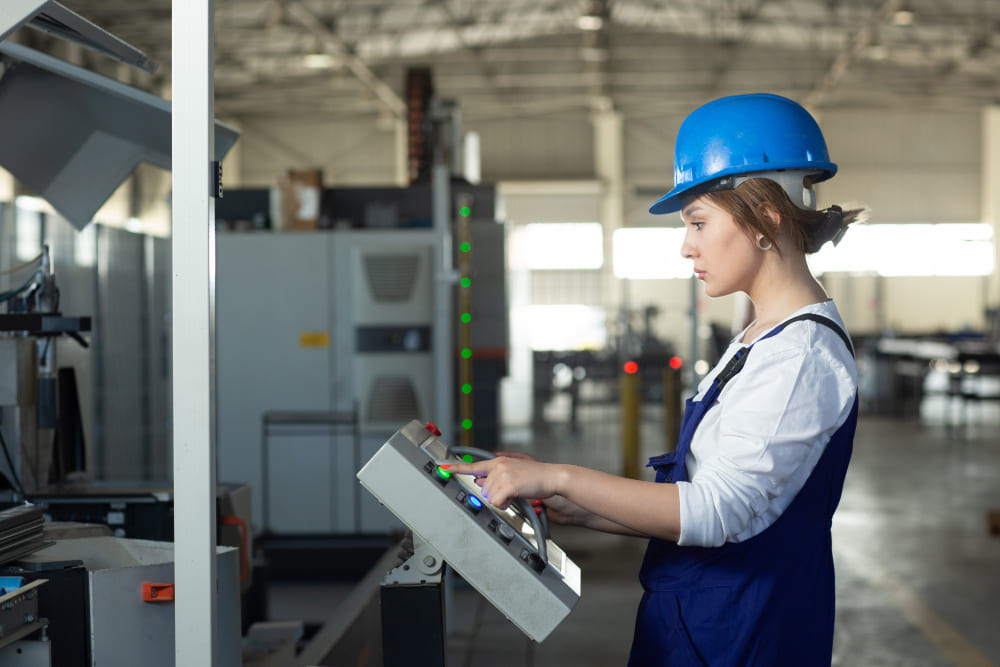
Other sectors have their own take on multimodal HMI. In the maritime domain, modern ship bridges and leisure boats are adopting touch displays and voice controls for navigation systems and onboard services. But given the possibility of rough seas and noisy engine rooms, these systems still include rugged physical controls and large, clear indicators for reliability.
D'ailleurs, si l'IHM marine vous intéresse, n'oubliez pas de consulter notre solution d'IHM marine.
In medical devices, surgeons might use voice commands to adjust settings on a machine when their hands are occupied, or foot gestures to navigate an on-screen menu, all while a nurse can still fall back to pressing a physical switch if needed – different modalities working in concert to ensure patient safety and efficiency.
L'apprentissage transversal s'accélère. Les innovations en matière d'IHM automobile (comme le design d'interfaces épurées et les assistants IA) inspirent des améliorations conviviales dans les contextes industriel et médical.
Conversely, the discipline and safety focus of industrial HMI is feeding back into automotive design. For instance, the realisation that too much touch-screen dependency can be dangerous without tactile backups, or that interface design must accommodate users of varying skill levels. In summary, whether it’s a car, a combine harvester, a marine navigation system or a smart fridge, the core principles of multimodal HMI remain: combine modalities thoughtfully to serve the user’s needs in any situation, and leverage each technology where it fits best.
Perspectives : les tendances qui façonnent l'avenir du HMI
L'avenir du HMI multimodal est prometteur, avec des avancées technologiques rapides à l'horizon.
Interfaces de réalité augmentée
One prominent trend is the expansion of augmented reality (AR) in interfaces. AR head-up displays in cars are moving from luxury gadgets to mainstream features, projecting navigation cues and safety alerts onto the windshield in real time. This effectively adds a new visual modality to the HMI, merging digital information with the user’s direct view of the world.
De même, dans un contexte industriel, des lunettes AR portables peuvent superposer des données sur un équipement pendant qu'un opérateur le regarde, permettant un guidage adapté à la situation sans avoir besoin de consulter un écran séparé.
Biométrie
Future HMIs may recognise the user by face or fingerprint and automatically adjust to their preferences (seat position, interface layout, etc.). They might even monitor driver alertness via eye-tracking or measure stress levels and respond (for example, activating a relaxation mode or restricting certain interactions if the user is overloaded). While these technologies raise important privacy considerations, they promise to make interfaces more personalised and adaptive.
Intelligence artificielle
We expect next-generation HMIs to be even more context-aware and predictive. Natural language interfaces will get better at carrying multi-turn conversations (so you can correct a voice command or ask follow-up questions naturally). Intelligent agents might coordinate multiple devices – imagine your car, home, and personal devices all working together via one cohesive HMI agent that travels with you. This kind of seamless ecosystem is on the horizon, as companies invest in connected IoT integration and standardize protocols for devices to communicate.
Simplification en surface
Designers are focusing on minimalistic and intuitive UI design – displaying information only when it’s relevant, reducing clutter, and using clear, understanding visuals and sounds to guide users. The more the technology does in the background, the more important it is that the foreground (what the user sees and hears) remains approachable and not overwhelming. The best multimodal HMI of the future might be one that doesn’t make the user think about the technology at all – it will simply feel like the most natural way to get things done.
Adopter un avenir HMI multimodal et centré sur l'utilisateur
Chez Spyrosoft, nous considérons l'avenir de l'IHM multimodale comme prometteur et riche en opportunités.
À mon avis, l'avenir des HMI est clairement multimodal.
From what I see in our projects and discussions with clients across automotive, home appliances, industrial and other markets, the strongest direction is the combination of voice and touch. These two modalities naturally complement each other: touch gives precision and reliability, while voice supported by an intelligent agent in the backend enables context, memory and understanding of user intent in a more natural way.
I believe that the intelligent agent layer is the real game-changer. It’s not just about recognizing commands, but about remembering context, discovering the environment, and helping the user in a proactive way. This is where HMI stops being a screen and becomes an assistant.
At the same time, I have to say that “in-air” gesture control, like we often see in movies, doesn’t work in real life. Our findings and client feedback confirm that people don’t find it intuitive and rarely want to use it. That’s why I don’t expect such solutions to be adopted at scale, and I don’t recommend investing heavily in them.
Pour moi, l'avenir, c'est la voix + le tactile, soutenus par des agents intelligents et conscients du contexte. C'est la base des HMI que les gens utiliseront et apprécieront réellement. »
Vous cherchez des solutions HMI ?
Chez Spyrosoft, nous sommes passionnés par la création de telles solutions HMI tournées vers l'avenir.
Nous combinons expertise technique et approche de conception centrée sur l'humain et bienveillante pour livrer des interfaces qui répondent aux attentes des utilisateurs modernes dans les domaines de l'automobile, de l'industrie et du grand public.
Si vous souhaitez explorer les possibilités de l'IHM multimodale pour votre produit ou obtenir des conseils sur l'intégration de la voix, du tactile, des gestes et de l'IA dans une expérience utilisateur fluide, nous sommes là pour vous aider.
Contactez-nous via le formulaire ci-dessous ou découvrez-en plus sur notre Services de développement HMI.


arrow_circle_rightContactez-nous
Nous sommes là pour vous aider avec votre projet HMI
Przemyslaw Krzywania
Directeur HMI
arrow_circle_right Nos articles


